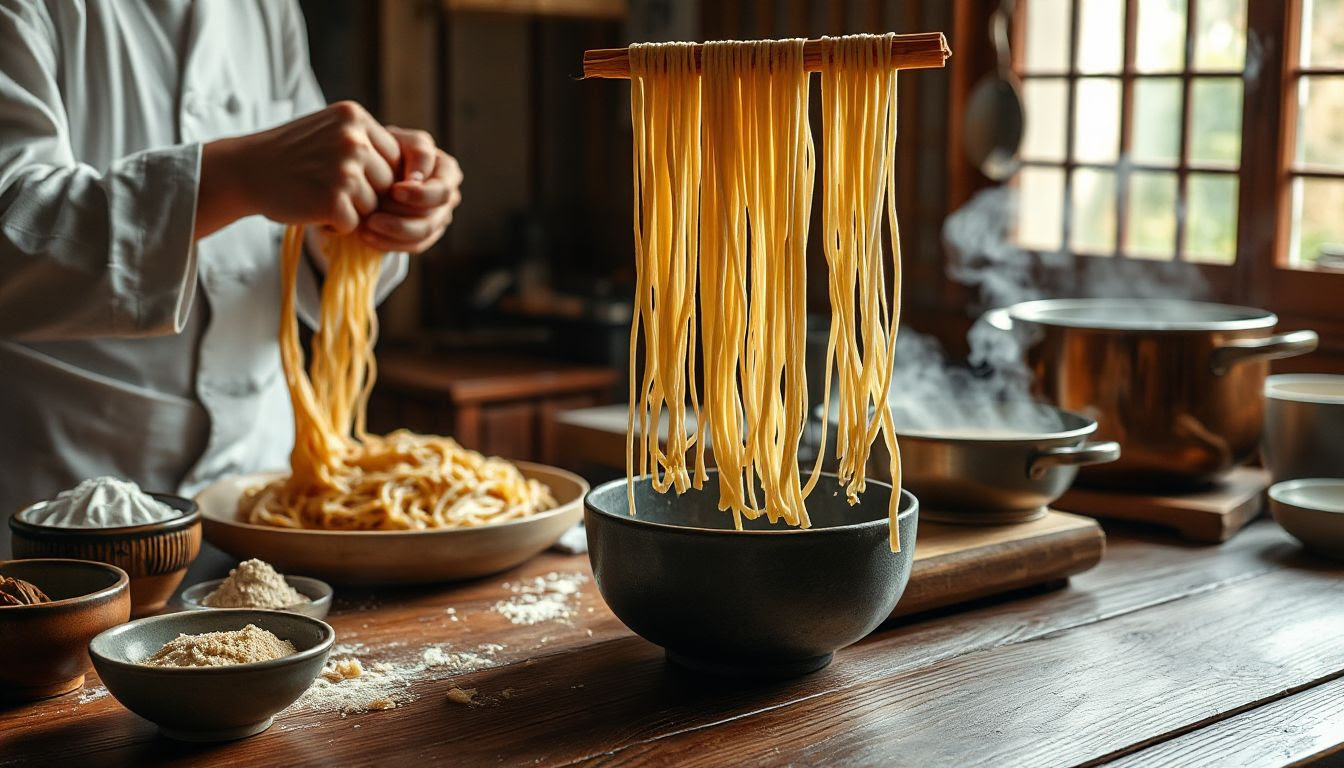
John Hornick — Chef’s Apprentice
Introduction
Ramen noodles are loved worldwide, not just for the rich flavor or their broth but also for their chewy, satisfying texture. Whether you’re a home cook or a seasoned chef, crafting authentic ramen from scratch may seem like a challenge. The secret lies in using the right alkaline agents—baked baking soda or kansui (also known as lye water)—that transform simple flour into what we recognize as ramen noodles. These ingredients give the noodles their distinct yellow color and chewy bite.
This is my recipe for making ramen noodles from scratch. This guide walks you through every step. You’ll learn how baked baking soda or kansui help create noodles that mimic those served in top ramen ya (ramen shops). Ready to become a ramen noodle master? Now go make some ramen from scratch!
Understanding Ramen Noodle Chemistry and Ingredients
What Makes Ramen Noodles Unique?
Ramen noodles stand out because of their chewy texture and bright yellow hue. This comes from their alkaline content. The alkalinity changes the noodles’ pH, making them firmer, slipperier, and giving them that signature color. Without alkaline agents, the noodles are basically Italian pasta.
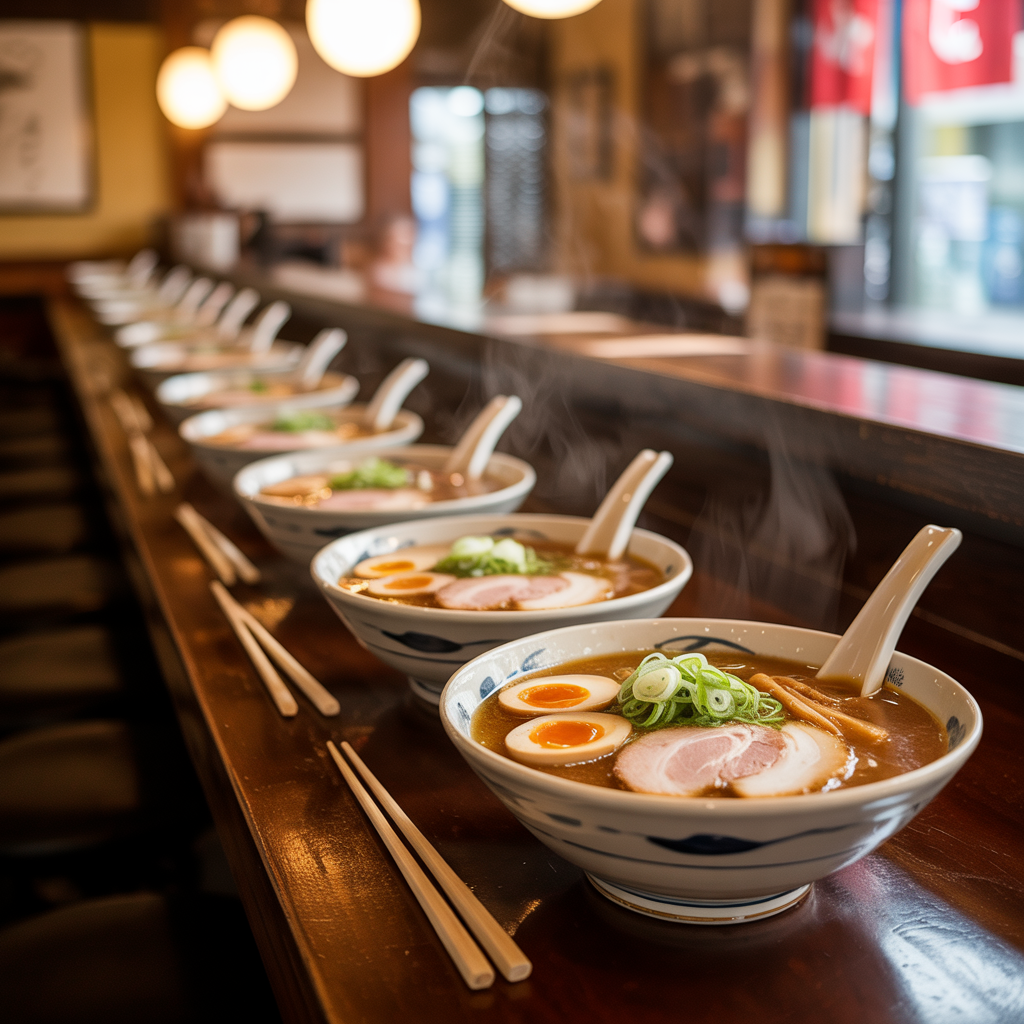
Experience Ramen Ya in Japan
Maybe you’re heading to Japan and would like to experience ramen in a Ramen Ya (ramen shop/restaurant). Maybe you love to travel and have been struggling to decide your next destination. Maybe you would like to do a ramen crawl in Tokyo’s Shinjuku, area, famous for its nightlife. Maybe you would like to see if ramen in Japan is different than ramen in the U.S. If you fall into one of these categories, CLICK HERE TO PLAN YOUR JAPAN TRIP and CLICK HERE TO BOOK JAPANESE RAMEN ADVENTURES.
Key Ingredients for Homemade Ramen Noodles
- Flour: I have seen recipes calling for bread flour or mixtures of bread flour and all-purpose flour, but I use 100% AP flour.
- Water: Hydrates the flour and helps develop gluten bonds.
- Alkaline Agents: Baked baking soda or kansui are essential for authentic taste and texture.
Differences Between Baking Soda and Kansui
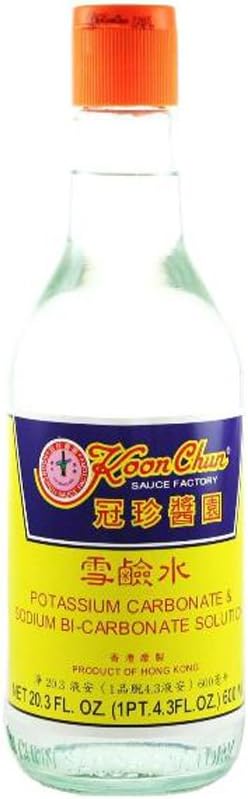
Baking soda is common in baking, but when baked, it transforms into a more effective alkaline agent. The master of food chemistry and physics, Harold McGee, provides the method shown in my video for using baking soda to make a substitute for kansui. Heating baking soda, which is sodium bicarbonate, makes sodium carbonate, which, when mixed with water and flour, makes ramen dough. This baked soda can be used as a substitute for kansui. Kansui is made by combining potassium carbonate and sodium bi-carbonate. It creates that classic ramen chewiness and bright yellow color. Baked baking soda acts similarly but is easier to prepare at home. Warning: kansui can irritate your skin.
Preparing Baked Baking Soda for Ramen Noodles
Why Bake Baking Soda?
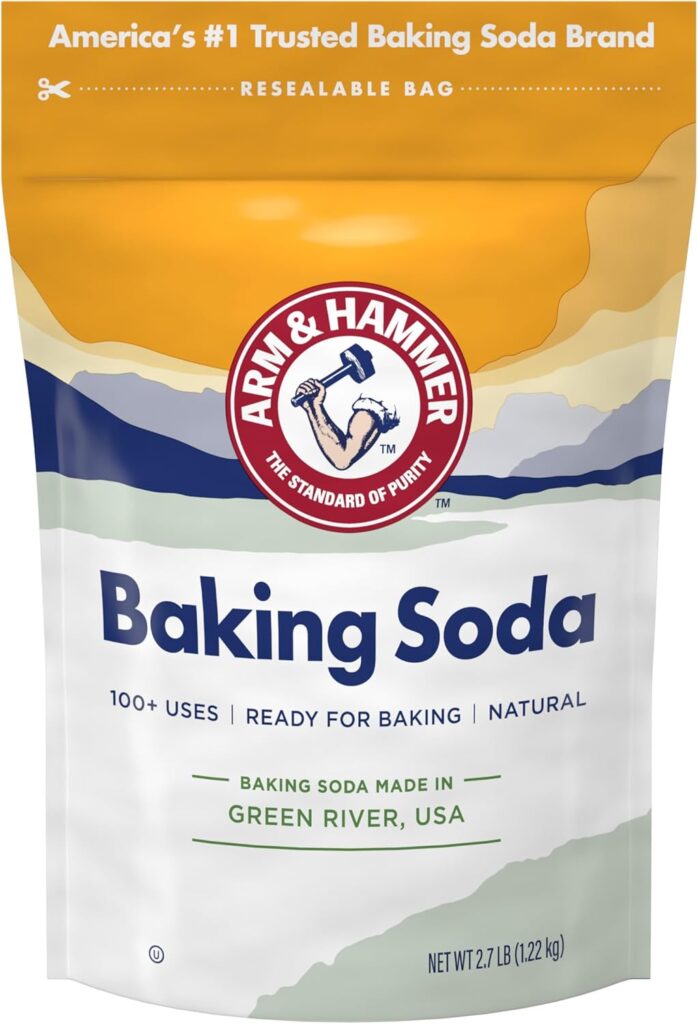
Regular baking soda isn’t strong enough to give ramen its signature traits. Baking it first turns it into a more potent alkaline powder. When added to dough, baked baking soda raises the pH level effectively, leading to the normal ramen appearance and texture.
Step-by-Step Guide to Baking Baking Soda
- Preheat the Oven: Set it to 250°F (120°C).
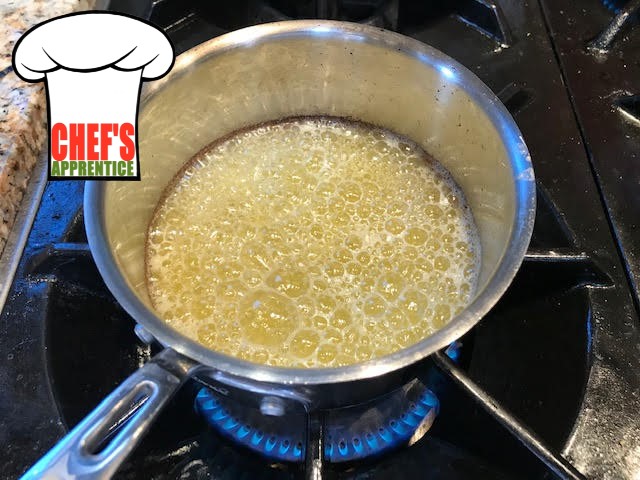
- Bake the Baking Soda: Spread about half a cup of baking soda on a baking sheet. Bake for 1 hour.
- Cool and Store: Let it cool before storing in an airtight container. Keep it dry for best results.
How to Use Baked Baking Soda in Noodle Dough
To achieve the right alkalinity, I mix 4 tsp. baked soda and ½ cup warm water. After dissolving the baked soda in the warm water, I add ½ cup cold water and mix it well. This works out to about 1 1/3 tsp. baked soda per cup of flour. Pour baked soda water into 3 cups flour. This ensures even distribution and consistent results. Kneading is discussed below. See my video on making ramen noodles with baked soda.
Making Ramen Noodles with Kansui
What is Kansui and How is it Made?
Kansui is a type of mineral water rich in potassium and sodium carbonates. It’s available at the link above.
Incorporating Kansui into Noodle Dough
Add the kansui gradually into your flour mixture. I use 2 1/2 Tb. of kansui for 3 cups of flour. Mix the kansui with enough warm water to make 1 cup. Then pour the water into 3 cups flour. Mix as described below. This ingredient makes your noodles chewy, slippery, and authentic. See my video on making ramen noodles with kansui.
Benefits of Using Kansui in Homemade Ramen
Kansui creates that iconic yellow hue, raises the pH for a firmer bite, and adds depth to the flavor. Nothing beats the taste and feel of noodles made with traditional ingredients. But baked soda works well too.
Step-by-Step Guide to Making Ramen Noodles
Preparing the Dough
Combine the flour and your chosen alkaline agent—baked baking soda or kansui. Mix to make a rough crumbly dough (it won’t get smooth). Work the dough on your work surface until it starts to come together. Knead the dough, rolling and pushing it for about 5 minutes, which builds gluten bonds. This will seem like a long five minutes and will build your arm muscles.
Wrap the dough in plastic and let it rest at room temperature for about 20 minutes. Then unwrap the dough and repeat the kneading, rolling, and pushing for about 5 more minutes.
Wrap the dough in plastic and rest in the fridge for 1 hour. Then unwrap it, cut it into 3 pieces, and wrap two pieces for later use.
Shaping and Cutting the Noodles
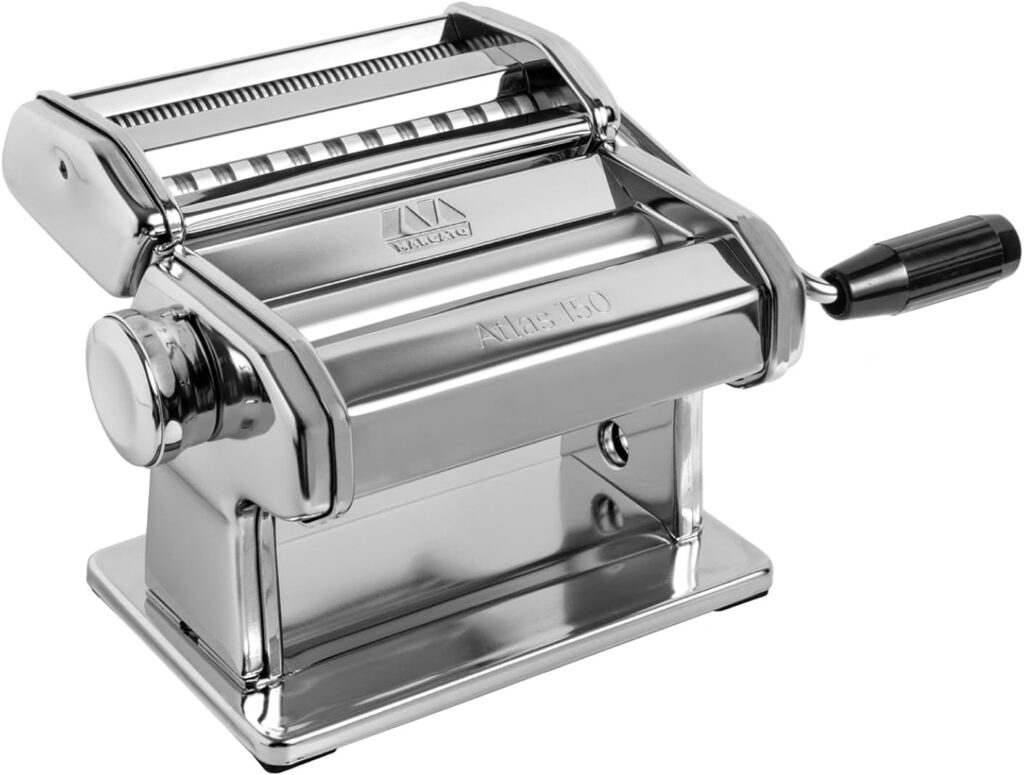
Flour a sheet pan to receive the noodles. Using a hand-cranked pasta machine, roll out the dough to your desired thickness. My pasta machine goes to setting number 6. I stop at setting 5. Then use the machine’s linguine cutter to cut the pasta into noodles. Dust with flour on the sheet pan to prevent sticking. These steps are no different from making pasta from scratch.
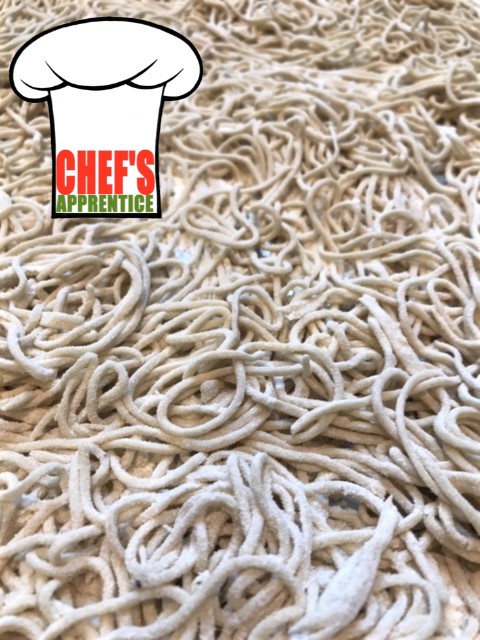
Here are my ramen noodles.
Cooking and Serving
Bring a large pot of water to a boil. Drop in the noodles, and cook for 1 to 1 1/2 minutes. Then pour the noodles and cooking water through a fine mesh strainer into another pot. This is important because the noodles are slippery and may slip through the holes in a normal pasta colander. The strainer catches the noodles and the pot catches the water for reheating he noodles. Run the noodles under cold water to stop the cooking and heat the pot of water.
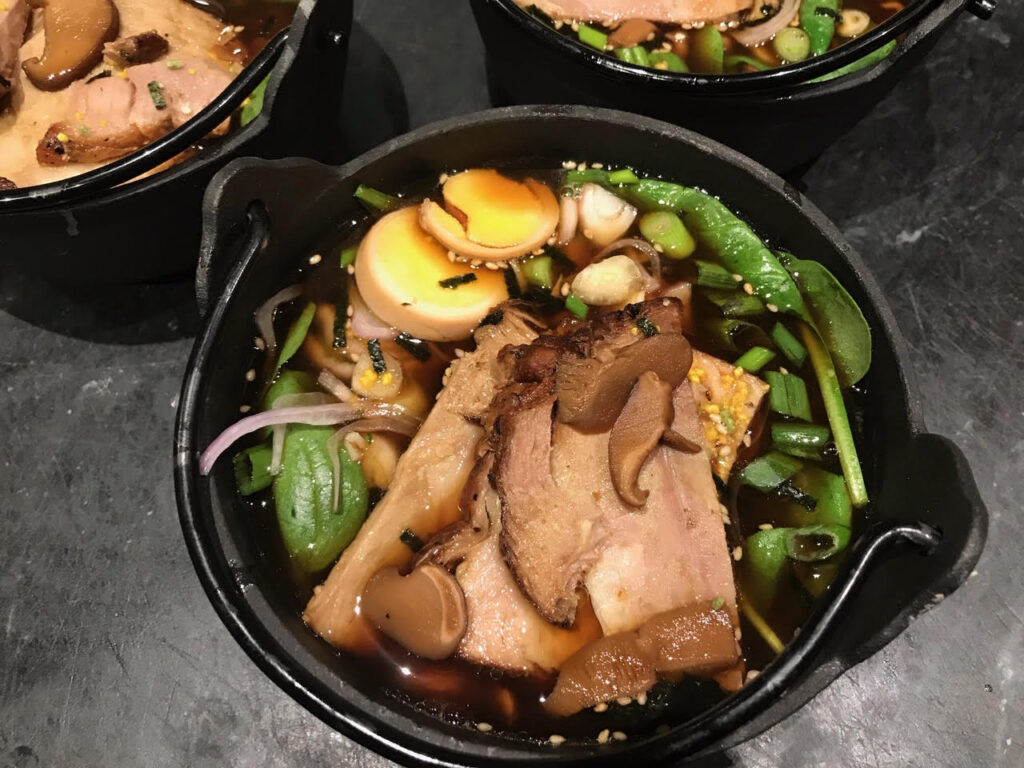
When you are ready to serve, plunge the noodles into the pot of water to warm them. Then empty them into the strainer and serve immediately with broth and your favorite ingredients, like Chasu pork, eggs, and vegetables. See my videos on making Chasu pork, Chasu Chicken, ramen broth, my Anybones broth, and vegetables and assembly.
My finished ramen.
Tips and Troubleshooting
Achieving Perfect Noodle Texture
The key is to get the dough consistency right—firm but not dry. If the noodles are too sticky, dust with a little more flour. If they’re too brittle, add a tiny bit of water and knead again.
Storage and Preservation
Fresh noodles are best enjoyed within 24 hours. I have not had good luck freezing them.
Conclusion
Making ramen noodles from scratch can be both fun and rewarding. Using baked baking soda or kansui is essential for authentic texture, color, and flavor. Don’t shy away from experimenting with these alkaline agents—you’ll get closer to the real deal with each batch. Remember, mastering homemade ramen takes practice, so keep trying and adjusting your technique. Share your results, learn from others, and enjoy the delicious journey of crafting your own ramen noodles at home!
Disclosure: As an Amazon Associate I earn from qualifying purchases. If you buy from a link on this site, I may earn a small commission from the vendor without any additional cost to you. No company pays me to say anything in particular, or to say nice things. I only stand behind products I believe in.
Ingredients
- About ½ cup baking soda, of which you will need 4 tsp. for this recipe OR 2 1/2 Tb. kansui
- 3 cups flour
Step-By-Step
Serves 8
Preparation time:
- 1. Bake ½ cup baking soda at 250 F for 1 hour.
- 2. To make noodles:
- a. Mix 4 tsp. baked soda and ½ cup warm water.
- b. Add ½ cup cold water. (If using kansui instead of baked soda, mix 2 1/2 Tb. Kansui with enough water to make 1 cup).
- c. Pour baked soda water OR kansui water into 3 cups flour.
- d. Mix to make a rough crumbly dough (it won’t get smooth).
- e. Work the dough on work surface until it starts to come together.
- f. Knead, roll, & push dough for about 5 minutes.
- g. Wrap in plastic and rest at room temp about 20 minutes.
- h. Unwrap, then knead, roll, & push dough for about 5 more minutes.
- i. Wrap in plastic and rest in fridge for 1 hour.
- j. Unwrap, then cut into 3 pieces. Wrap two pieces for later use.
- k. Flour a sheet pan and work surface.
- l. Run 1 piece of dough through pasta machine to desired thickness (I stop at no. 5 on a machine that goes to 6).
- m. Cut with linguine cutter.
- n. Toss generously in flour.
- o. Heat water to boil and cook 1 to 1 ½ minutes.
- p. Pour noodles and cooking water through strainer into another pot (noodles may slip thru a normal pasta colander).
- q. Run noodles under cold water to stop cooking.
- r. Put pot back on stove on low heat.
- s. Plunge noodles into water to warm.
- t. Strain and plate up with broth, protein of choice, and vegetables of choice.