John Hornick — Chef’s Apprentice
Osaka is Famous For Yakiniku and Takoyaki
Osaka is famous for Yakiniku (grill-it-yourself beef, like Korean barbecue) and Takoyaki (grilled dough balls with octopus filling). Sake is Japan’s national drink. If you want a quintessential Osaka food and sake experience and have only two nights in this great Japanese city, this is your guide to a budget-friendly authentic Yakiniku, Takoyaki, and sake experience.
Getting to Osaka and Staying There
I jumped at the chance to go to Japan to obtain my Sake Professional Level 2 certification. I used United points to fly to Tokyo (after many trips, I believe United or ANA, its partner, are the best ways to get there). Check out my post “Chef’s Apprentice Gourmet Guide: Three Nights in Ginza, Tokyo.”
After a week in Tokyo, I traveled to Osaka to spend a week as an intern at the Daimon sake brewery just outside the city. I arrived in Osaka two days before I was scheduled to report to Daimon, so I used Marriott points to stay at the Marriott Courtyard Shin-Osaka, which is a very short walk from the Shin Osaka Shinkansen (bullet) train station.
To book your trip to Japan, or anywhere, use this Expedia box:
If you have slightly fewer points than you need, you can buy enough to get you the free trip you need from either United or Marriott.

If you want to obtain a Sake Professional Certification either online or in Japan, contact John Gauntner at sakeguy0494@gmail.com and mention my CHEF’S APPRENTICE promo code for a 10% discount.
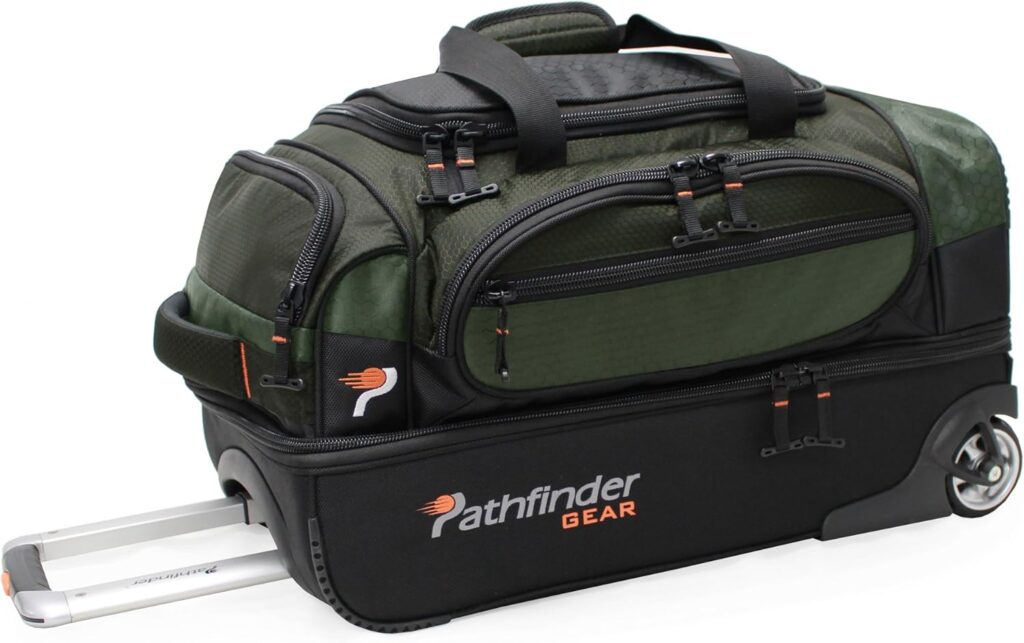
We travel with only one bag and a backpack each. I have been using this Pathfinder bag for many years. It has a large compartment with top or bottom access, and a nylon panel can be unzipped to combine the soft upper compartment and the rigid lower. The whole bag is heavy duty, including the retractable handle and wheels, as proven by the fact that I have been using it for well over five years, it still looks new despite having been in many, many overhead luggage compartments, and Sarah just bought one because mine has served me so well for so long. What I like most about it is the pockets. I love pockets and it has many pockets both inside and out.
What is Yakiniku?
“Yaki” means grilled or cooked in Japanese, and “niku” means meat. But the restaurant doesn’t do the cooking. In every Yakiniku joint I’ve seen in Japan, the restaurant provides a plate of uncooked meat and a burner of some sort, and the guests grill it to their liking. The burner may be small butane stove or a charcoal grill.
These places are always casual, usually inexpensive (by Japans standards — everything seems to be more expensive in Japan than in the U.S.), and filled with groups of friends or families cooking and eating together, and having a great time.
The restaurants and bars in this post are local joints, not tourist traps.

Yakiniku Daikokuya
A Google Maps search took me to this fun little Yakiniku joint walking distance from Shin-Osaka station. I was dining alone so they made me a half order of the combo plate (a full order would have been too much for even me).
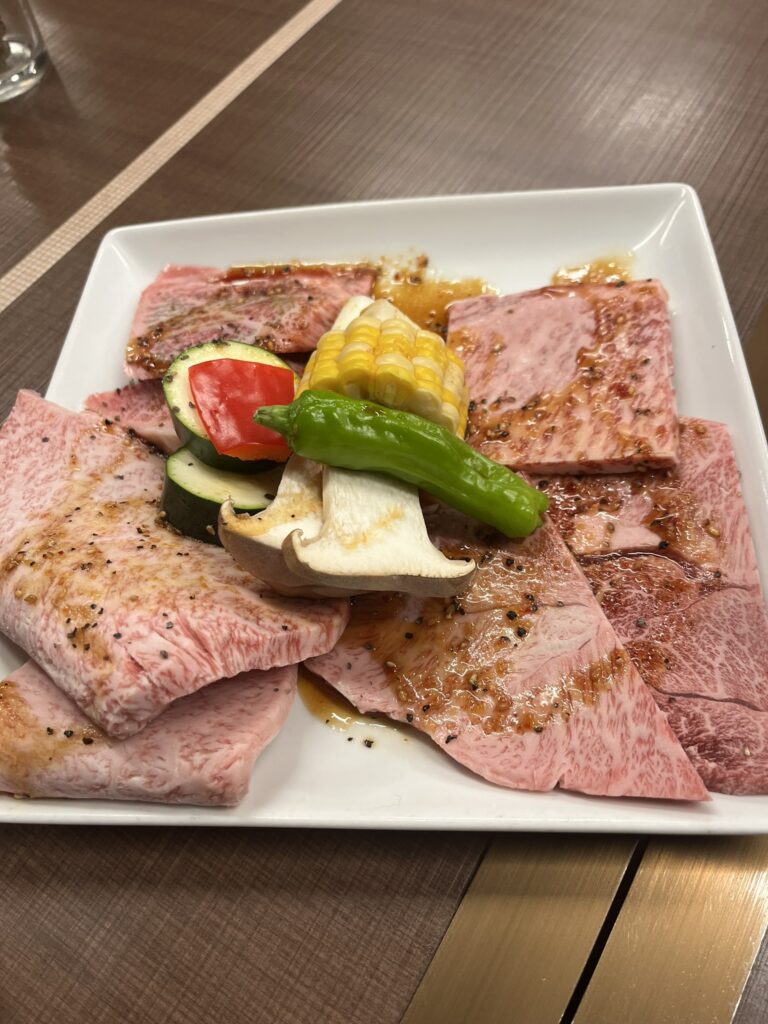
The Wagyu beef was beautiful and highly marbled. And there was so much of it! And this was a half order! The beauty and taste of the beef confirmed my theory (see my Chef’s Apprentice YouTube video on Wagyu) that the best of the best Wagyu stays in Japan and is not exported to the U.S.
I started grilling with a big piece of beef.
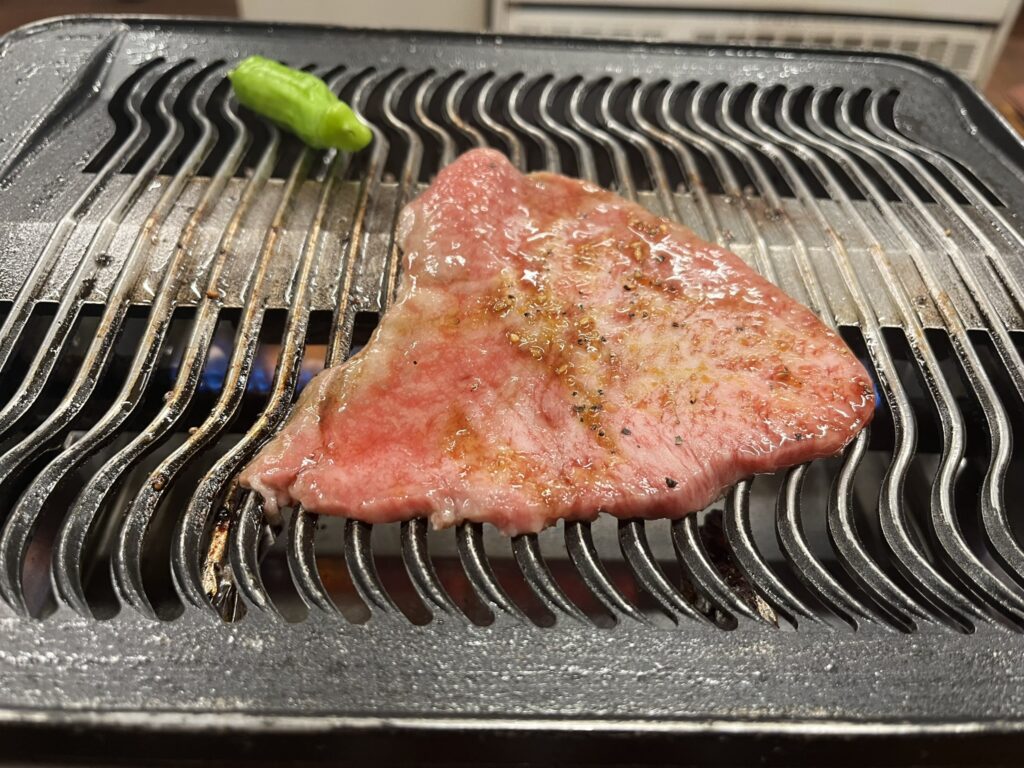
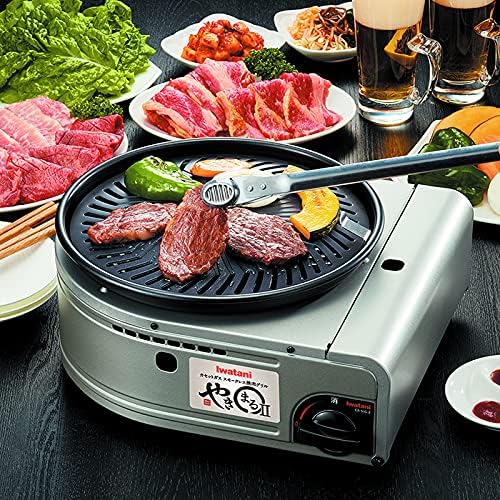
The Yakiniku burner at this restaurant was butane powered. Some people like the charcoal type better, but the advantage of butane is that it provides a constant flame, unlike charcoal, which may need to be stoked or refreshed.
I grilled my way through the platter of beef and veggies, loving every bite.
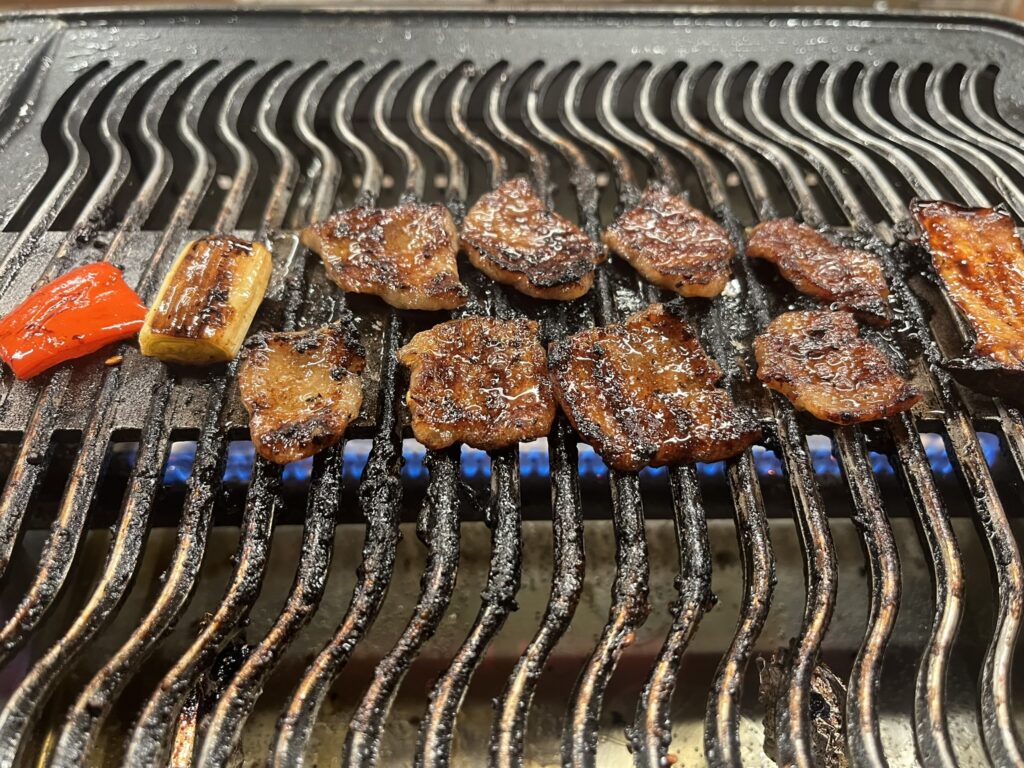
I dipped the grilled beef into Yakiniku Sauce, which is easy to make.
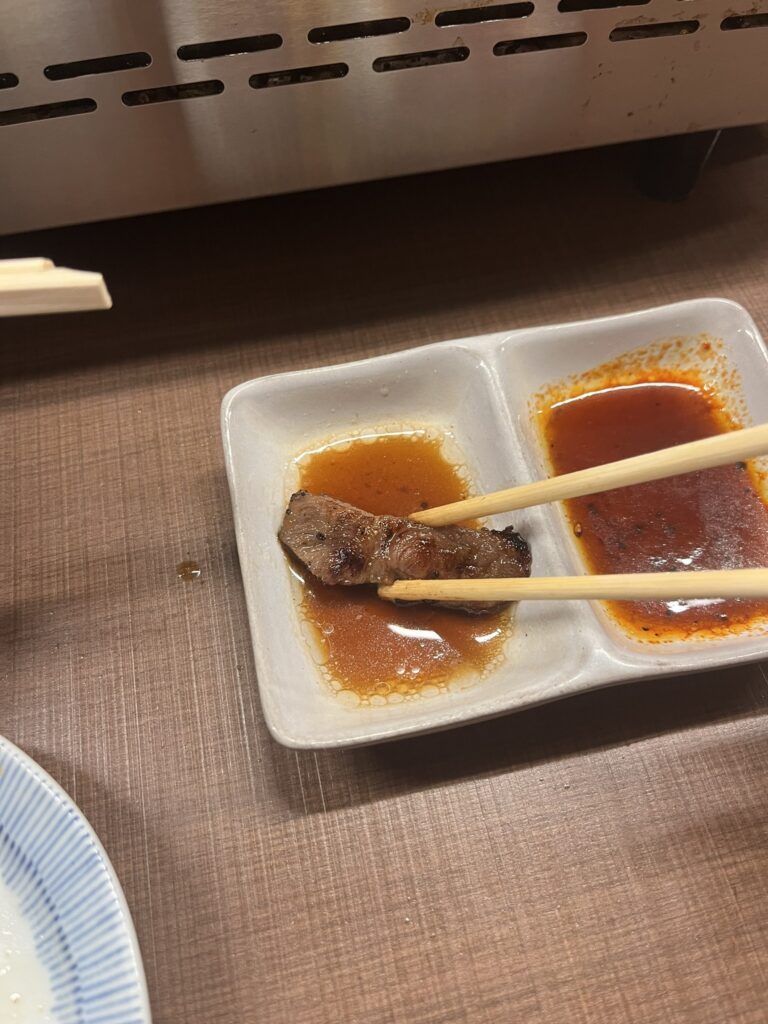
I thoroughly enjoyed my dinner and immediately bought Yakiniku grills when I got home, like the ones in the restaurant. See the photo at the bottom of this post.
My total bill with two beers was about $40. I was shocked at how inexpensive this restaurant was, partly because I was in Japan, partly because the beef was so beautifully marbled, and partly because the portion size was so generous.
Sake at Izakaya Murasaki Shin-Osaka
I read somewhere (Sake Today magazine?) that this is a good sake bar, so I came for sake and didn’t order food. I’d just finished a Yakiniku dinner at the nearby Yakiniku Daikokuya. From my seat at the low counter, I could see a great sake selection.
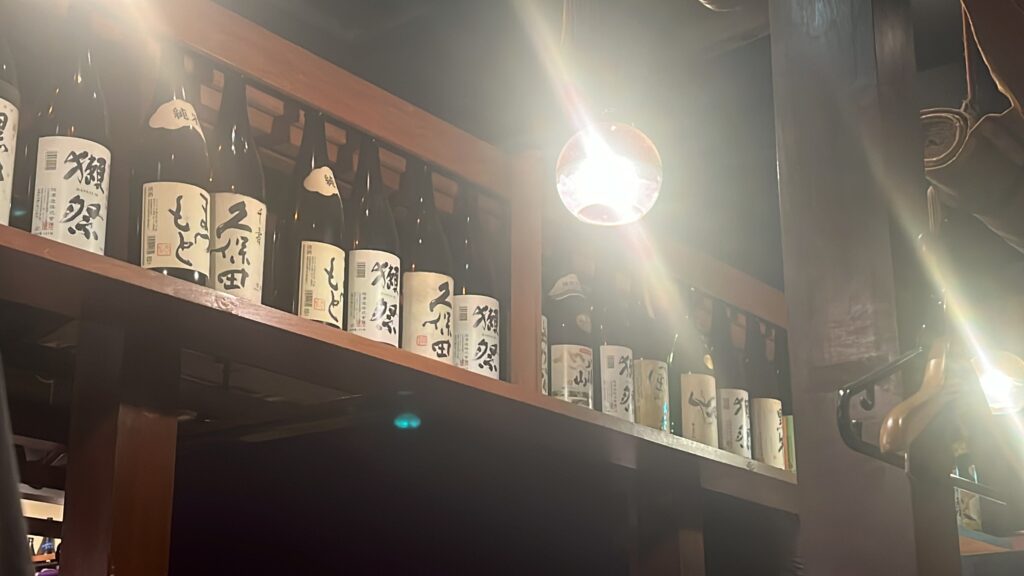
I was sipping sake while sitting at the counter watching the cooks on the hot line. The food looked and smelled really good. I was tempted to have a second dinner, but that may have been the sake talking.
I was enjoying my 300 ml Shochikubai nama (“nama” means unpastuerized (it was changing as it warmed, in a good way), catching up on Google reviews, eavesdropping on two guys at the other end of the counter discussing sake (I don’t speak much Japanese but I heard a lot of sake words), and vicariously partying with a lot of people talking and laughing in the izakaya’s (pub’s) many semi-private dining/drinking areas.
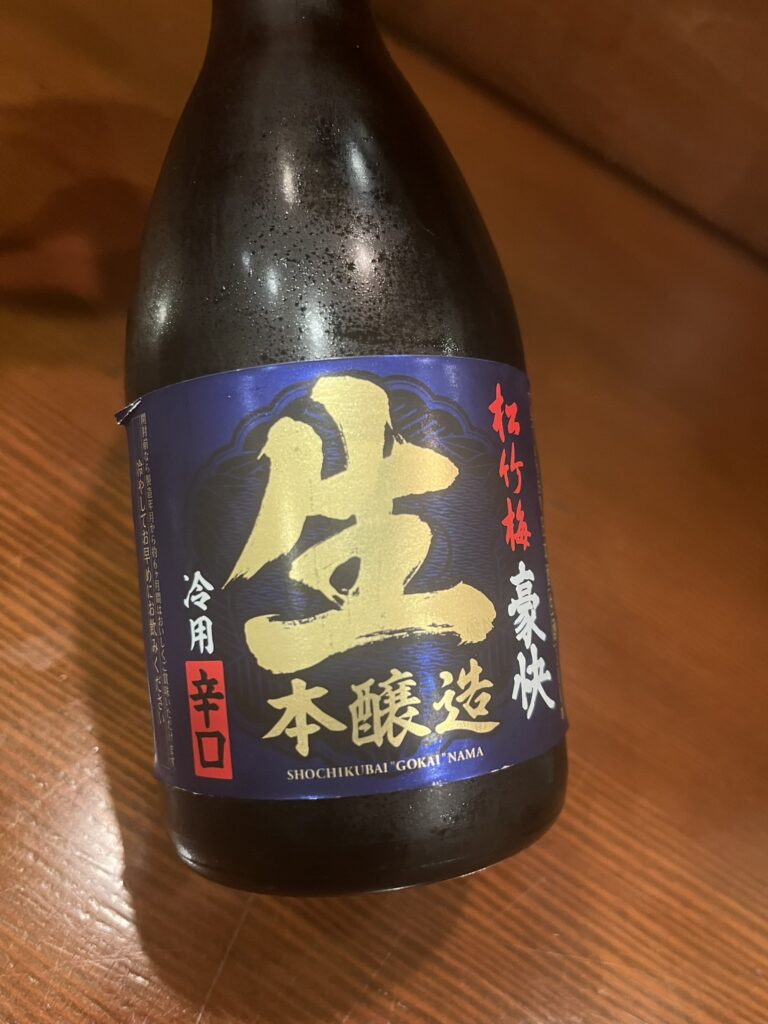
This iza was walking distance from Shin-Osaka station and my hotel. Next time I’m in Osaka, I’ll be sure to come back for more sake and to try the food.
Check out my video on ordering sake in a restaurant or buying it in a store. For some excellent sake choices here at home, check out my curated list at Tippsy Sake and use my “CHEFSAPPRENTICE” code for a discount at checkout.
Takoyaki on the Street in Osaka
I was free the next day so I took a taxi to Sennichimae Doguyasuji Shotengai, also known as “Kitchenware Street”, where the shops along the covered arcade specialize in every conceivable type of Japanese kitchen gear, for use at home or in restaurants. It’s a cooks paradise, my candy store.
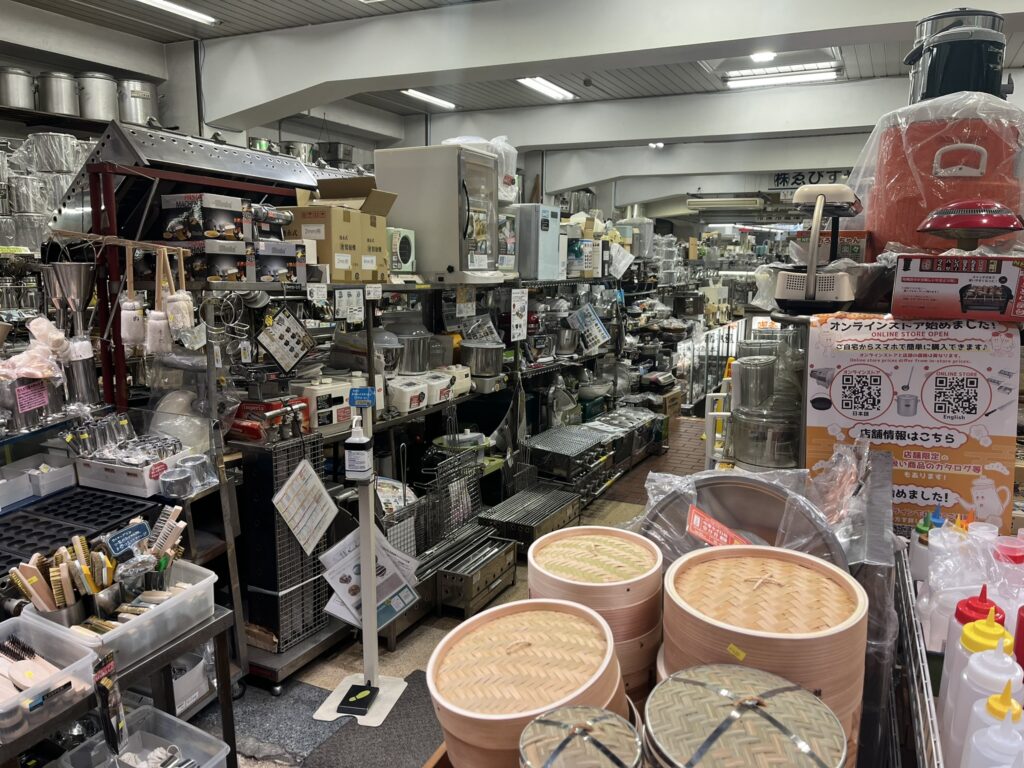
Just beyond the cooking equipment shops I found a few street stands making Takoyaki, which are grilled dough balls with a filling of octopus pieces.
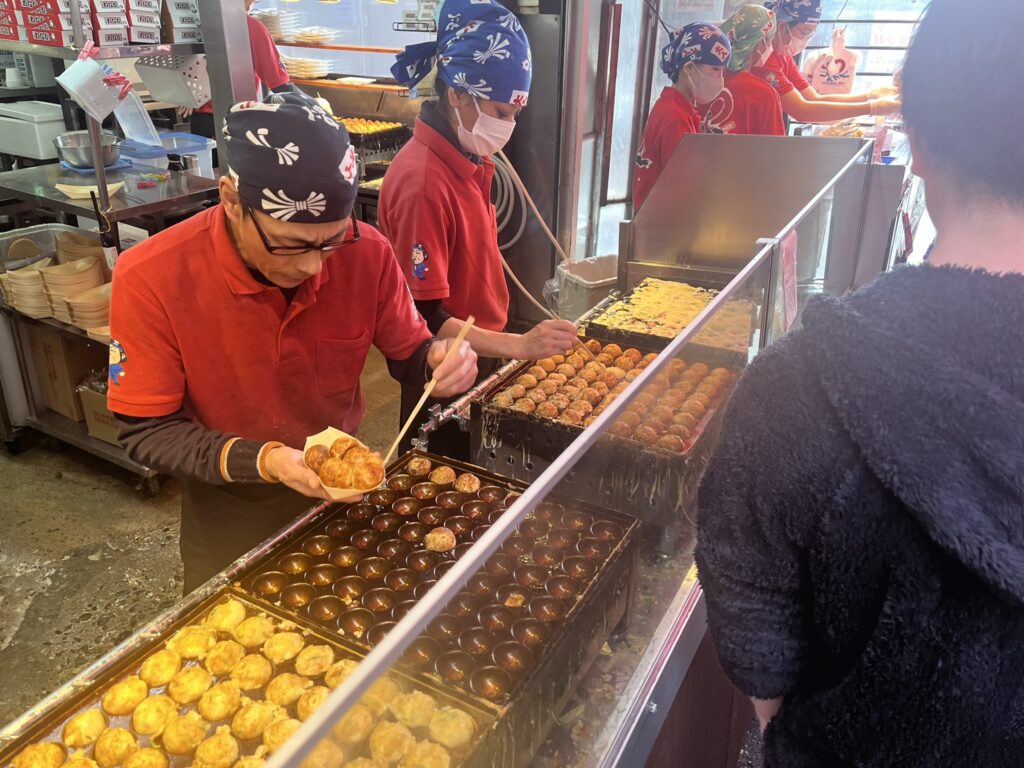
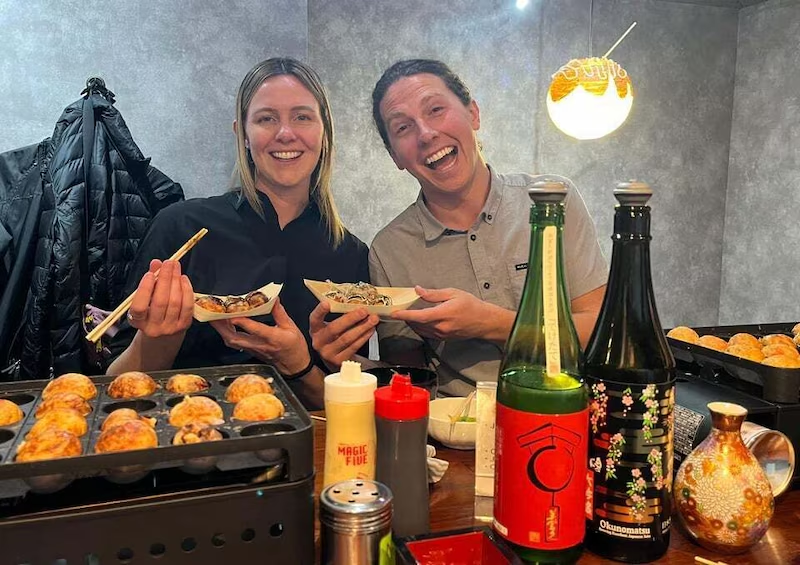
A typical order is only a few hundred Yen and is served in a paper tray with Takoyaki Sauce, mayonnaise, and chopsticks. These little octopus-filled dough balls are very tasty and very filling.
Check out my video Takoyaki Being Made On Osaka Street. Also, check out this video if you want to make Takoyaki at home.
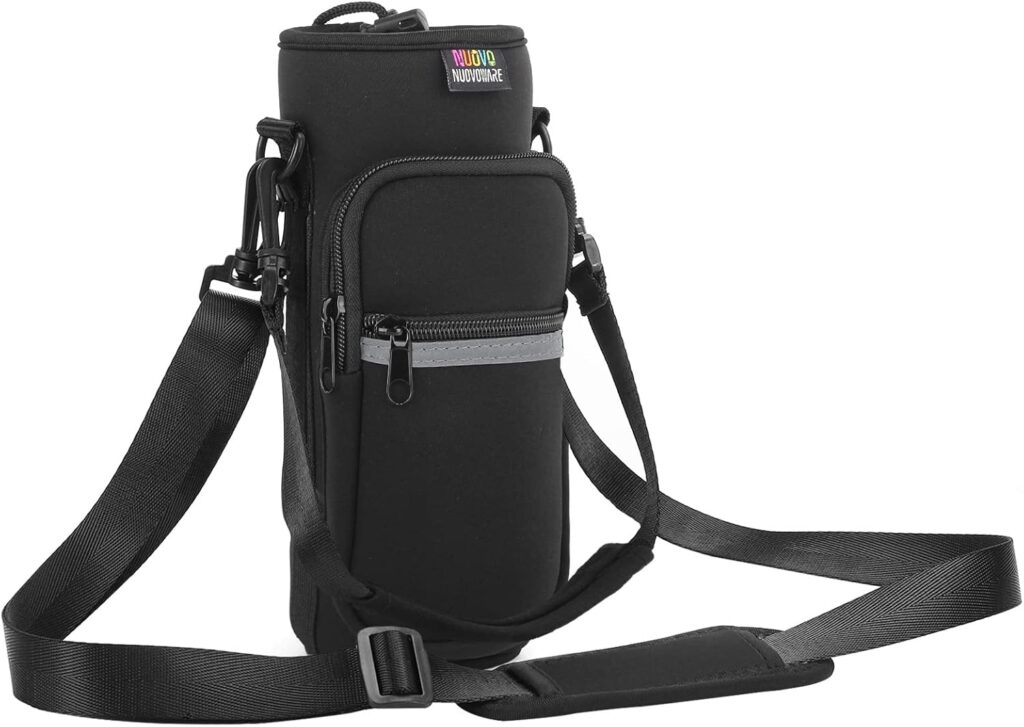
It seems like everyone carries a water bottle these days. I knew having one would be important for walking around in Osaka. Sarah found this great neoprene bottle carrier, which either slips over the shoulder or can be carried by a handle. It also has two zippered pouches.
Yamanaka Sake-no-Mise
I didn’t have much free time while interning at the Daimon sake brewery, but there were a couple of free nights. So my co-interns and I (Aart and Dave, whom I’m certain will be great sake makers someday) hopped a local train into Osaka, hunting for a good sake bar and Yakiniku for dinner.
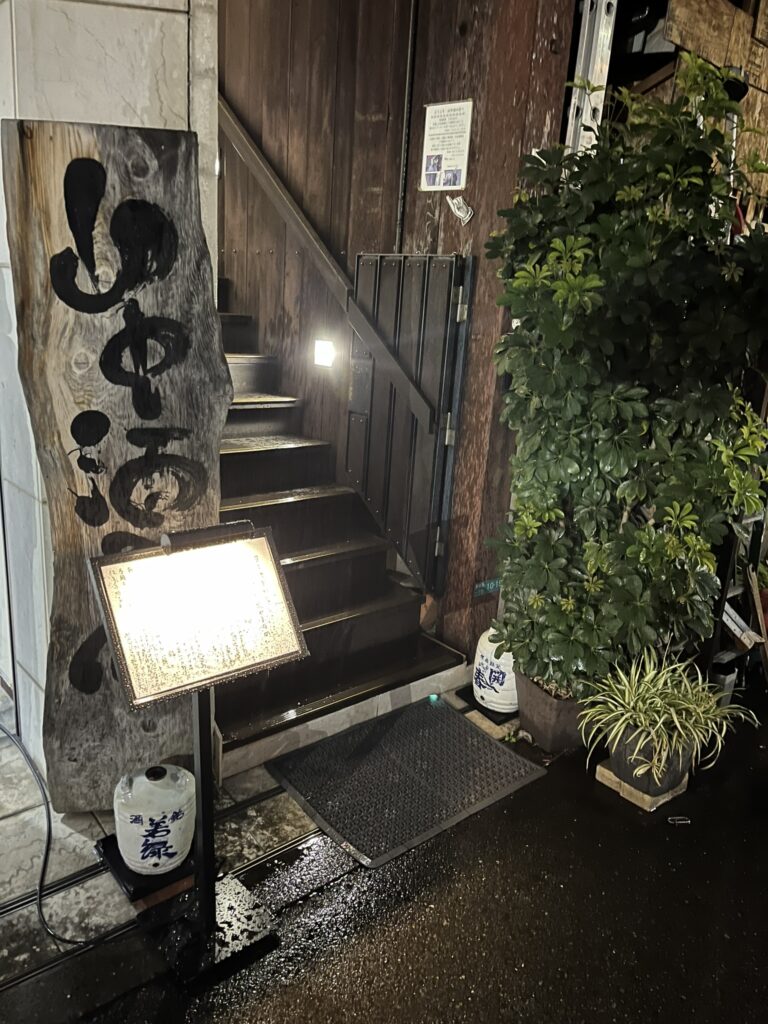
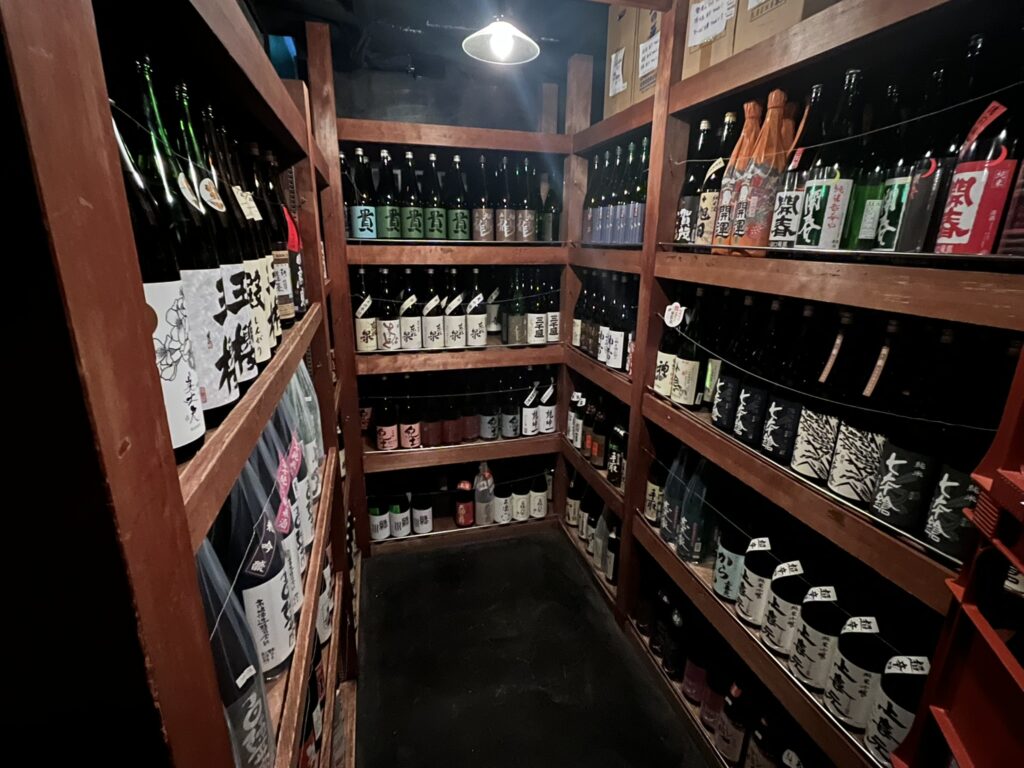
Aart or Dave had heard of this second floor place, which was both a sake bottle shop and bar.
The bar had a tasting dispenser operated by tokens.
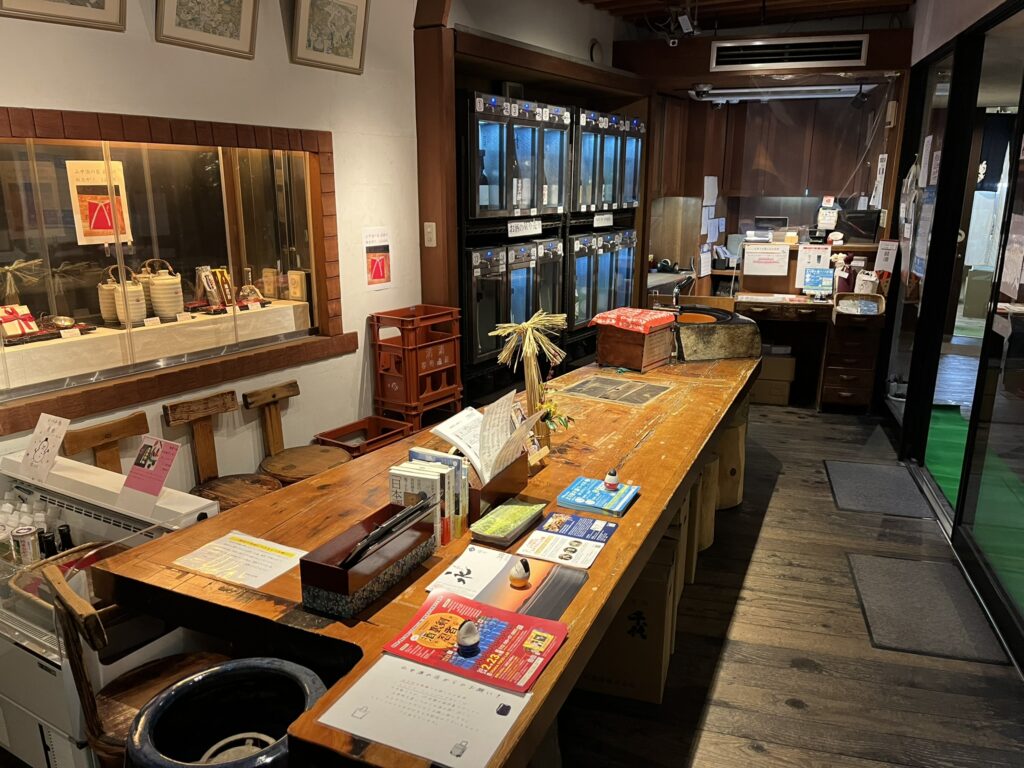
For a few hundred Yen, we bought tokens and tasted many of the sakes in the dispenser.
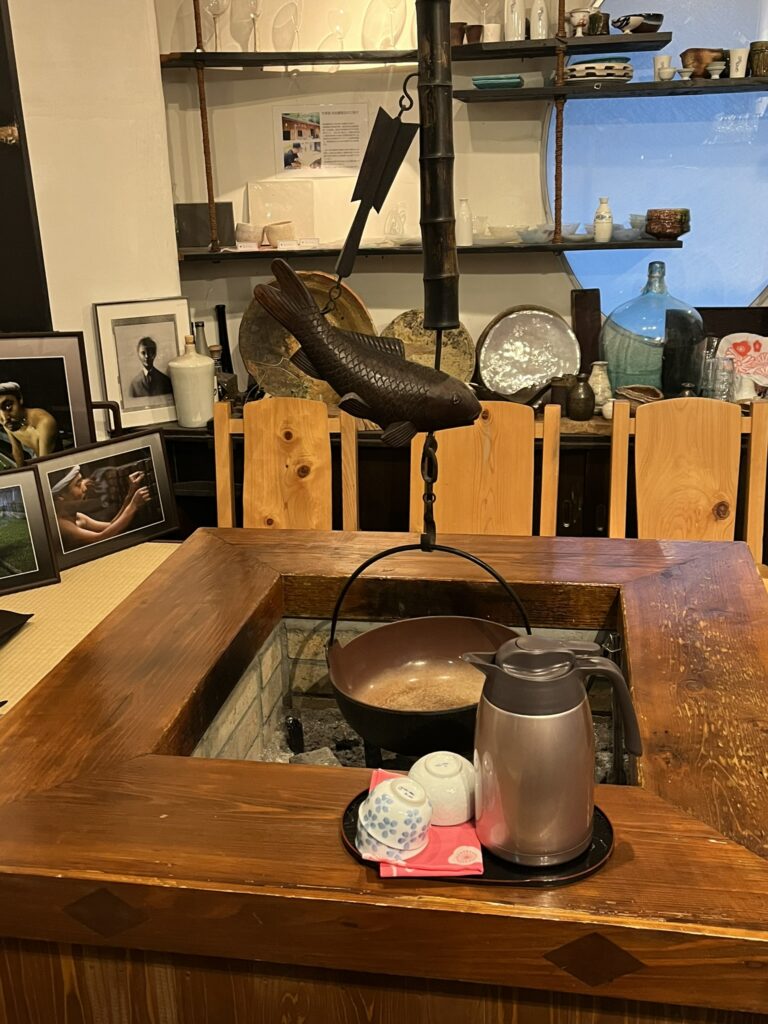
The atmosphere was everything I’d hoped for in an Osaka sake bar on a cold February night: an intimate setting with lots of wood, a warming fire and kettle of soup, Japanese antique knick-knacks, and plenty of sake.

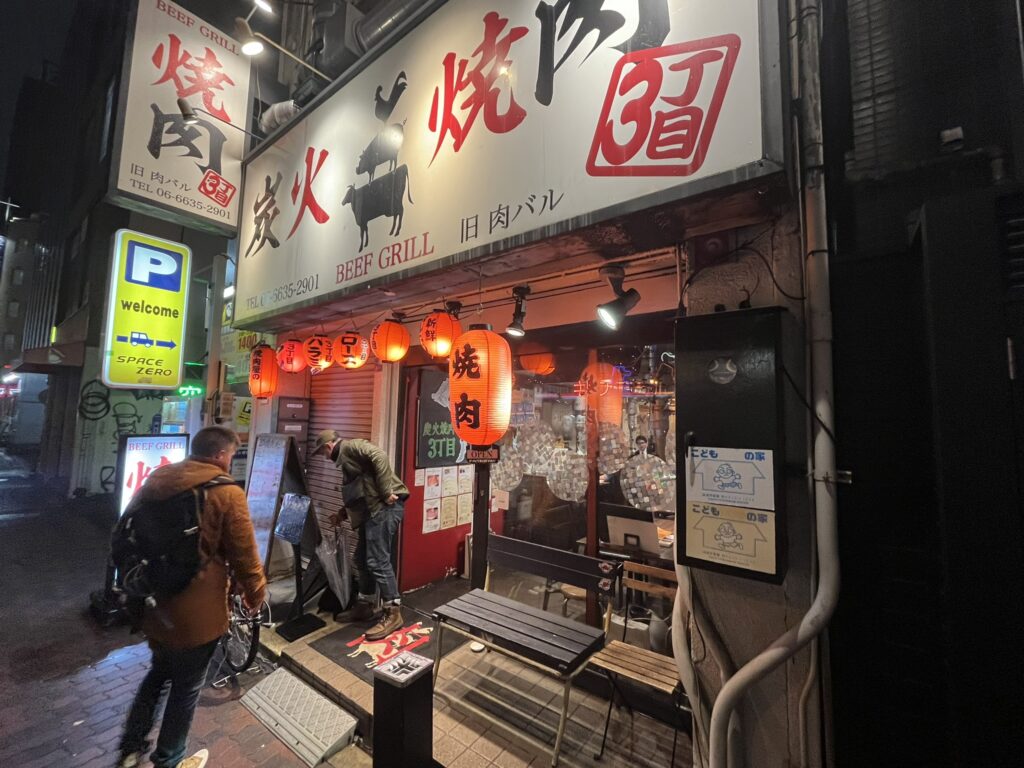
Sumibi-Yakiniku Niku-bal-sanchome
After we were well lubricated with several small cups of delicious sake, we somehow found this Yakiniku place.
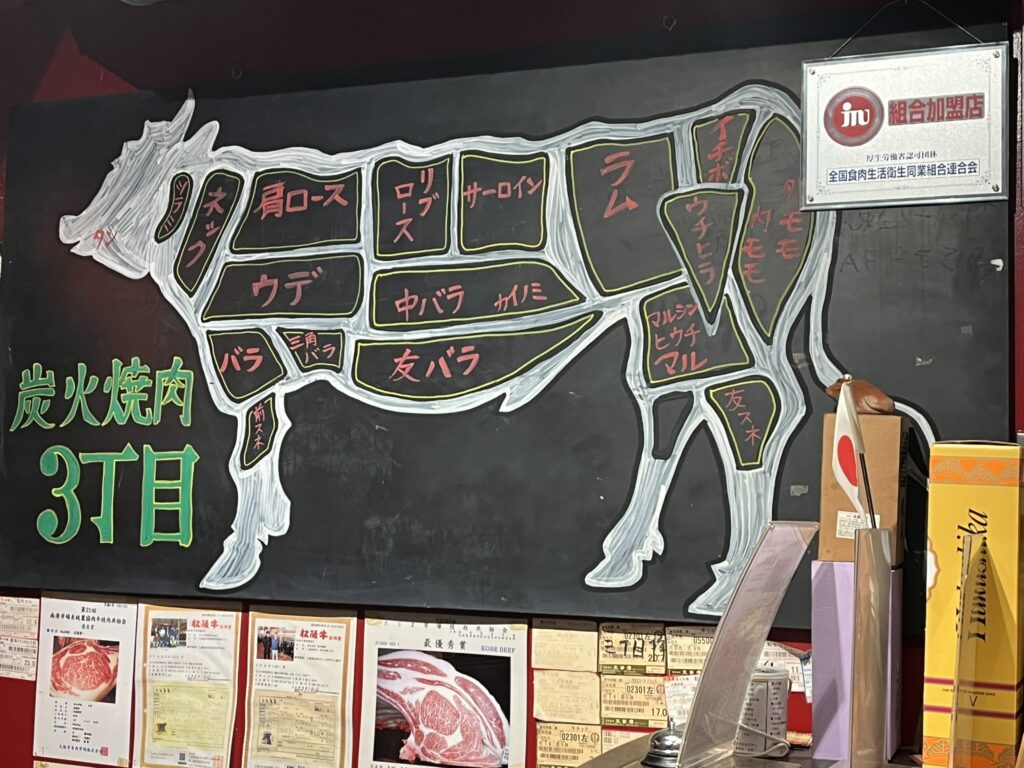
The wall offered a Wagyu map.
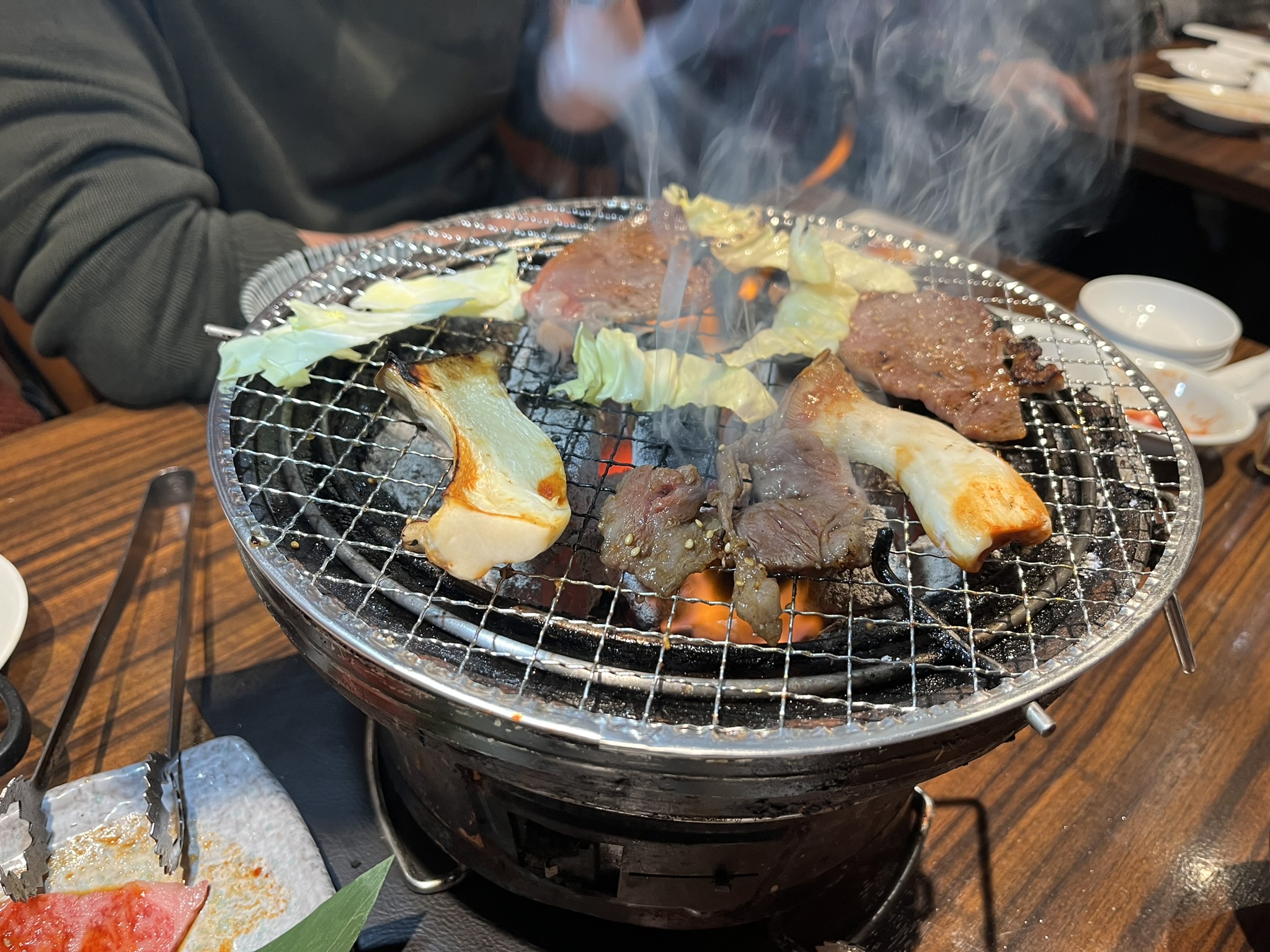
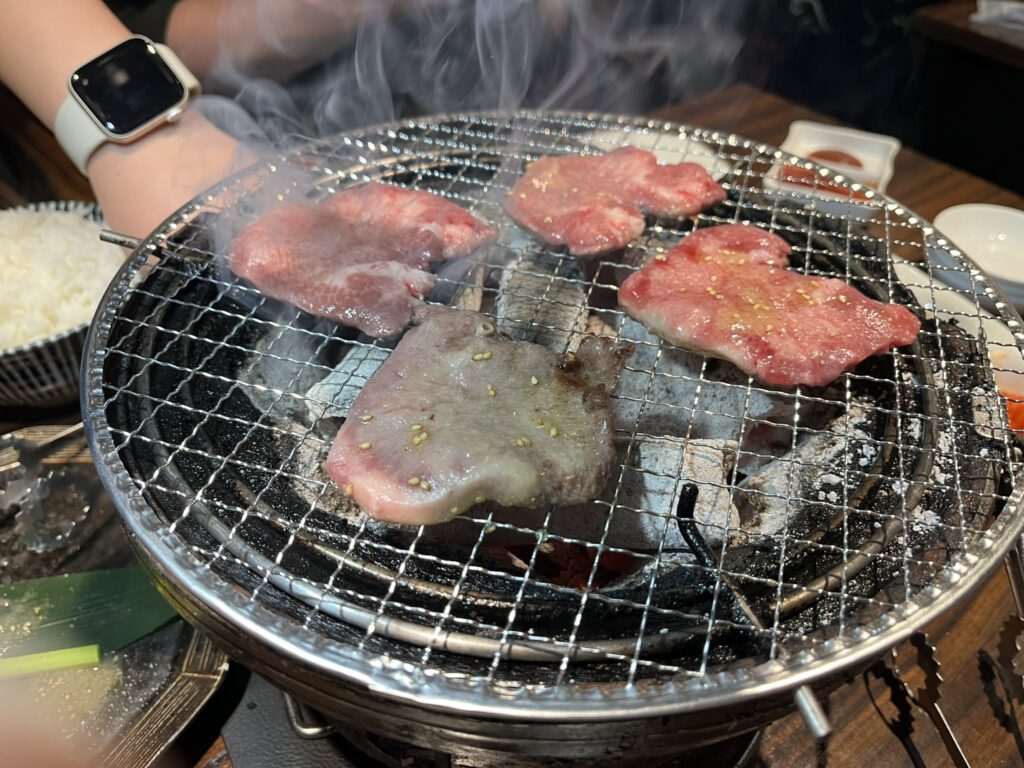
This was a charcoal-burner style Yakiniku joint. We gathered around the burner and grilled our beef.
Again, this place was very reasonably priced, by both U.S. standards and Japanese standards. Sumibi-Yakiniku Niku-bal-sanchome was a great time with great food and friendship.
Conclusion
After I got home from my trip, I couldn’t wait to make Yakiniku. I made this video, Yakiniku in Osaka and at Home and Yakiniku Night. I later made another video, Dueling Yakiniku: American Wagyu v Prime NY Strip. Check them out and check out these restaurants and bars if you have a couple of free nights in Osaka and want an authentic, inexpensive experience.
Disclosure: As an Amazon Associate I earn from qualifying purchases. If you buy from a link on this site, I may earn a small commission from the vendor without any additional cost to you. No company pays me to say anything in particular, or to say nice things. I only stand behind products I believe in.