John Hornick — Chef’s Apprentice
If you have three nights in Tokyo, want unique, top-quality Japanese food, sake, and wine, and budget is not an issue, this is your guide to a first-class gourmet experience.
Getting to Japan and Staying There
I jumped at the chance to go to Tokyo to obtain my Sake Professional Level 2 certification. I used United points to fly to Japan (after many trips, I believe United or ANA, its partner, are the best ways to get there) and Marriott points to stay at the Marriott Aloft Tokyo Ginza. This is a very nice business hotel within walking distance of anyplace in Ginza. Ginza is a district known for upscale shopping and restaurants. Traveling on points is the reason that budget was not an issue for my food and wine experiences.
To book your trip to Japan, or anywhere, use this Expedia box:
If you have slightly fewer points than you need, you can buy enough to get you the free trip you need from either United or Marriott.

If you want to obtain a Sake Professional Certification either online or in Japan, contact John Gauntner at sakeguy0494@gmail.com and mention my CHEF’S APPRENTICE promo code for a 10% discount.
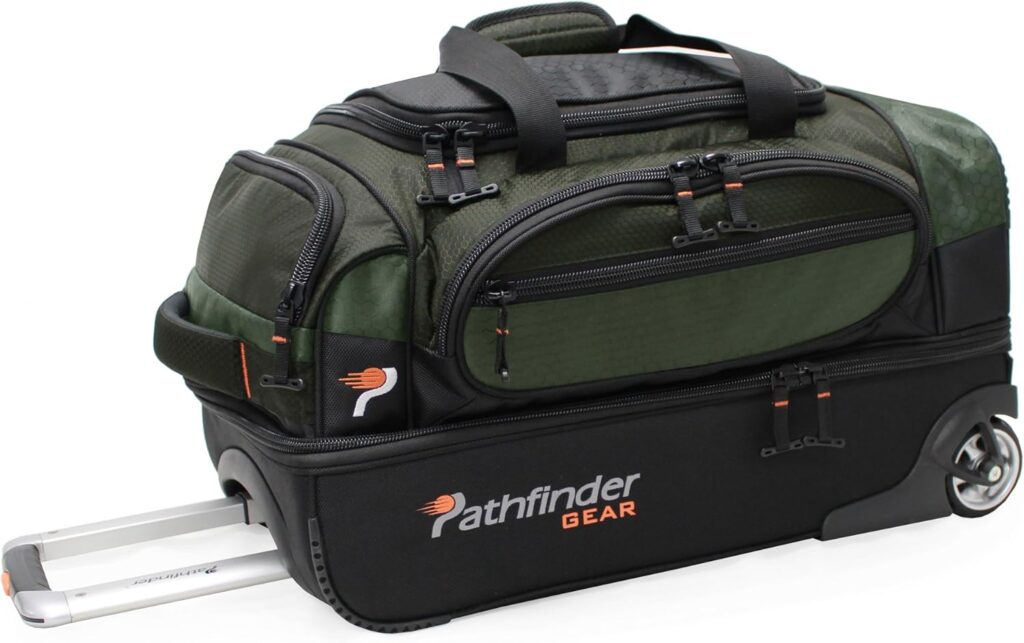
We travel with only one bag and a backpack each. I have been using this Pathfinder bag for many years. It has a large compartment with top or bottom access, and a nylon panel can be unzipped to combine the soft upper compartment and the rigid lower. The whole bag is heavy duty, including the retractable handle and wheels, as proven by the fact that I have been using it for well over five years, it still looks new despite having been in many, many overhead luggage compartments, and Sarah just bought one because mine has served me so well for so long. What I like most about it is the pockets. I love pockets and it has many pockets both inside and out.

Night 1
Wolfgang’s Teppan
What is Teppanyaki?
A teppan is a flat-topped grill and “yaki” means cooked or grilled in Japanese. So teppanyaki is food grilled on a flat-top, which is usually surrounded on three sides by seats for the dinner guests. The cooking is done by a chef dedicated to your teppan grill.
There are many teppanyaki restaurants in the U.S. However, teppanyaki in Japan is very different from teppanyaki in the U.S. Here, teppanyaki chefs cook everything at once, toss knives in the air and eggs in their toques, and present you with one big plate of so-so food. It’s fast and inexpensive. Japanese teppanyaki is a slow, refined evening of several perfect, beautiful small dishes, a tuxedoed waiter (or several), and no throwing of weapons or food. Typically, it is also very expensive, at prices that would shock most Americans.
Also, most of the male guests will be in suit and tie and the women will be very well dressed. I suggest wearing a collared shirt and sport jacket, if not a tie too.
Where to Find Teppanyaki
The easiest place to find teppanyaki is in big hotels, often on an upper floor. But you can also find teppanyaki outside of hotels. The very helpful staff at the front desk of my hotel recommended Wolfgang’s Teppan, which was only a short walk from the hotel. It was located on the 7th floor of a building dedicated to restaurants. By the way, this is common in Tokyo: restaurants may be located on any floor of any building.
Wolfgang’s Teppan Was a Great Choice
Before this trip I had not dined at Wolfgang’s Teppan in Ginza, but I knew the style to expect, the address gave me confidence, and entering the elegant restaurant confirmed that I had make an excellent choice. I was not bothered by the fact that the owner was not Japanese because the owner, Wolfgang Zwiener, was once the head waiter at the famous Peter Luger’s Steakhouse in New York, so I knew that he knows what he’s doing. Also the actual chef who stands in front of you and cooks your food is always Japanese. I also have a lot of Japanese teppanyaki experience, so I could tell it would be good.
Sake is Always a Great Way to Start
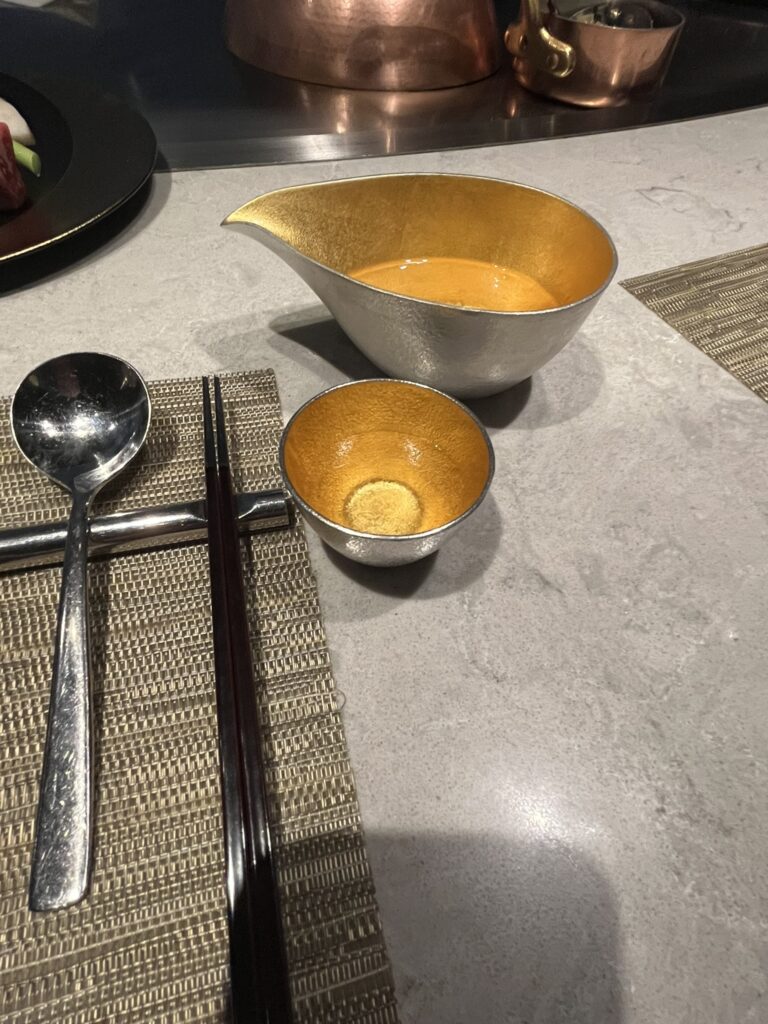
I was dining alone so I could focus on the food and thoroughly enjoy the experience. I started with sake, of which they had limited (but good) choices, elegantly served. My table had a nice window view, so I sipped my Tokubetsu Junmai sake and looked out the window onto the Ginza’s main drag.
Even though Japan is the home of sake, it’s common for restaurants to offer only a few sake choices. For some excellent sake choices here at home, check out my curated list at Tippsy Sake and use my “CHEFSAPPRENTICE” code for a discount at checkout.
The Menu
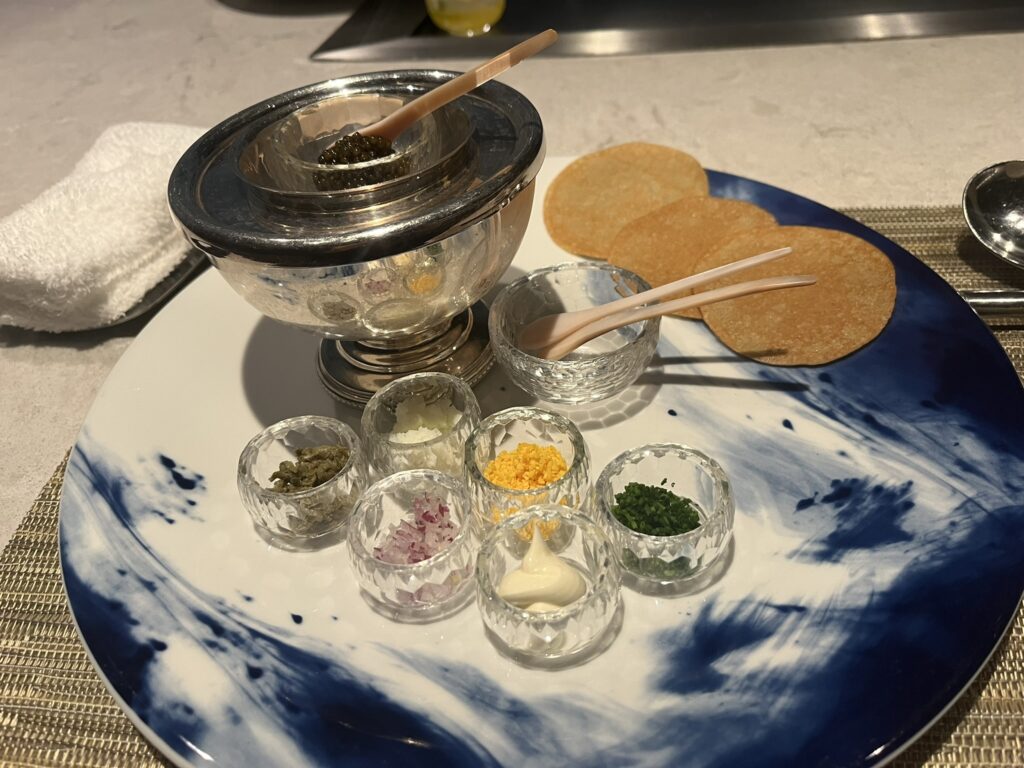
Teppanyaki restaurants typically offer several multi-course set menus, as well as a la carte dishes. I chose a set menu that included both seafood and beef. The menu began with caviar, which was served with all the fixings common in the West: red onion, capers, chopped egg, etc. The chef cooked the perfect blinis fresh on the teppan grill.
My menu included a fish, red snapper, and lobster.
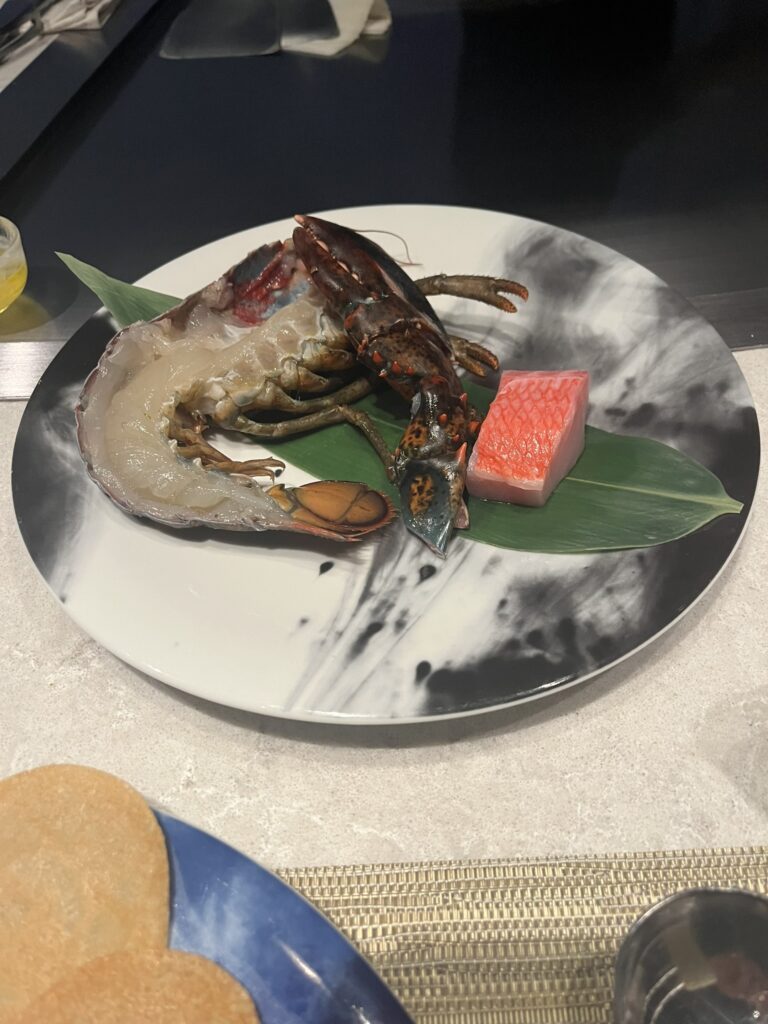
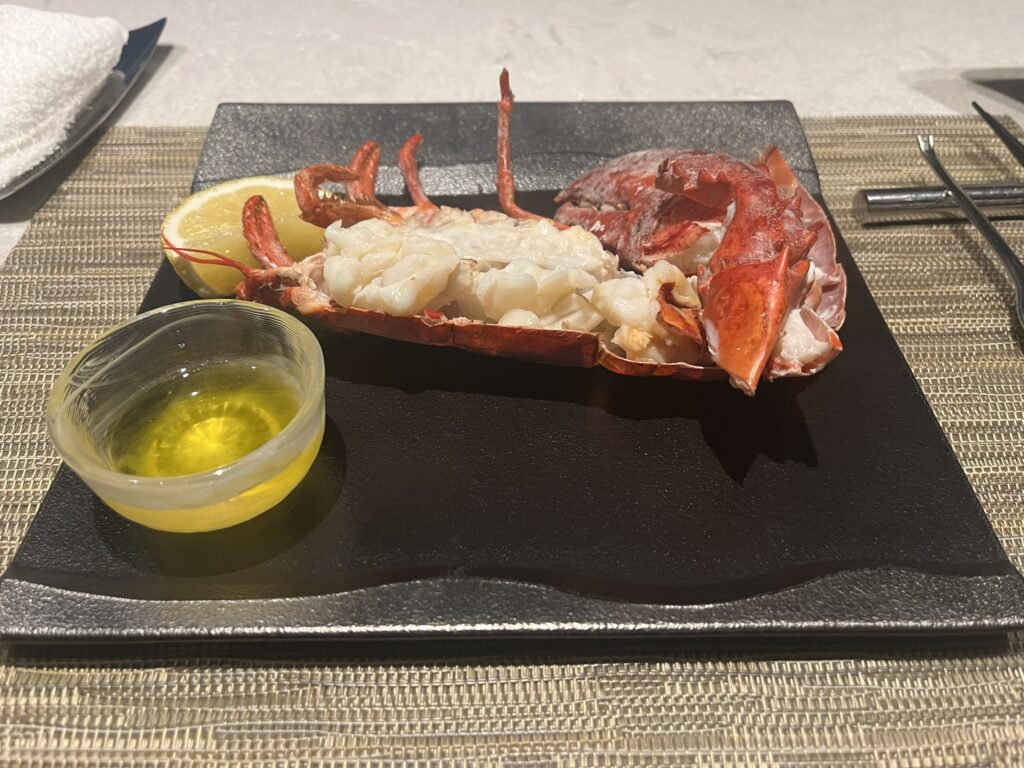
The chef first grilled the lobster meat, cut it into bite-sized pieces, and returned it to the shell.
After several more excellent small dishes, one of which was a unique and very tasty grilled salad, the meal arrived at the main event: beautifully marbled Wagyu Beef. I switched to red Bordeaux (not my favorite wine, but high-end Japanese restaurants stock mostly high-end French wine) as the beef approached. Wolfgang’s Teppan is a Wine Spectator “Best of Award of Excellence” winner.
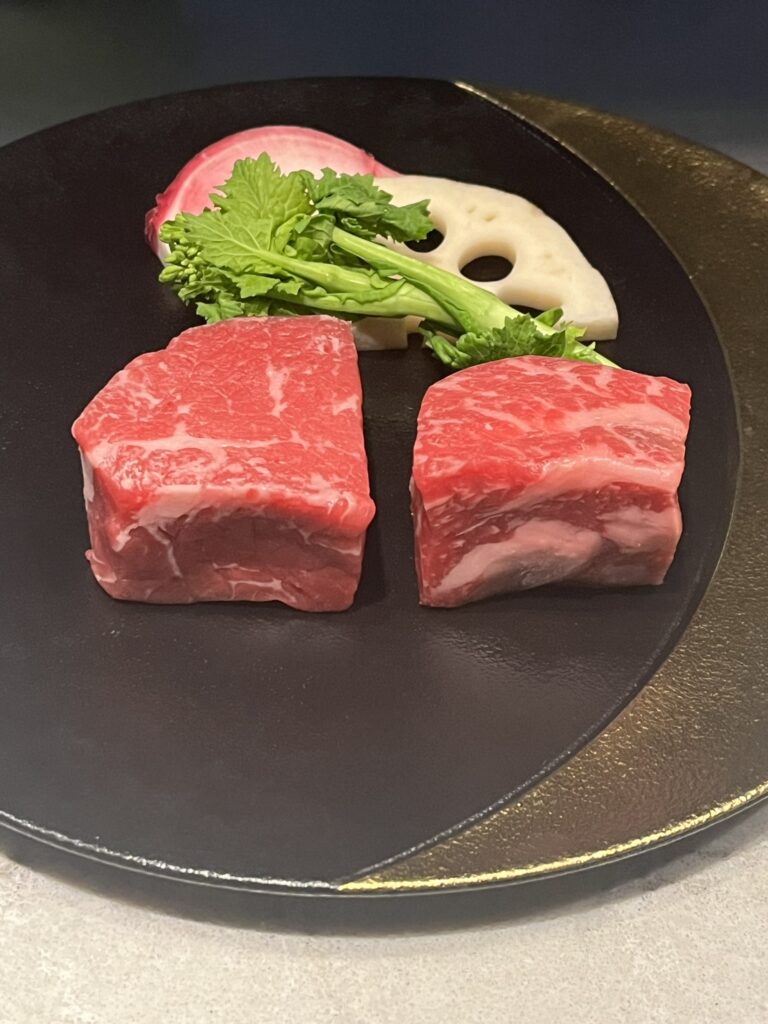
Flaming the beef was the limit of theatricality, to finish my beef.
I thoroughly enjoyed an evening of excellent teppanyaki perfectly executed in the Japanese teppanyaki style, elegant and moderately paced, one small dish at a time. The lobster and beef were great, of course, and I really liked the unique grilled salad course.
If you are looking for an elegant meal in Tokyo, try Wolfgang’s Teppan.
Check out my short jazzy video of this dinner and its courses, Teppanyaki Fine Dining in Tokyo.
Midair Wine Bar
After dinner I went searching for a great glass of red wine somewhere in Ginza. Midair is an elegant 10th floor, easy-to-find wine bar with top Bordeaux by the glass and tasty amuse bouche. Again, Bordeaux is not my favorite but if you want a great glass of wine in Tokyo, it will probably be Bordeaux or Burgundy. I chose Chateau Haut-Brion 2007, which was perfectly served by a tuxed waiter.
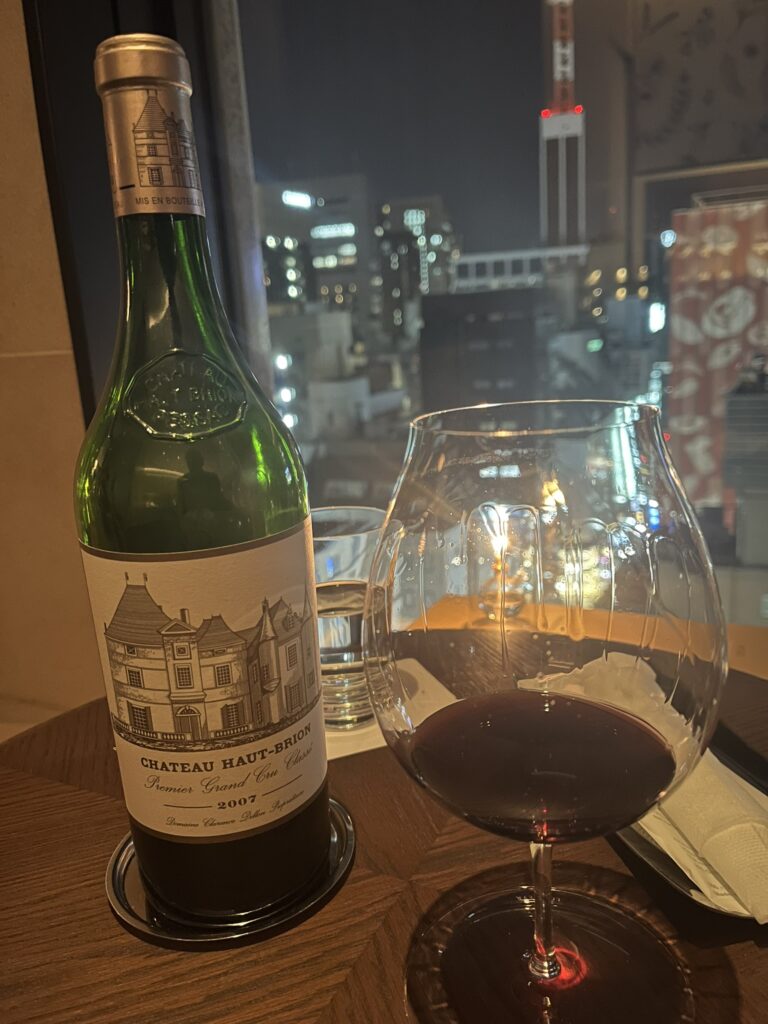
The bar had only three or four two-seat window tables (there was only one other guest when I was there). This is common in Tokyo: prices are high enough that they can afford to be small. My table provided a view of Ginza rooftops and the street below. There is also a counter that seats about 6 or so, and a small private room with a counter, which filled with a single raucous group not long before I left. The wine and service were great and exactly what I was looking for.
If you’re looking for good wine close to home, check out Wine Express, which has a broad selection and good prices.
Night 2
Tsukiji Suzutomi Ginza Six
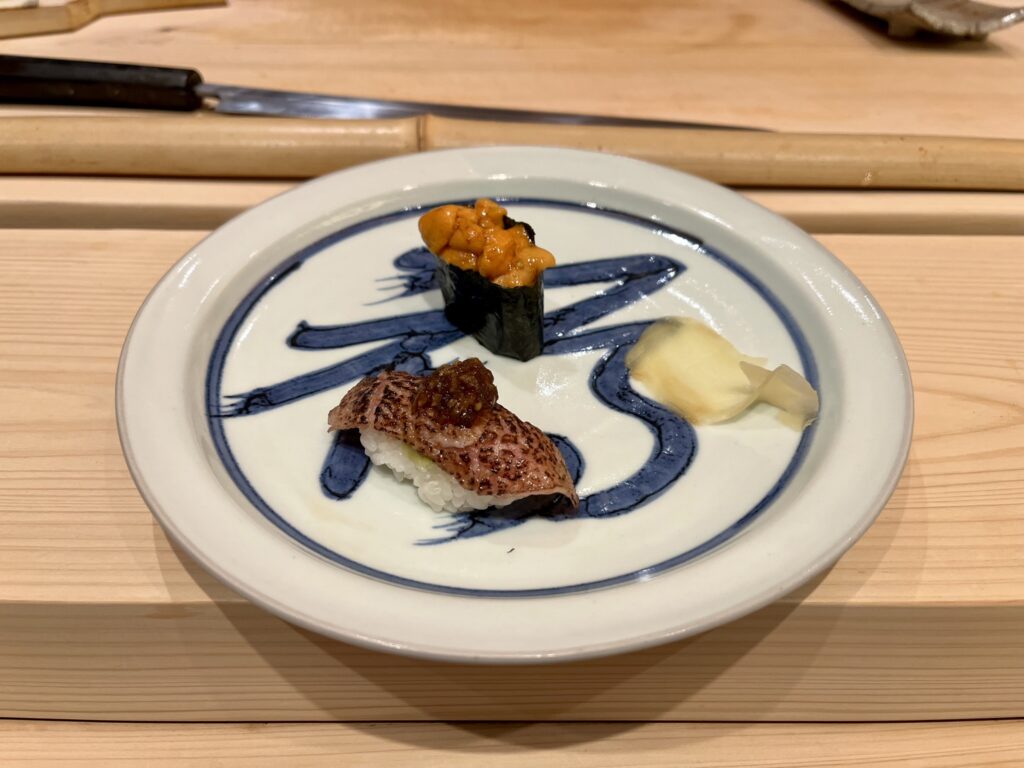
Although I usually have sushi for lunch rather than dinner when visiting Tokyo, I decided that tonight should be Ginza sushi night. I found this casual-ish sushi restaurant with friendly sushi chefs. I let them pick my choices and could not have been happier with the excellent food and experience. While the chef prepared my food, I chatted with his friend (the only other guest), whom he had known since high school.
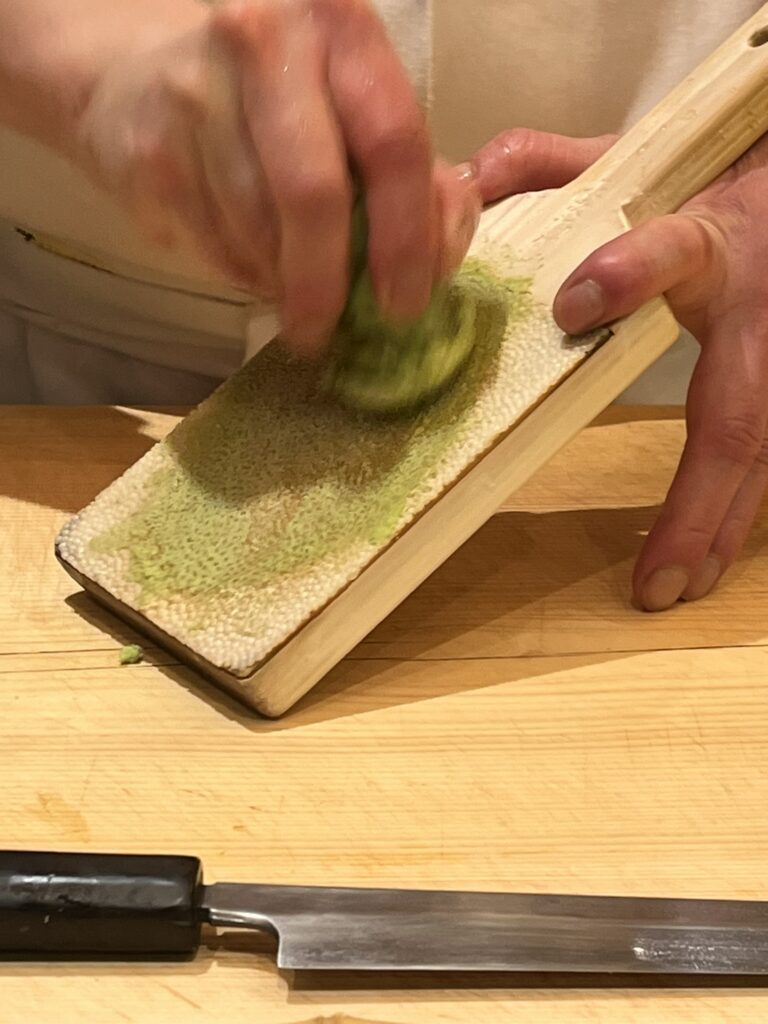
I enjoyed watching the chef grate real wasabi root, which is very different from the faux wasabi served in almost every sushi restaurant in the U.S. He is using a shark-skin grater, which is the proper tool for this job.
The chef said he has been using the yanigaba (single-edged slicer) in the photos for 30 years! He used it to slice fish and served the freshly-grated wasabi with some beautiful maguro (tuna).
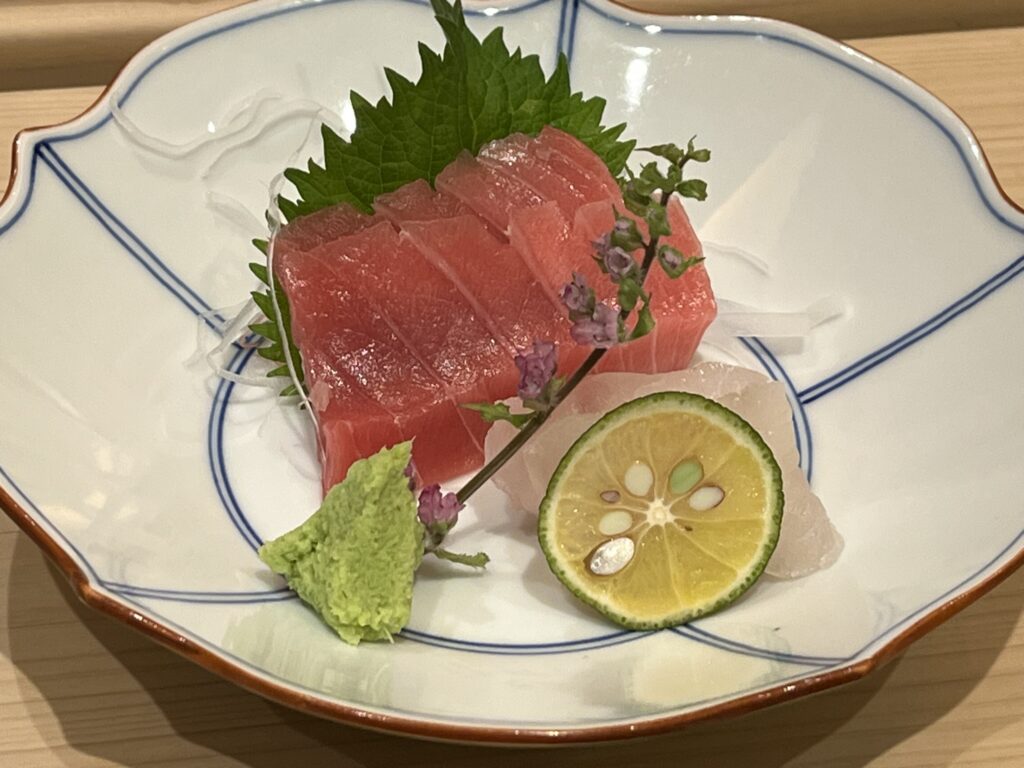
I enjoyed the wasabi almost as much as the fish.
See my short jazzy video about this dinner to see each course and the names of each fish.
Vin Apres Ginza Wine Bar
After dinner, I again hunted for a great glass of red wine in Ginza. I found this cozy little street-level wine bar playing old jazz vocals and torch songs. I was the only guest.
The bar offered an excellent selection of Coravin-drawn top Burgundy and Bordeaux (a Coravin allows you to remove a glass of wine from a bottle without removing the cork, so you can sample bottles that you don’t want to open).
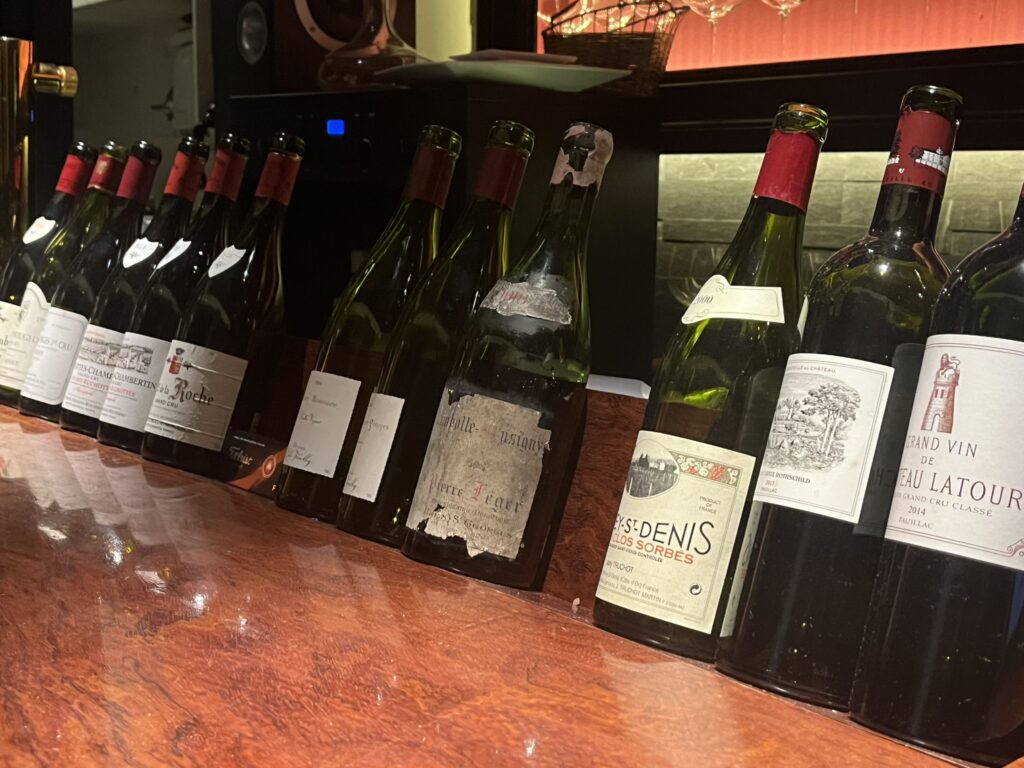
This night I chose a Burgundy.
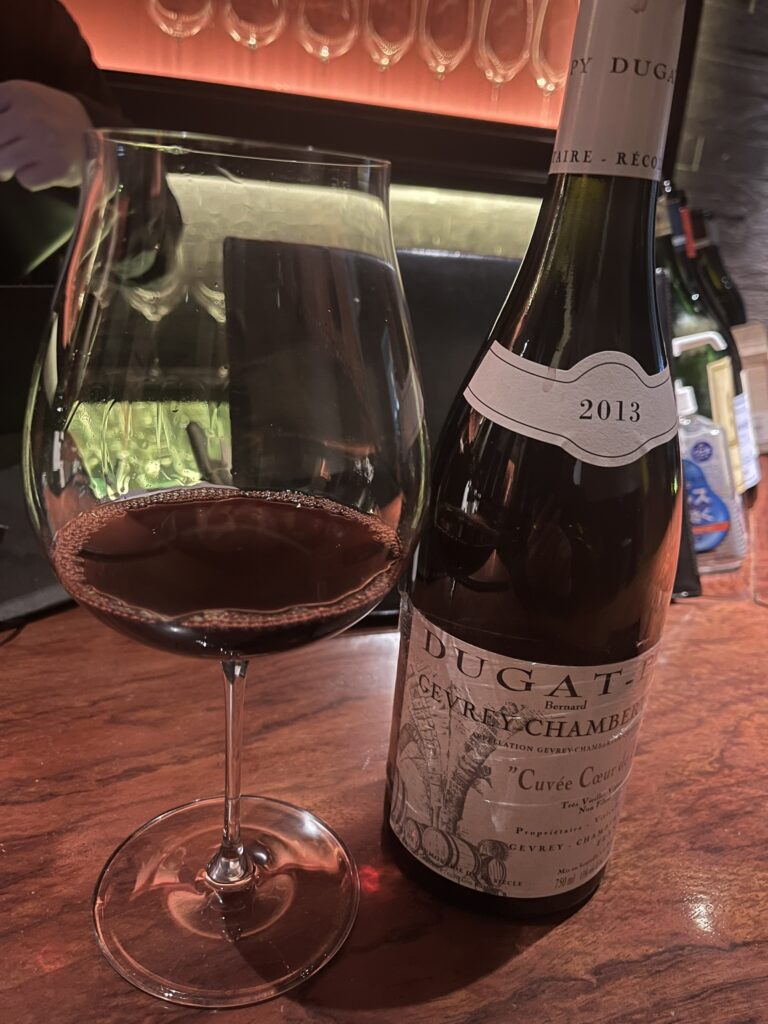
I chose the 2013 Gevrey-Chambertin, which was served by the casually dressed owner, who was obviously starved for conversation. He will gladly talk to about wine, or anything. This is a great place to unwind after a business meeting or dinner. I sat at the counter but there are also a few seats.
Night 3
Inakaya Ginza
Understanding Robata-yaki
My favorite restaurant in the world is Inakaya Roppongi (the one near Tony Roma’s), which recently moved. Japanese charm was sweating from the well-worn wood of this robata (a robata is a charcoal grill). But I didn’t want to leave Ginza so I walked to this new Ginza outpost, which continues the Inakaya robata-yaki tradition that I love.
How to Order Robata-yaki
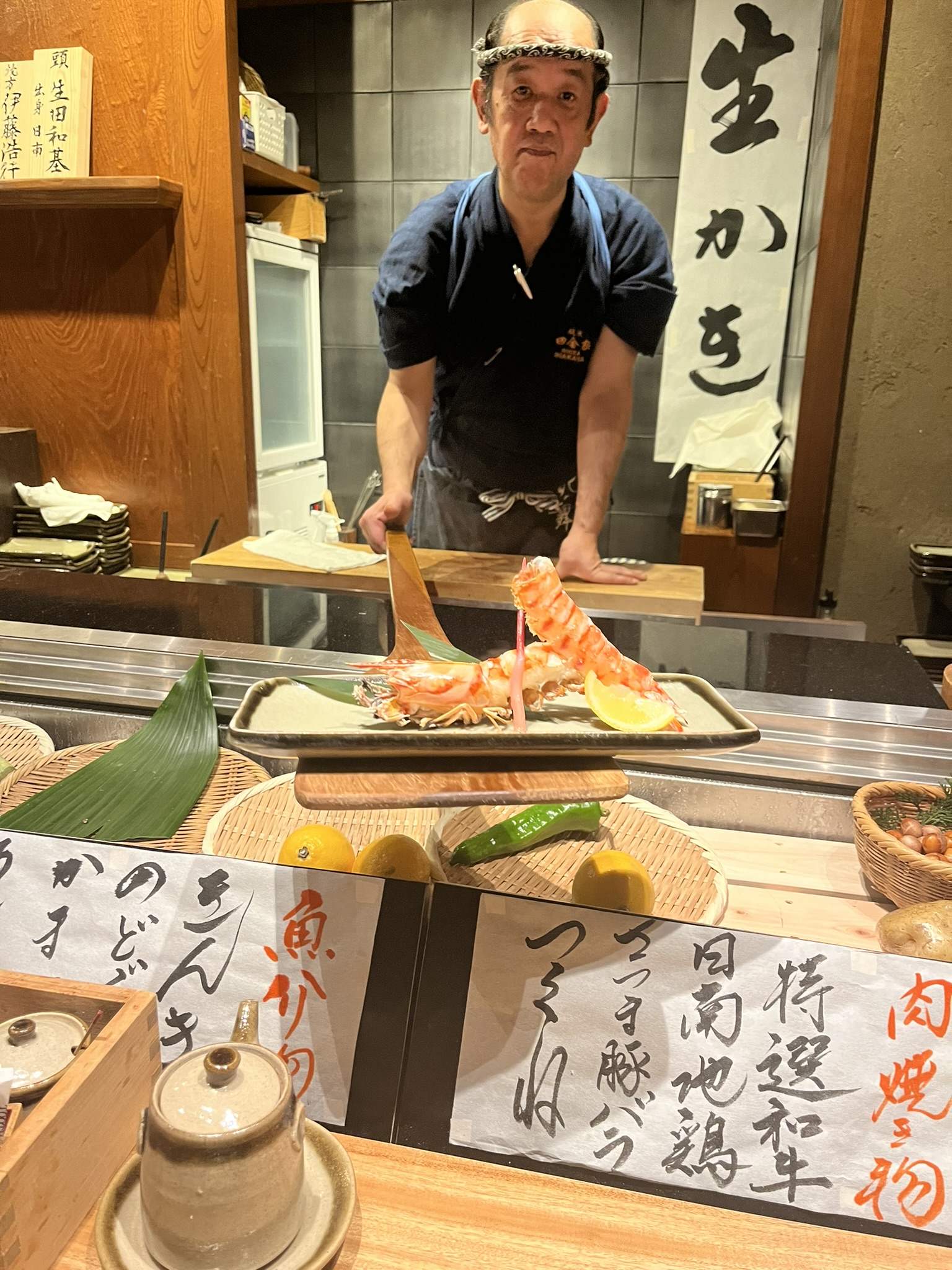
The food is still great (simple but delicious and beautiful), the atmosphere is still warm and charming, dining there is always fun (I like pointing to what I want, rather than using the menu), and the staff participation is still a hoot. Ordering is usually done by pointing to whatever you want, which is displayed before you, over ice. Your server watches you point and shouts the selection to a cook, who repeats the order loudly. From time to time, the entire staff erupts into a fun chant, punctuated by claps. Despite many visits, I have no idea what they are saying.
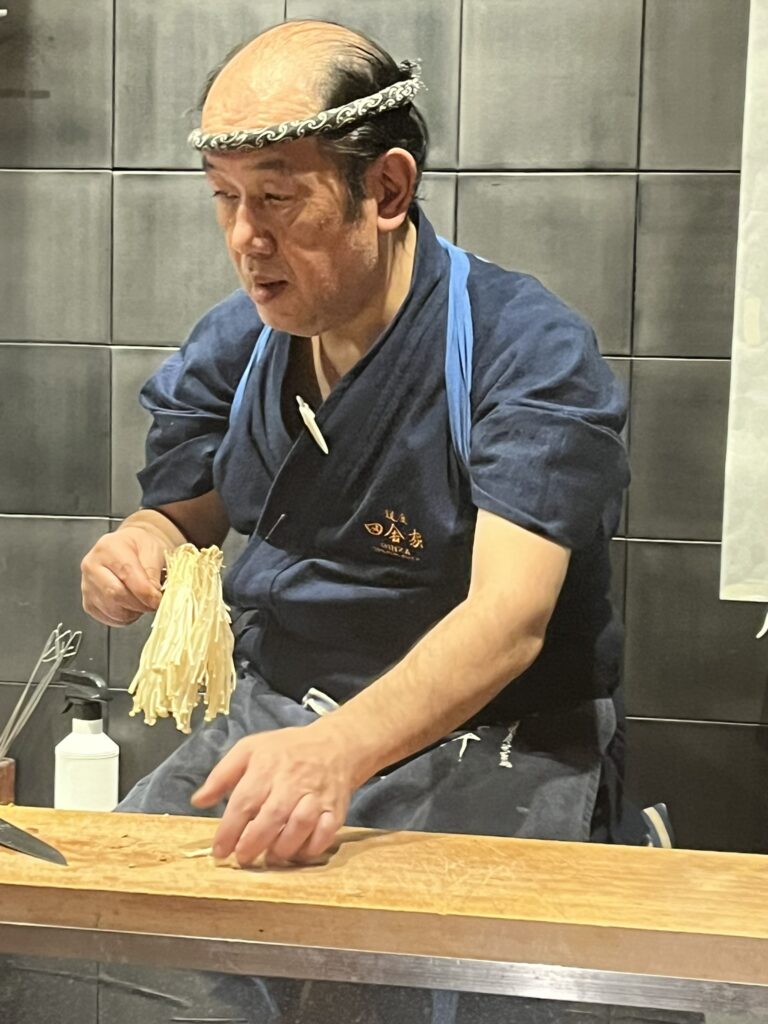
What to Expect
One of the many great things about Inakaya is that after the chef cooks your food over the robata grill, he places it on a long-handled paddle and hands it over to you. They do the same with open bottles of beer and never spill a drop.
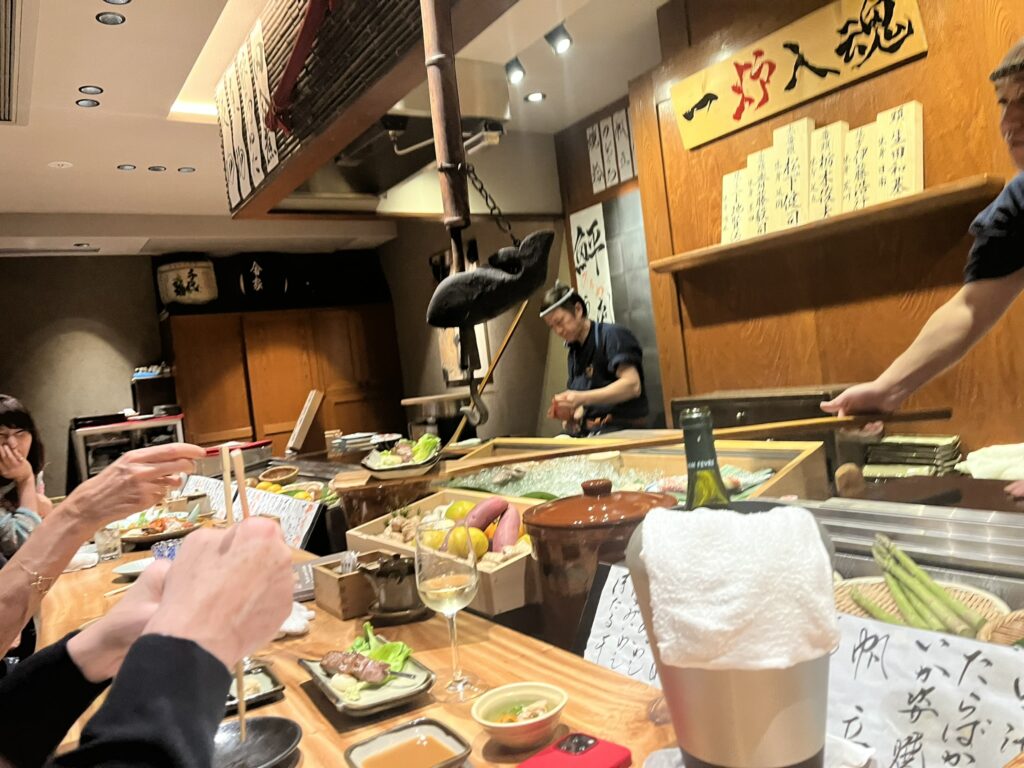
A typical setup of robata dishes, accompanied by cold Japanese Sapporo.
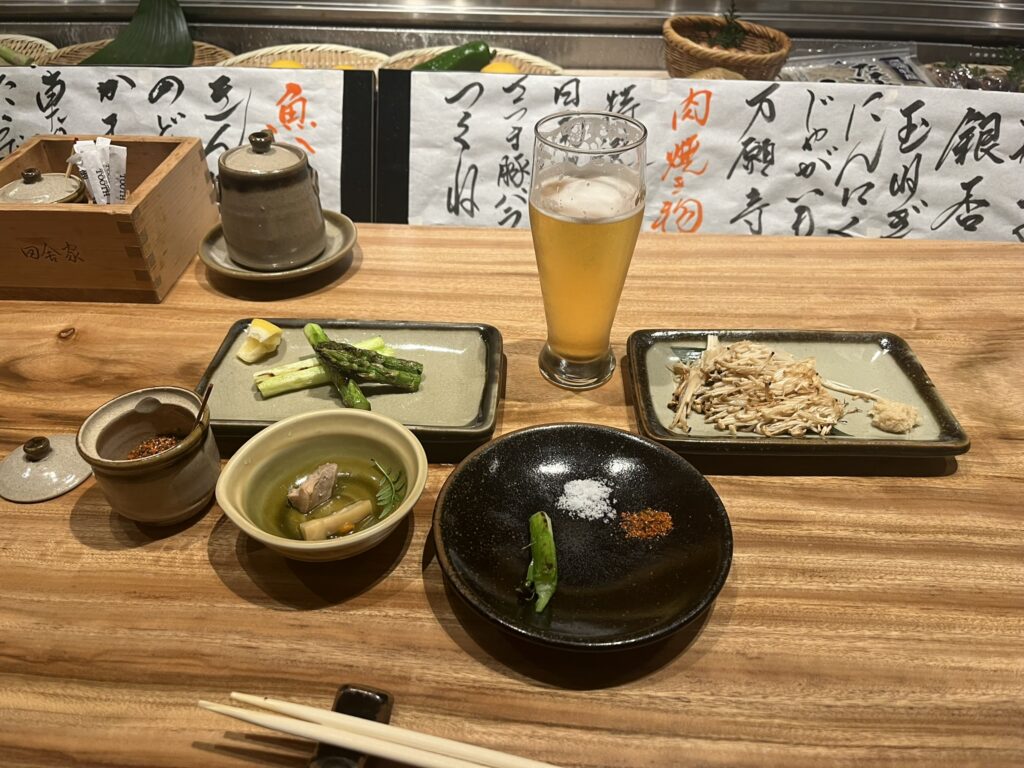
The main event: whole robata-grilled fish with grated daikon.
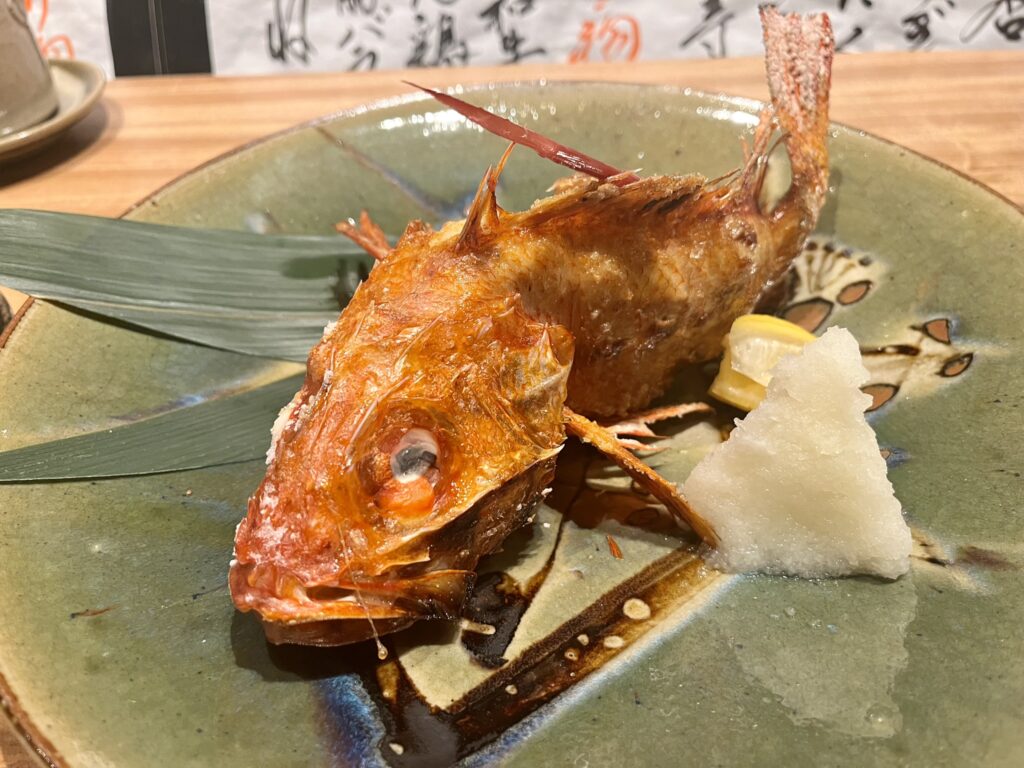
Still my favorite restaurant in the world. See my short video with the courses of this dinner.
Maduro
For my last free night I ventured out of Ginza. After much bar “research” and many visits, this is still my favorite bar in the world, which my friend Bill and I call “The Secret Bar” because it’s hidden inside the Grand Hyatt in Roppongi. Elegant, great cigar selection, quintessential Tokyo bartenders (the world’s best).
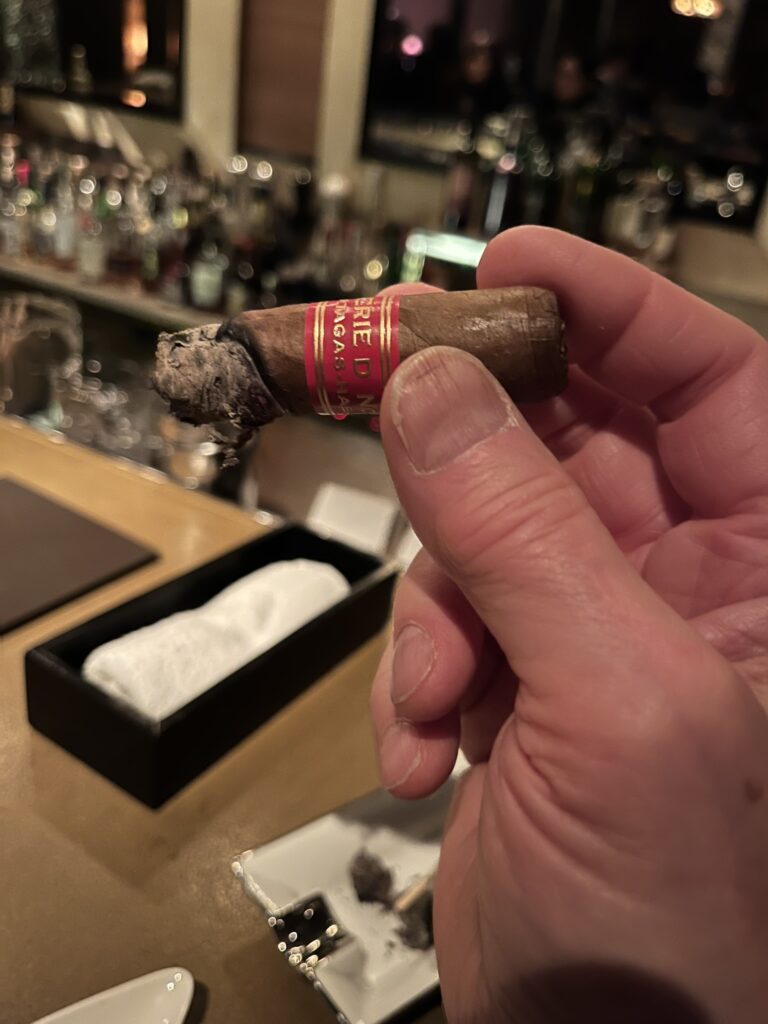
And cool jazz (the vocalists are good and the musicians are under-appreciated). My favorite spot is the community table, but this night it was reserved for hotel guests, so I sat at the bar.
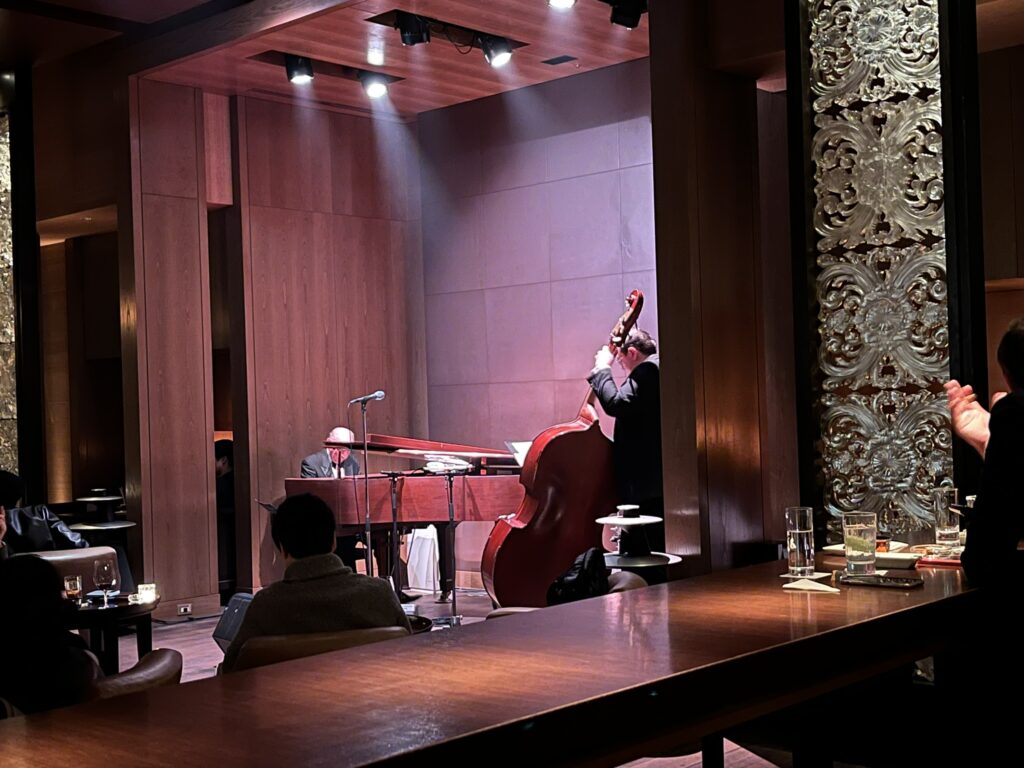
I love enjoying a cigar here, sipping a great glass of red wine, and listening to the cool jazz.
There are also plenty of tables and comfy chairs that face the music.
I hesitated including this spot because I don’t want it to get too popular, but it’s hard enough to find that maybe that won’t happen.
Conclusion
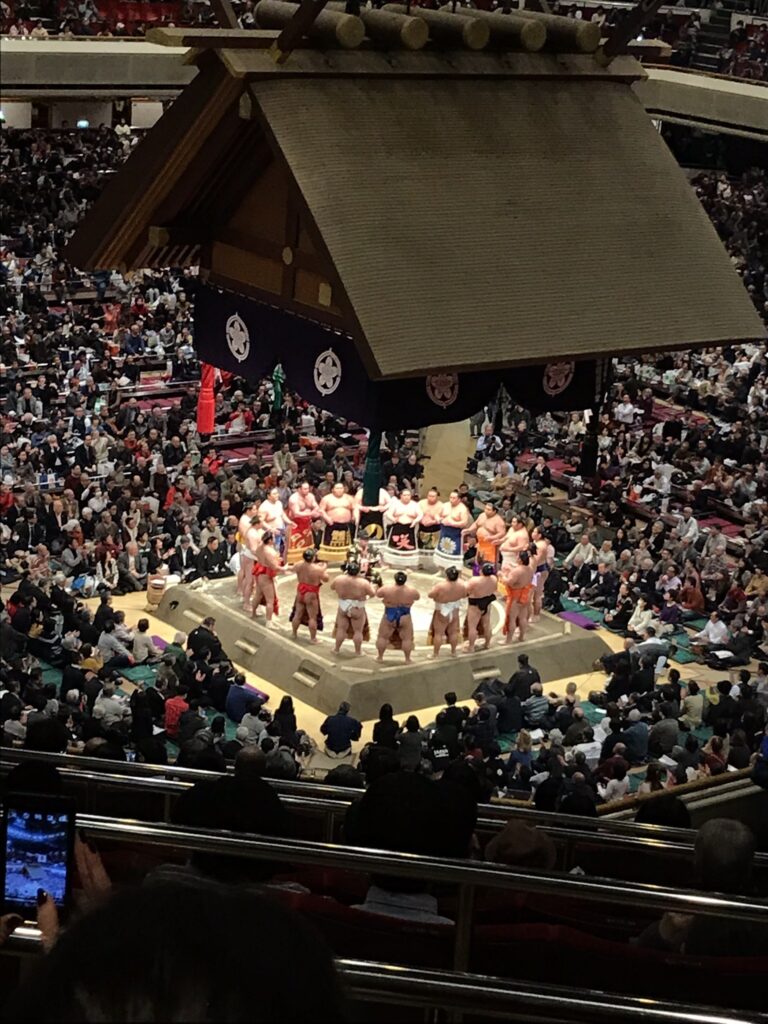
I have visited Japan many times, but always on a business schedule. The beauty of this trip was that I was on my own time, which allowed me to savor every minute in these six great places. If you want an extraordinary Tokyo experience, mostly in Ginza, follow this guide.
Disclosure: As an Amazon Associate I earn from qualifying purchases. If you buy from a link on this site, I may earn a small commission from the vendor without any additional cost to you. No company pays me to say anything in particular, or to say nice things. I only stand behind products I believe in.