John Hornick — Chef’s Apprentice
Introduction: Choosing the Right Blender for Your Kitchen Needs
Today’s homes see more blended smoothies, pureed soups, and Margaritas than ever. This sharp increase puts blenders on the must-have list for many kitchens. But not all blenders are built the same. You need a model that matches your needs—be it simple smoothies or serious meal prep.
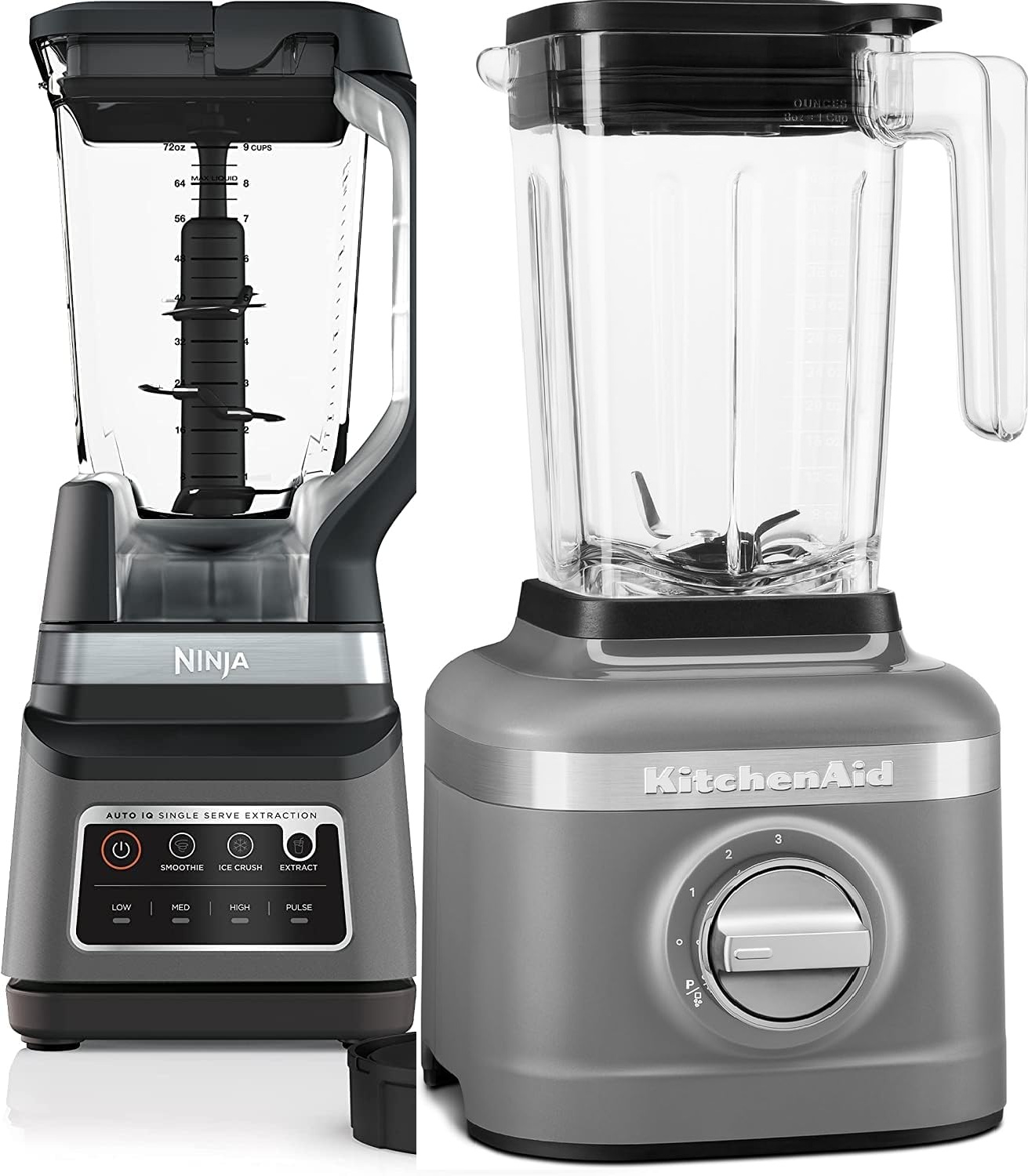
Two big names in this space are the Ninja Blender Plus Duo BN751 and the KitchenAid K150 Blender. They both promise powerful blending, but they do have their quirks. Before buying, it’s smart to look at the pros and cons of each. This guide breaks down what makes each model stand out and what to watch out for, so you can choose the best fit.
Overview of Ninja Blender Plus Duo BN751
Features and Specifications
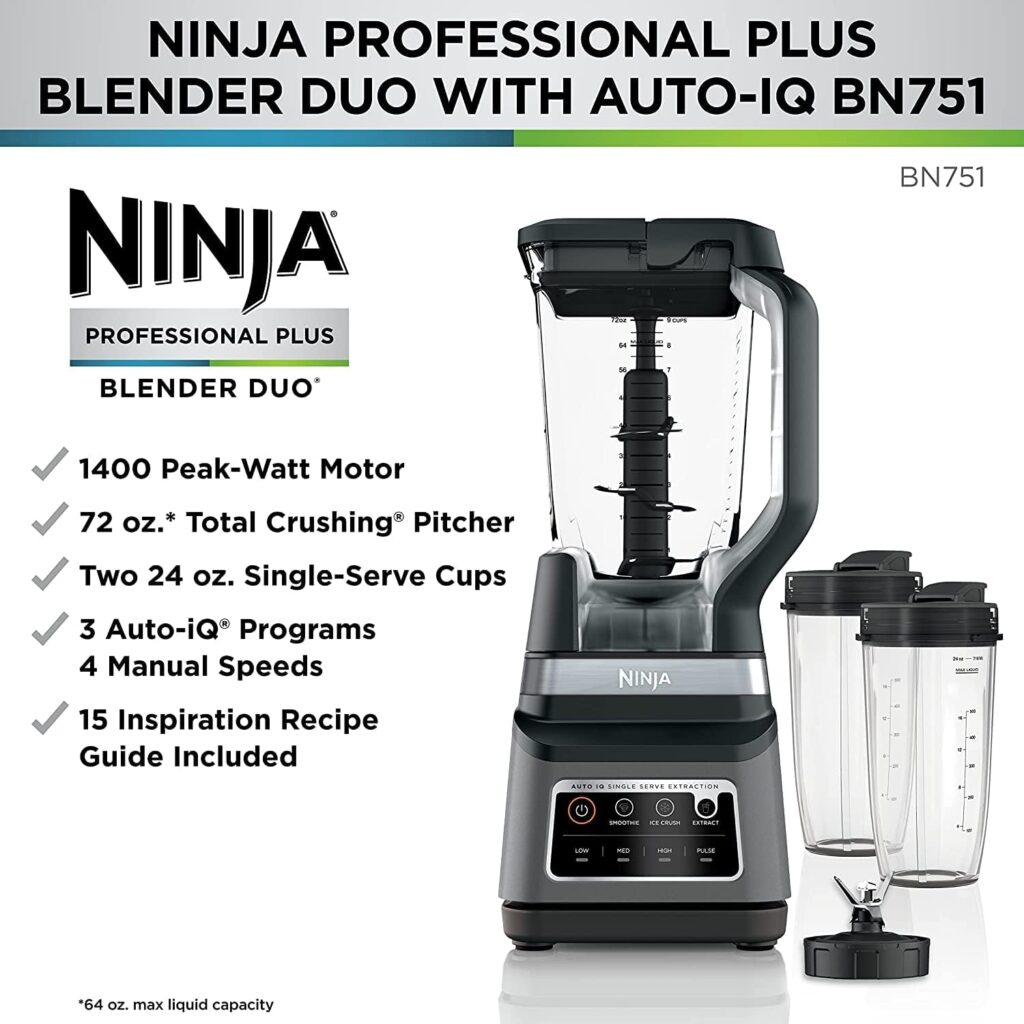
The Ninja BN751 stands out with a robust 1400-watt motor, making it a true powerhouse. It comes with a 72 oz. capacity (with 64 oz. maximum liquid capacity — you can’t fill it to the brim, but this is true of any blender) plastic pitcher for big batches and two smaller 24 oz. cups perfect for individual servings. The Auto-iQ preset programs take guesswork out of blending, automatically adjusting speed and time for consistent results. It employs a stacked blade for the pitcher and extractor blade for the 24 oz. cups. Designed with a sturdy base and sleek appearance, it blends (pun intended) into most kitchens easily.
Pros of Ninja BN751
- High versatility: Multiple functions cover smoothies, purees, and ice.
- Powerful motor: Crushes ice and blends frozen ingredients effortlessly.
- Ease of use: Intuitive buttons and cleaning make it simple to operate.
- Two-sized pitchers: Switch easily between large-sized and personal portions.
- Stacked blade: This multi-level blade blends ingredients throughout the height of the pitcher.
- Cleaning: Lift out the stacked blade to clean the blade and pitcher.
Cons of Ninja BN751
- Noise level: You may think it’s loud, especially during heavy blending, but to me it sounds the same as any blender.
- Height: Its 17.5″ height may be a problem for some appliance garages.
- Durability concerns: Some users report micro-cracking of the pitcher after prolonged or heavy use.
Overview of KitchenAid K150 Blender
Features and Specifications
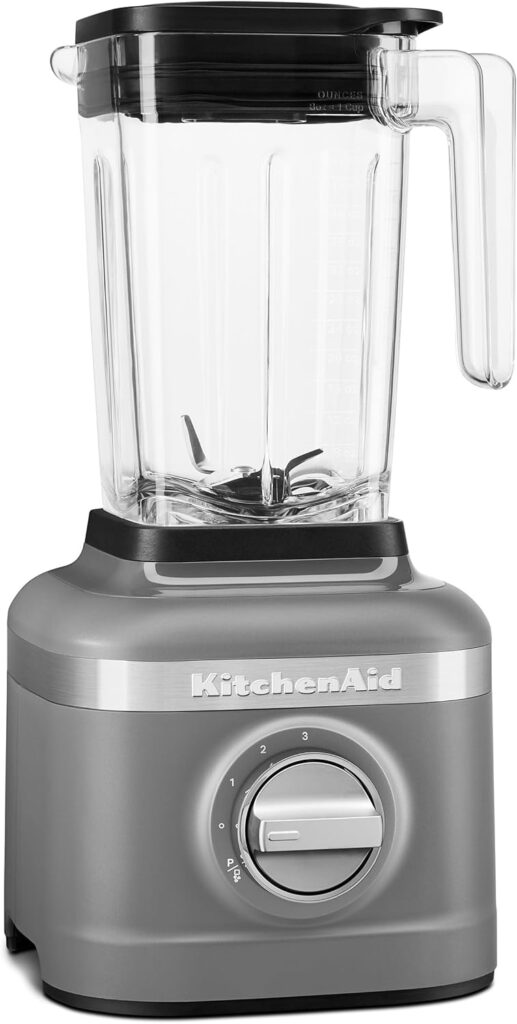
The KitchenAid K150 packs a 650-watt motor, less powerful but still capable. Its standout feature is the 3-speed control, which gives you fine-tuned blending. It’s soft-start motor starts at a low speed to pull the ingredients toward the blade, then increases to the selected speed. It asymmetric blade also helps pull ingredients toward it. This blender also offers a pulse button and a specific crush ice mode. With a sleek, retro-inspired design and a glass pitcher, it appeals to those who care about style.
Pros of KitchenAid K150
- High-quality build: It looks great and feels sturdy.
- Excellent control: 3 speed options to fit your needs.
- Elegant design: Matches well with modern kitchens.
- Long-lasting performance: Many users report it lasts years without issues.
- Height: Its 14.8″ is shorter than the Ninja, for fitting into appliance garages.
Cons of KitchenAid K150
- Price: It typically costs more than the Ninja.
- Noise: Can be loud, especially at higher speeds, but again, all blenders are loud.
- Limited presets: Fewer pre-programmed options than Ninja.
- Blade: Its in the bottom of the pitcher, compared to the Ninja’s stacked blade.
Comparative Analysis: Ninja BN751 vs. KitchenAid K150
Performance and Power
The Ninja BN751’s 1400-watt motor beats the KitchenAid in raw power, making it better for heavy-duty tasks. It can crush ice fast and blend dense ingredients smoothly. The KitchenAid, with its 650-watt motor, works well for typical kitchen use but may struggle with very tough ingredients. But users often find Ninja more versatile for tough blends.
Design and Aesthetics
While Ninja favors a modern, utilitarian look, KitchenAid leans toward classic style with a glass pitcher and retro design. KitchenAid’s shorter footprint makes it easier to fit in appliance garages, whereas Ninja’s height may present clearance issues.
Price and Value for Money
The Ninja BN751 typically retails at a lower price point, offering more features for less cash. KitchenAid’s higher price is justified for its stylish look and durability.
Which Blender Is the Better Choice?
For Different User Needs
If you want power and versatility to handle tough ingredients and big batches, Ninja BN751 is your best pick. Its multiple functions and strong motor make it perfect for big families or serious food prep.
If your blending needs are less demanding or you prefer a sleek appearance, the KitchenAid K150 sits well on a kitchen counter for everyday use. It’s also better if you value long-lasting quality.
Expert Recommendations and Consumer Feedback
Industry reviews praise Ninja for its high-performance motor and value. However, some point out its loud operation and size. KitchenAid gets high marks for style, control, and durability but is often considered less versatile for complex tasks. Customer reviews show high satisfaction with both but highlight different priorities.
Users praise the Ninja for its powerful performance in making smoothies (even with fibrous ingredients), ice crushing, and large-batch blending, while the KitchenAid is commended as an affordable, user-friendly option excelling in ice crushing, making frozen drinks, and simple tasks, but limited by its smaller capacity.
The Ninja’s overall ratings are high (mostly 5/5 stars), with users calling it a “workhorse” superior to cheaper models. The Kitchenaid also has consistently high ratings but not quite as high as the Ninja and there are fewer reviews overall. It’s rated as a solid all-rounder for everyday use, with strong performance-to-price ratio.
Conclusion
Choosing between the Ninja BN751 and KitchenAid K150 depends on what matters most to you. The Ninja offers unmatched power and versatility, usually at a lower price. The KitchenAid provides a stylish, durable, and precise control experience, but at a higher cost. I have used both brands for many years and both meet my needs. But if I had to choose one, I would pick the Ninja.
Assess your blending needs, budget, and kitchen layout to pick the right fit. Both are excellent options, so think about long-term use and what features will make your cooking easier. Your perfect blender awaits—just find the one that aligns with your lifestyle.
Disclosure: As an Amazon Associate I earn from qualifying purchases. If you buy from a link on this site, I may earn a small commission from the vendor without any additional cost to you. No company pays me to say anything in particular, or to say nice things. I only stand behind products I believe in.