John Hornick — Chef’s Apprentice
Introduction
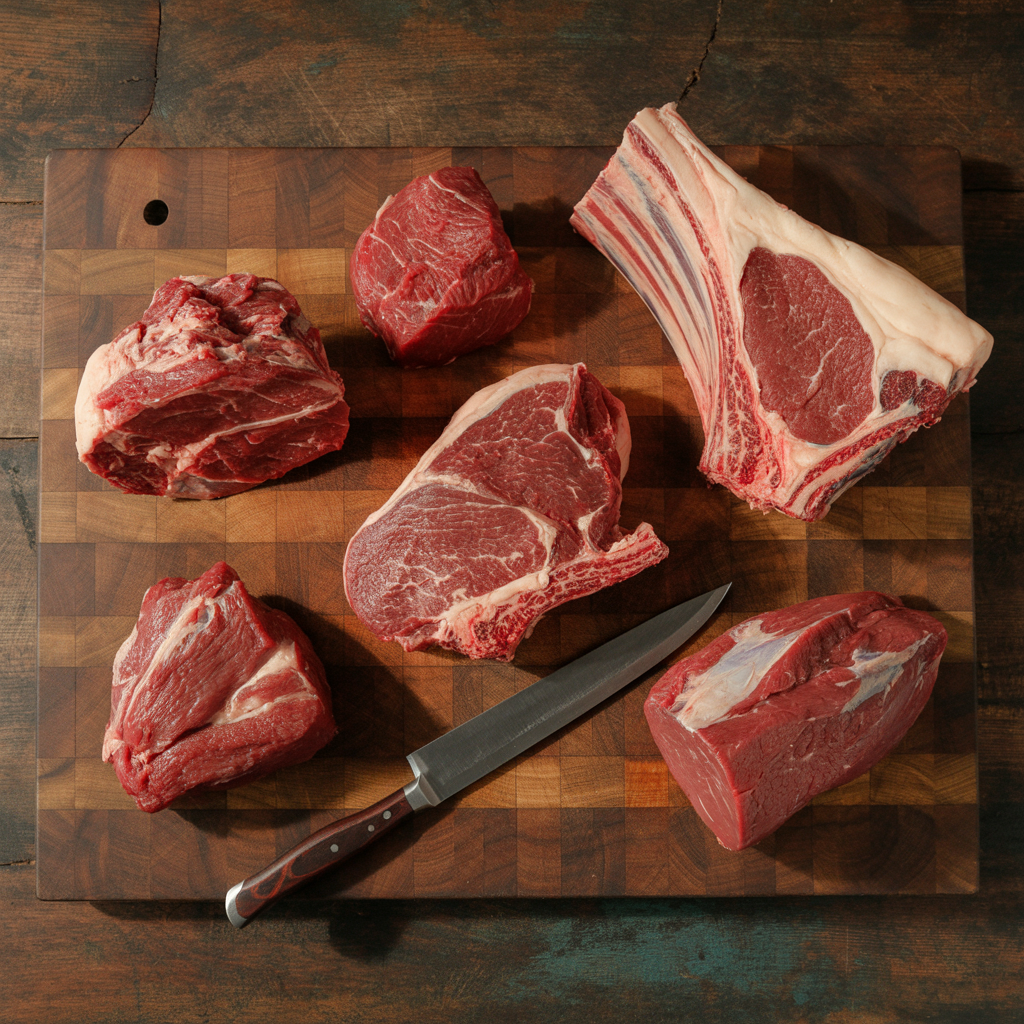
Beef has many cuts. Some are more tender than others. Some cook fast. Some cook slow. Whether you’re grilling steaks or slow-cooking roasts, picking the right cut involves what you expect from the meal and how you plan to cook the beef. Each cut has its own personality—choosing the right cooking method for the cut ensures maximum flavor and tenderness. This guide walks you through the major cuts of beef and the methods to cook them.
Understanding Beef Cuts: An Overview of Popular Parts
Different cuts of beef come from different parts of a steer, and each area affects how the meat tastes and how to cook it. Some parts are more tender because they don’t do much work, while others are tougher due to more muscle use but packed with flavor. Picking the right cut depends on what recipe you’re making and how you want to cook it.
Beef Primal Cuts and Their Characteristics
The cow’s body is divided into big sections called primal cuts. Some are great for quick, high-heat cooking, while others need slow, moist heat to become tender. Note: These are the cuts recognized in the U.S.
- Chuck: Comes from the shoulder. It’s flavorful but tougher, perfect for slow cooking, or for burgers.
- Rib: Located near the back. Famous for juicy steaks like ribeye, with lots of marbling.
- Short Loin: Just behind the ribs. Known for tender steaks such as T-bone and Porterhouse. This is where to find my favorite cut, the New York Strip, also known as strip loin or Kansas City steak. The tenderloin spans the short loin and sirloin primal cuts.
- Sirloin: Sits behind the short loin. Leaner than the rib section, good for grilling.
- Round: From the back leg. Lean and tough, best suited for slow cooking.
- Brisket: From the chest area. Rich in connective tissue; needs long, slow cooking.
- Plate: Located near the abdomen. The source of hanger steaks (my second fave), short ribs, and skirt steaks.
- Flank: From the lower belly. Known for flavor, but needs proper slicing and marinating.

Subdivisions and Popular Retail Cuts
Primal cuts are sliced into many smaller, easy-to-buy cuts. Here are some top choices:
- Ribeye: Very flavorful, juicy, tender steak with lots of marbling. However, it can have a lot of inedible gristle. After you finish a ribeye, you will probably have some inedible remnants on your plate. Delicious but not my favorite.
- New York Strip/Strip loin: Less marbling than ribeye, but very flavorful. Very little inedible remnants. My fave.
- Tenderloin / Filet Mignon: The most tender cut; lean and perfect for quick cooking. But this is my least favorite cut of all. It’s tender and very popular (and expensive) but has comparatively little taste because it is so lean.
- Sirloin Steaks: Budget-friendly, versatile, and tasty. But I buy hanger instead.
- Round roasts: Lean and affordable, best when cooked slowly or sliced thin.
- Short ribs: These pieces can be cut from the several primals (plate, chuck, brisket, or rib). They are tough but very tasty if properly cooked.
- Flat Iron (aka Top Blade steak): “They” say it resembles an old-fashioned flat iron. I don’t see it. Even though this cut comes from the chuck primal, it is marbled (and therefore pretty tender) and flavorful.

Best Cooking Methods for Different Cuts of Beef
The personality of each cut demands its own cooking method. Match the right technique to the meat and you’ll enjoy better flavor and texture.
Tender Cuts and Ideal Cooking Techniques
Tender cuts come from muscles that don’t do much work. They’re quick to cook but easy to overdo.
Tenderloin / Filet Mignon
Tender but low-fat, this cut is best sauteed or pan-fried in a hot pan, broiled, or grilled quickly. Keep it simple—don’t overcook. A few minutes on each side is enough for perfect doneness. Medium is as done as it should get. Medium rare would be better.
Ribeye, New York strip (strip loin), Sirloin, and TriTip (from the lower Sirloin)
Ribeye is well-marbled. New York Strip is a little less so. Sirloin is even less marbled. But all of these steaks are packed with flavor, but diminishing as the marbling diminishes. They all love high heat—grill, saute, pan-fry, or broil for a juicy, crispy outside. For the best results, cook to medium-rare or medium.
I use highly marbled ribeye or New York strip in my Shabu Shabu video and post.
Plate (Hanger and Skirt steak), Flank, or Flat Iron: These steaks can be cooked with high heat (saute, pan-fry, broil, or grill) or low and slow (braised or smoked). For the best results, cook to medium-rare or medium.
Tips:
Fast, high-temperature cooking helps keep these cuts tender and juicy. Don’t poke or press down—which can cause juices to be lost.
Some people love rare steak, or blue (more rare than rare). I think it’s too chewy. I believe steak is best medium rare to medium. You be the judge.
Tougher Cuts and Optimal Slow-Cooking Methods
Tough cuts come from working muscles that need more help to become tender. Long, slow cooking breaks down connective tissue.
Chuck or Round Roast
Ideal for braising (moist heat) or slow roasting (dry heat). Cook it low and slow to turn this budget-friendly cut into fall-apart tender meat.
Brisket and Short Ribs
Perfect for smoking or braising. Low heat over hours transforms the tough fibers into tender, flavorful meat. These cuts are favorite among BBQ lovers.
Tips: Patience pays off here. The longer you cook these cuts, the softer and tastier they become.
Stewing and Braising Cuts
Some cuts work best when cooked in liquid, making them perfect for stews and one-pot meals.
Round (Bottom and Eye of Round)
Lean, less tender beef that needs moist heat to stay juicy. Stew or braise for tender slices.
Marinating
Flank and Skirt Steak
Any cut can benefit from marinating, which tenderizes and infuses flavor. But flank and skirt, which are tough but flavorful, shine when marinated and quickly cooked on high heat. Slice thinly across the grain to maximize tenderness.
Preparing and Cooking Ground Beef
Ground beef is a kitchen staple, used in burgers, meatloaf, tacos, and sauces.
- Uses: Ground beef is flexible. You can shape it into patties, mix into meatballs, or brown for chili.
- Tips: Don’t overmix the meat. Cook thoroughly and choose the fat percentage based on your dish. An 80/20 blend offers good flavor and juiciness, while 90/10 is leaner.
Tips for Choosing the Right Beef Cut for Your Dish
Matching the cut to your recipe is the key to success. Do you want a quick, juicy steak? Go for tender cuts. Looking for a slow-cooked meal? Tougher cuts are your friends.
Always buy fresh, quality beef from a trusted source—you’ll taste the difference. I have provided links to Porter Road, and online purveyor of, as they say “Life-changing meat”. Porter Road works with select farms and expertly hand-cuts every piece at their Kentucky facility. While the butcher shop has become a cult favorite for locals, the founders realized that unfortunate people everywhere else were stuck eating low quality, grocery store meat. So now they offer their high-quality meat products online with the goal of making the world’s best meat accessible nationwide. They are my prime and only known source of pig wings, which is a very rare (almost secret) and wonderful cut of pork.
“Know your cuts,” says a seasoned butcher. “Use tender cuts for quick meals, tougher ones for slow cooking.” When choosing beef, look at marbling—more fat means more flavor and juiciness.
Conclusion
Understanding the different beef cuts and their best cooking methods unlocks a world of flavorful meals. From quick sears to slow braises, knowing what cut suits your recipe helps avoid mistakes and ensures perfect results every time. Experimenting with various cuts also lets you discover new favorites and elevate your home cooking. Take time to select the right cut, use the proper technique, and enjoy delicious, tender, and flavorful dishes.
Disclosure: As an Amazon Associate I earn from qualifying purchases. If you buy from a link on this site, I may earn a small commission from the vendor without any additional cost to you. No company pays me to say anything in particular, or to say nice things. I only stand behind products I believe in.