John Hornick — Chef’s Apprentice
This stunning subtropical Portuguese island has it all: romance, adventure, history, food, and, well, Madeira wine. I was reluctant to go because I feared I’d be reluctant to leave, and I was right. Use this guide to get the most out of a week on this “Island of Eternal Spring”.
Check out my other Travels, Tastes, & Toasts posts on:
Malaga, Spain & The Rock of Gibraltar
Also, check out my Chef’s Apprentice YouTube channel for hundreds of recipes and cooking lessons.
Getting There
We flew into Madeira, connecting through Lisbon. To book your trip to Madeira, or anywhere, and to get good prices, use this Expedia box:
We used United points to fly to Lisbon. If you have slightly fewer points than you need, you can buy enough to get you a free trip from United. If you want to stay in Marriott hotels and don’t have enough points, you can also buy more here.

We travel with only one bag and a backpack each. I have been using this Pathfinder bag for many years. It has a large compartment with top or bottom access, and a nylon panel can be unzipped to combine the soft upper compartment and the rigid lower. The whole bag is heavy duty, including the retractable handle and wheels, as proven by the fact that I have been using it for well over five years. It still looks new despite having been in many, many overhead luggage compartments, and Sarah just bought one because mine has served me so well for so long. What I like most about it is the pockets. I love pockets and it has many pockets both inside and out.

Check out my Benable Essential Travel Gear rec list.

Madeira in a Nutshell
Location
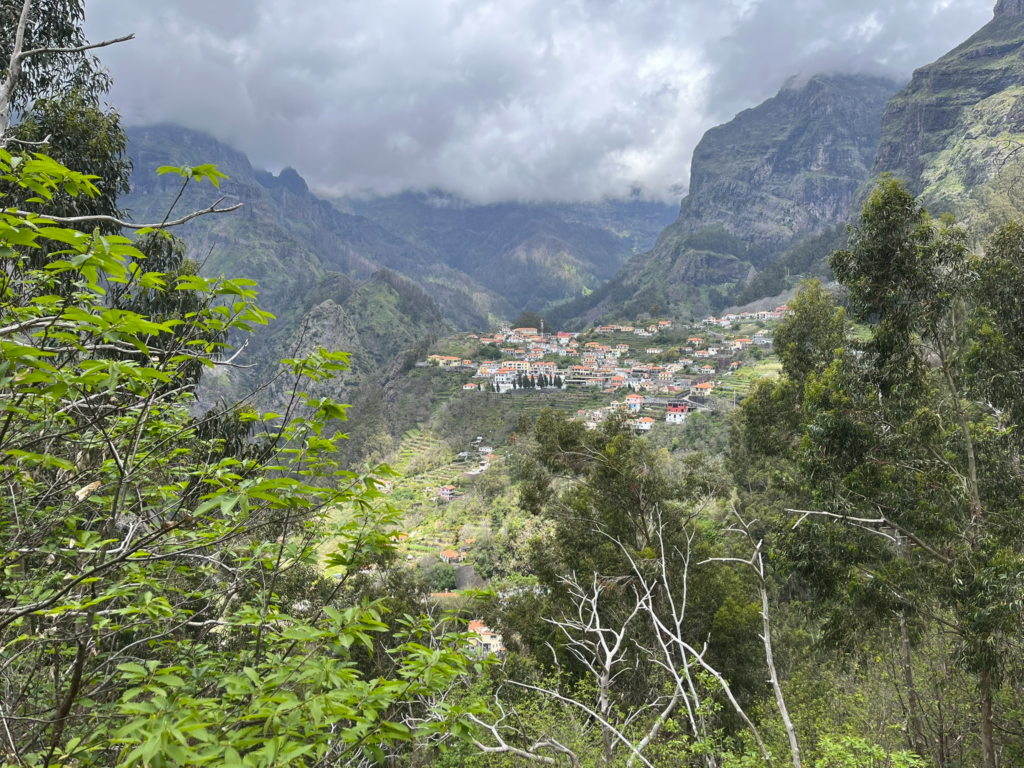
Madeira is a string of islands in the North Atlantic Ocean, about 600 miles southwest of Lisbon, Portugal. It includes the main island of Madeira and several smaller islands, with Funchal as its capital. The island is known for its rugged terrain, lush vegetation, and volcanic origin.
History
Madeira was discovered in 1419 by Portuguese explorers. It became a strategic point for maritime trade and exploration. The island’s economy flourished in the 16th century due to sugarcane production, and later, it became famous for its wine, called “Madeira”.
Walkability
Madeira is a paradise for hikers. The island features levadas (irrigation channels) that provide numerous walking paths through its mountainous landscapes, lush forests, and coastal views. Popular walking routes include the Levada do Caldeirão Verde and the Pico Ruivo hike, offering varying levels of difficulty and breathtaking scenery.
Attractions
- Funchal: The capital city is known for its botanical gardens, historical sites like the Sé Cathedral, and the vibrant Mercado dos Lavradores Farmers’ Market (see below).
- Pico do Arieiro: The island’s third highest peak offers stunning panoramic views and challenging hiking trails.
- Monte Palace: A beautiful garden and palace located above Funchal, accessible by cable car.
- Cabo Girão: One of the highest sea cliffs in Europe, featuring a glass skywalk for thrilling views.
Fun or Interesting Facts
- Unique Climate: Madeira has a mild climate year-round.
- Madeira Wine: The island’s fortified wine has been produced for centuries and was historically popular among the American colonies and Europe’s elite.
- Flora and Fauna: Madeira is home to several endemic species and is a UNESCO Biosphere Reserve, known for its laurel forests. Bananas are one of its main economic drivers, along with Madeira wine and tourism.
- New Year’s Eve Fireworks: Funchal hosts one of the largest and most spectacular New Year’s Eve fireworks displays in the world, which is recognized by the Guinness World Records.
- Levadas: The island has over 2,000 kilometers of levadas, which were originally built for irrigation but are now popular walking paths.
Madeira’s combination of natural beauty, rich history, and vibrant culture makes it a unique destination for both adventurers and tourists.
Where to Stay: Apartments
We opted to stay in an apartment, as have friends who have visited the island. CLICK HERE FOR SOME TOP CHOICES.
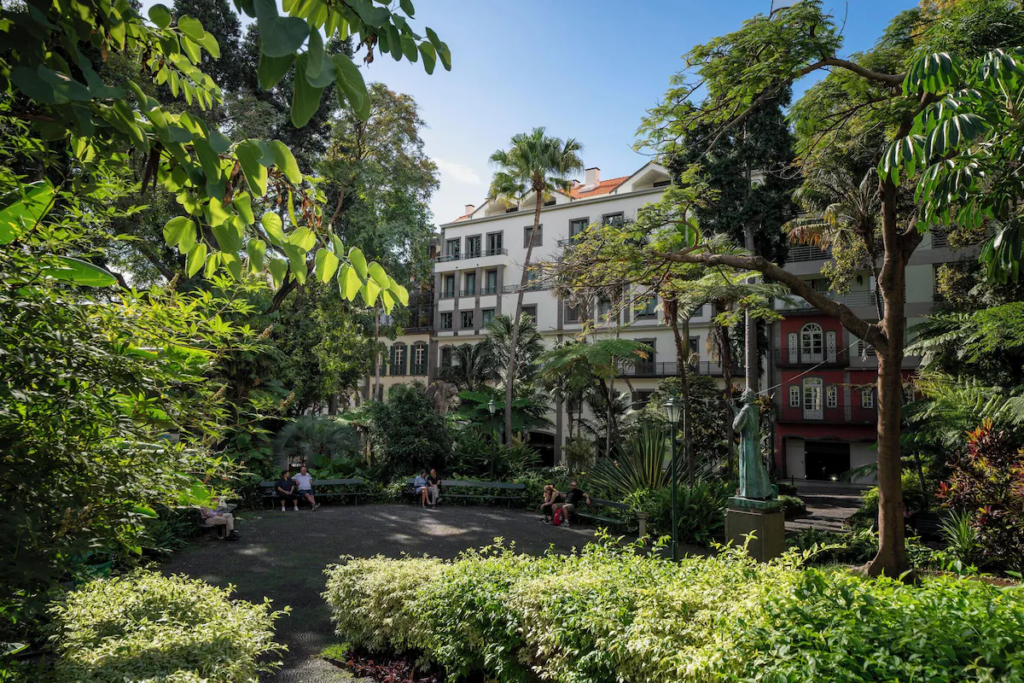
GALERIA Restaurante
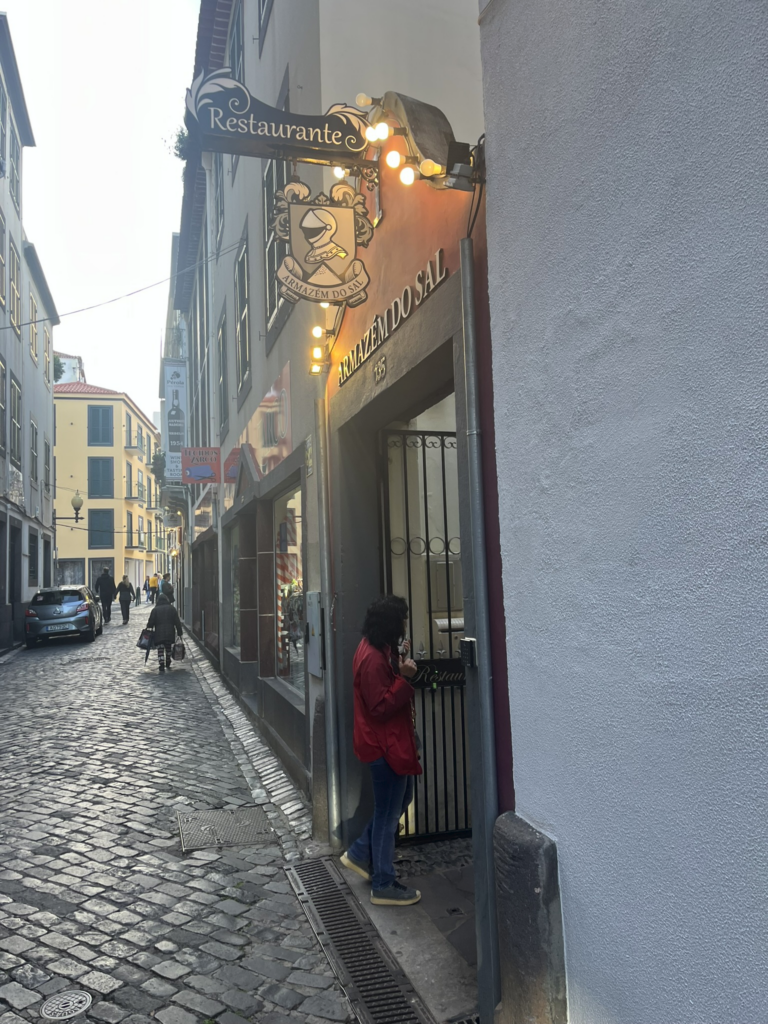
There are so many dining choices on the Street of the Painted Doors, but Galeria’s wine-bottles-everywhere theme caught our eyes on our first night in town.
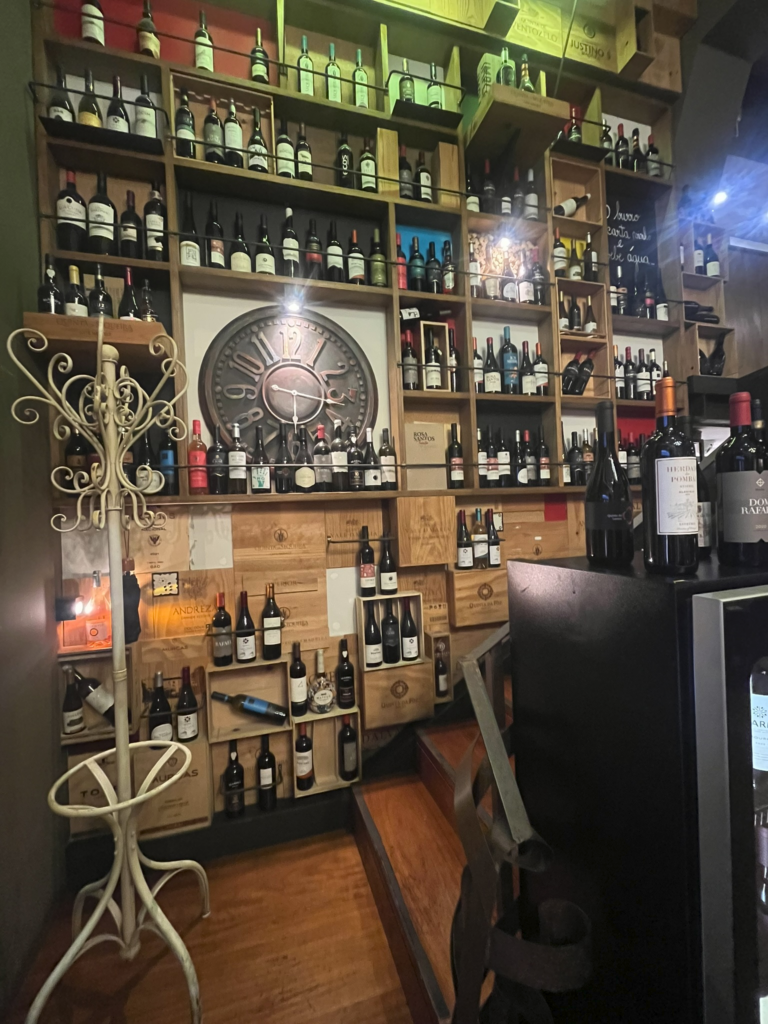
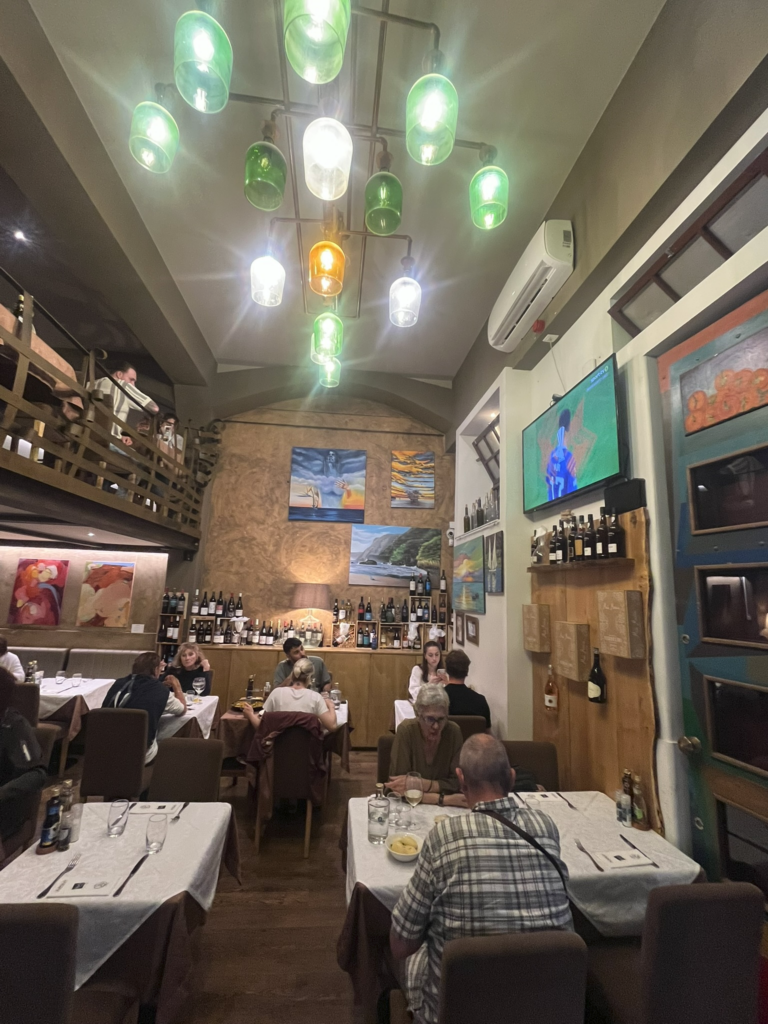
Drawn in by the bottles, we were impressed with the restaurant’s upscale interior: balcony dining with a curled steel railing overlooking the street-level white-table-clothed main dining room, the unusual multi-color glass pendant chandelier, and the reason for the establishment’s name — colorful paintings in every open spot where there are no wine bottles (even on the exterior walls).
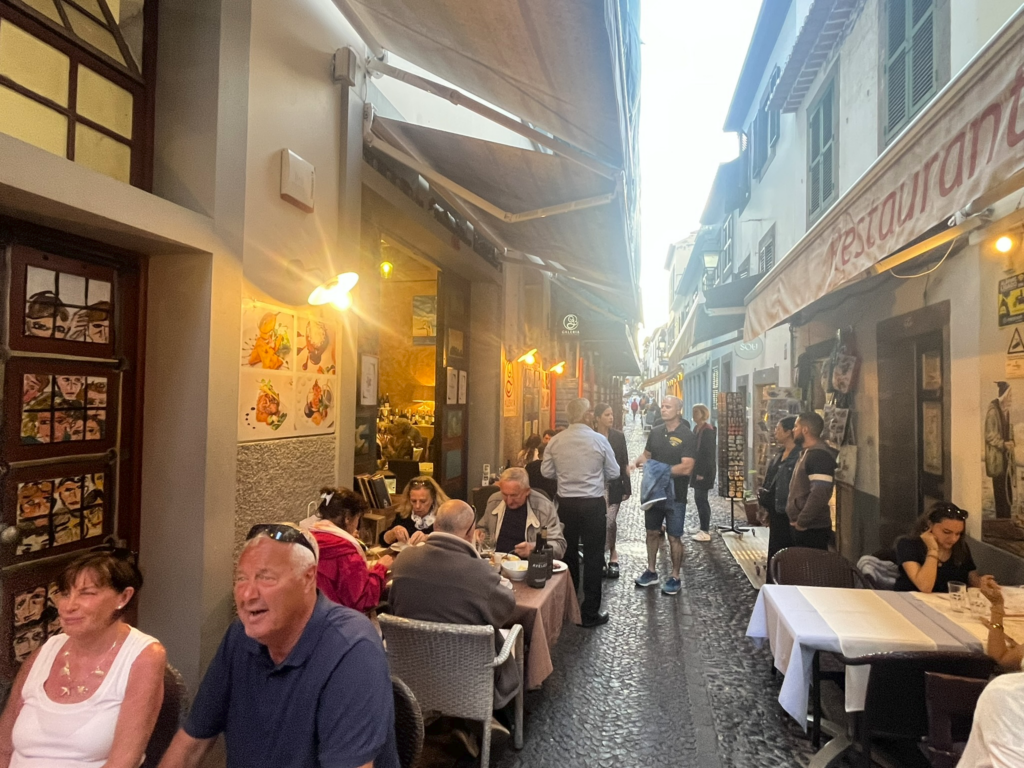
We would have been happy inside, but we chose a street-side table for al fresco dining and people watching, made easy by the table’s diamond orientation, so we could both face the street.
The multi-language menu and excellent English-speaking server made it easy to choose from the many seafood selections (there was also plenty of landfood, but this was our first night on the island, so food from the sea seemed more appropriate ).
Sarah was still a bit full from lunch so she chose the excellent fish soup (which I happily helped her finish) and the tasty ground-meat-filled samosas with almond sauce.
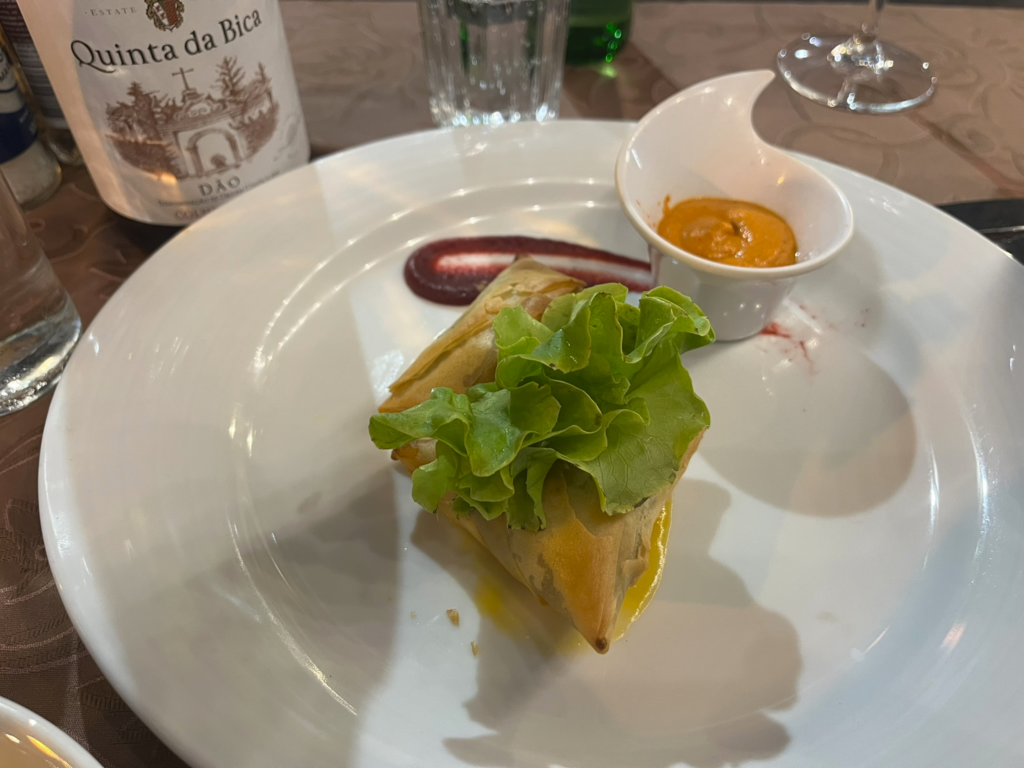
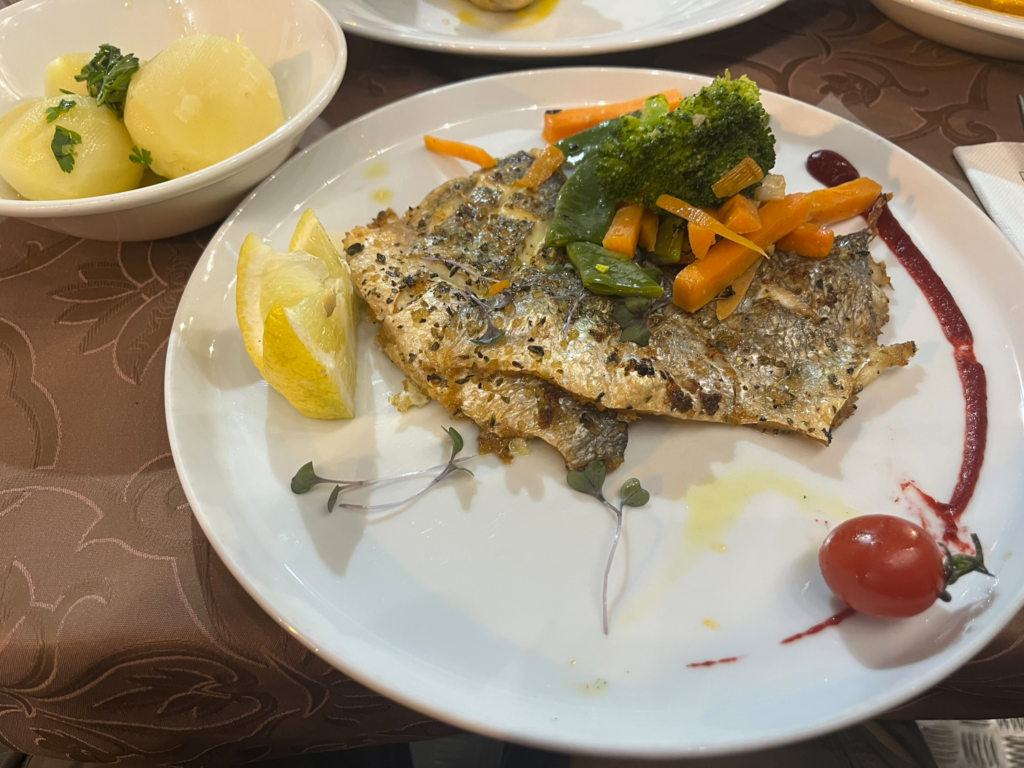
I chose the grilled fish of the day, sea bass, which had beautiful crispy skin on the presentation side and flaky flesh underneath. All it needed was some freshly squeezed lemon juice. Vegetables and boiled potatoes rounded out the dish.
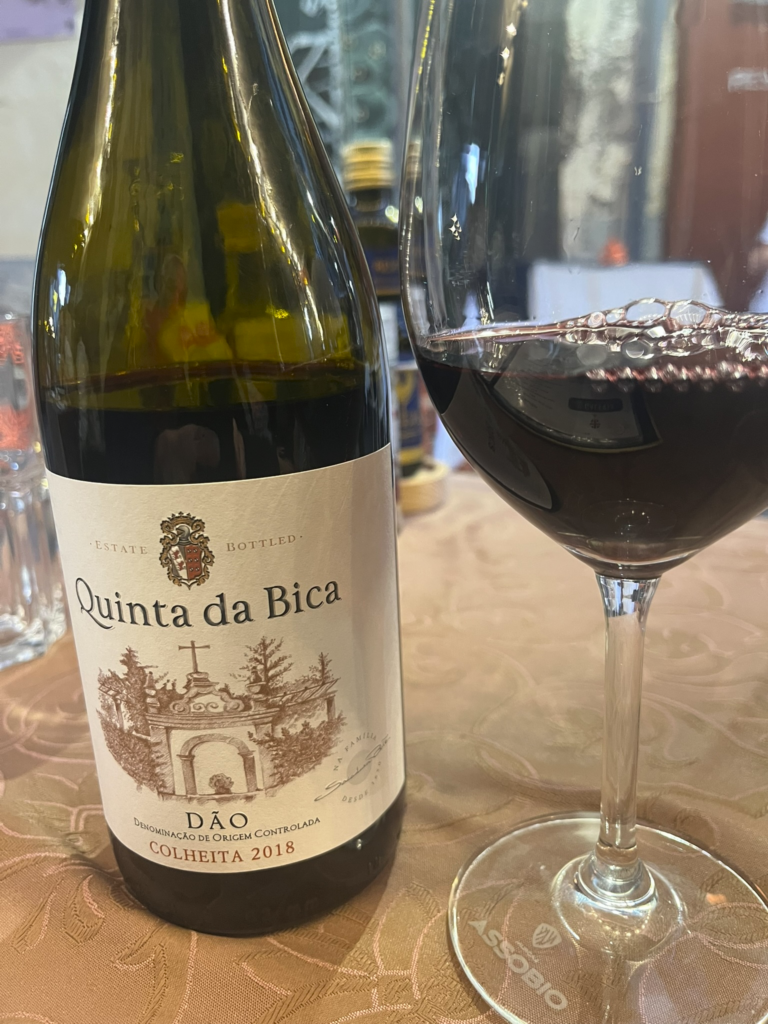
Being philistines who drink red wine with everything, we accompanied our leisurely dinner with a Quinta da Bica from the Dao appellation. Very nice all around.
Mercado dos Lavradores (Farmers’ Market)
We love fresh food markets outside the U.S. This three-level market, which is both indoor and outdoor, is particularly nice.
The lowest level is for fish and operates from early morning until about mid-day.
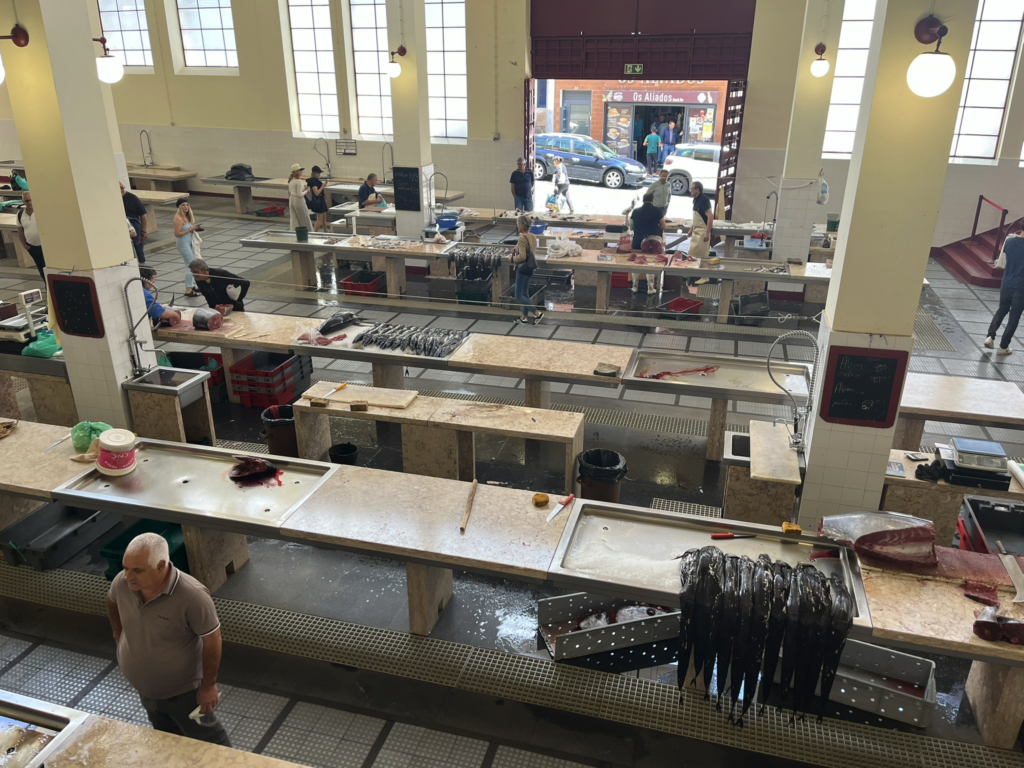
The other two levels sell fruits, vegetables, nice quality corkware (I bought a great cork fedora and Sarah was overwhelmed by the purse selection), olive oil, spices, etc. throughout the day. I didn’t see any T-shirts. 😀
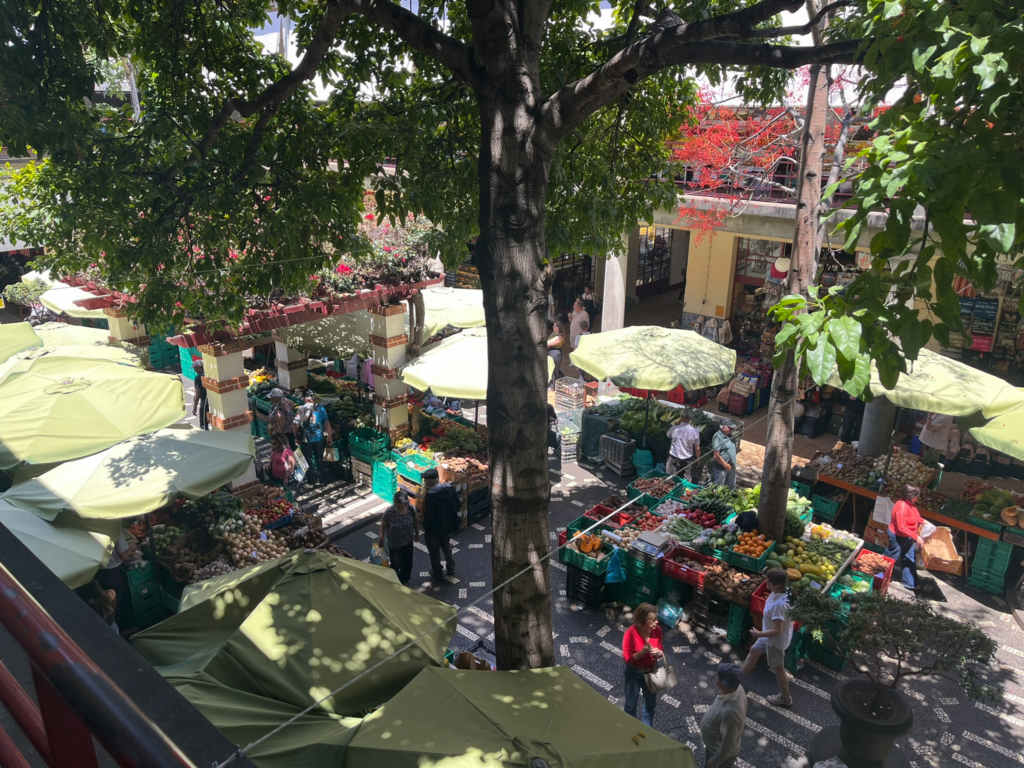
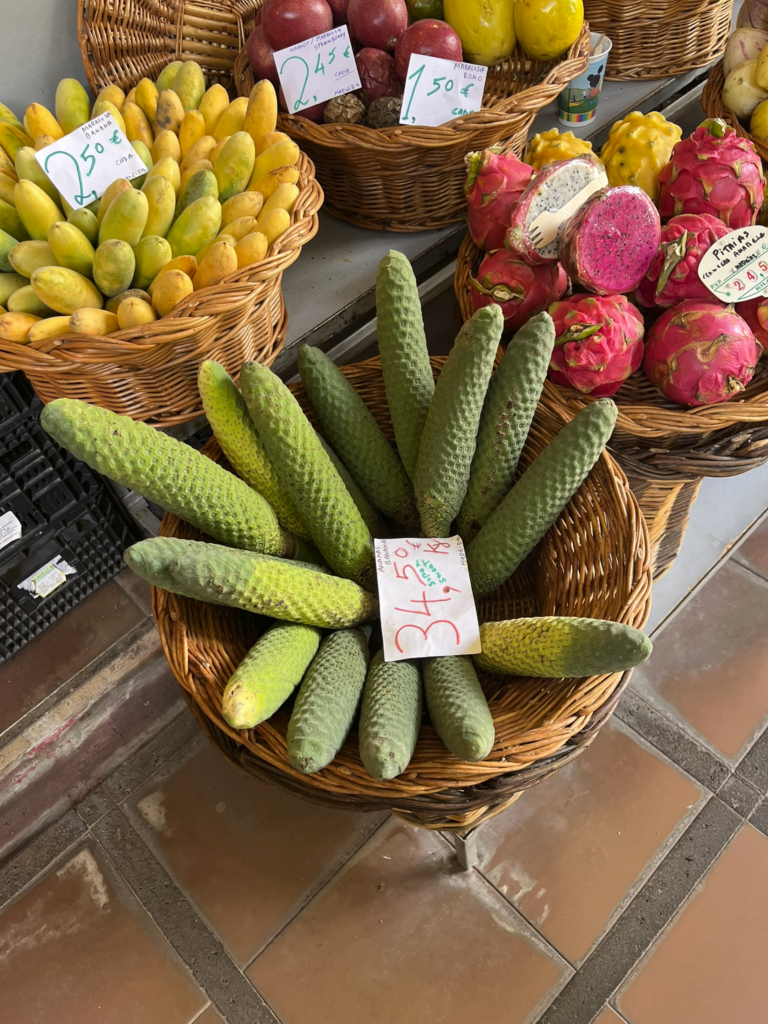
The selection of fruits is incredible, and many of the merchants are happy to have you taste them (in hopes that you buy, which we did).
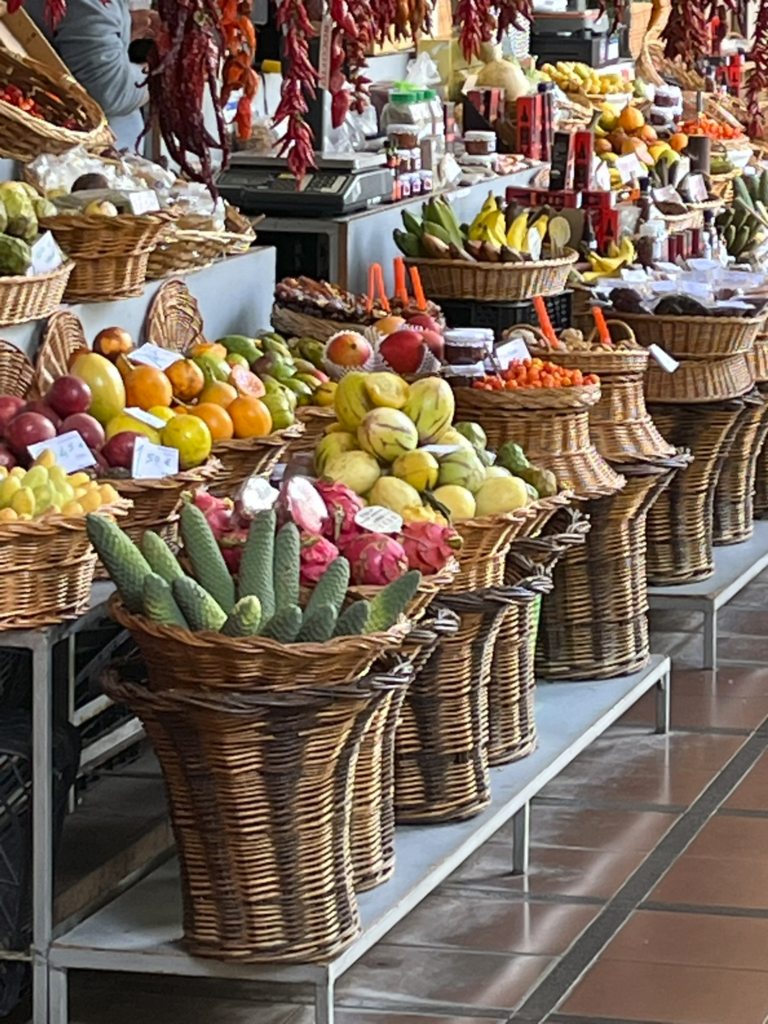
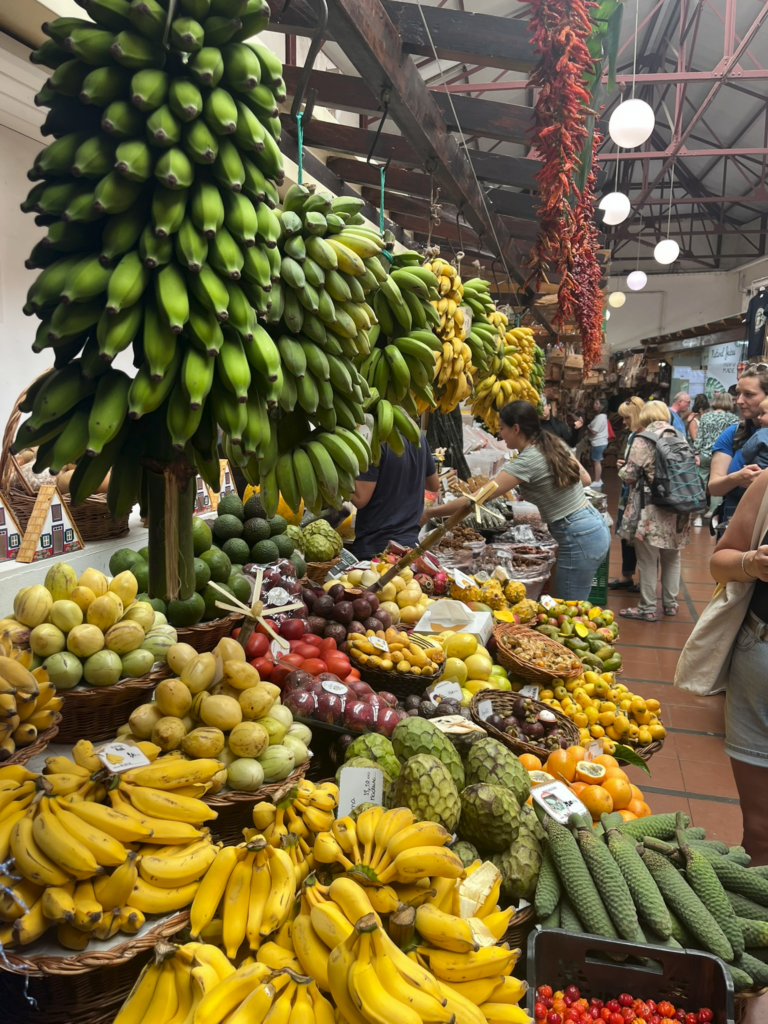
The banana selection alone is, well, a banana nirvana. I’ve seen many of the world’s 1000+ (really) banana varieties, mostly in Asia, but I’ve never seen so many types in one place, particularly the one that’s kind of like a banana version of corn on the cob.
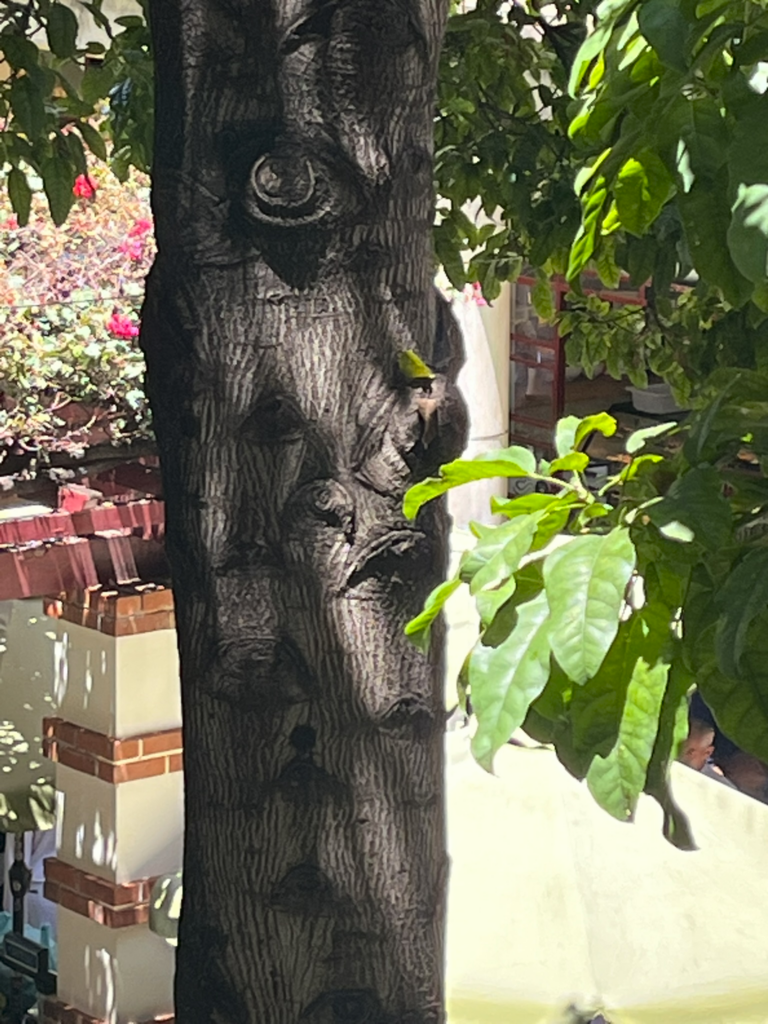
But enough banana talk. The market shares its courtyard with lush plants and trees, one of which had a distinctly grumpy face (can you find it?).
The second level also has two shaded outdoor cafes, one of which we chose for a light lunch. I had a glass of red wine and Sarah was punched by her first poncha of the trip. They go down way too easily.
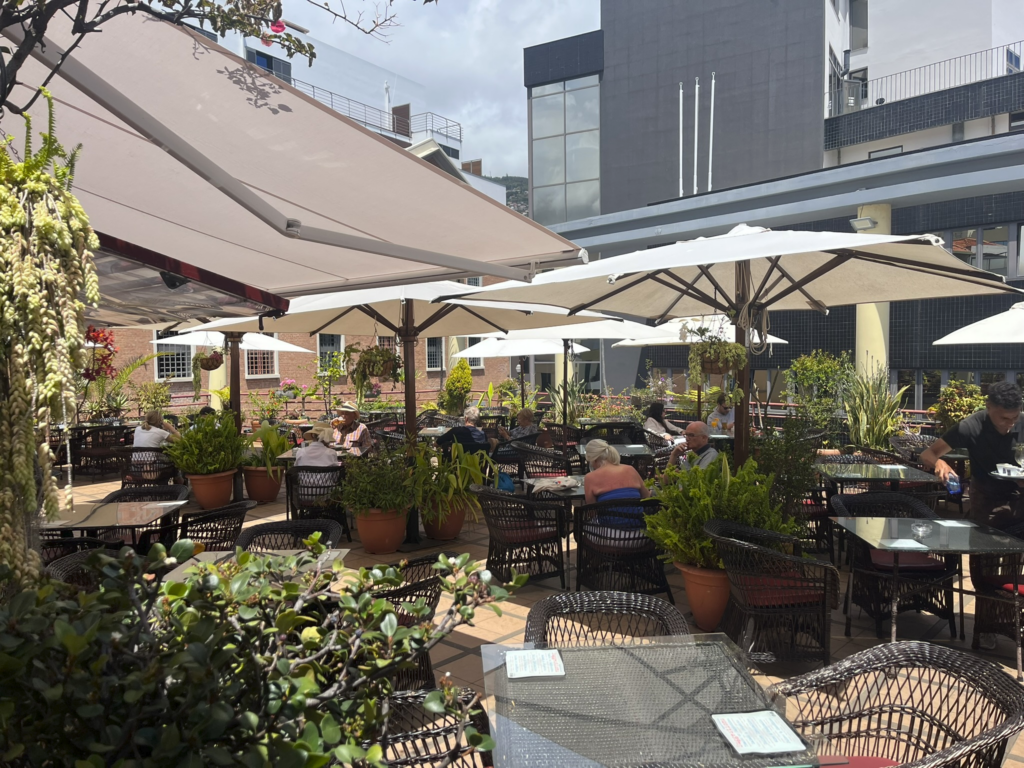
After lunch we grabbed two excellent pastel de nata at the market’s first floor bakery.
This is a great place to spend a couple of hours, as we did. If you like markets, you will like this one. Some reviewers called it a tourist trap but mostly locals shop here for fruits, vegetables, and fish.
Restaurante dos Combatentes
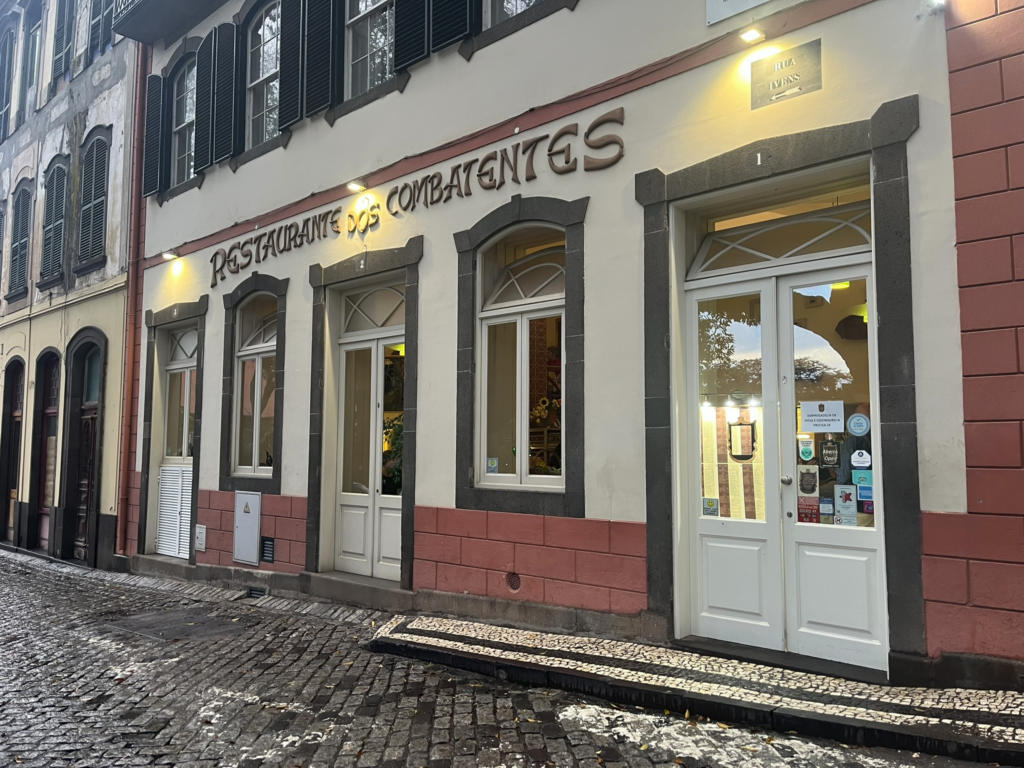
We pinned this classy restaurant in Google maps based on the Pack the Suitcases travel blog (recommended). But we may not have actually dined there but for the fact that we stumbled upon the restaurant as we were exploring Funchal. Glad we did.
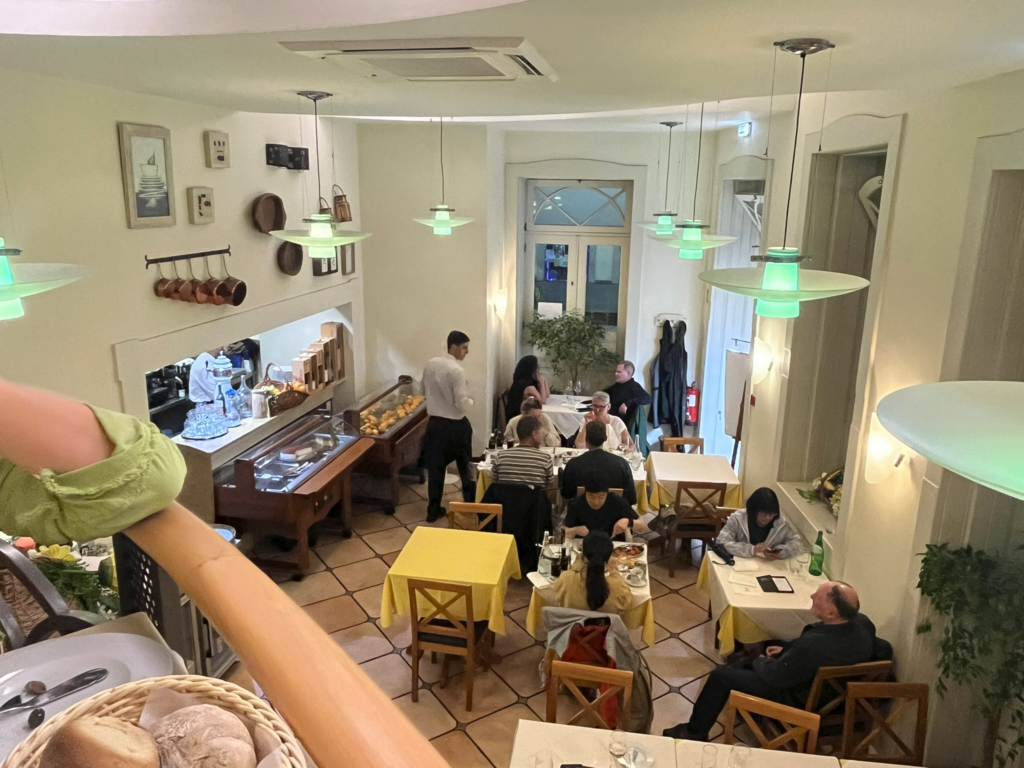
We made a reservation for that same night, requesting the duece along the balcony railing. When we arrived at the appointed time, the table was waiting empty for us in a very full and busy restaurant. Thanks!
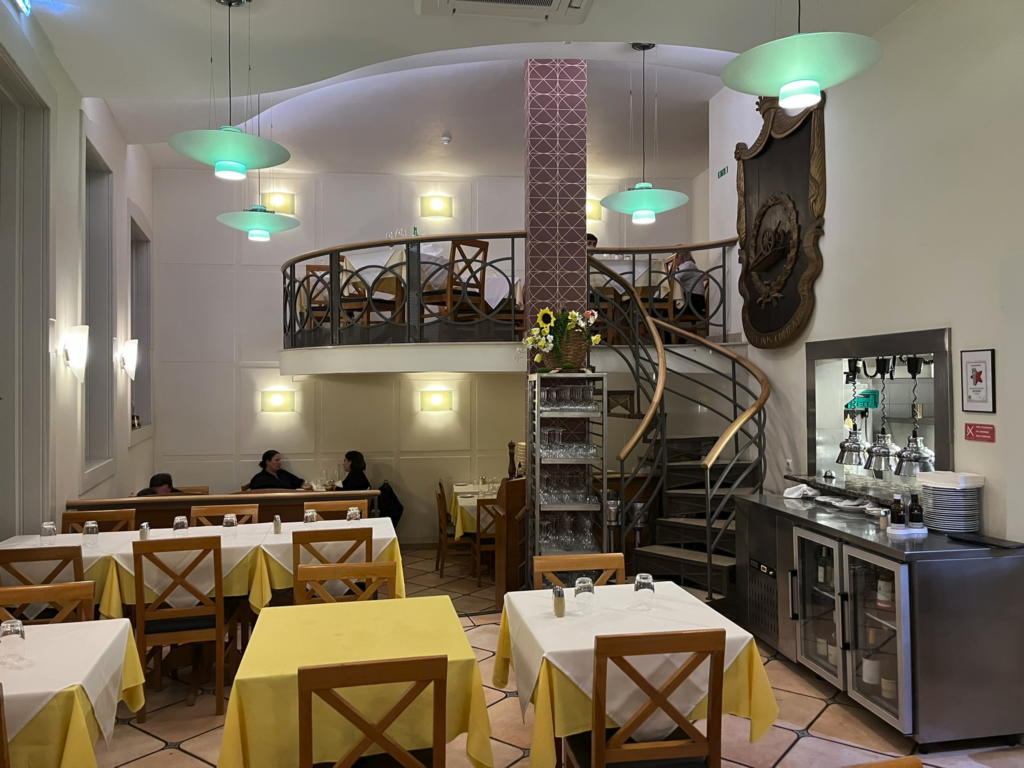
This table really is the best in the house (for two people), but I must provide a warning. Other guests are dining directly below the railing.
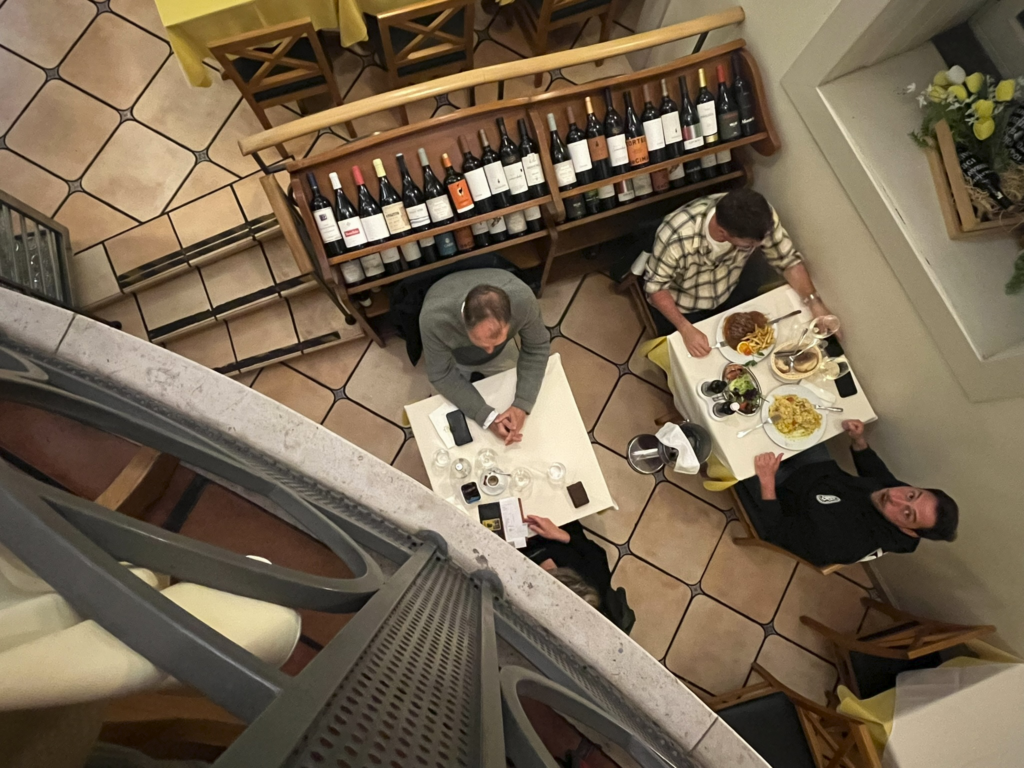
I was worried during the entire meal that we would accidentally knock our wine bottle or a full wine glass onto unsuspecting diners below. For the restaurant, I suggest providing helmets for guests at the lower-level tables, which would be in keeping with the restaurant’s name. 😀
Other than worrying about wine-bombing the table below, we had a delightful and excellent meal from a menu that is just as strong on both seafood and landfood, and the service was excellent.
Blandy’s Wine Lodge
Although we are fairly knowledgeable wine lovers, we knew nothing about Madeira’s namesake wine. And — being sweet — we were not sure we would like it.
But we signed up for the Vintage Tour on an afternoon when rain threatened, and the tour changed that.
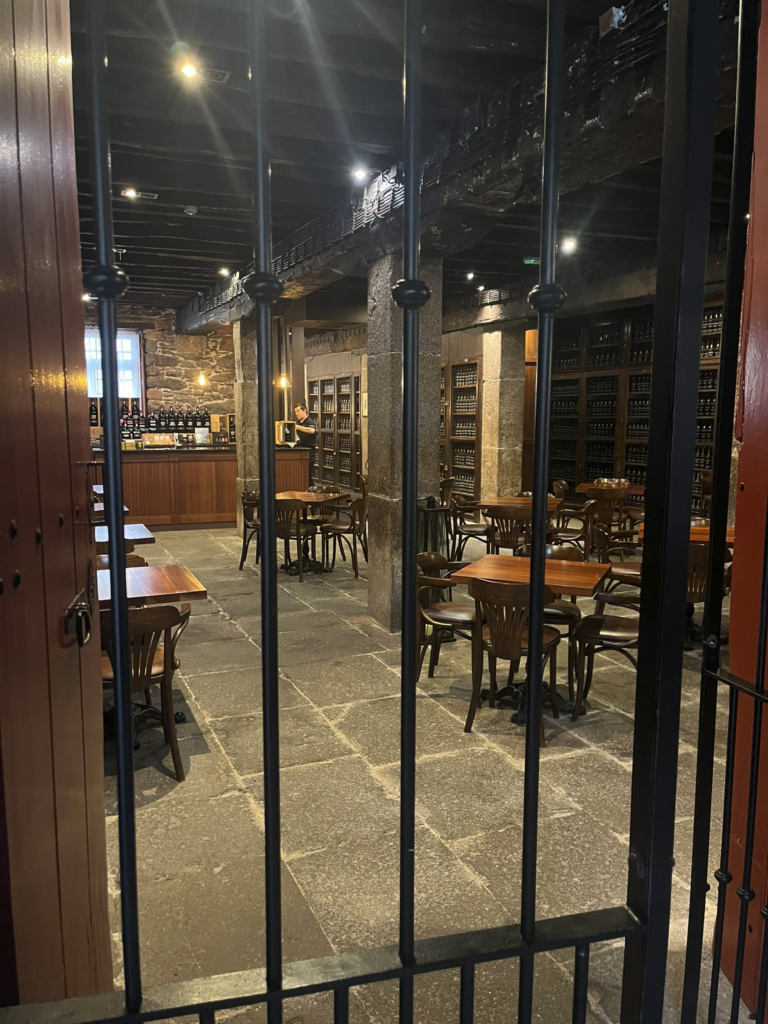
You can await your tour in leather comfy chairs in the far end of the wood-beamed gift shop, or outside near the wall of flowers. We chose both.
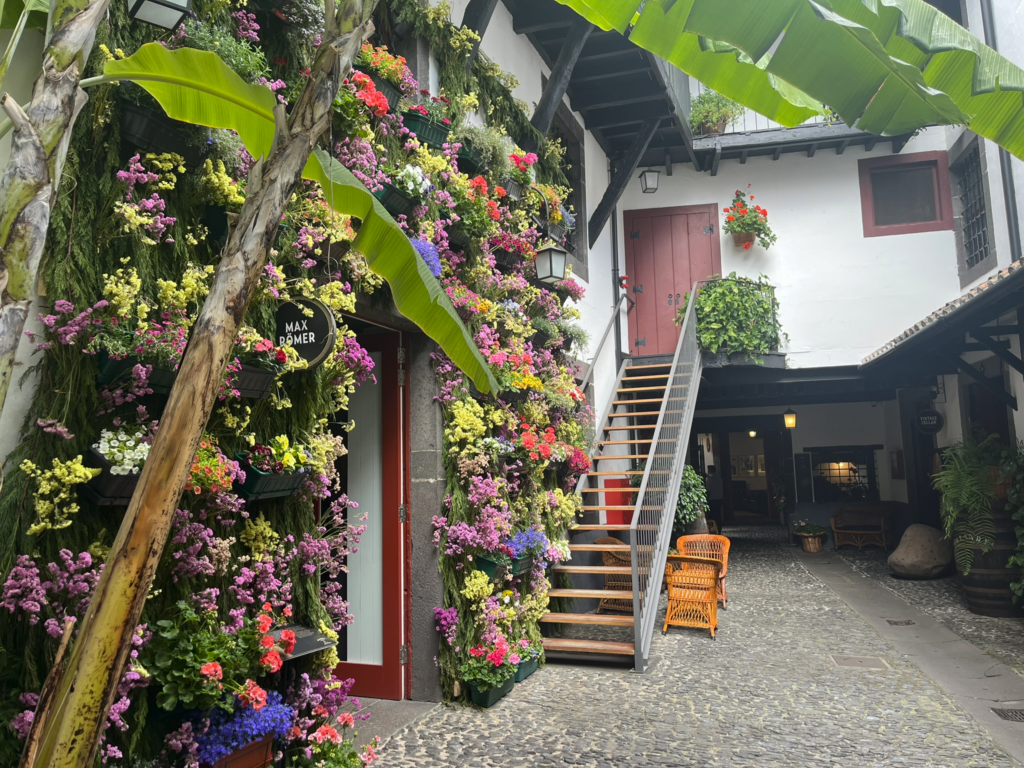
While we were waiting outside, we checked out the winery’s restaurant, which looked like a good future dinner spot.
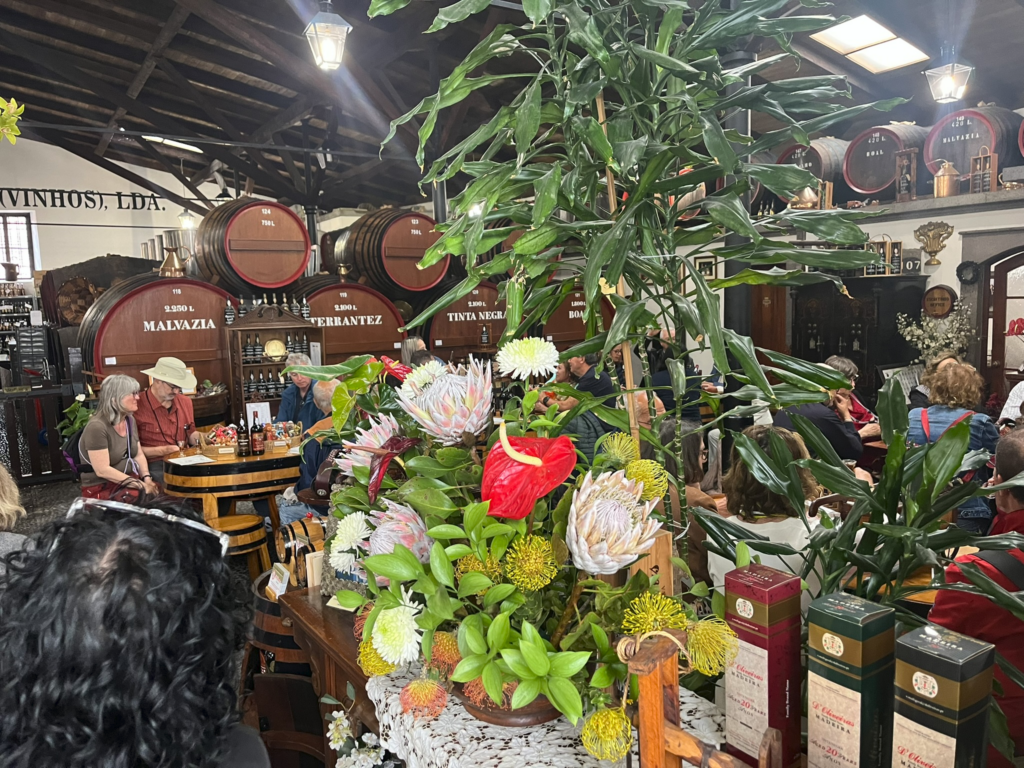
Stepping back into history, our great tour guide then led us through the myriad charming old buildings on the property, where we learned all about Madeira and saw many very big old oak barrels with wine aging as long as 75 years.
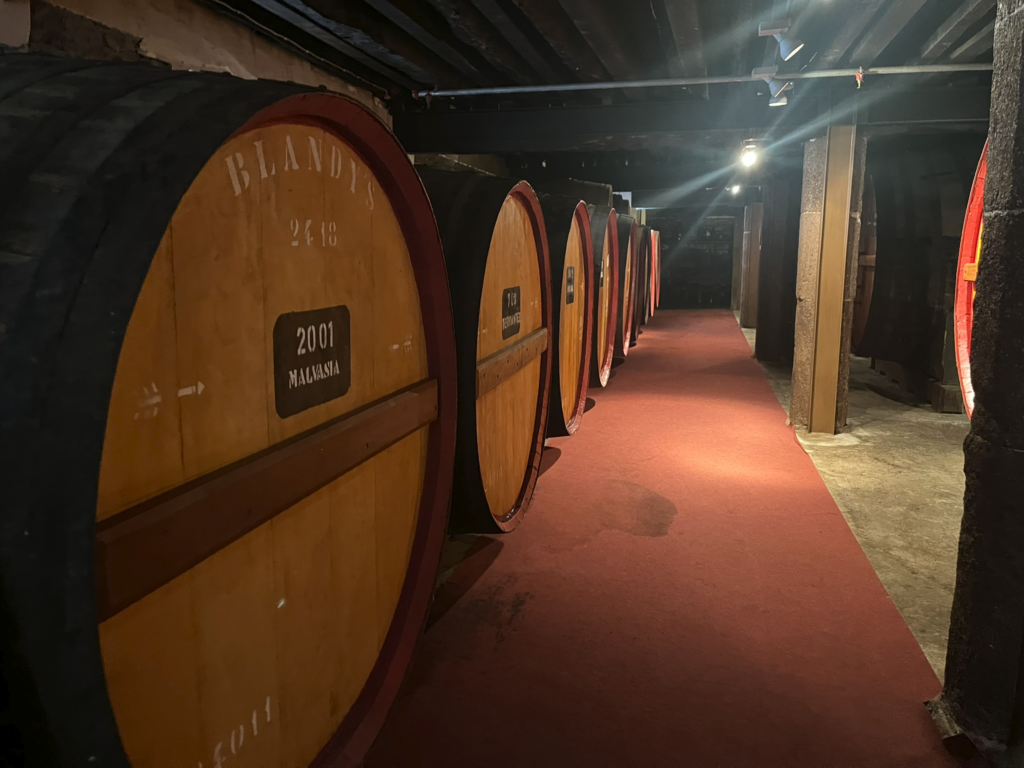
There’s also an interesting museum and we saw a library of old bottles reaching back to the early 1800s (alas, they don’t offer library cards). Because Madeira only ages in casks, not in bottles, the wine in the library’s old bottles should taste the same as the day it was bottled (see, we learned a lot), but we’ll never know about those bottles.
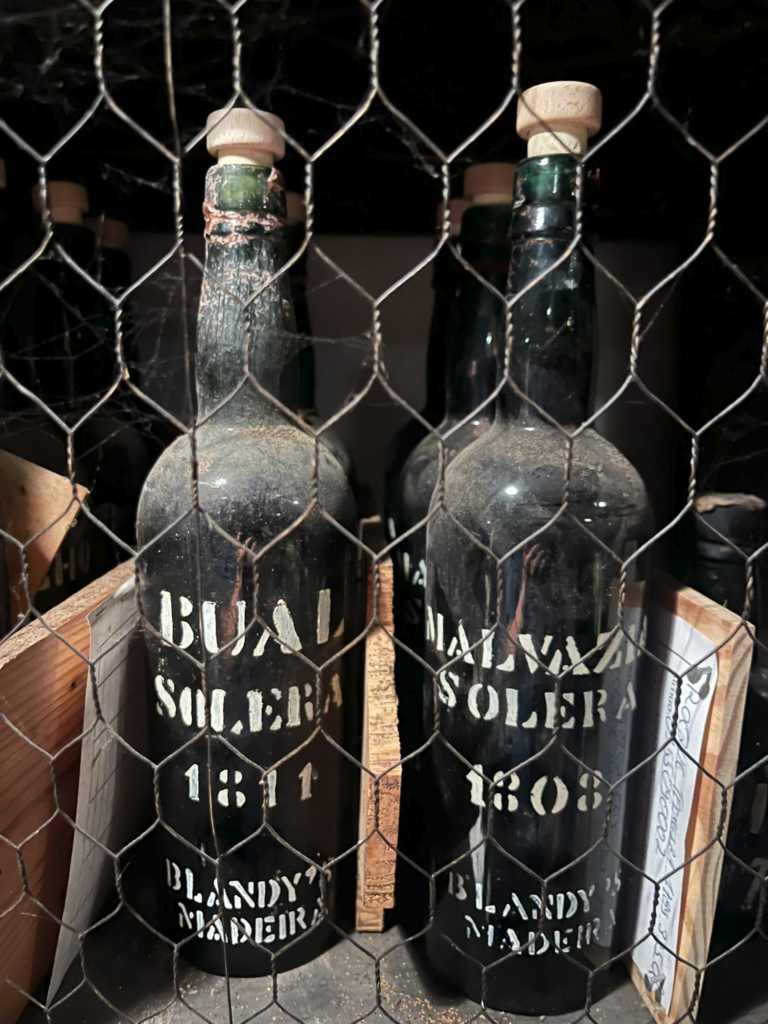
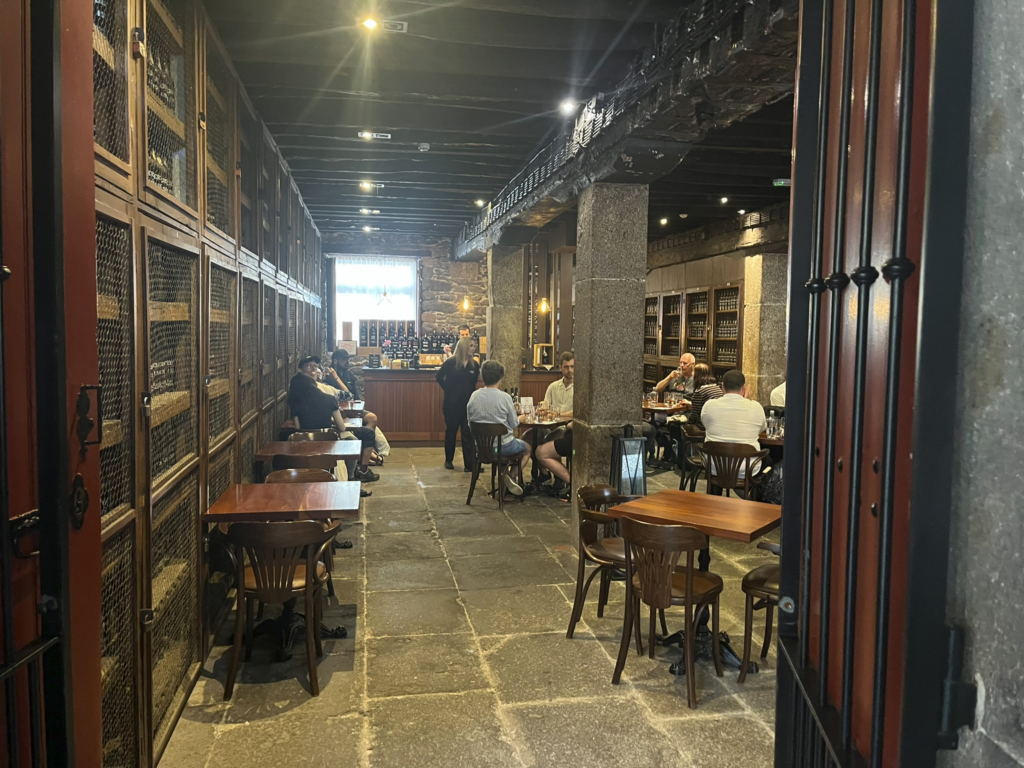
The tour includes a tasting, in a clubby, wood-paneled room with lockers of more old bottles, along with some magnums and larger.
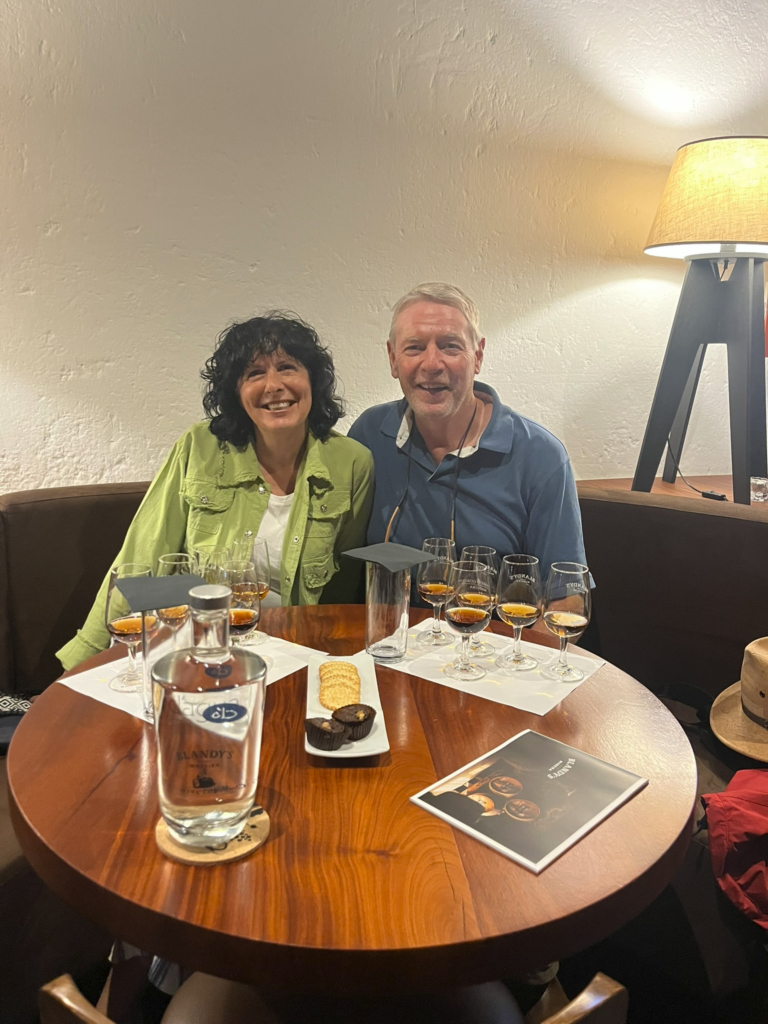
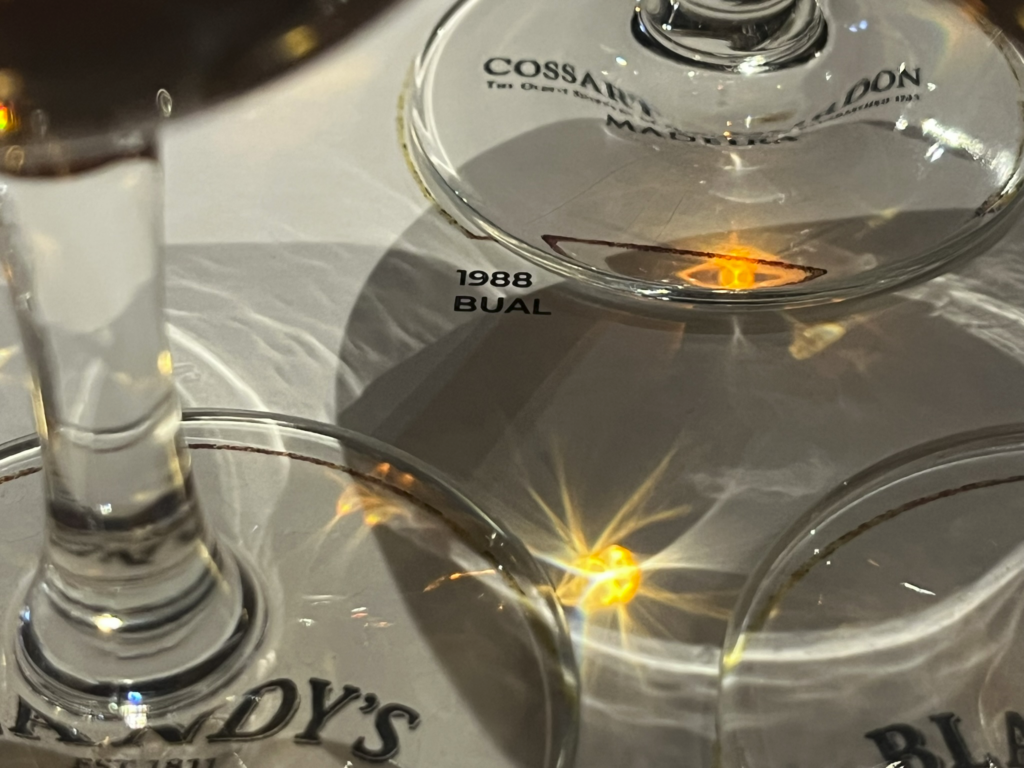
By tasting four ten-year Madeiras made from four different grapes, along with a 1988 vintage, we also learned that Madeira is not as sweet as Port and not as harsh as Sherry.
Last cocktail party fact: the island’s economy runs on three engines: Madeira wine, tourism, and — wait for it — bananas. To support the economy and to have a nice apéritif or after-dinner drink back home, you can buy bottles here at a discount, then pick them up after security at the airport, so you can carry the bottles on the plane. But after those bottles are but pleasant memories, the challenge will be to find good stuff like this in the U.S. But we like a good challenge.
Tapas Y Copas Funchal
This cool and lively fine food joint offers plenty of outdoor and inside seating on several levels of what struck me as several stacked stainless-steel outlined glass-fronted boxes (I liked the architecture).
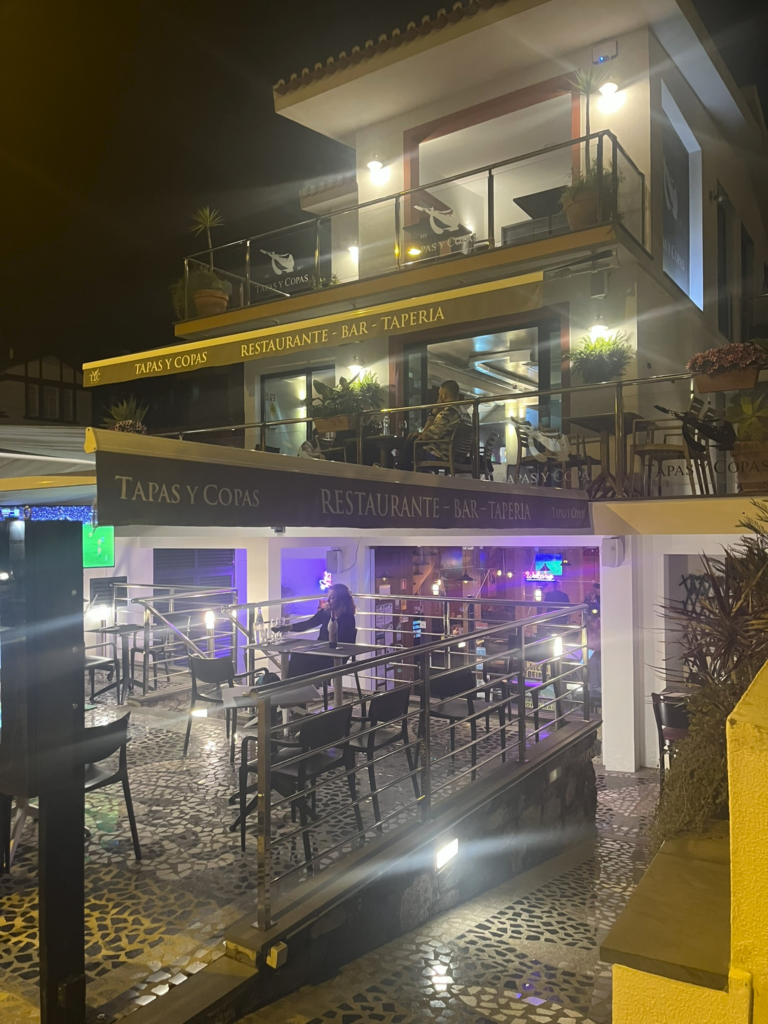
The outside floors’ mosaic tiles, bar level’s brick wall, wood-like tile floors upstairs, mottled-paint walls, dark wood tables, and well-placed travel posters give the place a clean but comfortable feel.
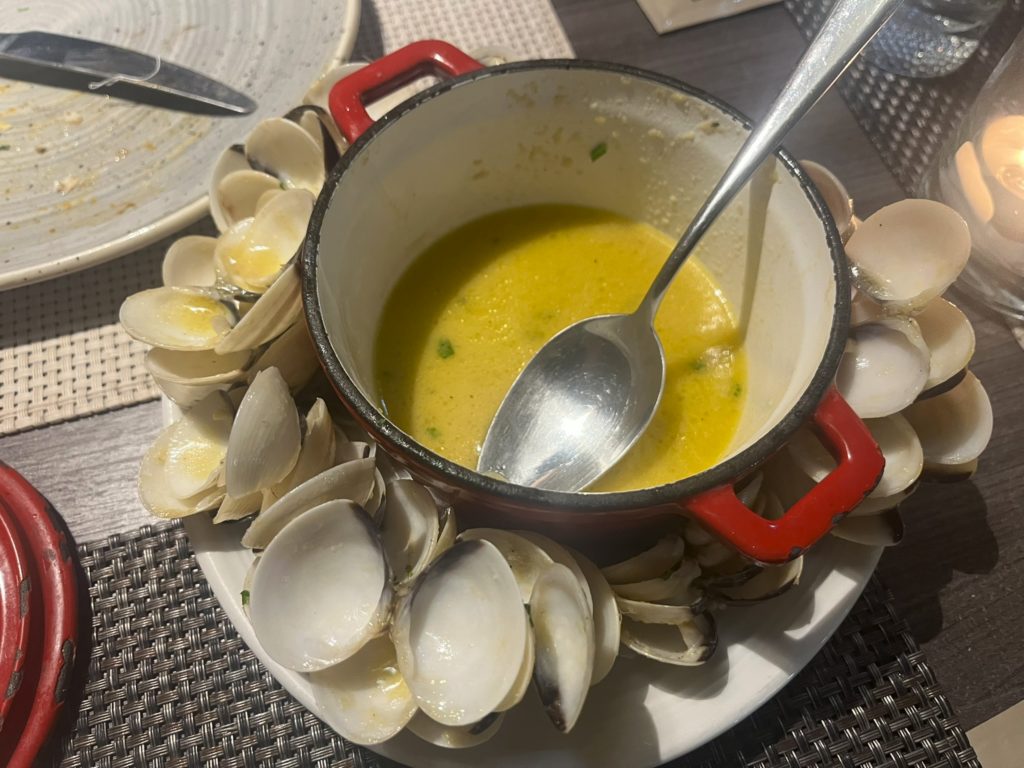
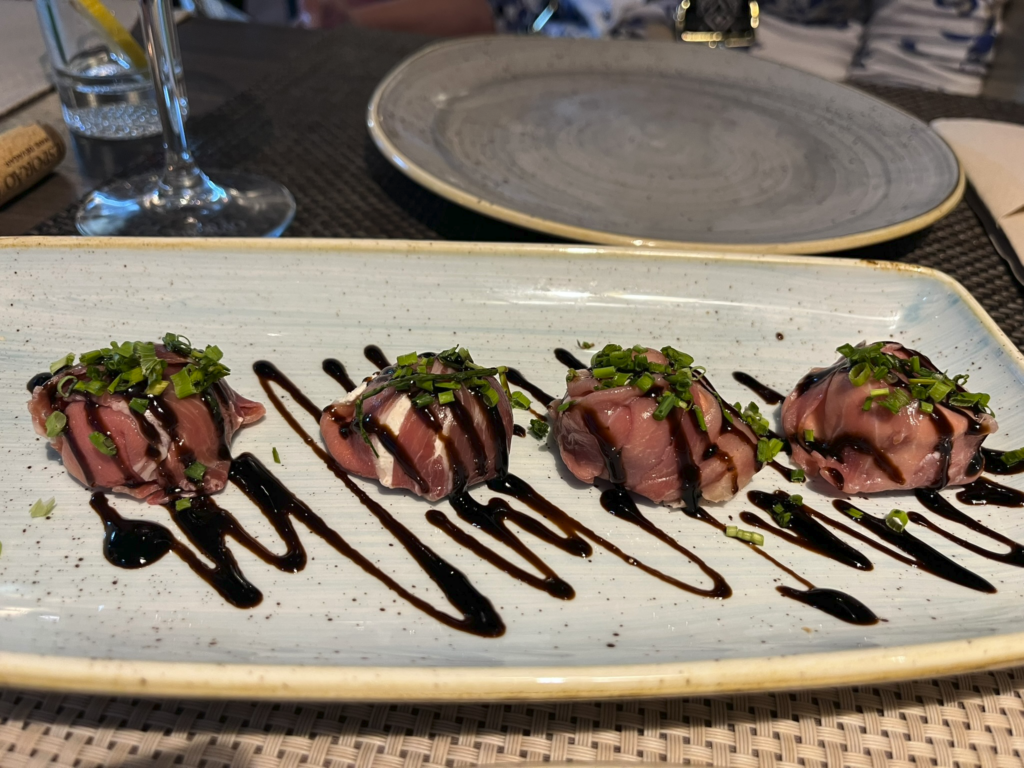
The food is Spanish tapas. Generous portions but still tapas, and many different menu choices.
The list also offered good wine choices by the bottle but limited choices by the copa. This was not a problem for us because we always order a bottle but if more copas had been offered we may have tried several different wines by the glass instead of buying a bottle of one thing.
On the Sunday night we were there, live music filled the first floor inside, so the volume was perfect for us on the second floor.
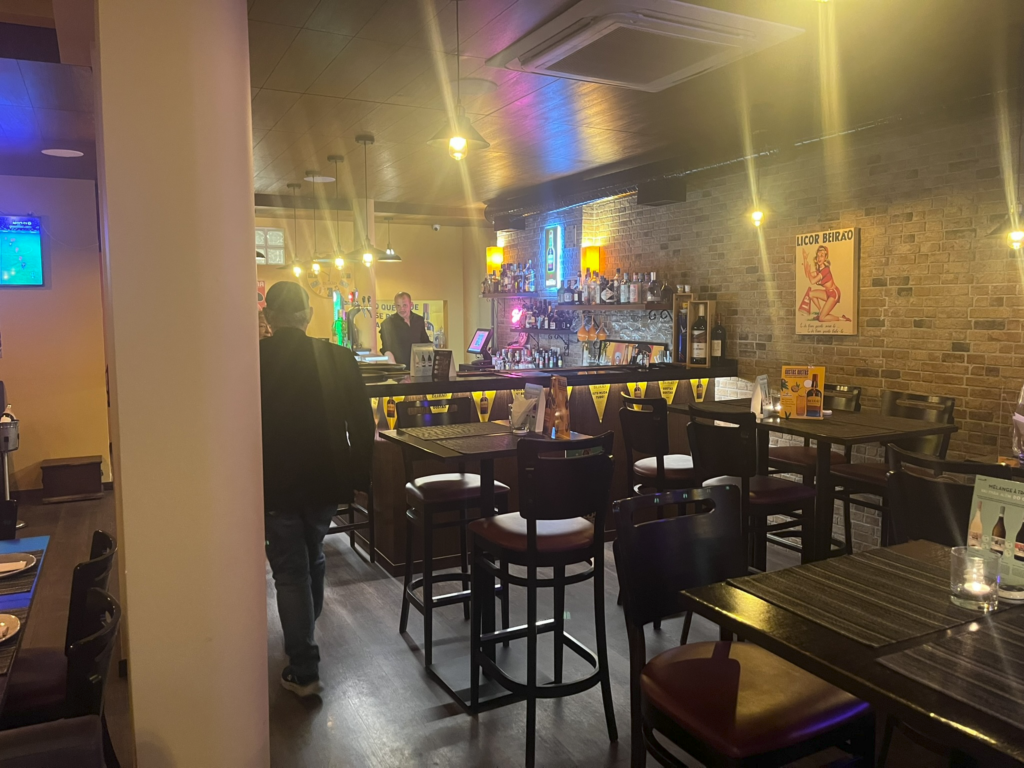
Unique feature: on each table was a device to call a server. Push the button and a server comes quickly. I have never seen this before, anywhere. I need to get one for my wife. 😁 The food we chose was all excellent.

Cable Car
There are five ways to get to the attractions around the upper cable car station: bus (scenic but boring), taxi (same), car (limited parking, and keeping one’s eyes on the road is advised), walking (very steep), or cable car (fast and exciting). Guess which one we chose?
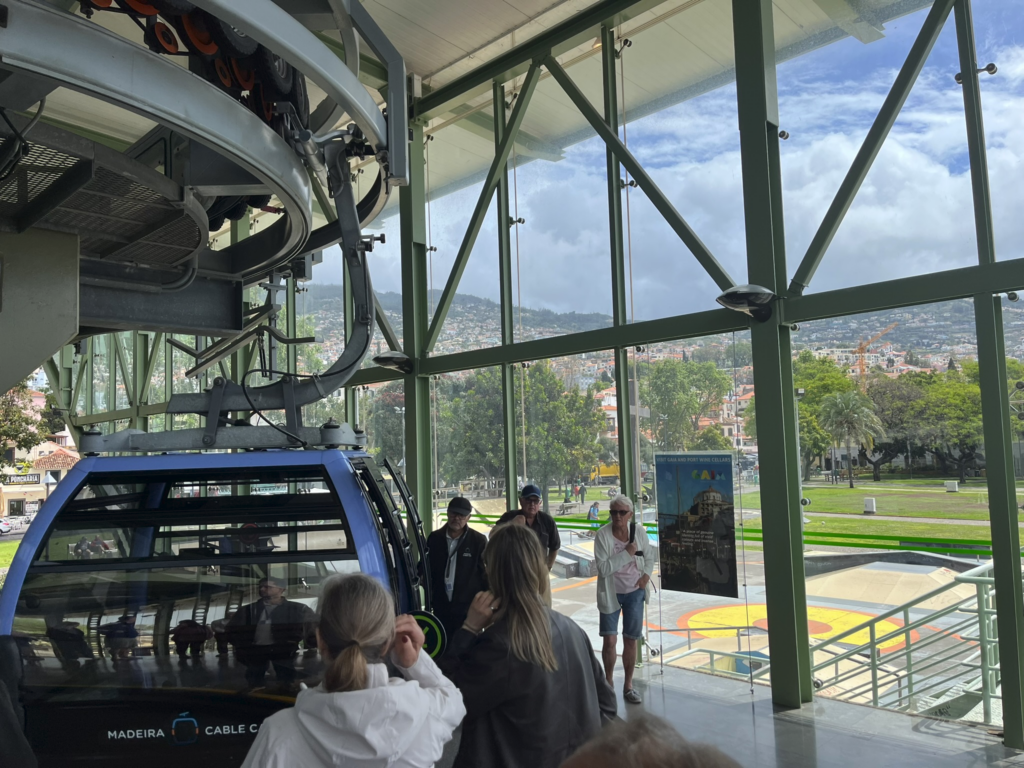
After you arrive, there is easily a whole day’s worth of things to do, and several places to eat.
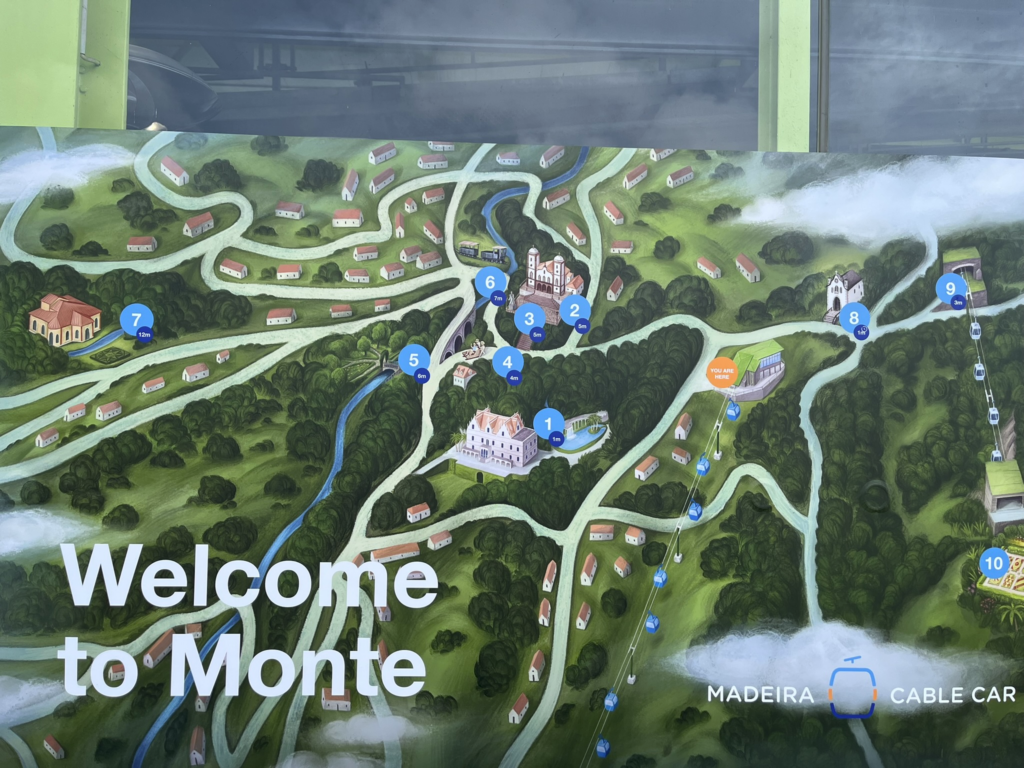
On our first trip to the top they were only selling one-way tickets because weather threatened to shut down the operation. This didn’t happen, but if it had, three of the remaining ways to get to the top will also get you back down (guess which three).
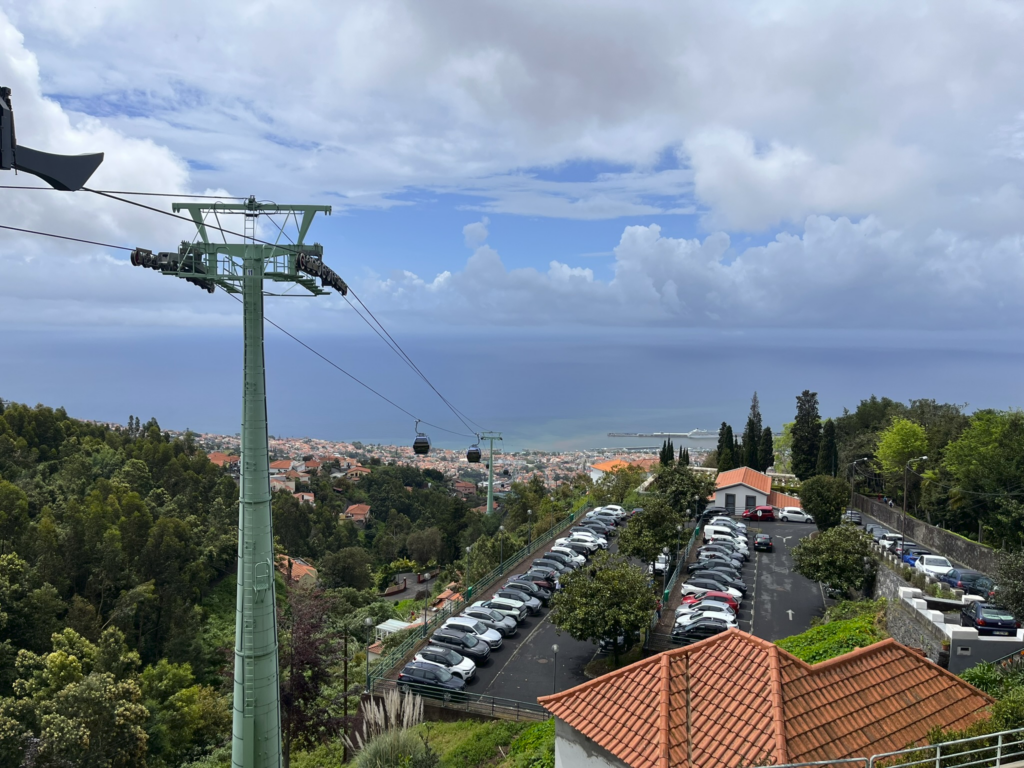
We chose to walk down. Our research said walking down takes a half hour. Wrong. I have a lot of hiking experience, usually behind Siberian Huskies at SHS (Siberian Husky Speed). Of course it depends on your personal speed but about an hour is more accurate.
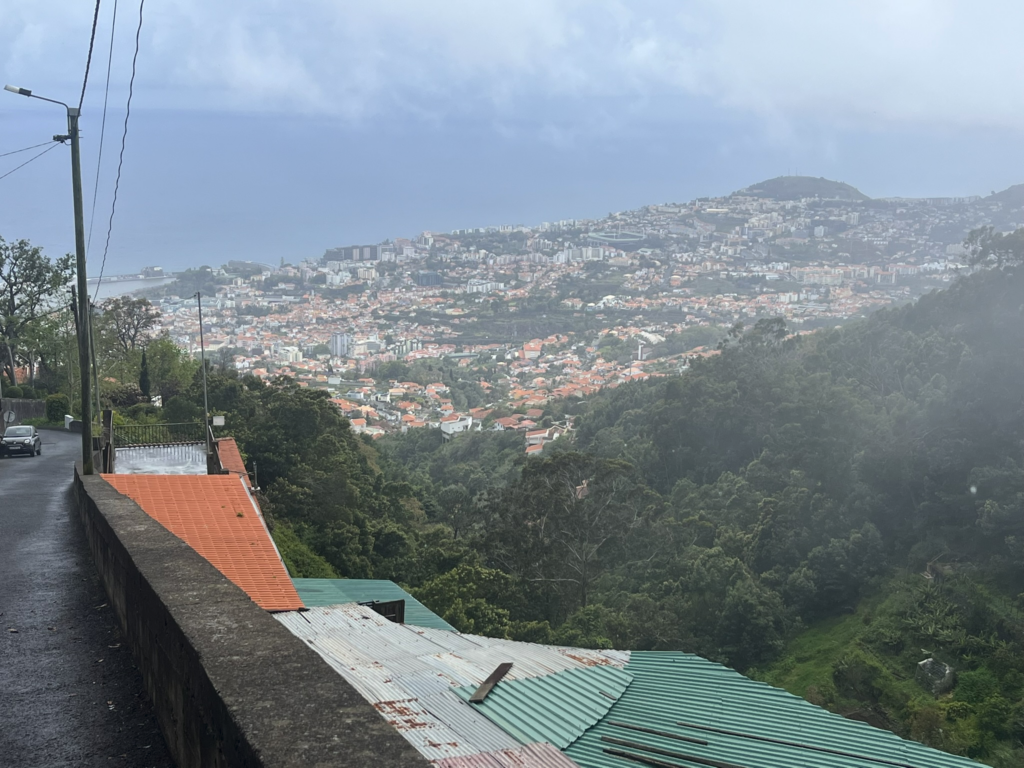
The road, which is a straight shot to downtown, is too steep to walk very fast. I also believe hiking up anything is almost always easier than hiking down. This is especially true here. It’s steep most of the way, which puts impact pressure on the knees and hips. But this is just a warning. We’re glad we did it and would do it again, and it was more fun than any of the other ways to get back to the base.
Botanical Garden
Reach this garden by taking the cable car from the lower station in Funchal. Then, when the cable car reaches the top, walk to the right of the cable car (as you are riding up) to the ticket booth for a different cable car to take you down (in a different direction) to the botanical garden.
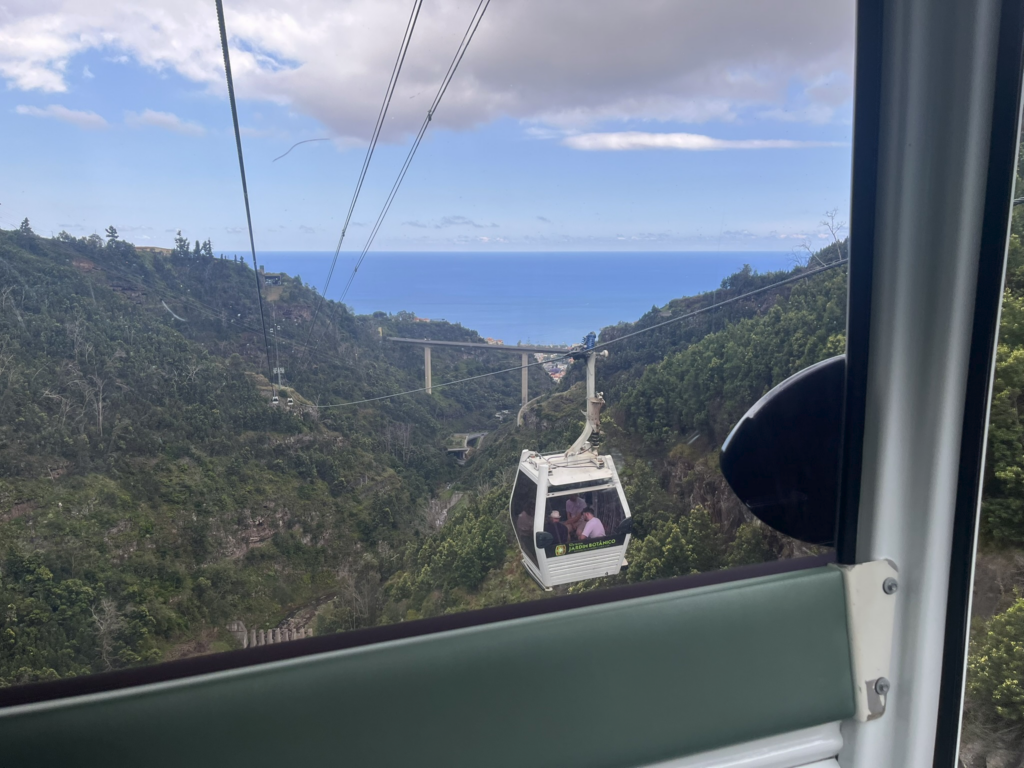
I recommend seeing this garden but I highly recommend that you see it BEFORE seeing the tropical garden at the Jardim Monte Palace, which is to the left of the cable car (as you are riding up). This is a really impressive garden but the tropical garden is better. If you go there first, you may be underimpressed with this garden.
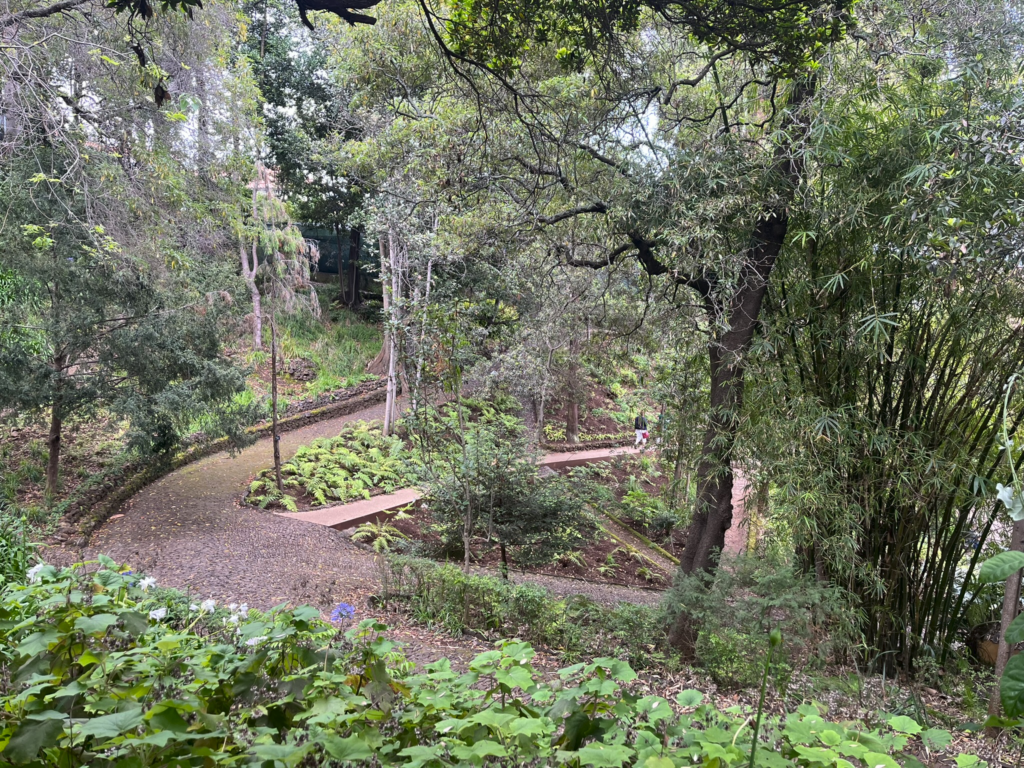
This is a true botanical garden. Everything is labeled with its Portuguese and Latin names. There are topiaries, medicinal plants, tropical plants, palm trees, indigenous plants and trees, frog 🐸 ponds (with frogs louder than you might expect), cacti, etc.
The cactus area is especially impressive, with many huge specimens.
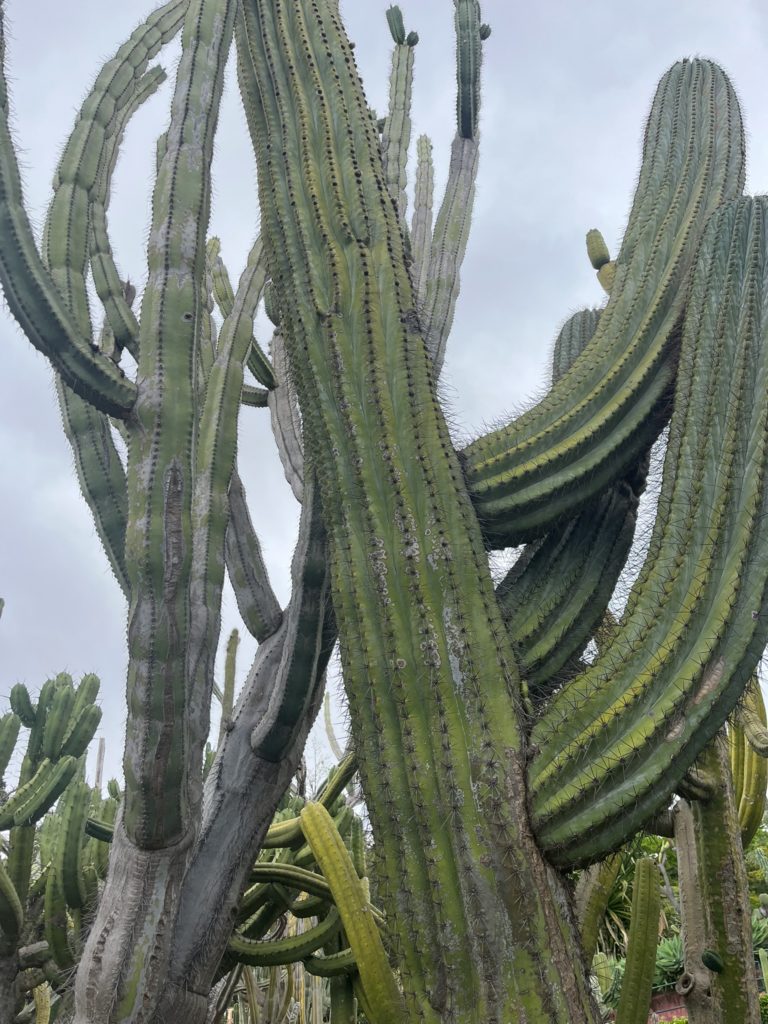
There is also a cafe with indoor and outdoor seating and an amphitheater.
It is really well done and worth seeing, but see it before seeing the tropical garden.
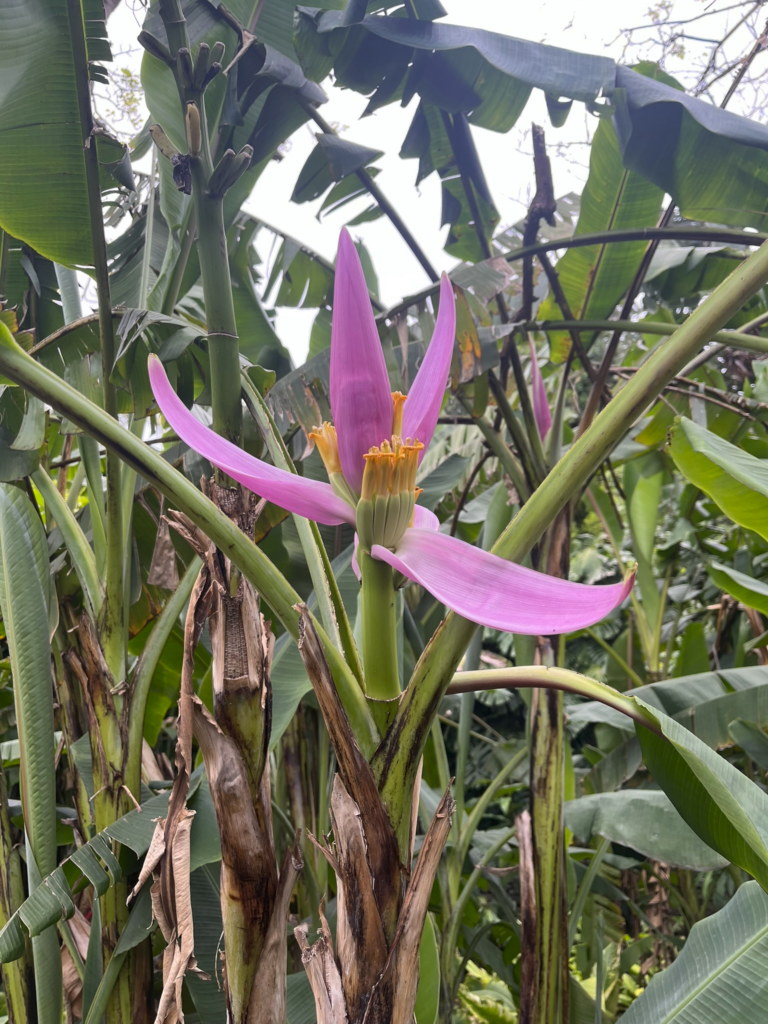
After we worked our way to the bottom end of this garden, we exited the South Gate, from which you can take a taxi or walk down to Funchal. This walk is not as steep or as long as the walk down from the tropical garden.
Espadeiro by Jose De Sousa
This restaurant is one of many outdoor/indoor places lining the two busy restaurant streets in the village of Câmara de Lobos, which is a short bus ride from downtown Funchal.
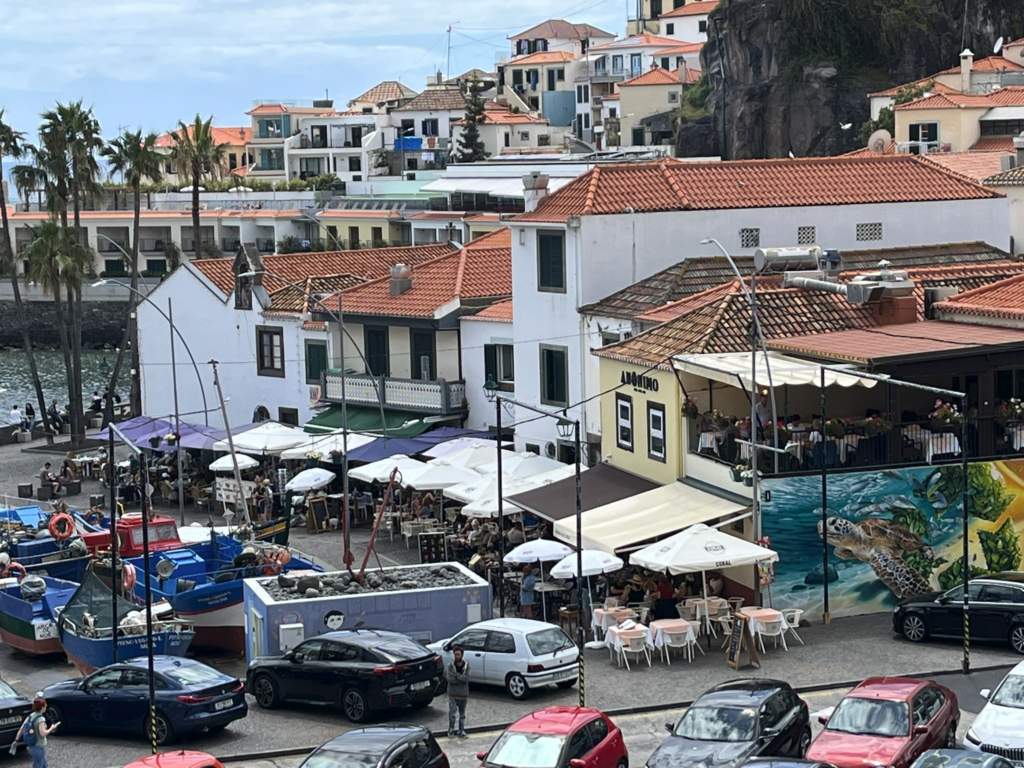
We chose it because another couple vacated an outside table at exactly the right moment, during the busy lunch service.
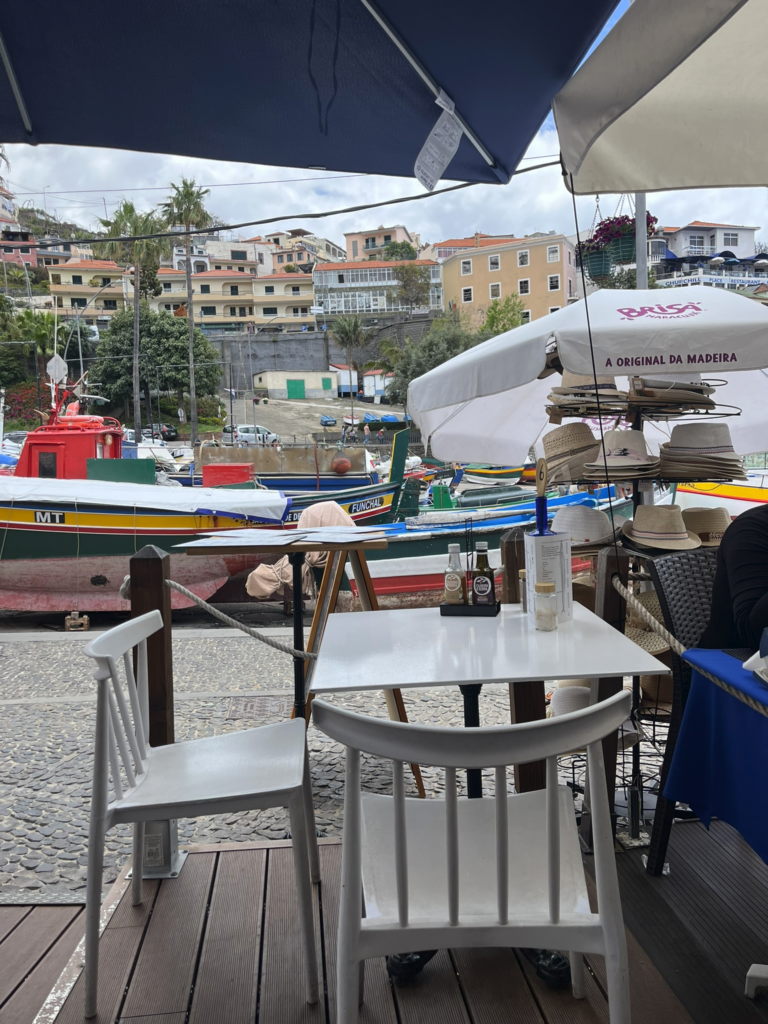
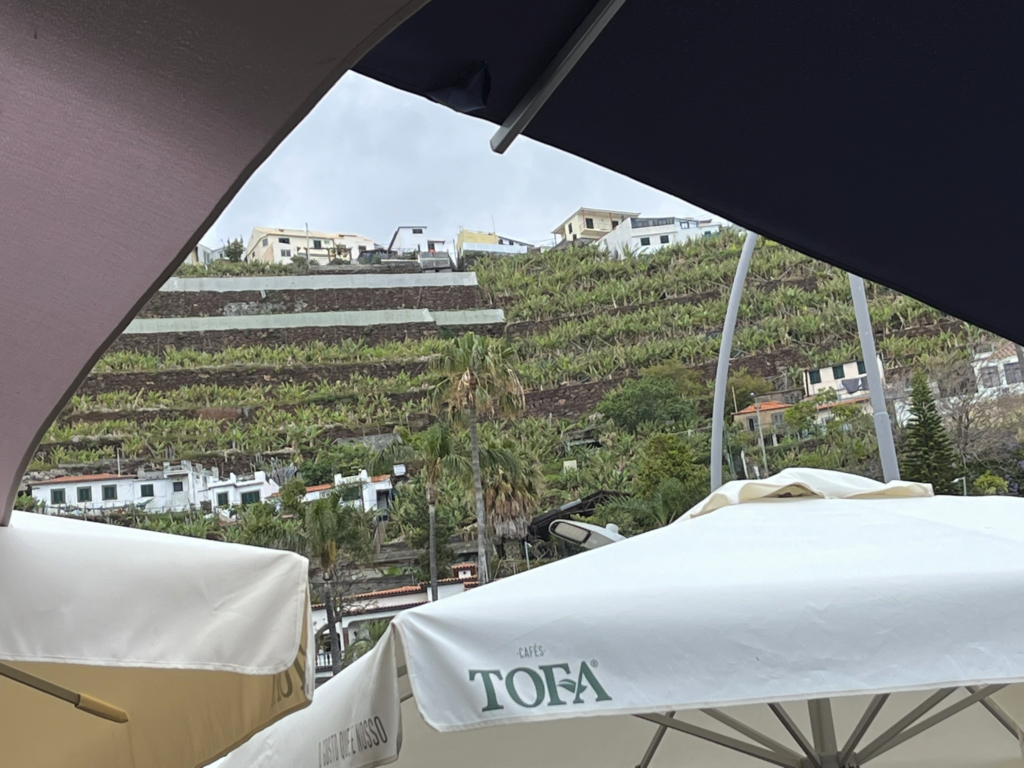
We were able to sit perpendicularly to each other, which allowed both of us to sip our glasses of wine while viewing the fishing boats in the small harbor and the banana-laden hills above, and to people watch.
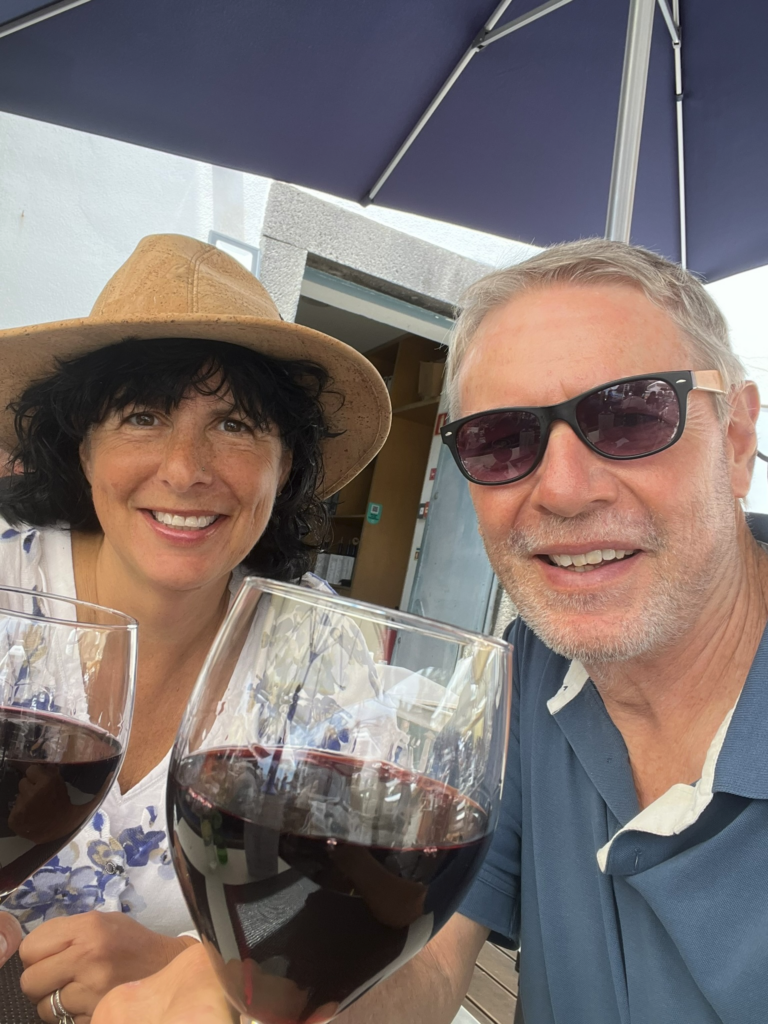
I was most impressed with the wine list, which isn’t long but is printed on a label affixed to a wine bottle. I haven’t seen this anywhere else in the world. Brilliant!
The menu offered the usual suspects for restaurants in this area. But it was here that we had our first-ever scabbard fish (pan-fried) and first-of-the-trip squid (Lagareiro style, which is kind of stewed). Both were well-prepared and tasty. Although the area is touristy, the food was good and the setting was energetic, colorful, and fun.
Jardim Monte Palace Tropical Garden
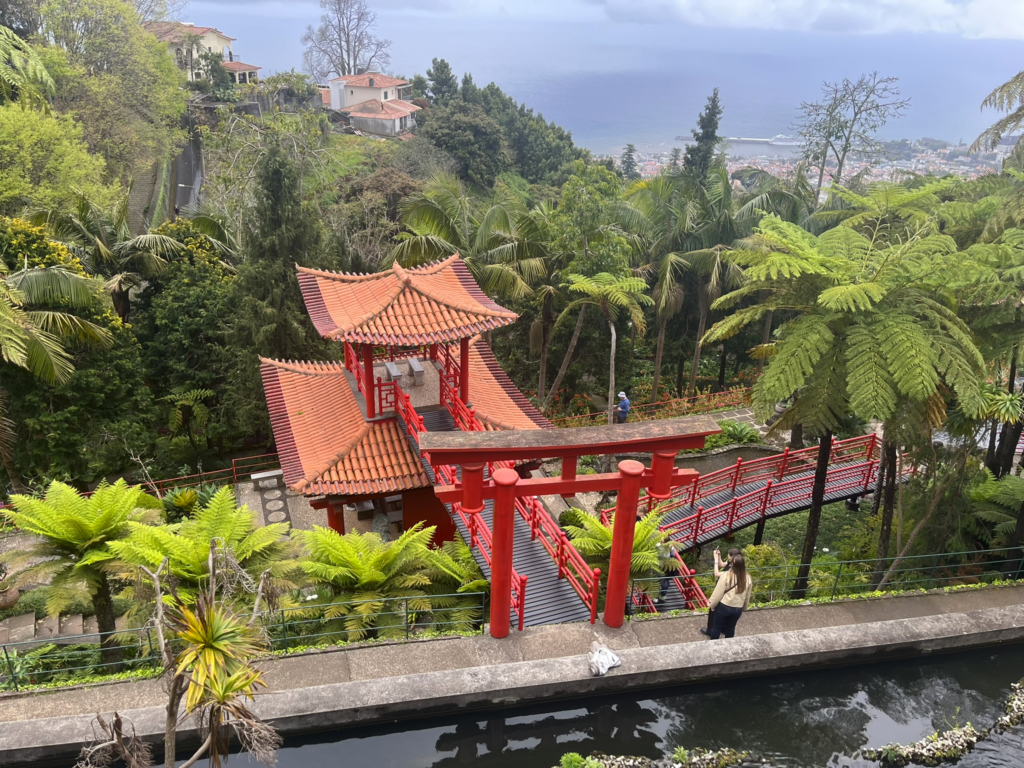
This is one of several things to see and do around the upper cable car station. This is a great botanical garden, but it’s also so much more. Although the palace is the centerpiece and it’s not open to the public, you can spend hours wandering the lush maze of the grounds that surround it.
Warning: the property drops in elevation from the top/entrance to the bottom and what goes down (you) must also come back up. So keep this in mind if you are perambulatorily or pulmonarily challenged. I believe an antique car-like vehicle can bring you back to the top but don’t count on it.
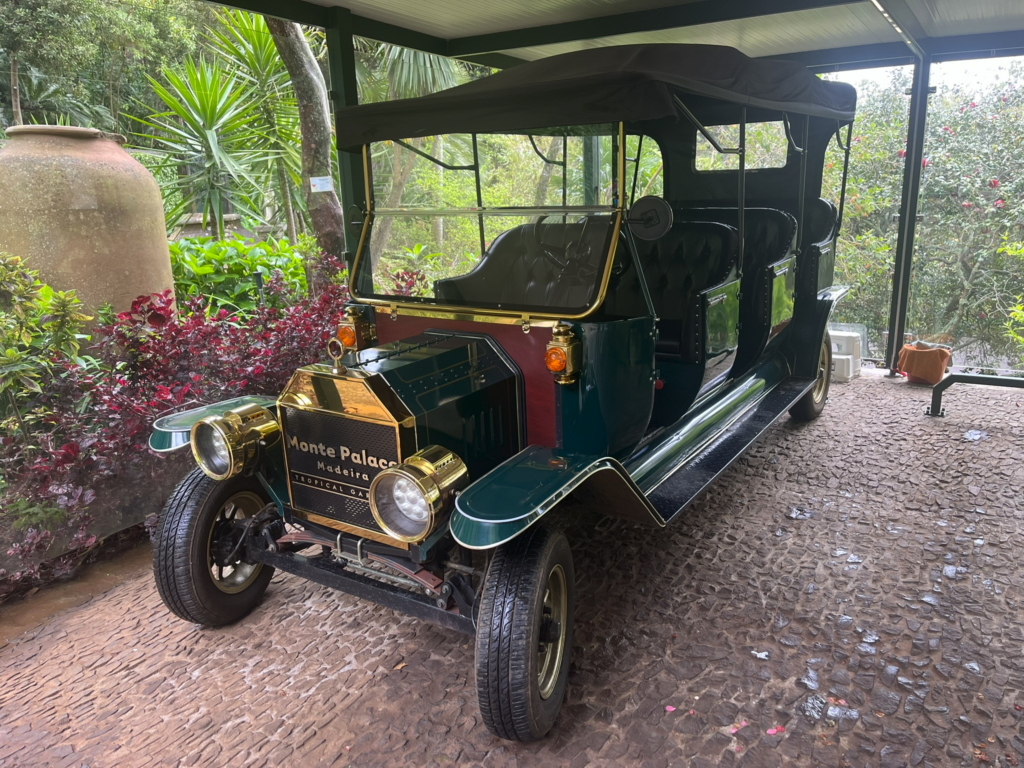
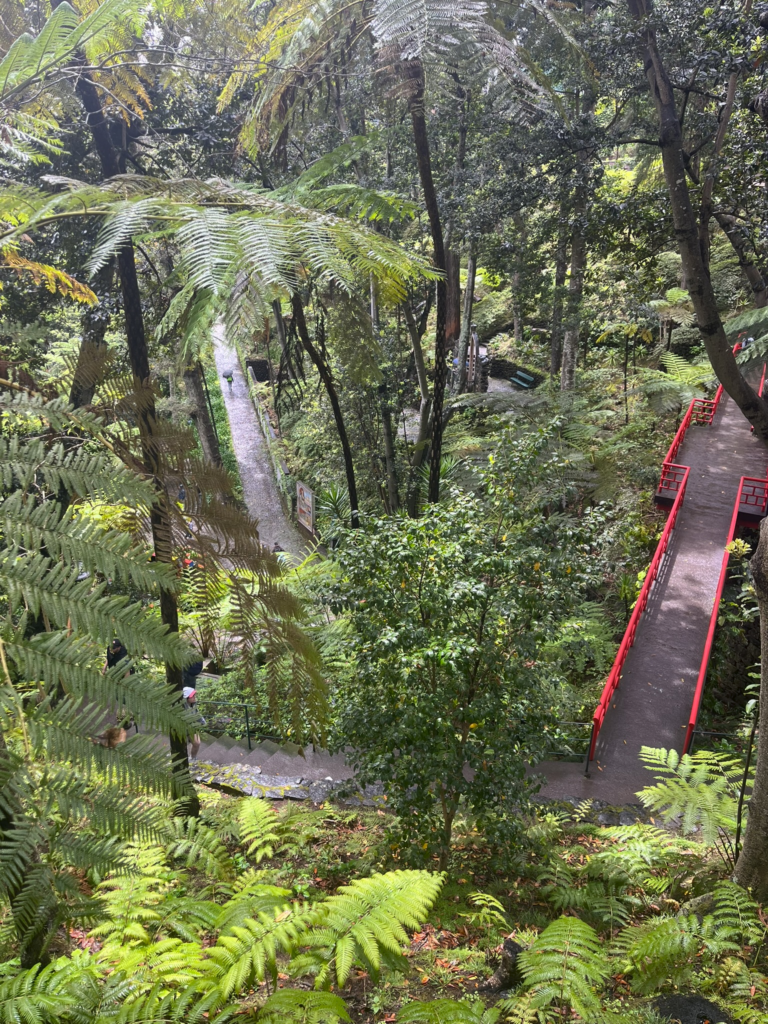
We started with the magnificent mineral collection, then crisscrossed the property across myriad bridges and along winding pathways, some with steps, some without, but all trending up or down.
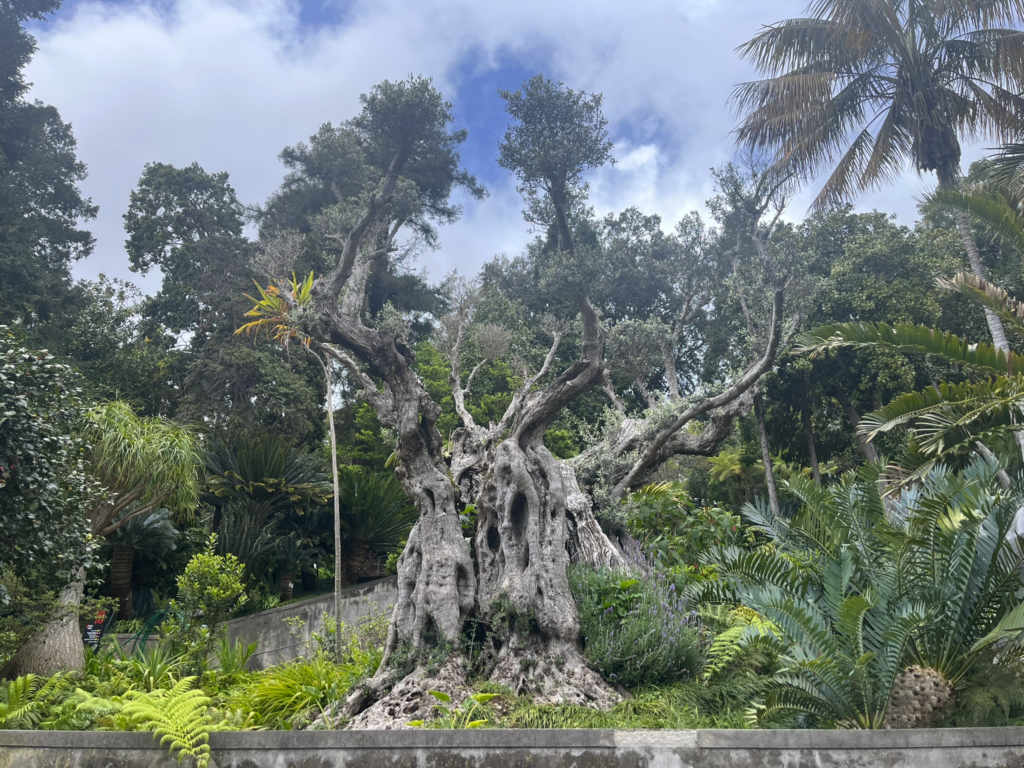
Our favorite features — other than the fantastic and broad selection of trees (some of which are huge or very old, like this one, which was growing when Caesar reigned in Rome),
shrubs, plants, and flowers — were the Japanese and Chinese elements of the landscape architecture.
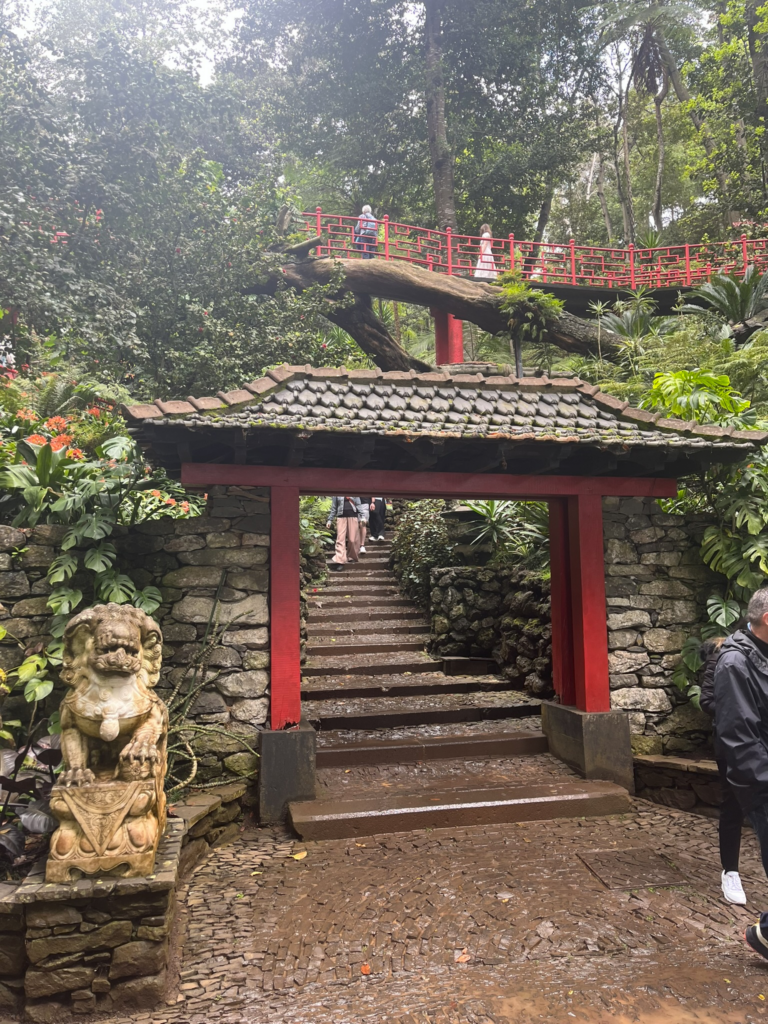
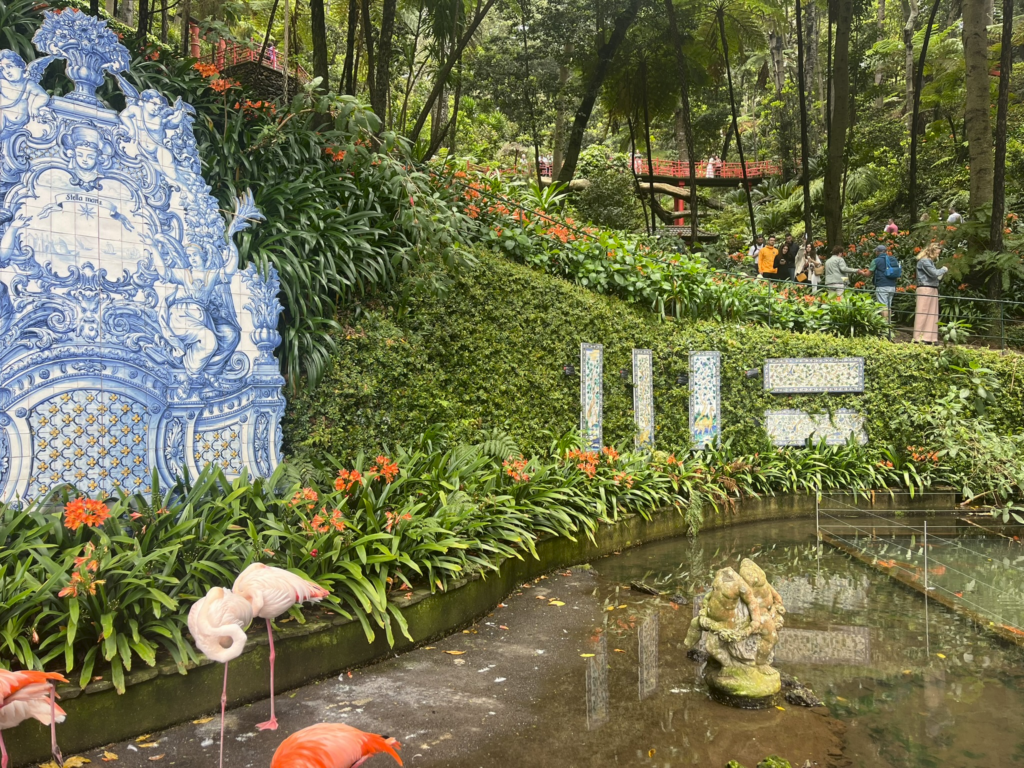
Speaking of which, José Manuel Rodrigues Berardo, who bought the property and transformed it into what it is today, worked an unbelievable number of elements and details into this masterpiece, including Portuguese tiles,
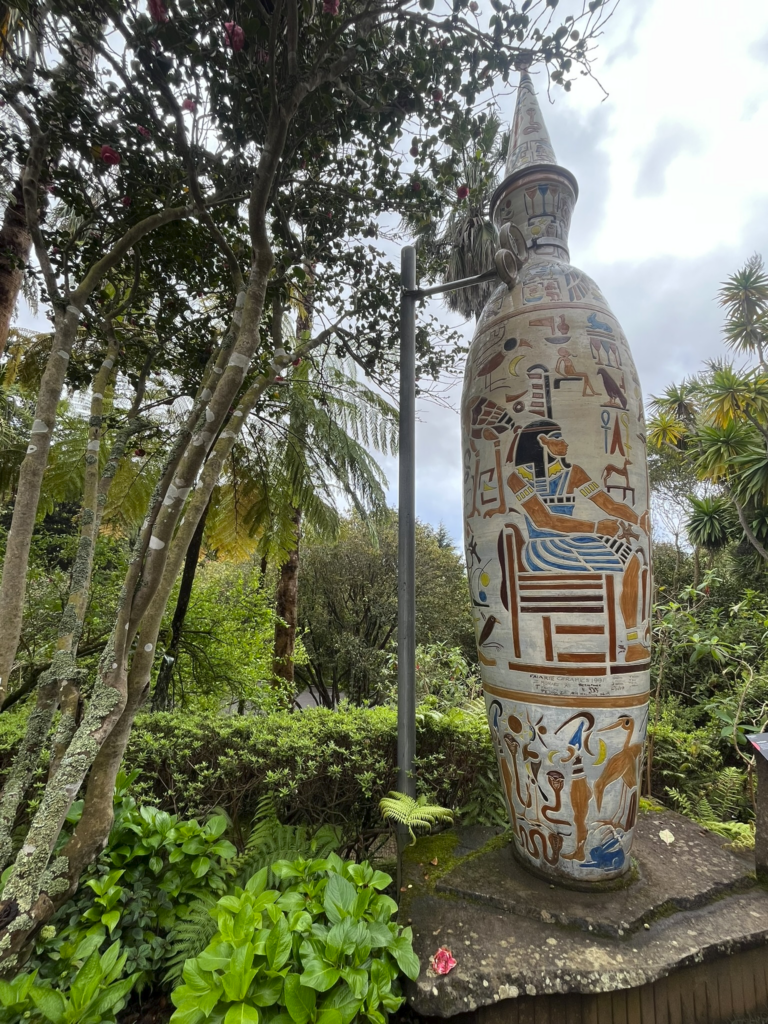
a huge Egyptian vase,
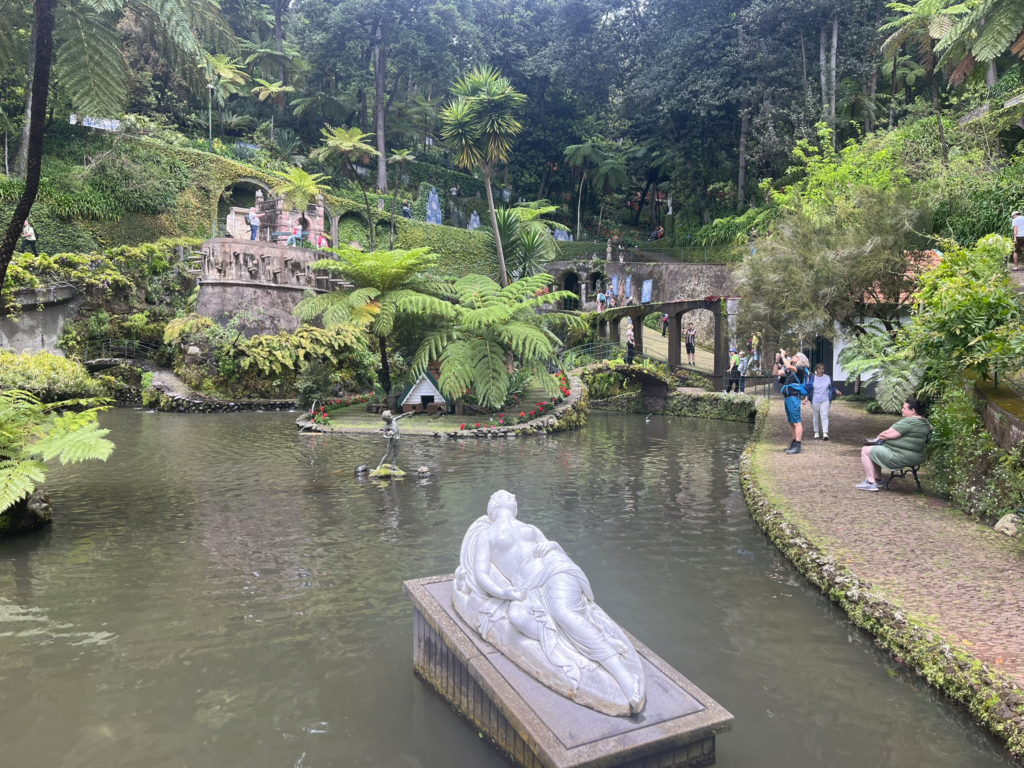
sculptures,
waterfalls,
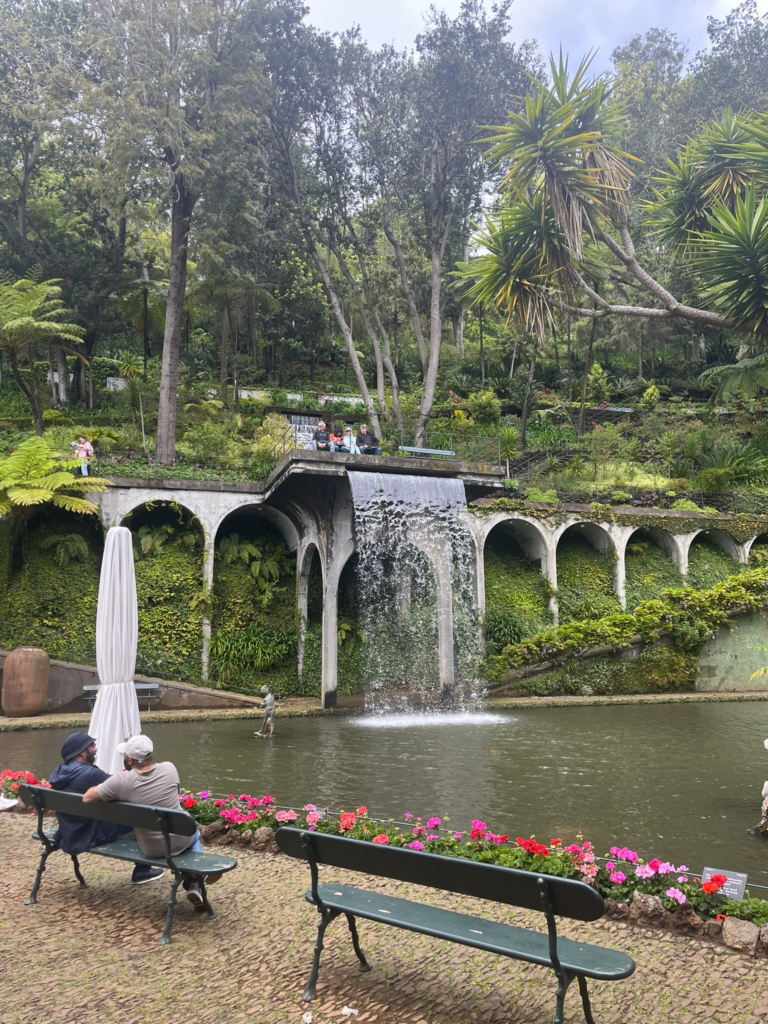
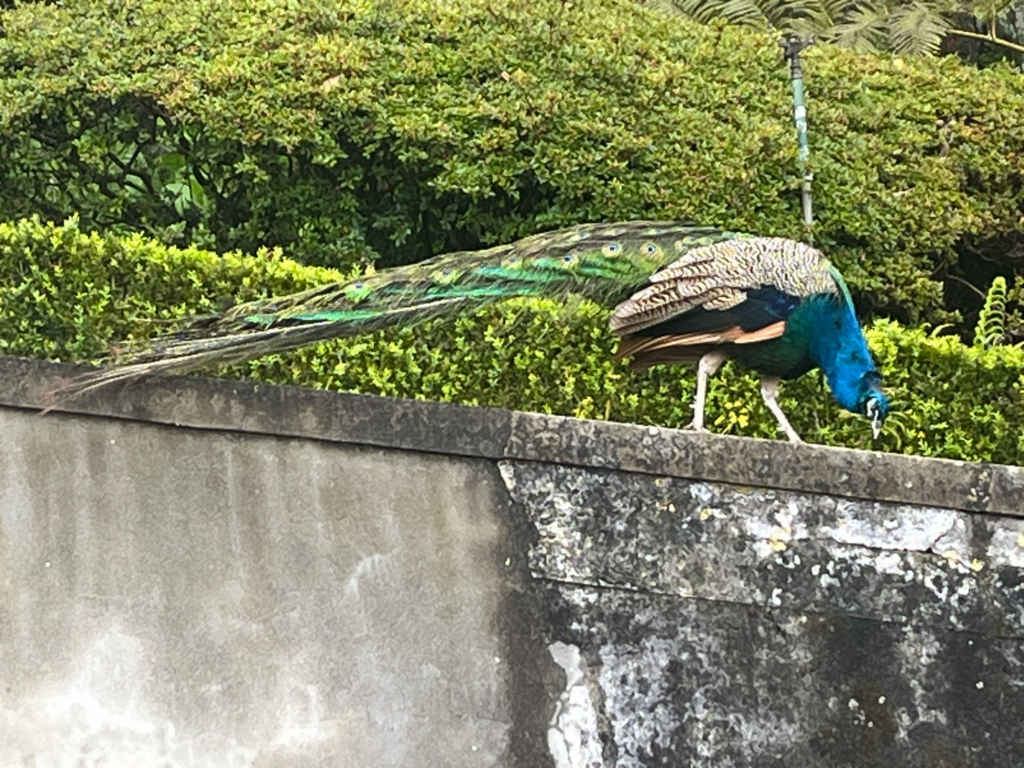
panels depicting Portuguese historical figures, geese, swans, peacocks,
koi ponds with viewing windows,
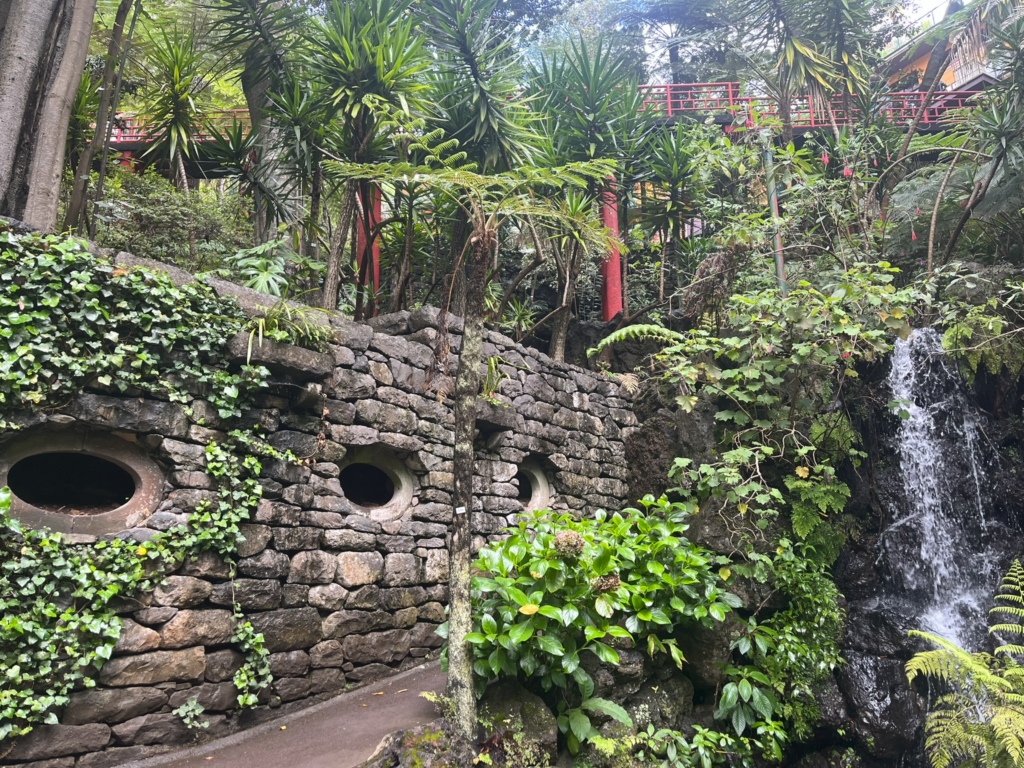
ponds and stepping stones across them, water spouts, niches, and stone lanterns.
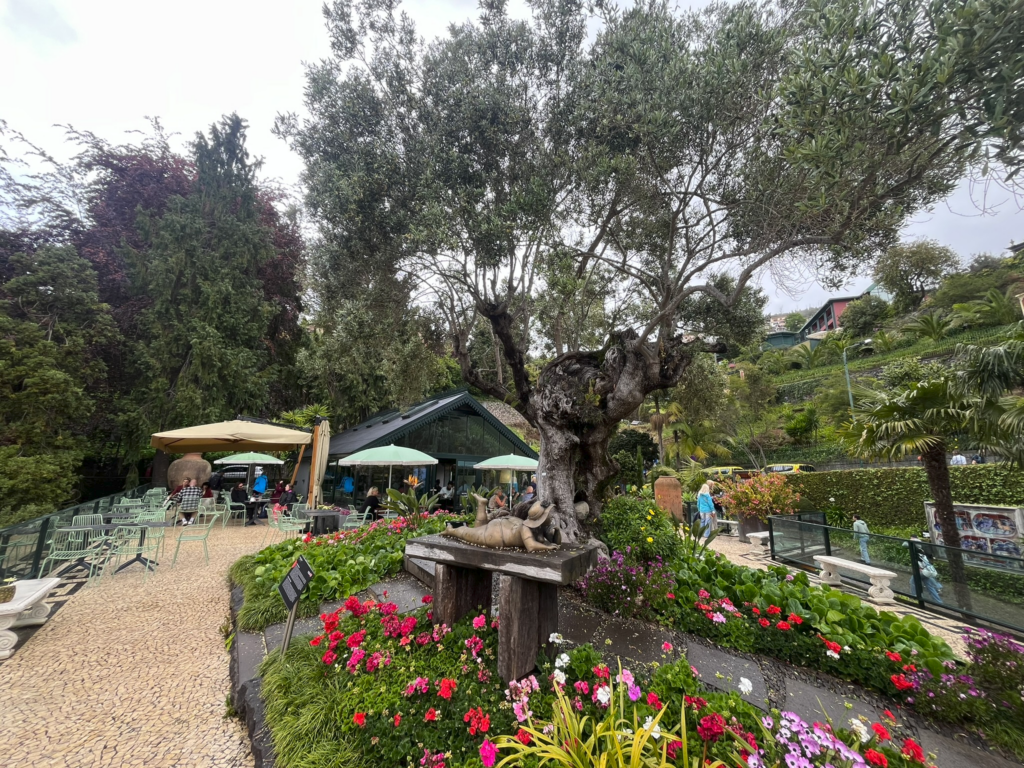
There are also two cafes for fortification before or after exploring the gardens, and a free wine tasting at the bottom of the gardens, to prepare you to walk back up. Plan to spend a few hours here.
Igreja de Nossa Senhora do Monte Church
Check out this beautiful, twin-towered church where the exiled Charles I of Austria sleeps, forever.
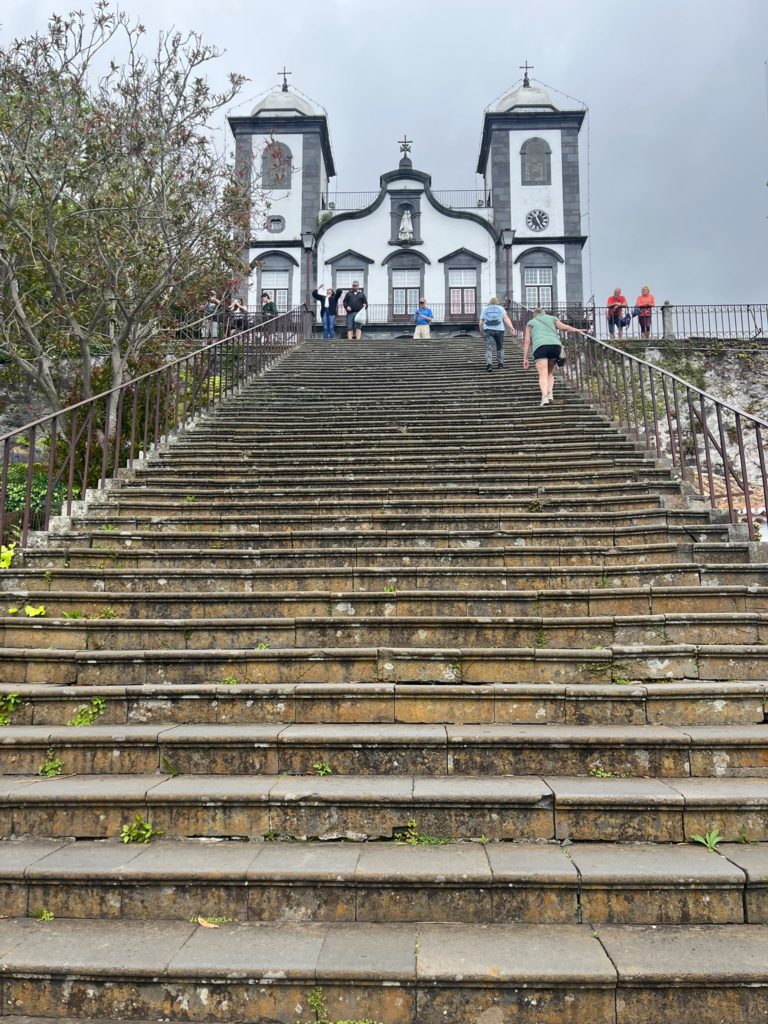
It’s an easy walk from the upper cable car station. If the steep steps are too much for you, take either the road on the right side of the church (still pretty steep) or the gradually ascending path through the gardens on the left side.
The platform at the top of the steps provides a birds-eye view of the wood and wicker sledges being launched below.
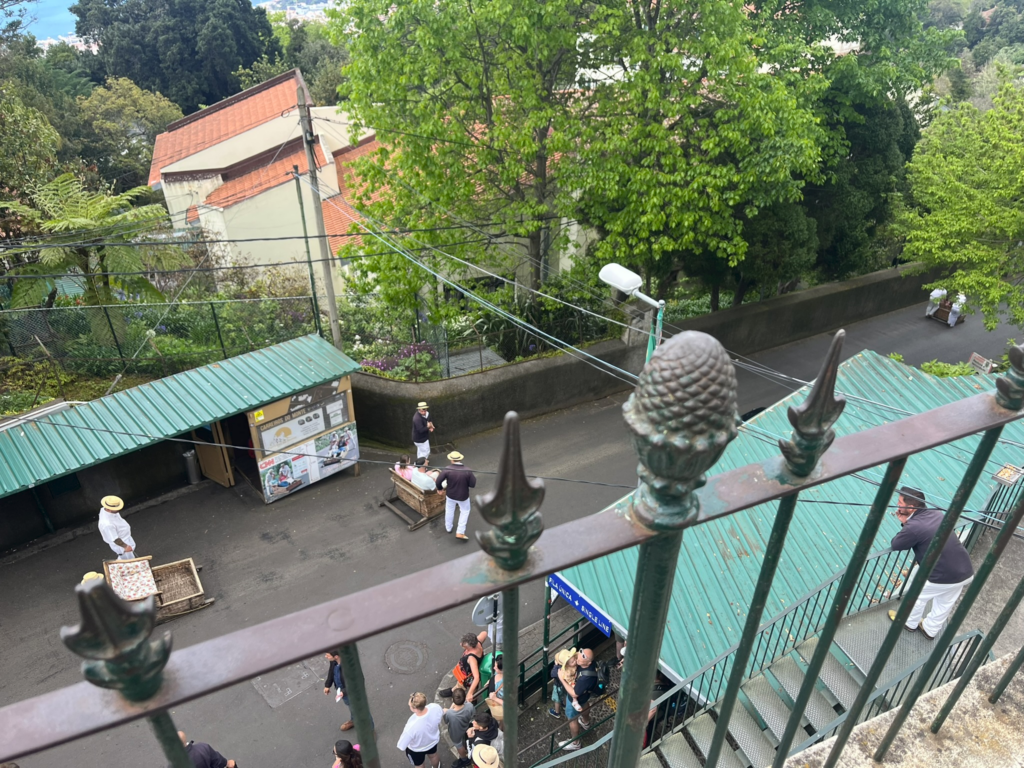
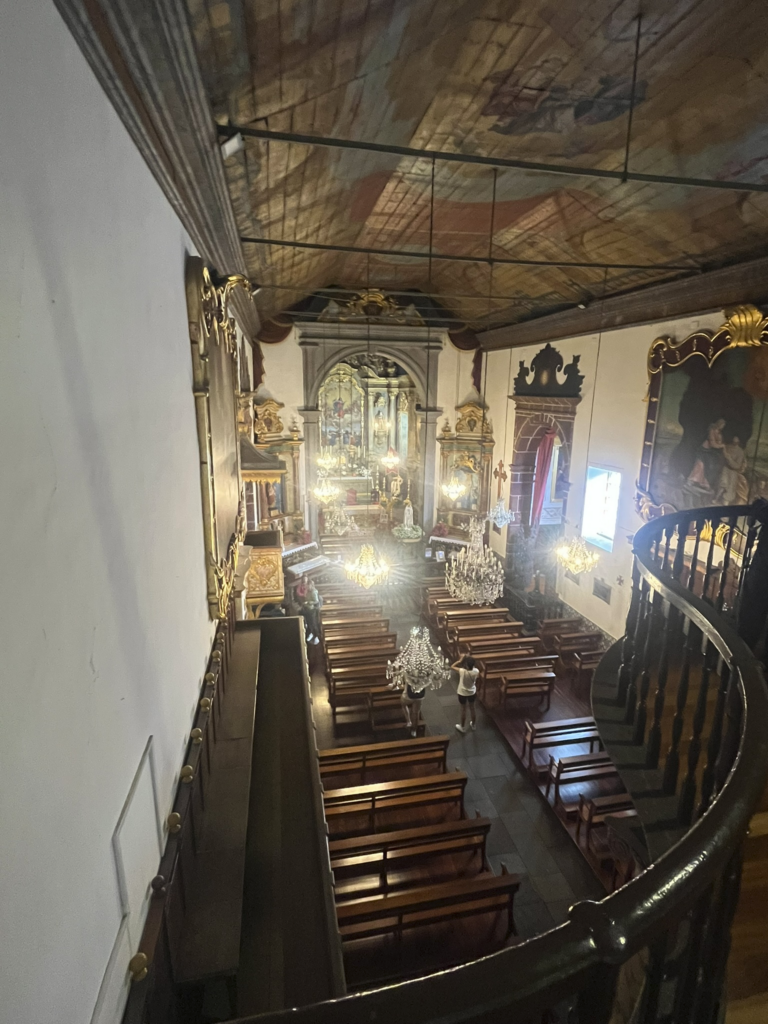
After you make your way up and into the church, be sure to walk up to the choir loft (not many steps) to see the pipe organ and liturgical accoutrements.
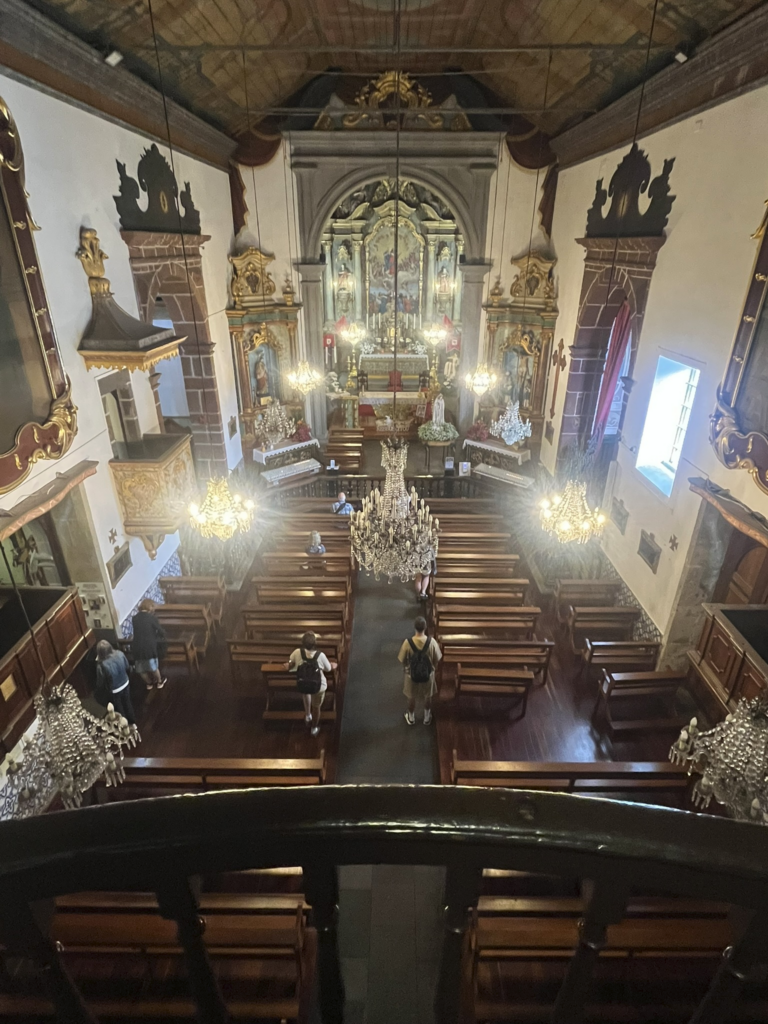
From this loft you can also get a good view of the wonderful painted tongue-and-groove concave and convex arched ceiling.
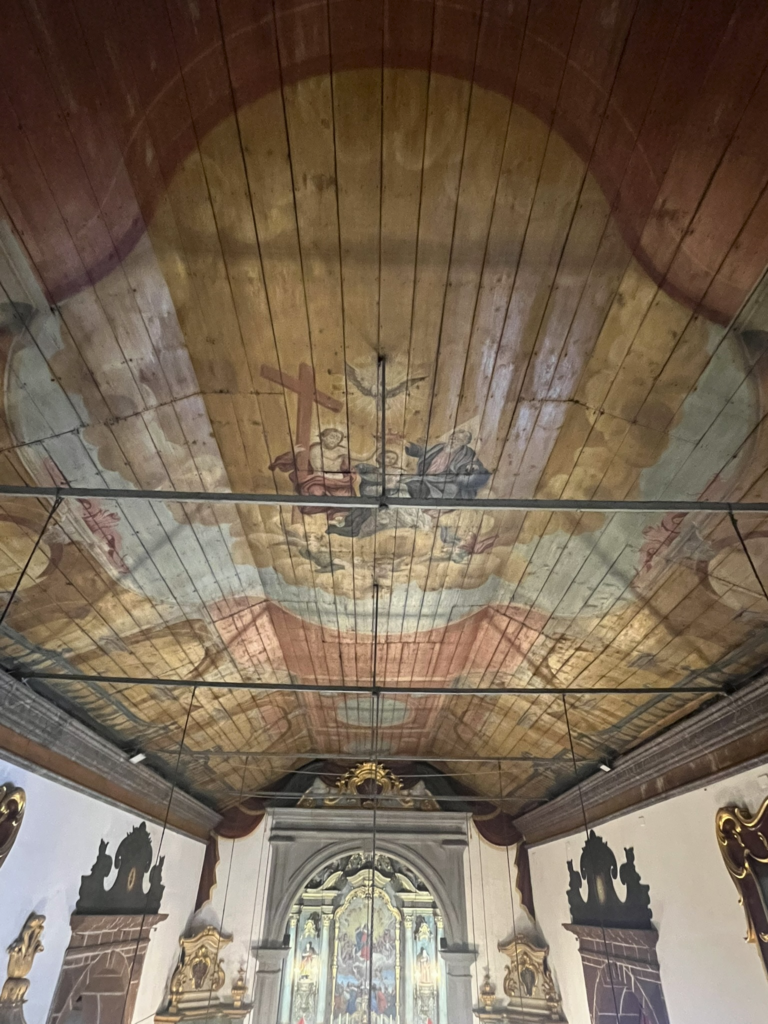
From the floor of the nave, be sure to look back and up at the choir loft and its Corinthian-ish columns, at the interesting wooden box seats on the two side walls, and at the ornate pulpit.
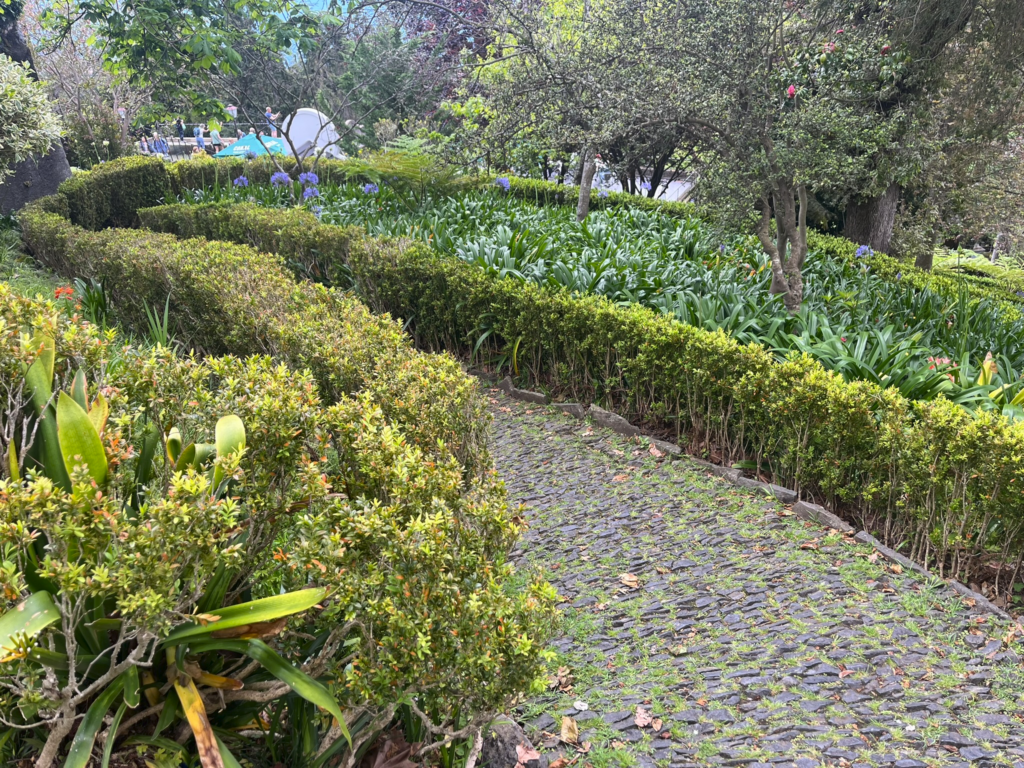
After viewing the church, be sure to stroll the multiple paths of the gardens, which are lush and full of different plant and tree varieties.
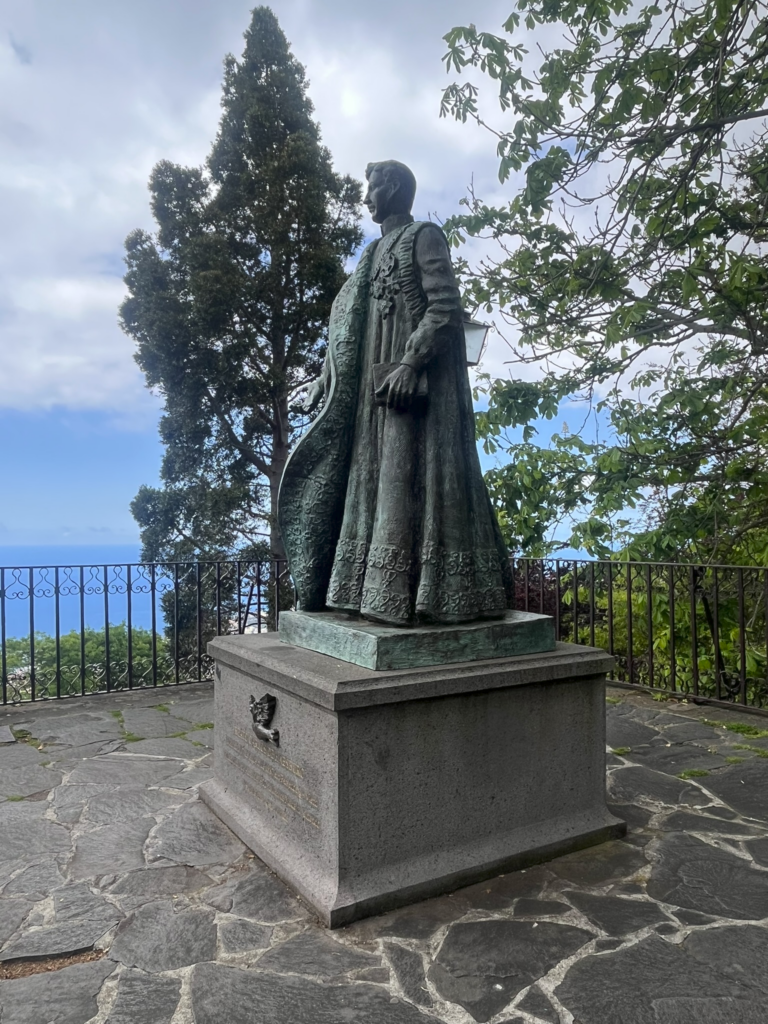
Charles I (a statute) stands guard.
I especially liked the big old trees and the mottled-paint-and-plaster old building to the left of the church.
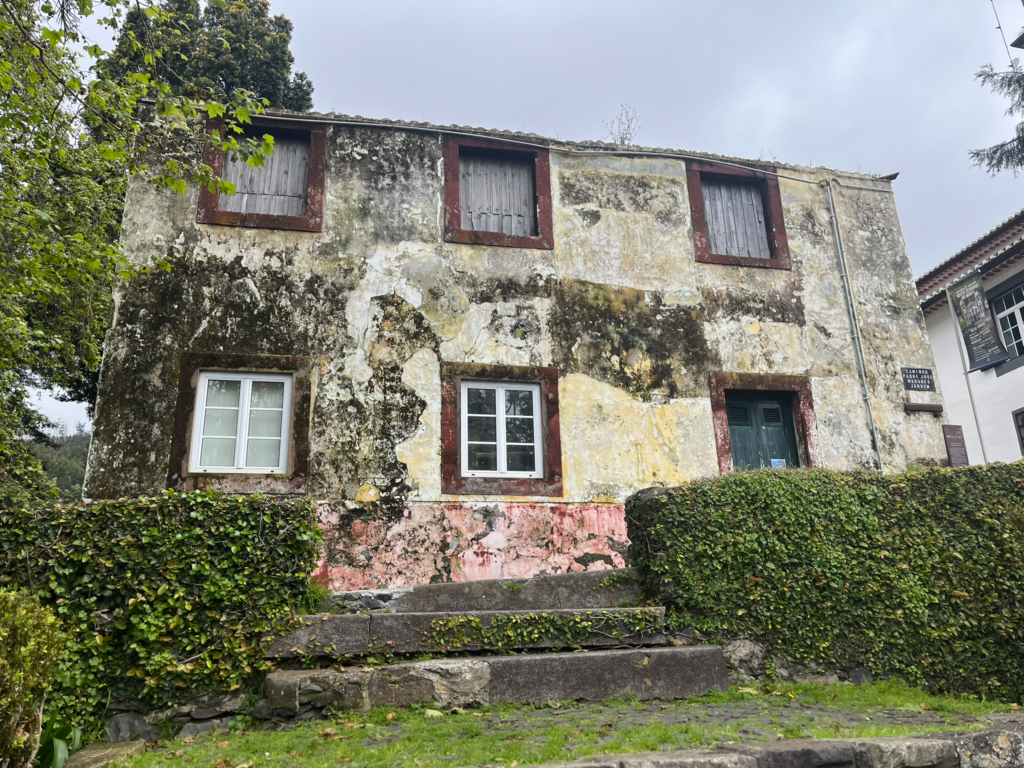
We wondered if it’s possible to walk all the way around the church. It is. If you are interested, there’s a tea house on the right side, up the hilly street.
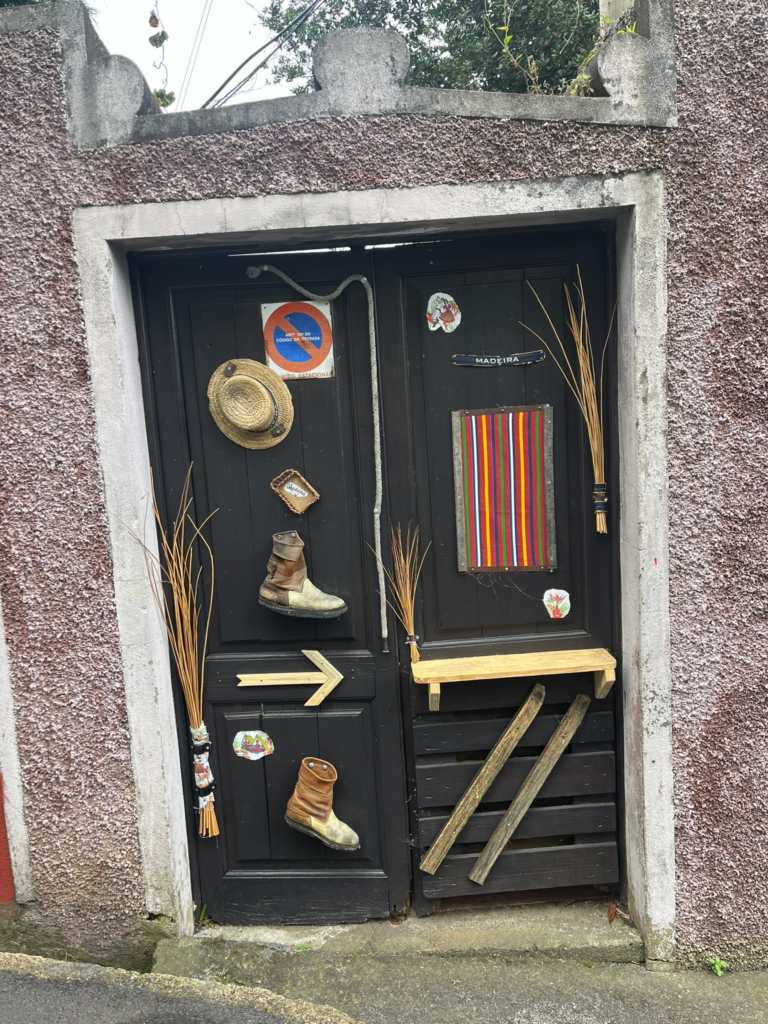
Sea View Restaurante
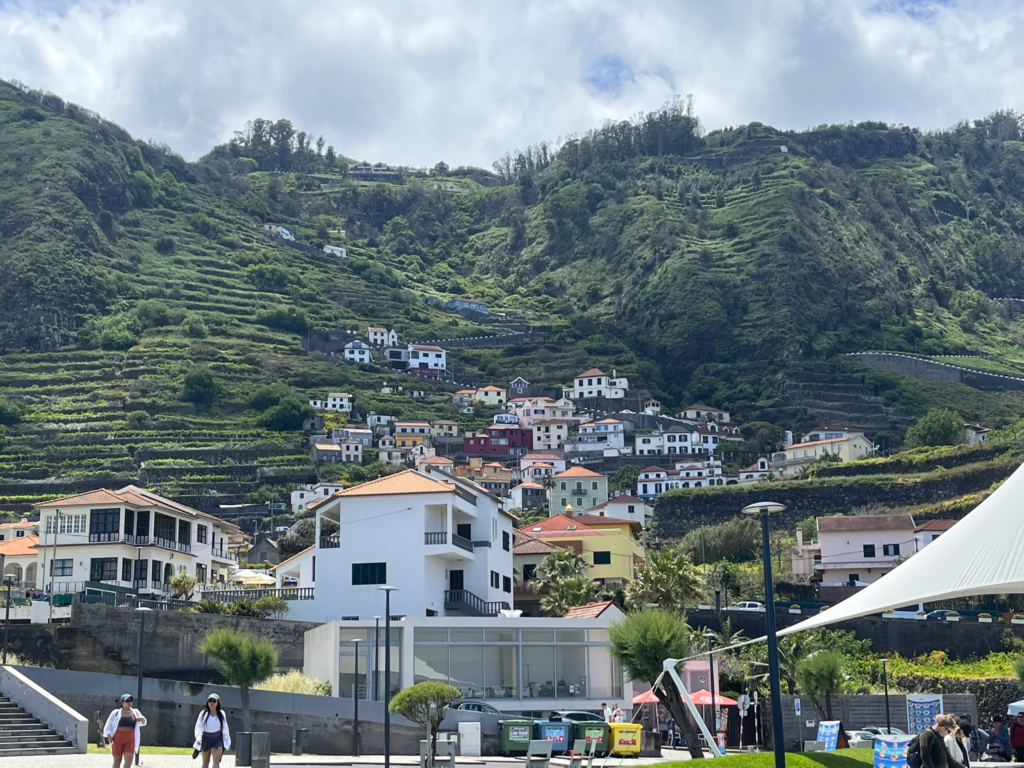
After driving to the village of Porto Moniz_on the northwest tip of the island for lunch, we chose this spacious indoor/outdoor restaurant for two reasons.
1. every table (even the inside tables because of the glass walls) has a great view of the ocean and the town’s salt water tide pools, and
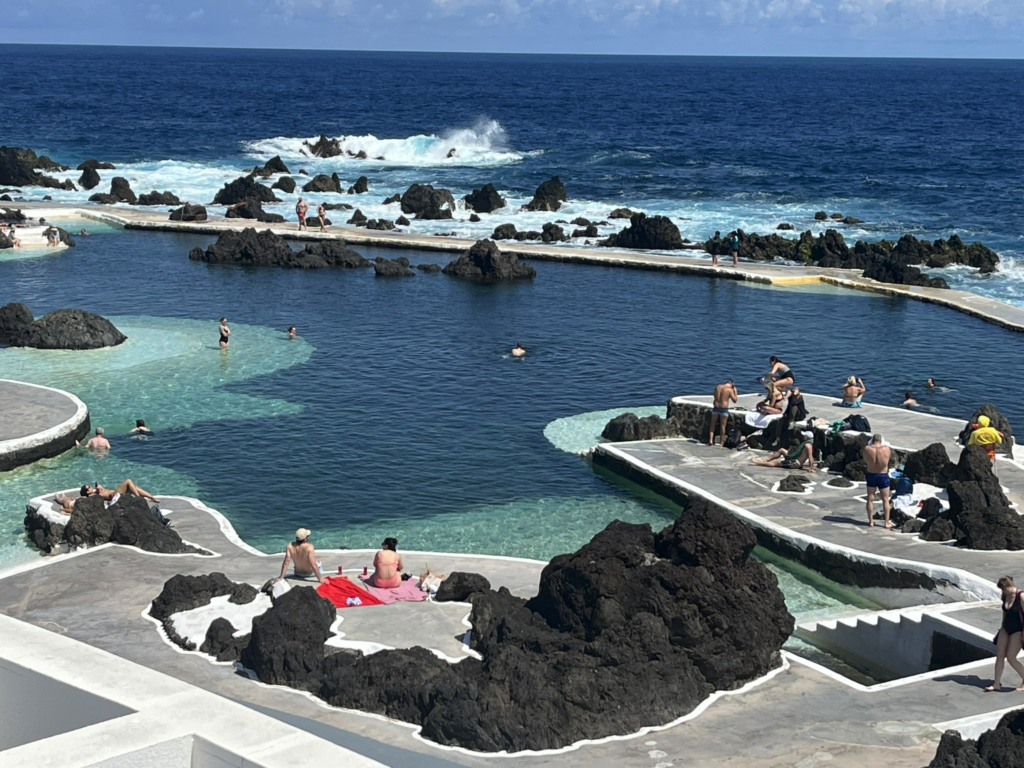
2. the menu’s promise of Mediterranean and Japanese Cuisine (how could we go wrong?).
We chose an umbrellaed table along the windscreened railing, where we could watch the people enjoying the tide pools below and waves crash in the lagoon.
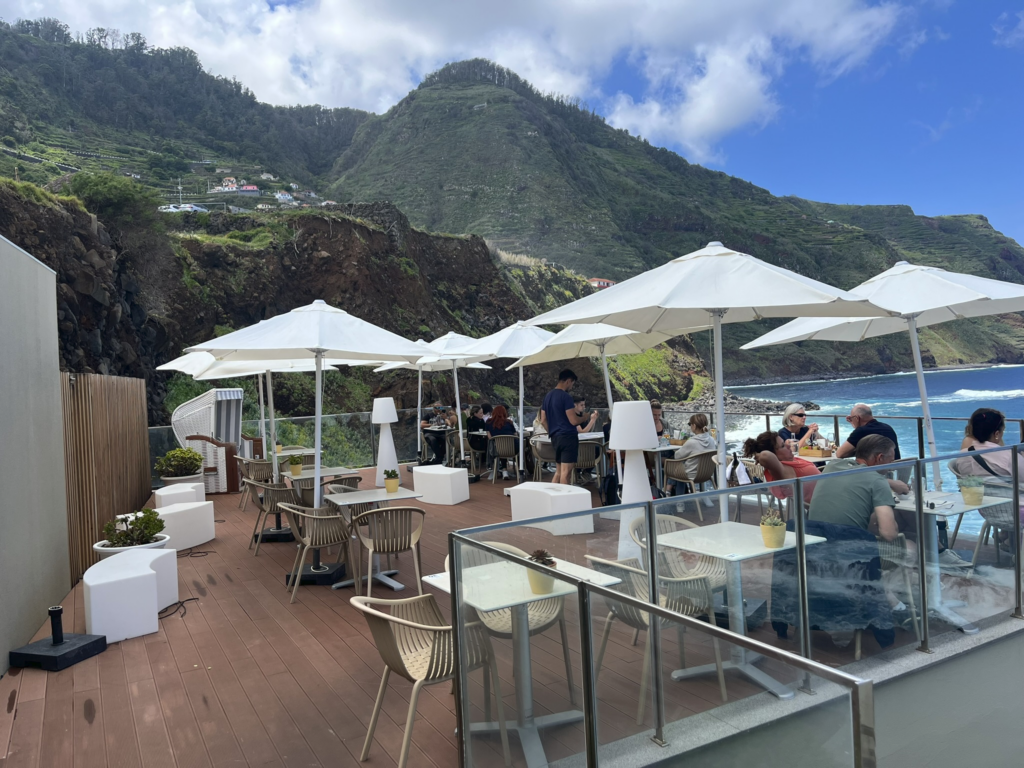
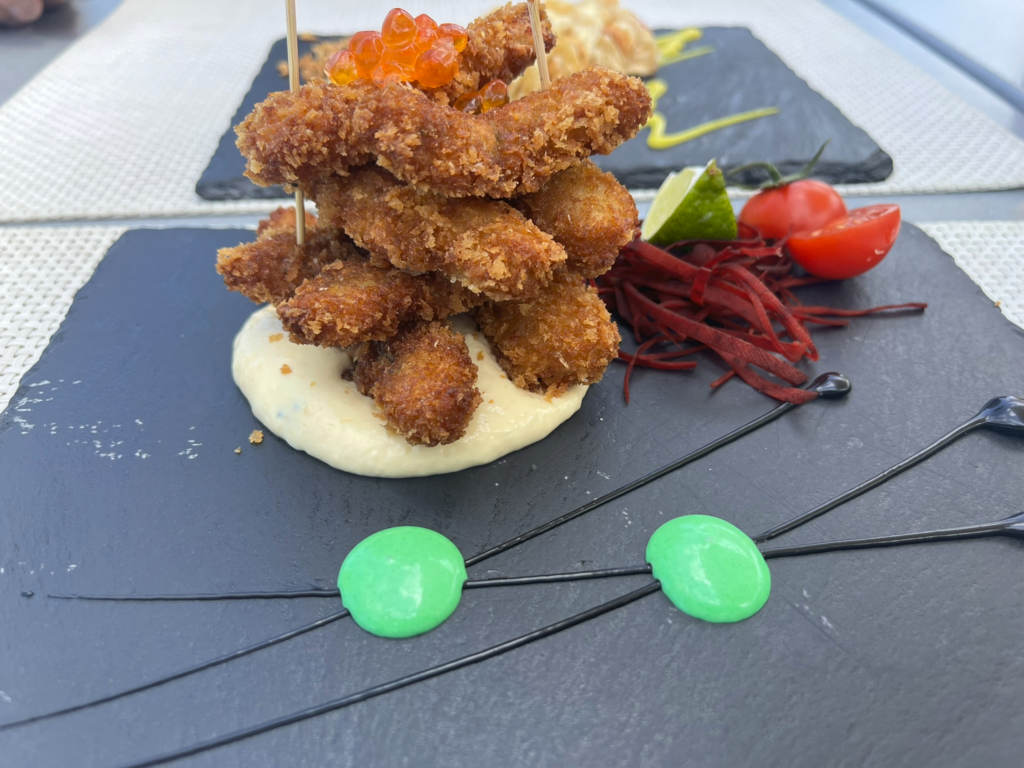
We ordered the Chicken Gyoza with mustard honey sauce and the Crunchy Tidbits of Scabbard Fish with cream of maracuja (passion fruit) and salmon roe.
The plating of both dishes was beautiful, especially the Jenga-like scabbard fish sticks. They were also very tasty.
Some reviewers might think this restaurant is touristy. Yes, it is, but if not for tourists the town wouldn’t exist. So if you want a great view in a great setting while enjoying a tasty lunch, this is a really good choice.
ComTradições Restaurant
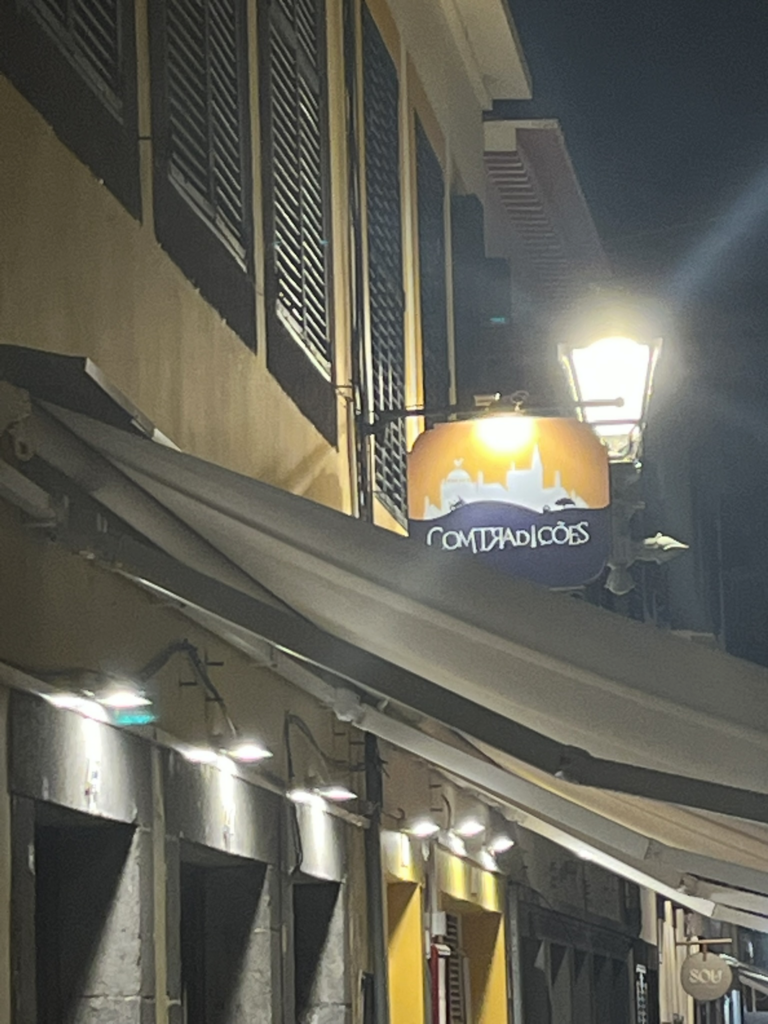
Although this fine food restaurant is located on the Street with the Painted Doors (Rua de Santa Maria), it seems different from its neighboring restaurants. Whereas the neighbors implore passersby to dine with them, this restaurant doesn’t and doesn’t seem to need to.
It’s hard to describe exactly what makes it different. It just has a different feel when you walk by. Maybe it’s all the white and the weird and strangely spelled name.
We did walk by on our first night in town, but that was because there were no tables available outside. We wanted to dine there. A day or so later, a local confirmed out instincts by recommending it, so we made a reservation.
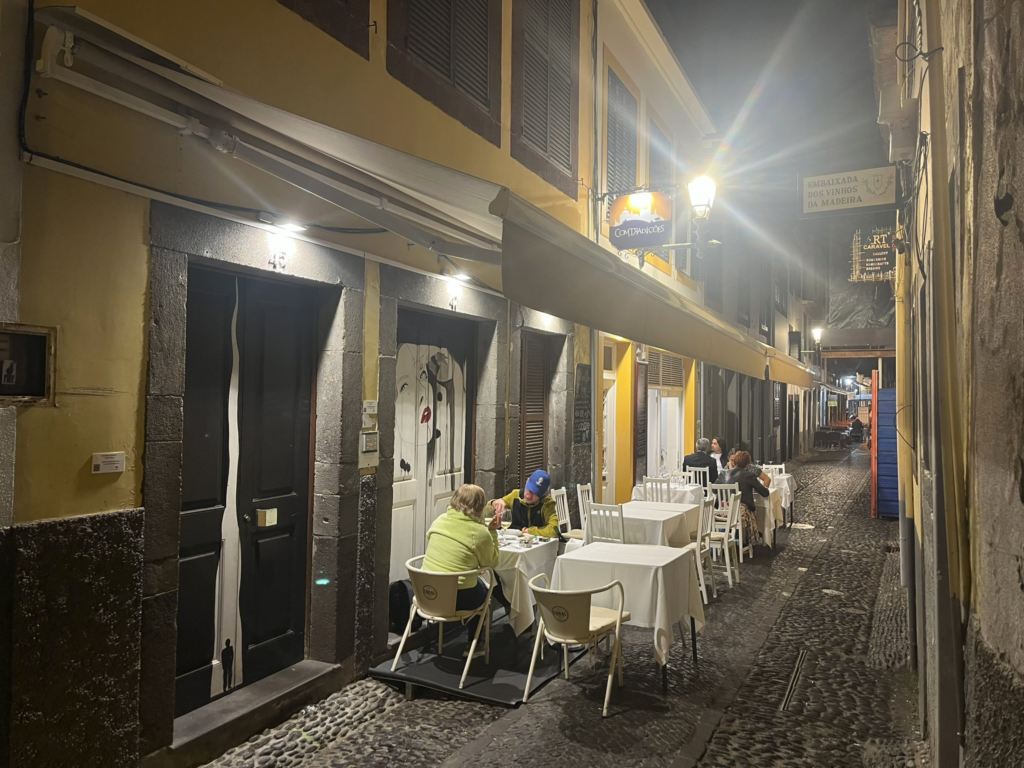
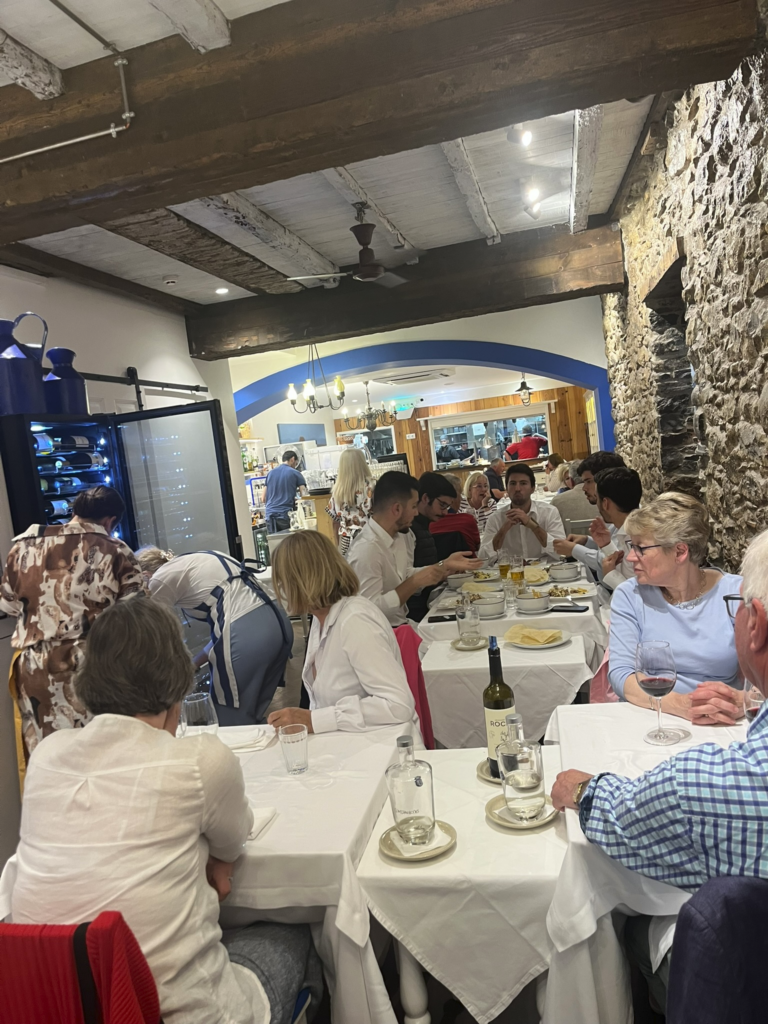
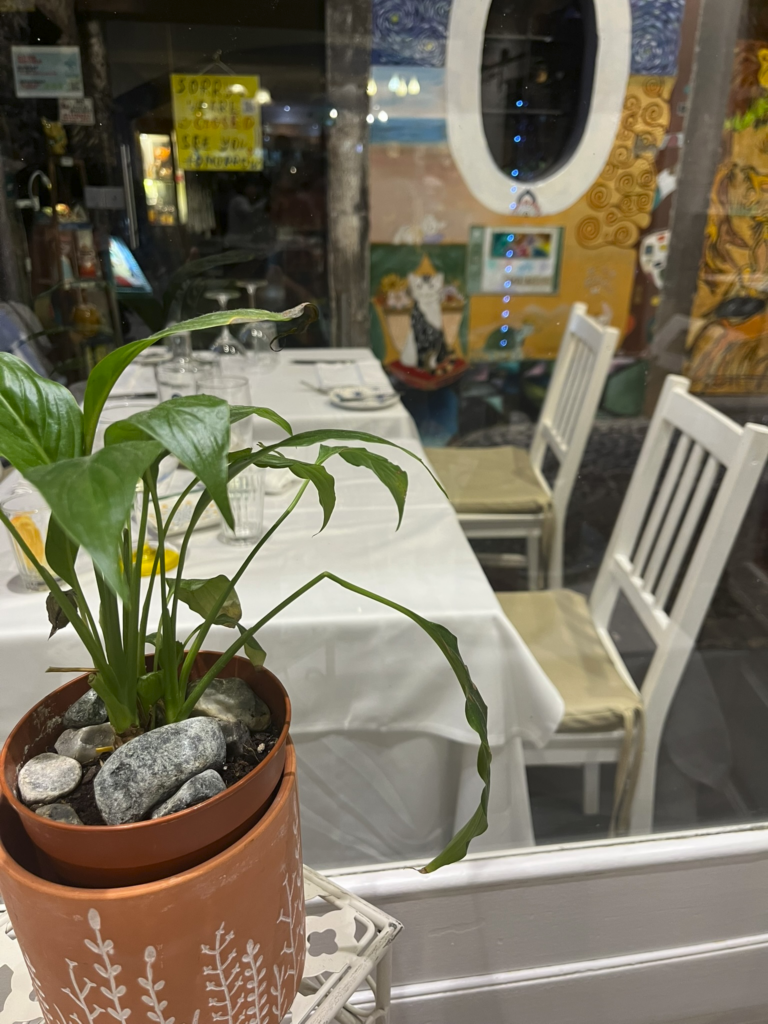
We chose to sit inside, which is a bit more intimate and festive than outside, but because we snagged the table for two in the big front window (which can open on beautiful nights), we still had good people watching.
The menu offered dishes different from the usual suspects offered nearby. One of the two owners (two women) told us that the recipes are family heirlooms. We really enjoyed the Snapper with rice and shrimps, with ginger and lemon (wonderful and unique flavor) and the Red Snapper and seafood pasta (tomatoey, with shrimp and lots of tiny clams).
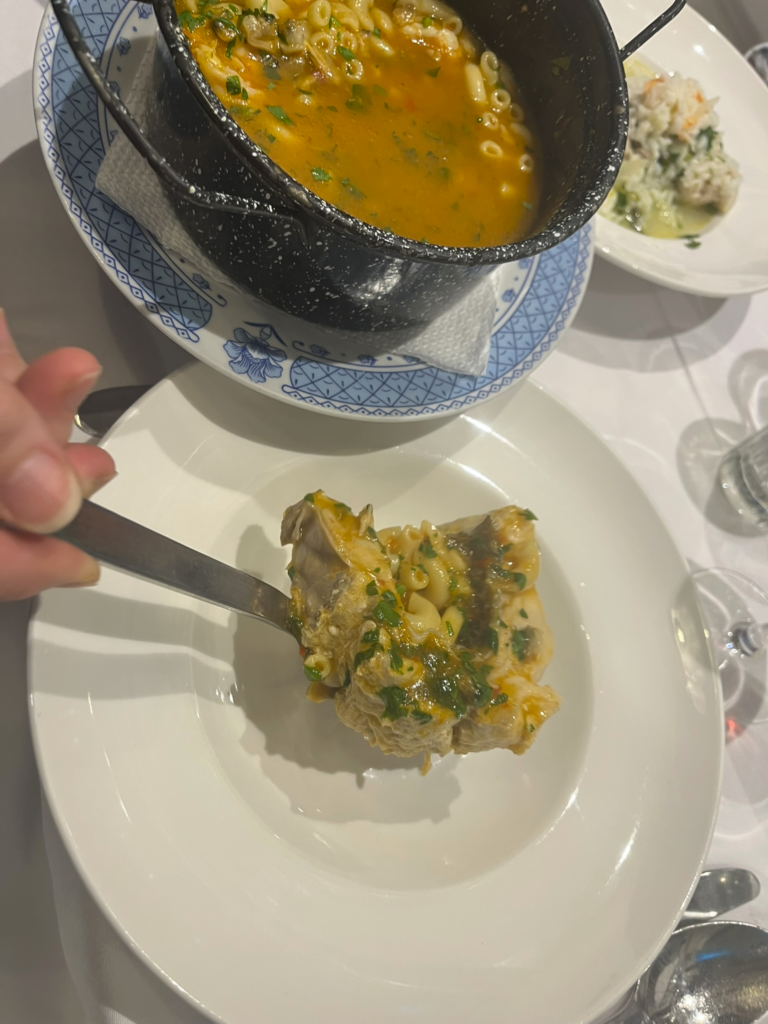
Both were like stews and were served in dark blue lidded pots, from which our server (the owner) ladled them into our big white bowls, which gave the experience a rustic country feel. Both dishes were both generous and delicious.
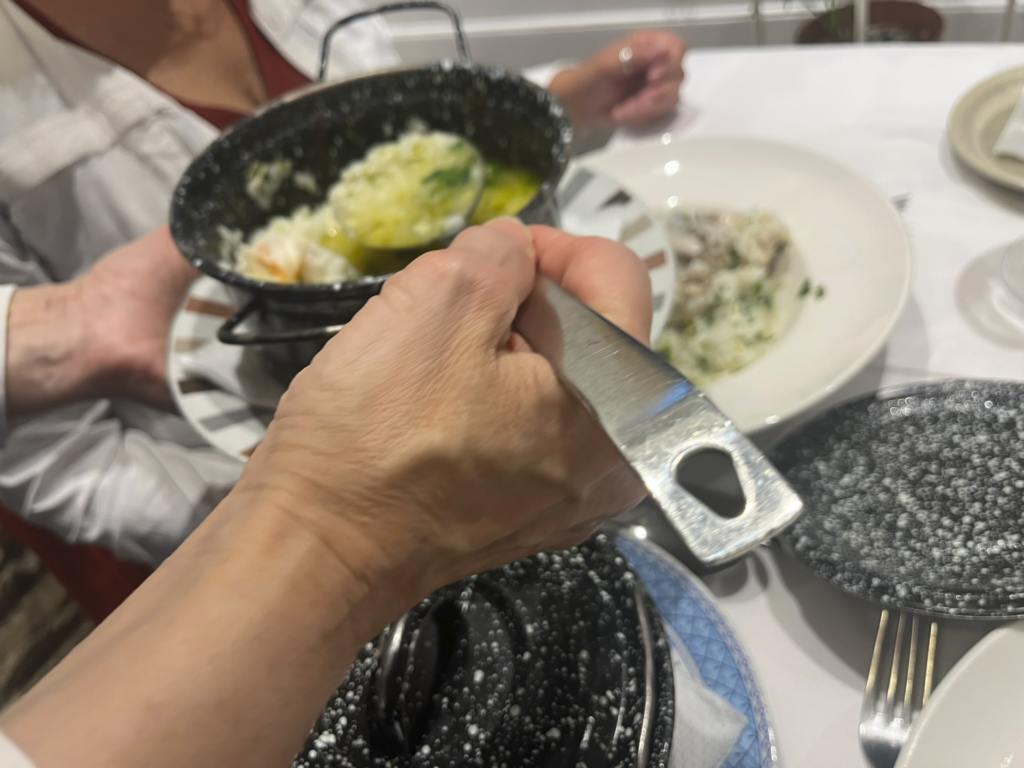
Other menu choices seemed different and a cut above the competition. Reservation recommended.
Valley of the Nuns Hike
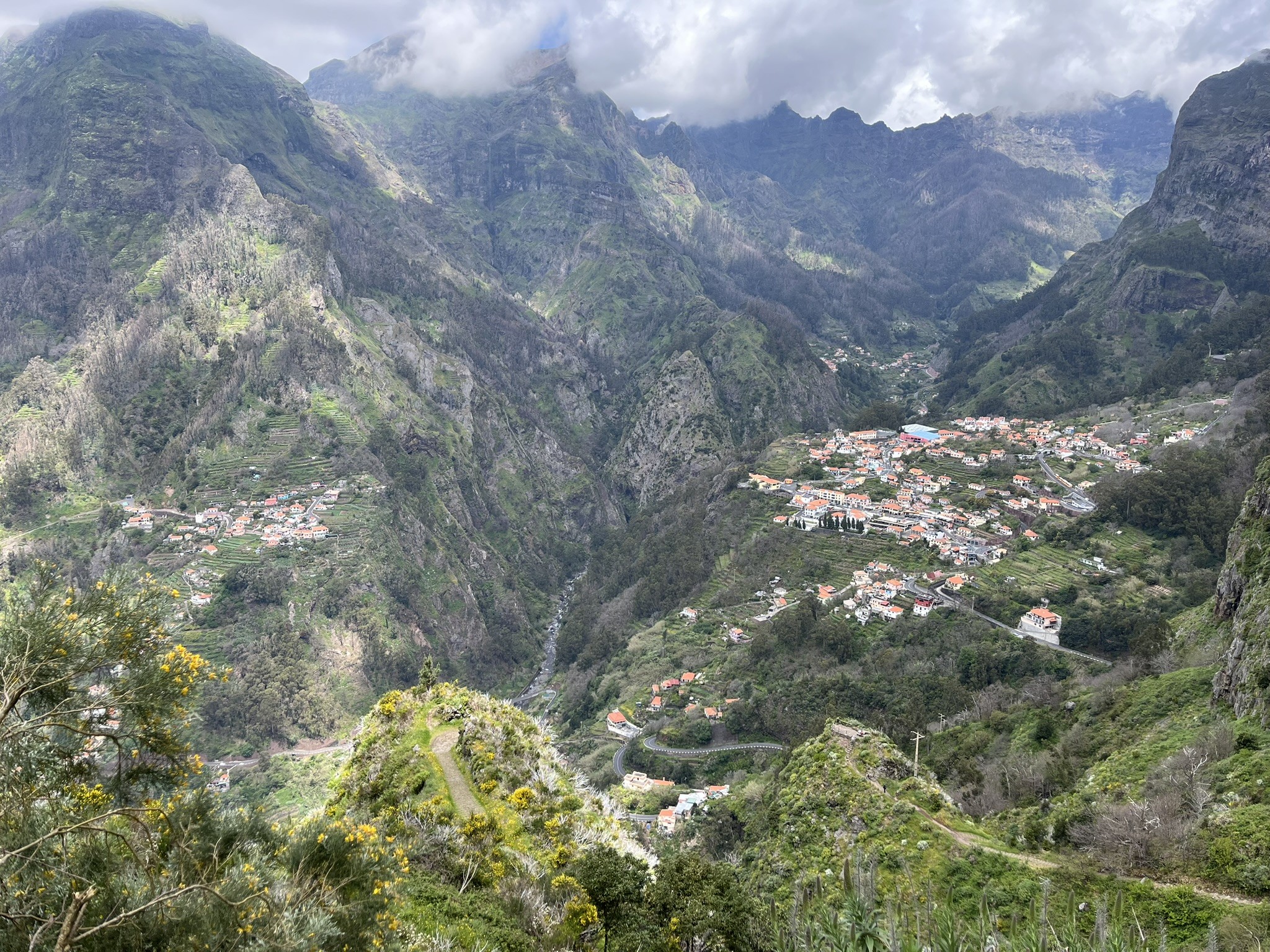
The nuns went to the valley — which was later named after them — in 1566 to escape pirate marauders. I guess the nuns figured that if they can’t have any “fun”, they could at least have a great view.
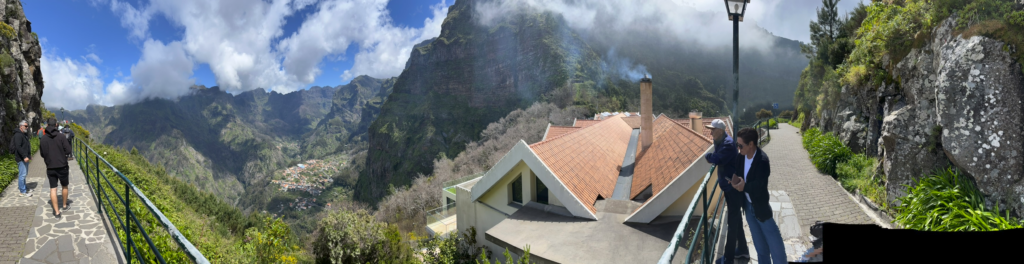
As for the pirates, you would have to “want” a nun really badly to follow them there. It’s not so easy to get there in the 21st Century. Imagine how hard it would have been in the 16th?
It’s easier to get there today (bus or taxi) but I believe it is now a NFZ (nun-free zone). Sorry pirates. 🏴☠️
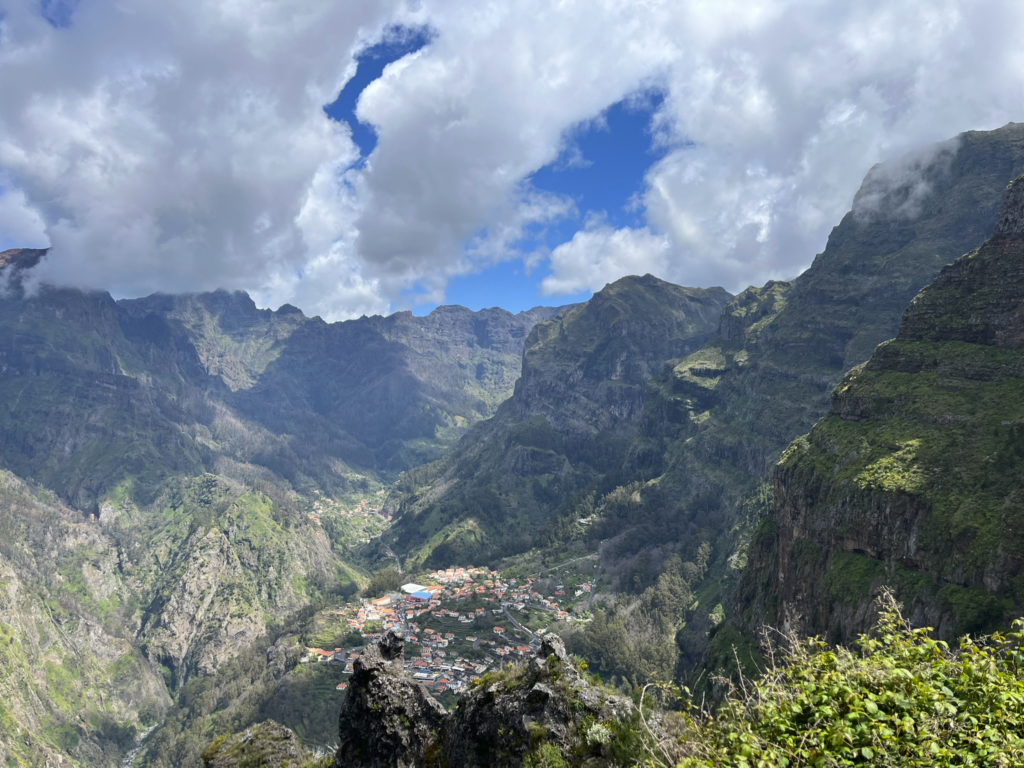
I’ve read a lot of incomplete, inaccurate, or unclear information about hiking down to the village from the bus route. The village is called Curral das Freiras. Here is how we did it. We took the 81 bus at 11am, which leaves from the cable car station in Funchal. It costs a few Euros, in cash, one way. Make sure the bus you take will be stopping at Eira do Serrado, which is a hotel, restaurant, and spa.
If so, the bus will make a left turn off of the main road just before going into the tunnel leading to Curral das Freiras. The bus will go down the road a short distance until the road dead ends into the parking lot of the hotel. There’s a great gift shop there.
There is also a scenic overlook, which you can reach by taking the developed path to the LEFT end of the hotel (if you are facing the hotel in the parking lot).
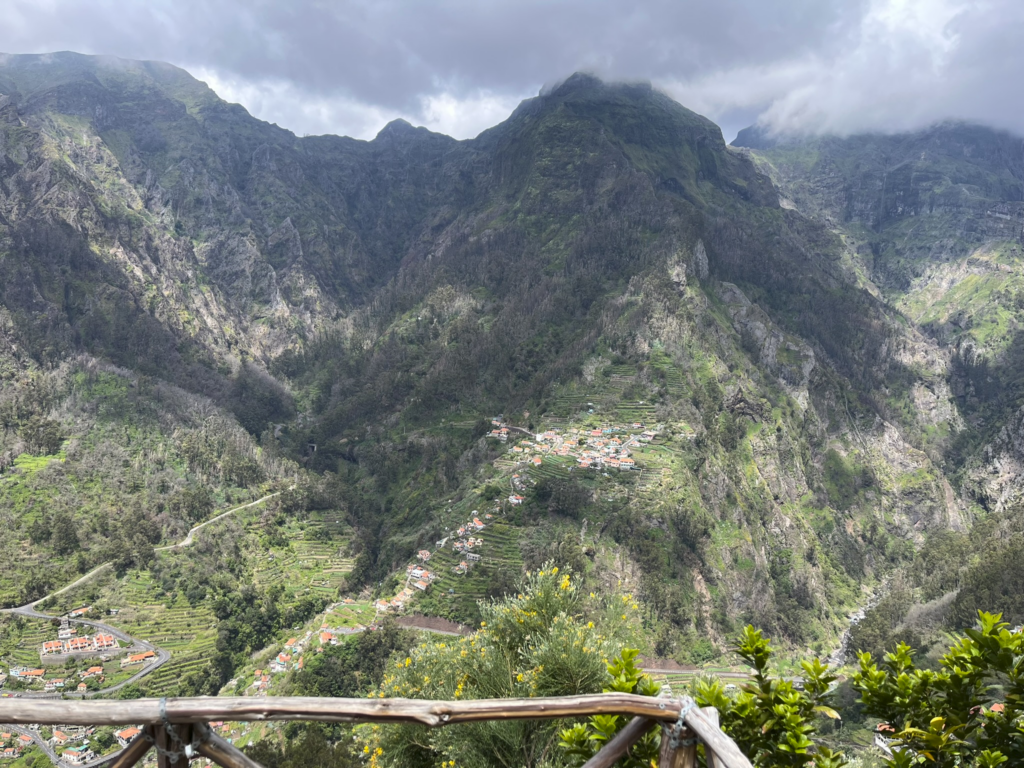
It’s only a short distance. When you are ready to hike down to Curral das Freiras, walk to the RIGHT end of the hotel, where you will see a sign that says “Curral das Freiras”, with a symbol of hikers.
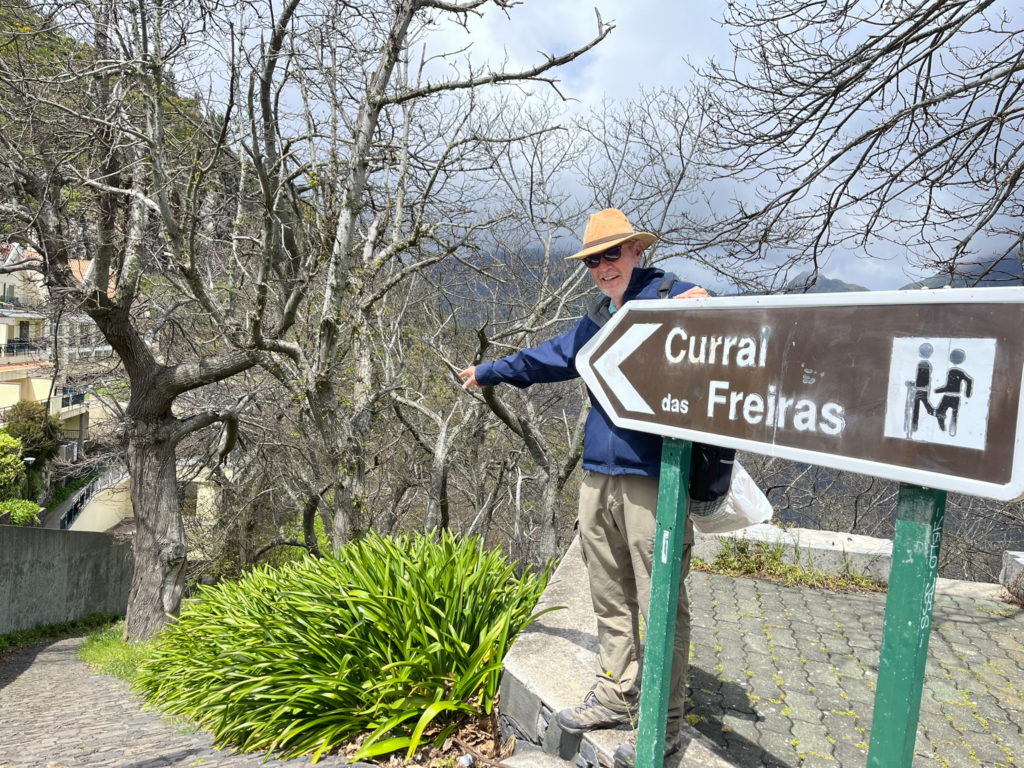
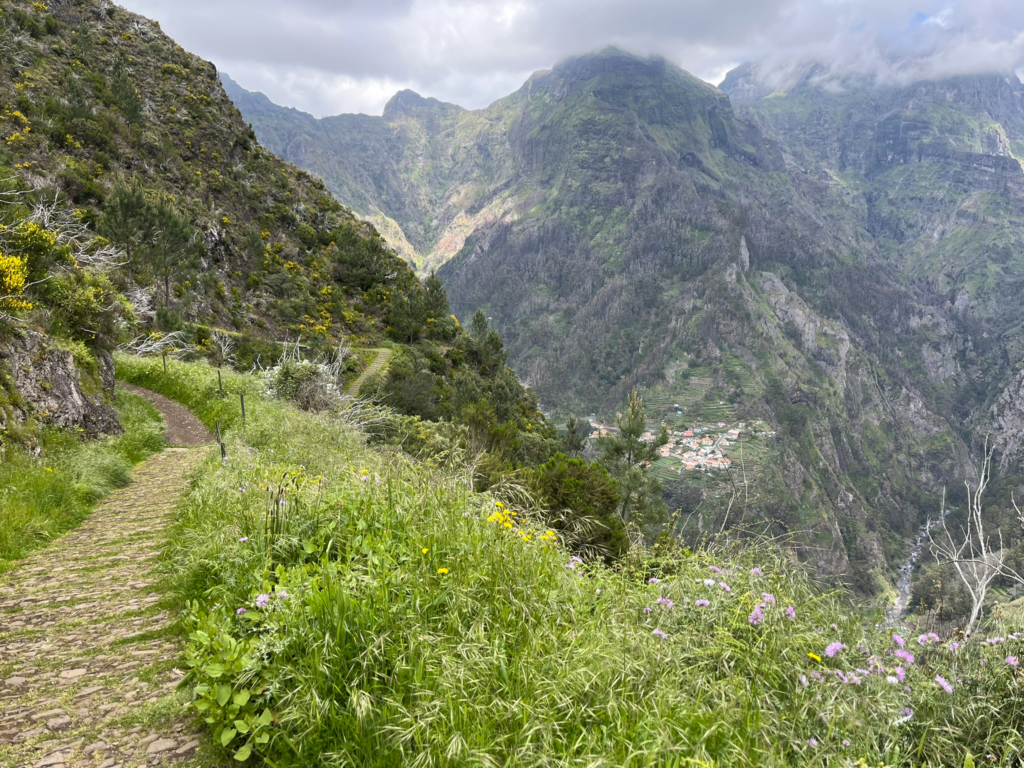
The hiking path starts out as small cobblestones. It degrades along the way, but it is a clear path. Follow the switchbacks all the way to the bottom. It can be slippery but it is easy. There are a couple of overlooks along the way.
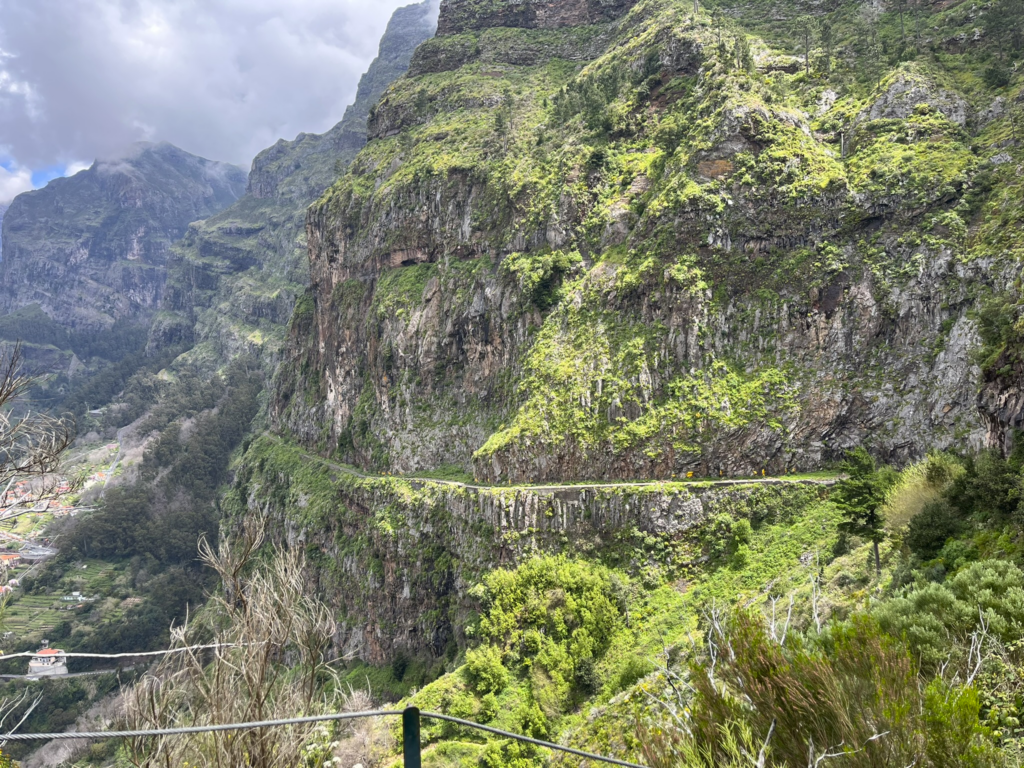
The scary road you may see from the hotel, which hugs a cliff face, is NOT part of the path.
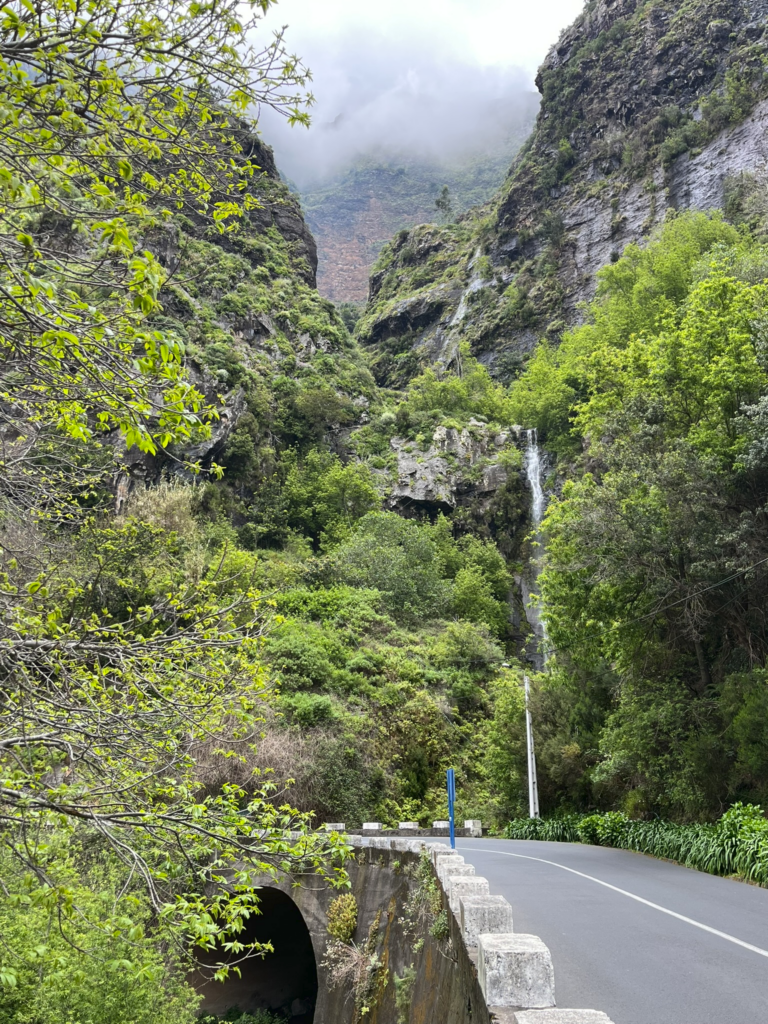
It took us a little over an hour to hike to the village but Sarah’s bad knee was slowing her down. At the bottom, you will be on a paved road.
Follow the road to the right, a short distance into town, where you will find lunch, a shop or two, and not much else. After lunch, we took the 81 bus back to Funchal, but you could also take a taxi, especially if you miss the last bus (check the schedule and plan accordingly). Note: we saw only one taxi waiting. The bus schedule is posted on a kiosk in the middle of town. If you don’t want to hike, just stay on the bus after the stop in Eira do Serrado, or take an 81 bus that doesn’t stop there at all.
Sabores do Curral
When we finished our hike from Eira do Serrado down to Curral das Freiras, we were famished. The first restaurant we came to was this one, but we wanted to see what this very small town had to offer, so we walked on.
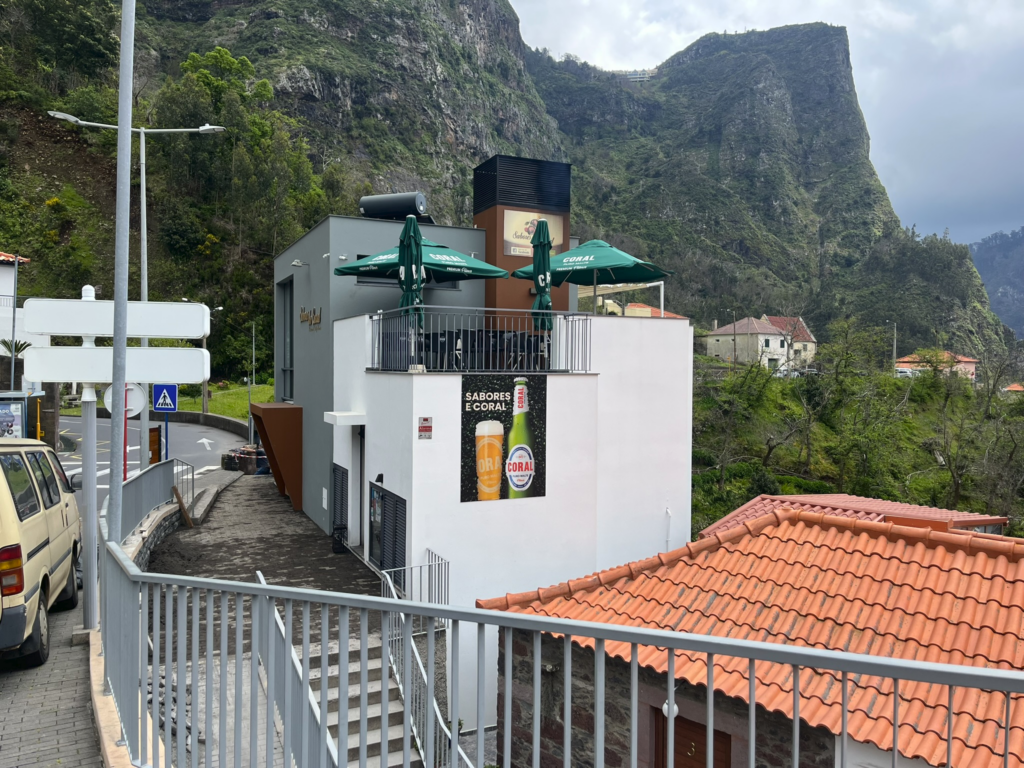
There are a few other places to eat in town, but we chose to walk back to this one. Why? Someone invested a lot of money in this place. Its new-ish sleek glass and steel construction and multiple indoor (which you can see from outside) and outdoor seating areas say “We are not just another tourist restaurant. We are doing something different.” We heard them and we responded.
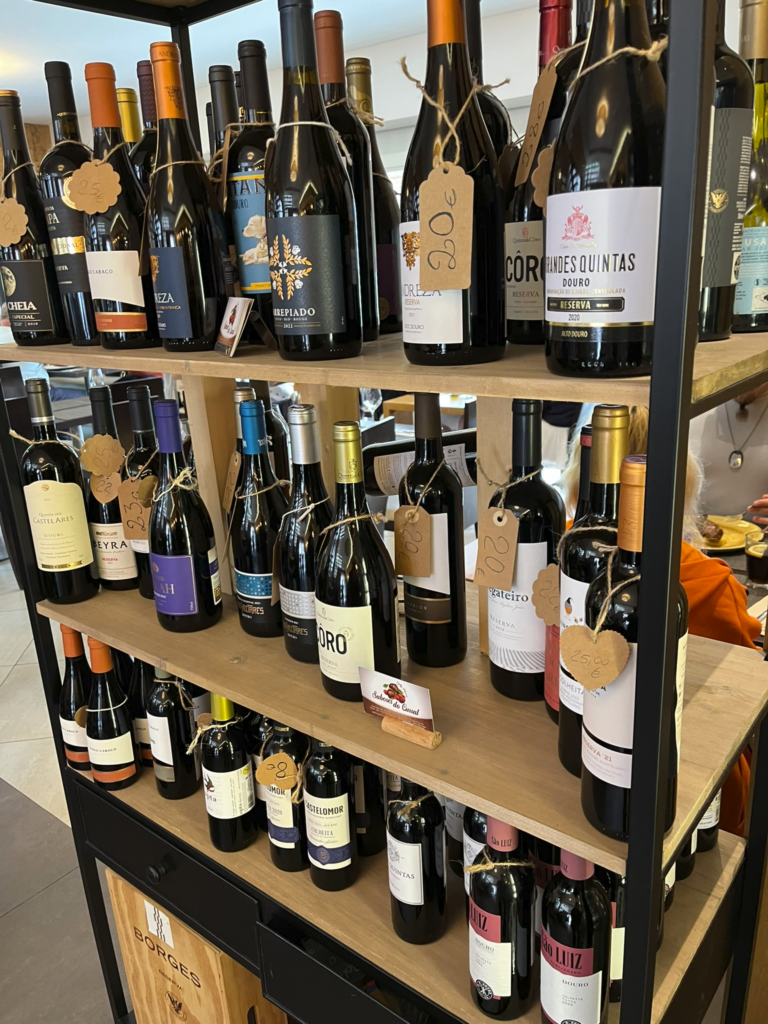
To be fair, we also wanted to dine with an outside view of the incredible natural beauty of the valley and surrounding massifs and this restaurant had a perfectly sited outdoor table. So we walked in and got the perfect outdoor table that we wanted. Then we ordered.
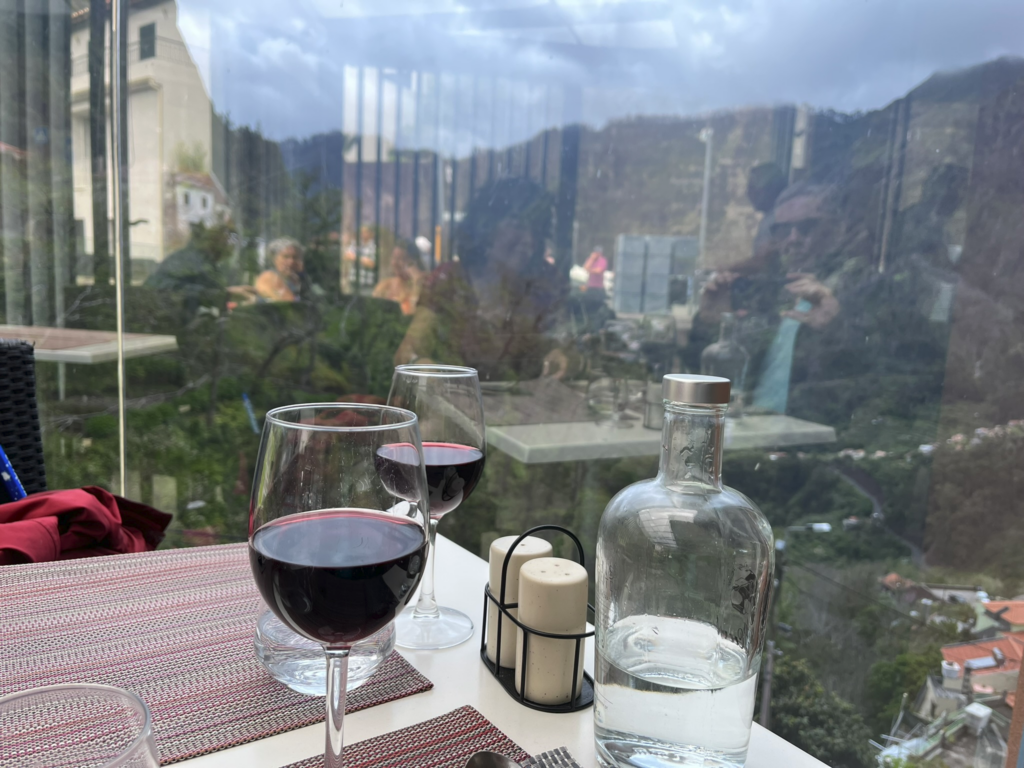
Then we decided it was too cold, went inside, and got a different table perfectly situated to appreciate the wonderful view, but warmer.
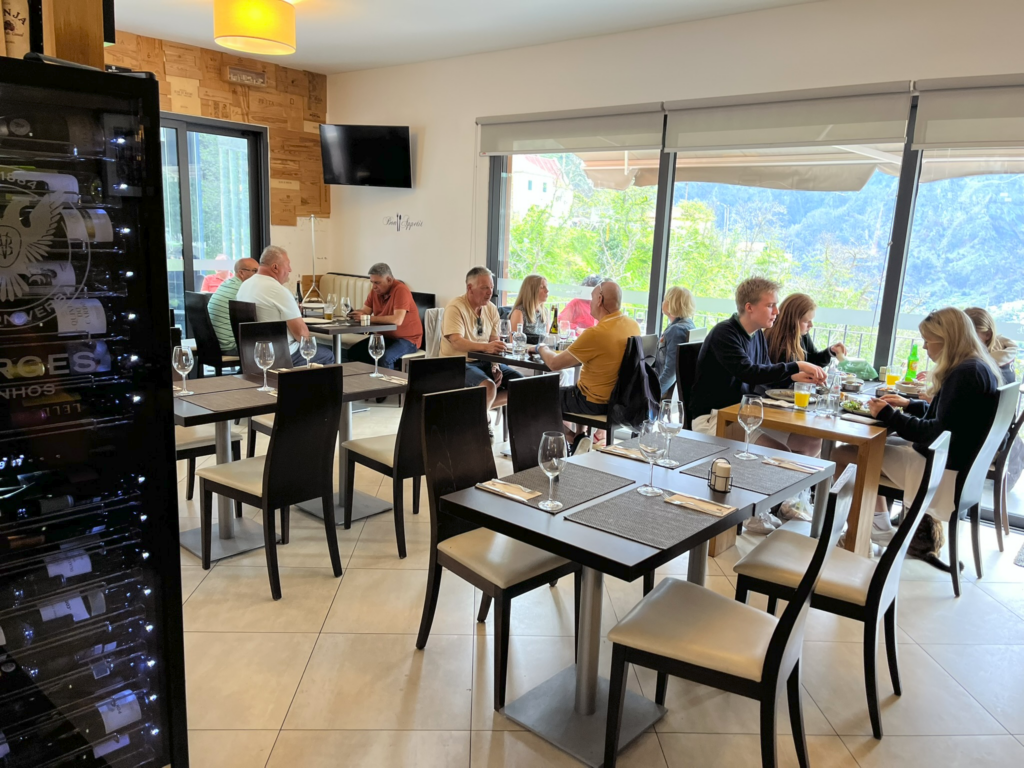
The menu is chestnut-centric and shaped like one. Think all chestnuts, all the time. But that’s a good thing. If you know my channel you know I use chestnuts 🌰 (check out my chestnut and pear ravioli). They are underrated.
This restaurant is making Herculean efforts to bring chestnuts to the world. Not surprising. Curral das Freiras is the heart of Madeira’s copious chestnut production and hosts a famous annual autumn Chestnut Festival.
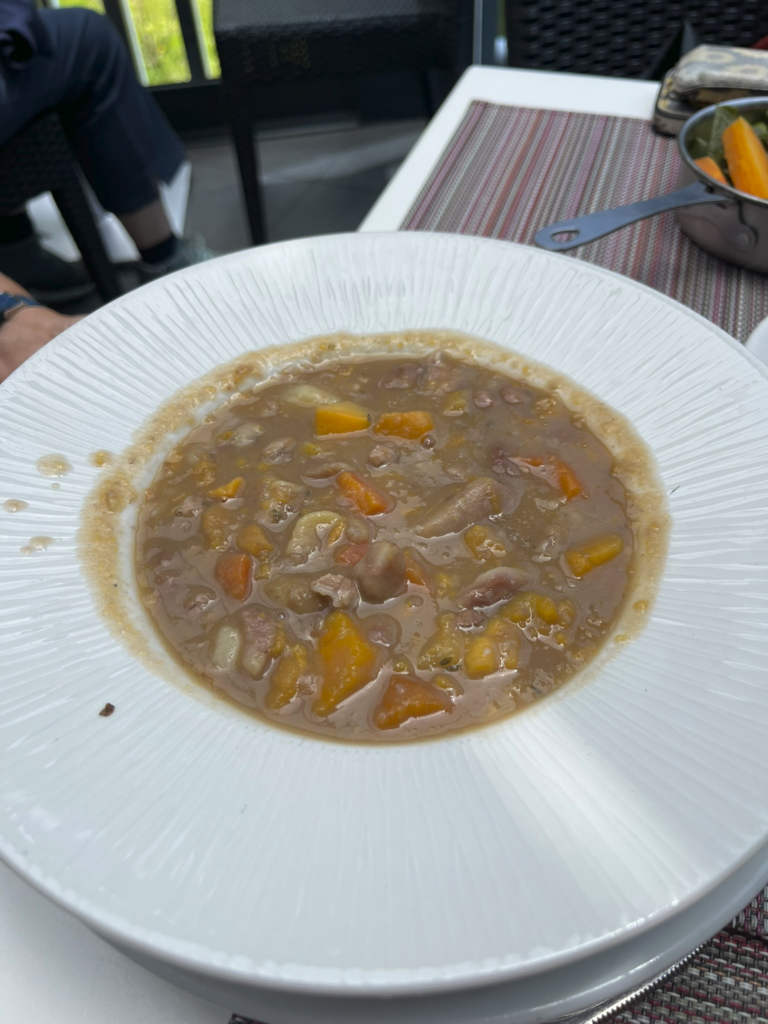
To help further the restaurant’s mission and to support the economy, we ordered only chestnut-centric dishes. We shared the chestnut soup (chunky, with potatoes, but I dreamed of using their chestnut cream to make the soup), which was chestnutty and good,
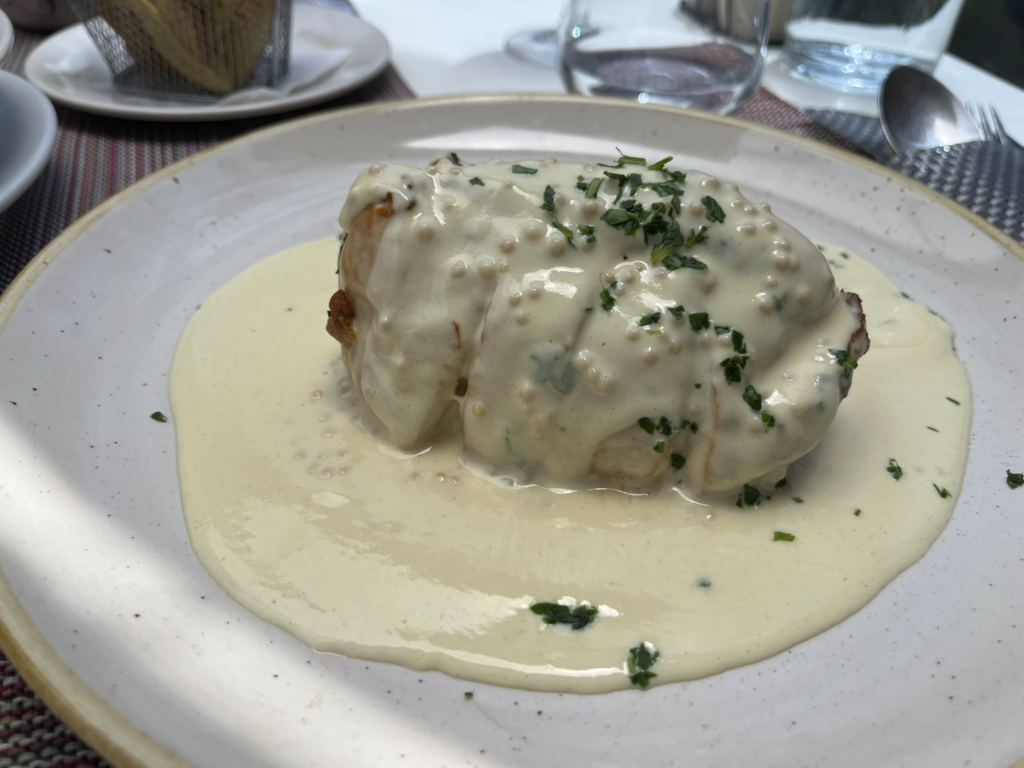
and the chestnut-and-sausage-stuffed roasted chicken breast with Dijon mustard cream sauce, which was deliciously more French than Portuguese, and the sauce was good for dunking the accompanying frites.
Olivia
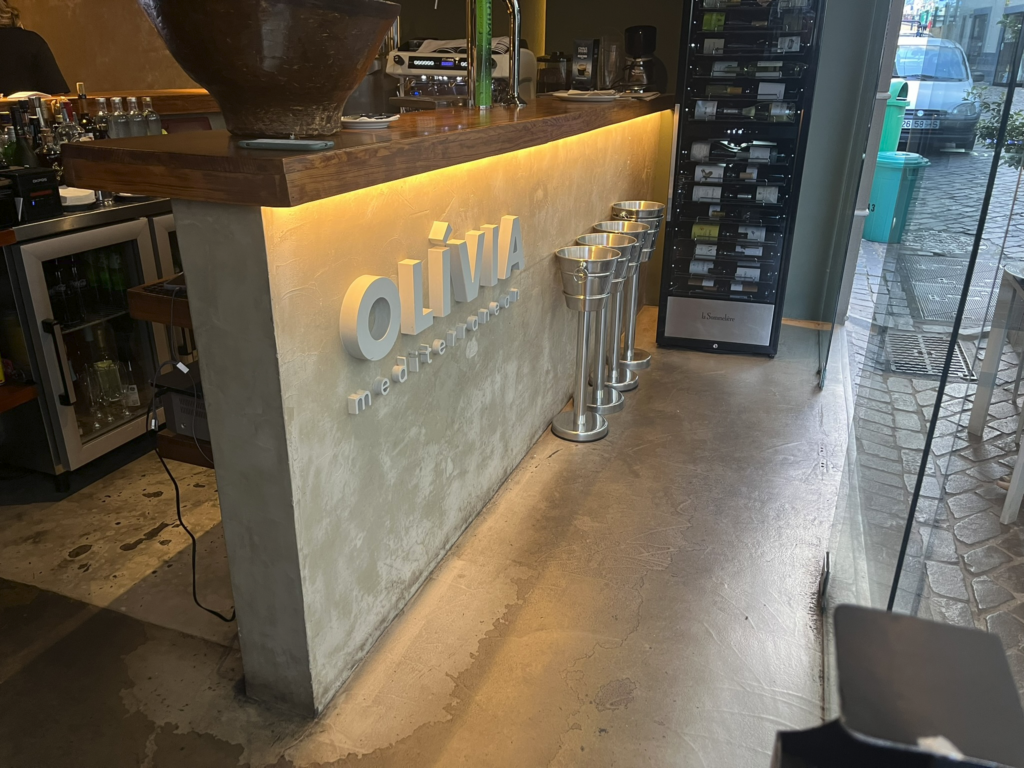
Although all of this part of Funchal is a tourist area, I put this restaurant in my Fine Food category instead of my Tourist Area category. The reason is that it is very different from most of the restaurants we saw or experienced in Funchal.
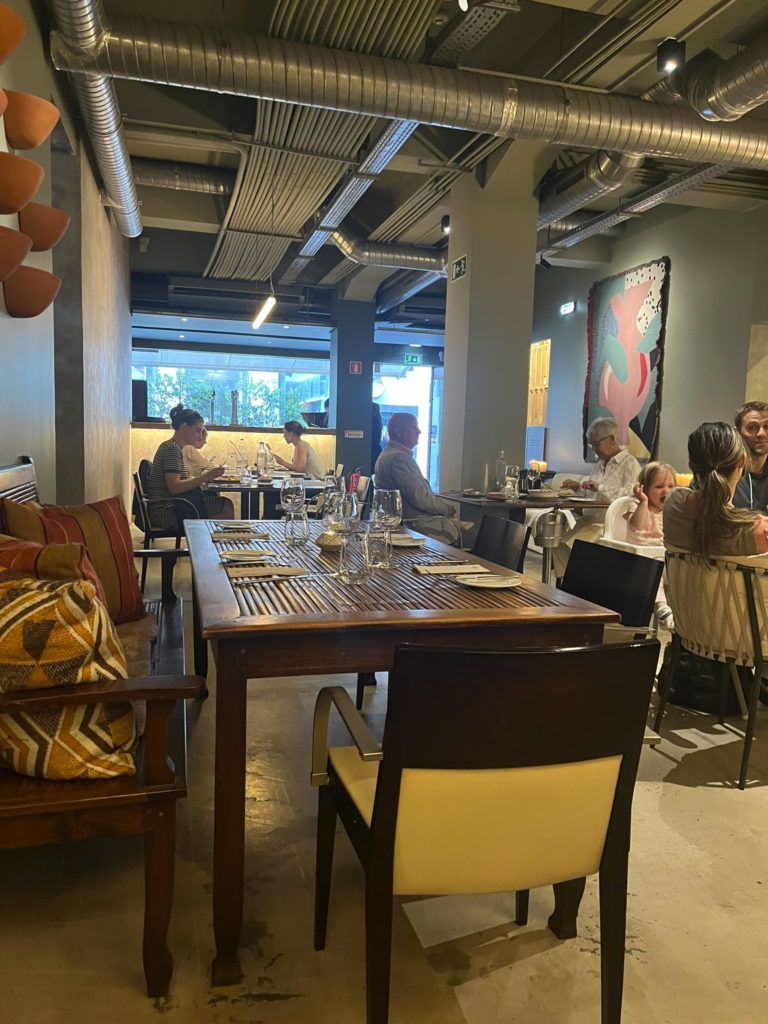
First, it has a fundamentally different clean, modern, industrial, concrete and steel ambiance. The ceiling is completely open and exposed, revealing everything that most restaurants want to keep hidden.
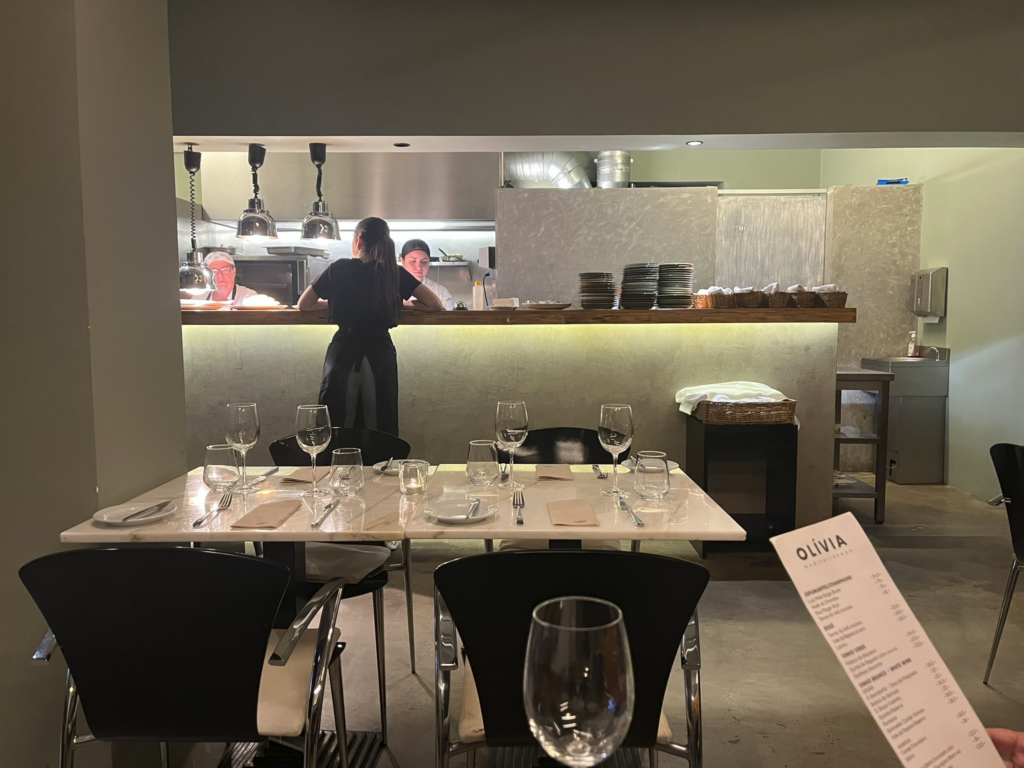
The kitchen is also open. We could sometimes hear the chef talking to the kitchen staff from our table.
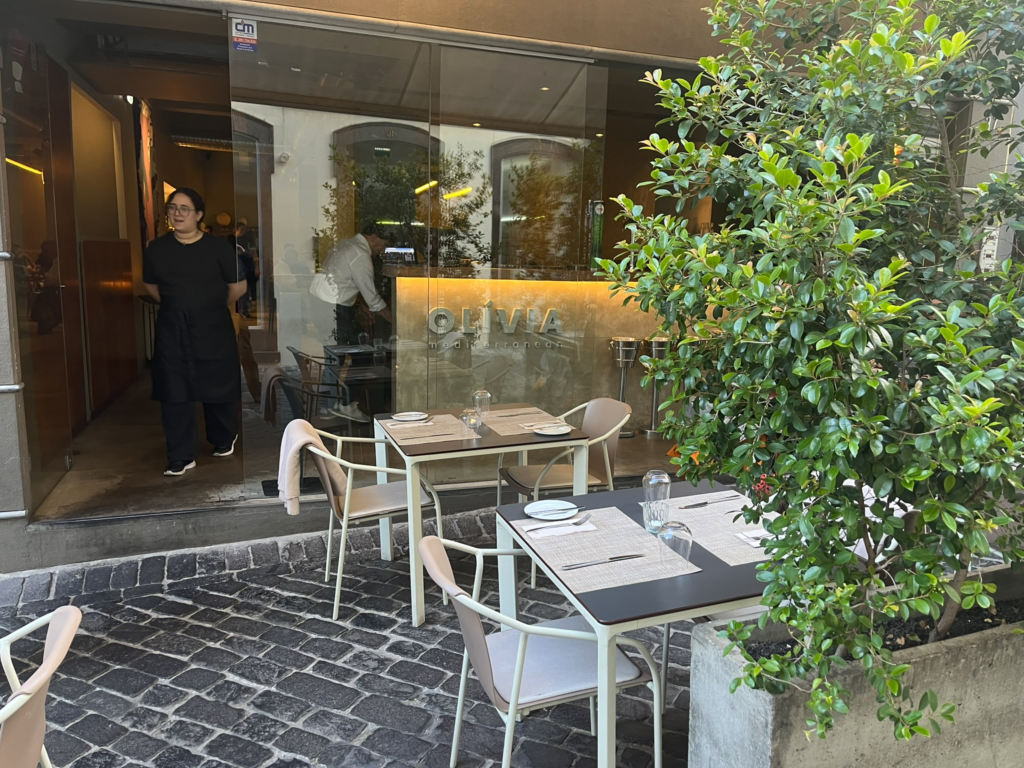
Although there were tables outside for al fresco dining, we chose to dine inside because we love this kind of restaurant, and this one in particular. We discovered it while walking by a few days earlier, on our way to another restaurant, and decided to eat at Olivia on our last night in Madeira. Turned out it was a great choice.
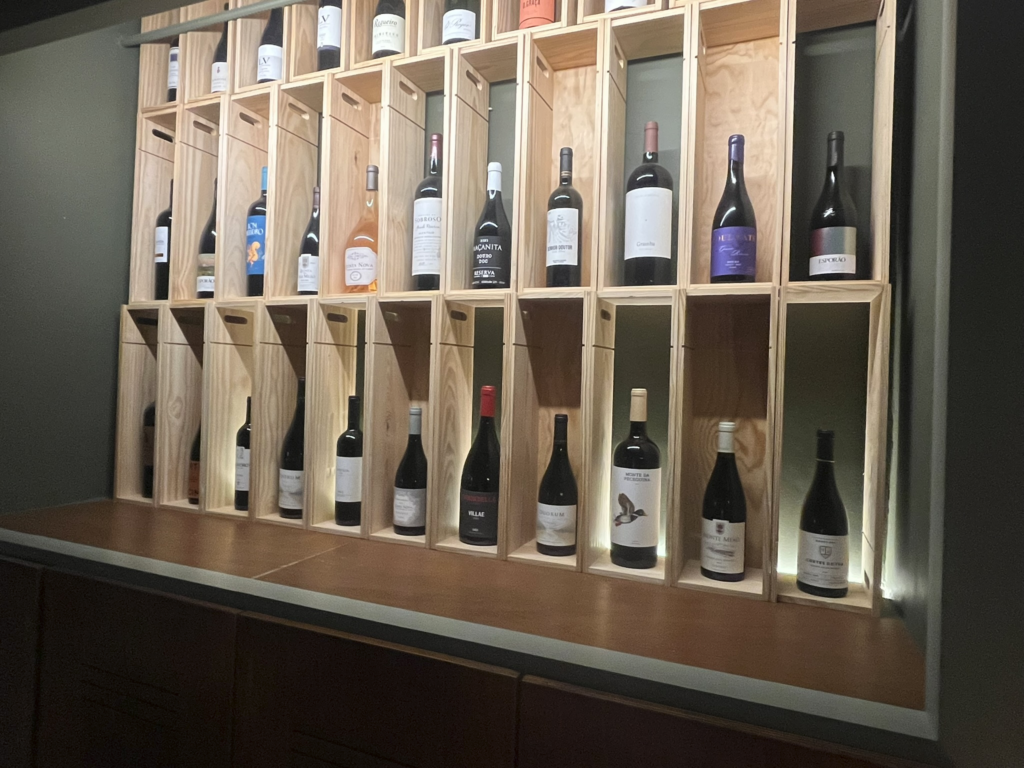
We especially liked the fact that it was very busy AFTER 8pm, which is our normal dinner time. Most restaurants here are clearing out by that time.
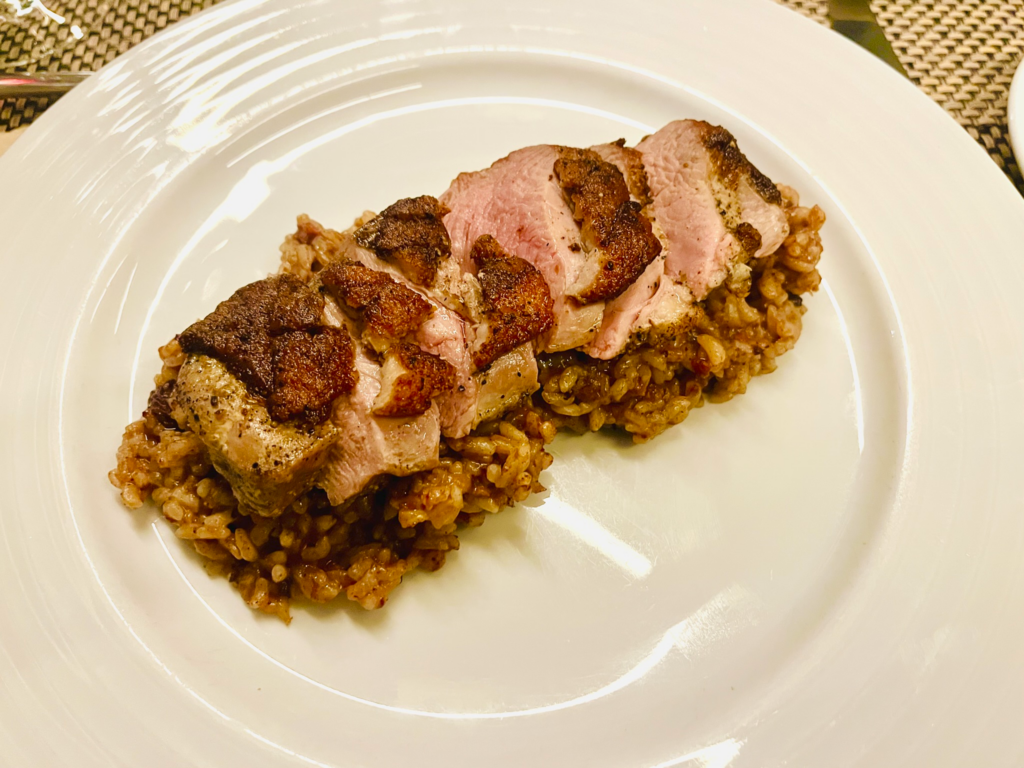
The menu also seemed different and more creative than most. We shared and enjoyed the duck breast with chorizo risotto (I REALLY liked the risotto, and it was in keeping with my philosophy that risotto is best as a base for other food (in this case duck) or as an accompaniment, and that it is too rich to be a main course). Check out my Risotto Master Recipe.
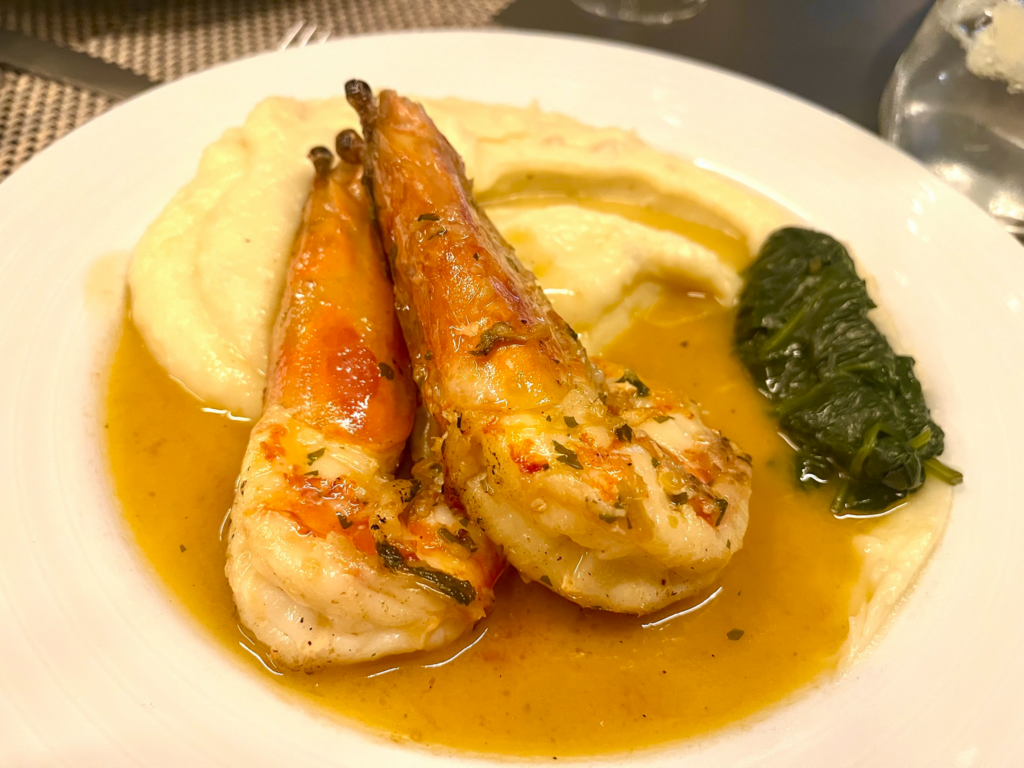
We also loved the tiger prawn fried in ginger and pepper olive oil, with mashed potatoes and spinach. The mashed potatoes were delicious mixed with the olive 🫒 oil, which was flavored by the ginger, pepper, and prawn. I even dipped some of the duck breast in it.
The restaurant seemed to have a group server approach; every server seemed to serve every table. They all did a great job. Reservations recommended.
Conclusion
“Island of Eternal Spring” is an apt nickname for this beautiful island. There’s plenty to do, plenty of good food, and unlimited incredible scenery.
Disclosure: As an Amazon Associate I earn from qualifying purchases. If you buy from a link on this site, I may earn a small commission from the vendor without any additional cost to you. No company pays me to say anything in particular, or to say nice things. I only stand behind products I believe in.