John Hornick — Chef’s Apprentice
L’Isle-sur-la-Sorgue is a picturesque town in the Provence-Alpes-Côte d’Azur region of southeastern France. Before we signed up for a culinary tour of the town and its environs, I had never heard of it. But what a great find!
Here’s a summary covering its location, history, walkability, attractions, and interesting facts. After the summary I provide details on local restaurants and a few things to see and do.
Location
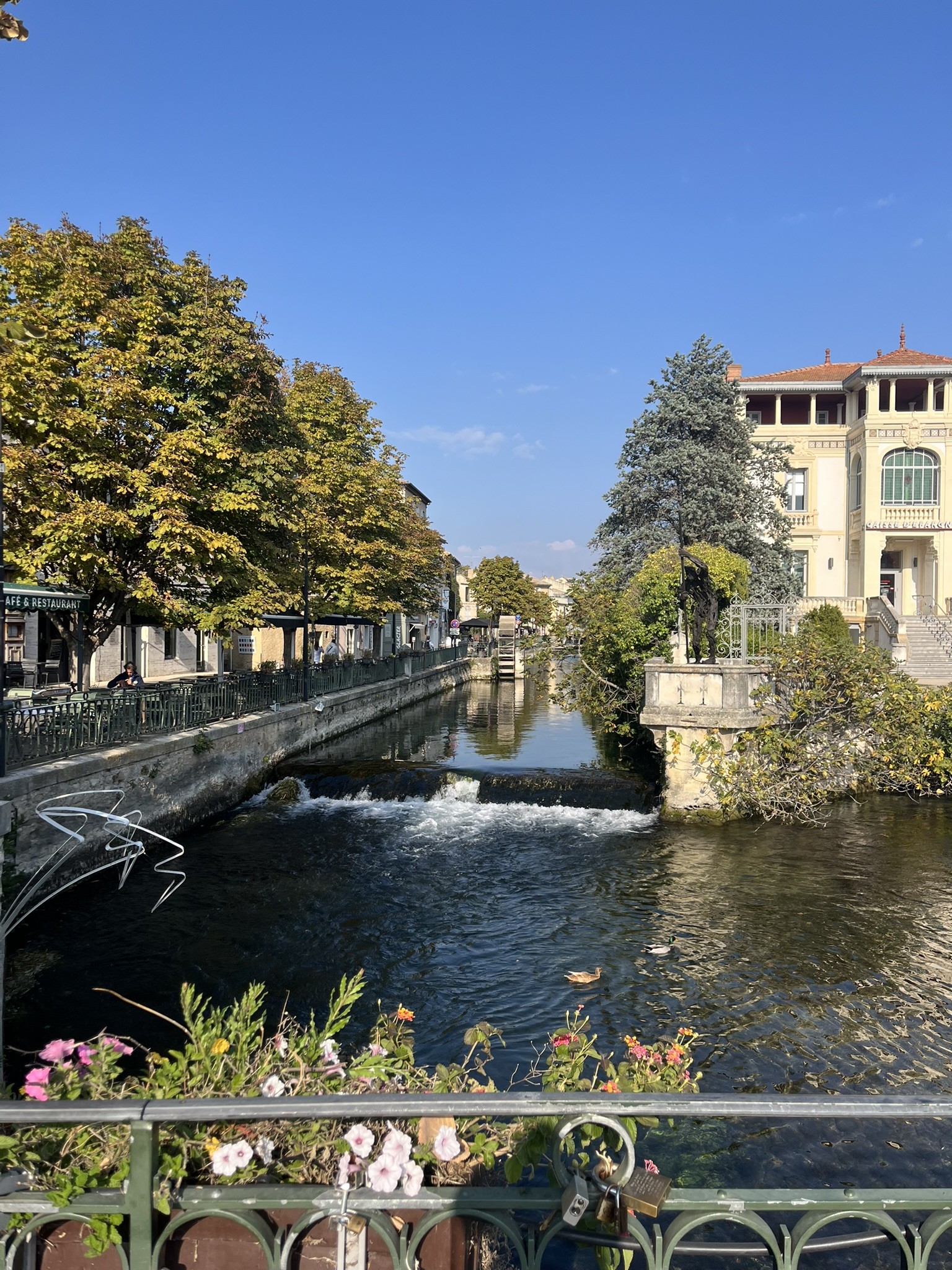
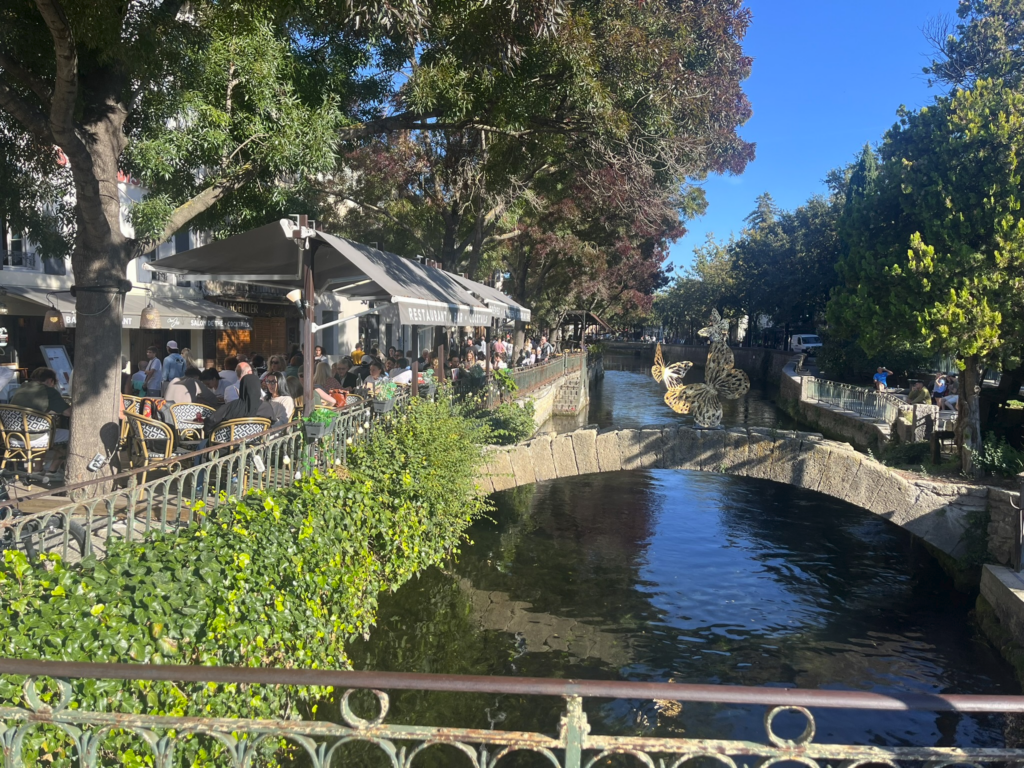
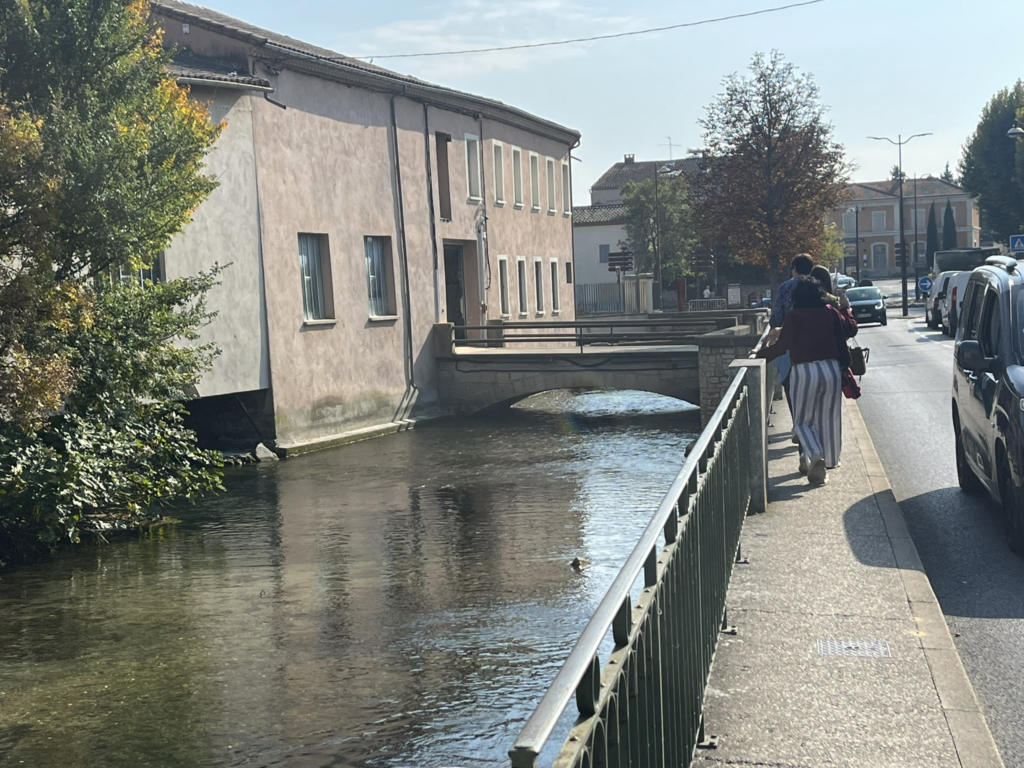
L’Isle-sur-la-Sorgue is located in the Vaucluse department, nestled in the heart of Provence. It’s approximately 20 kilometers east of Avignon, alongside the Sorgue River. The town’s setting among waterways earned it the nickname “the Venice of Provence.”
History
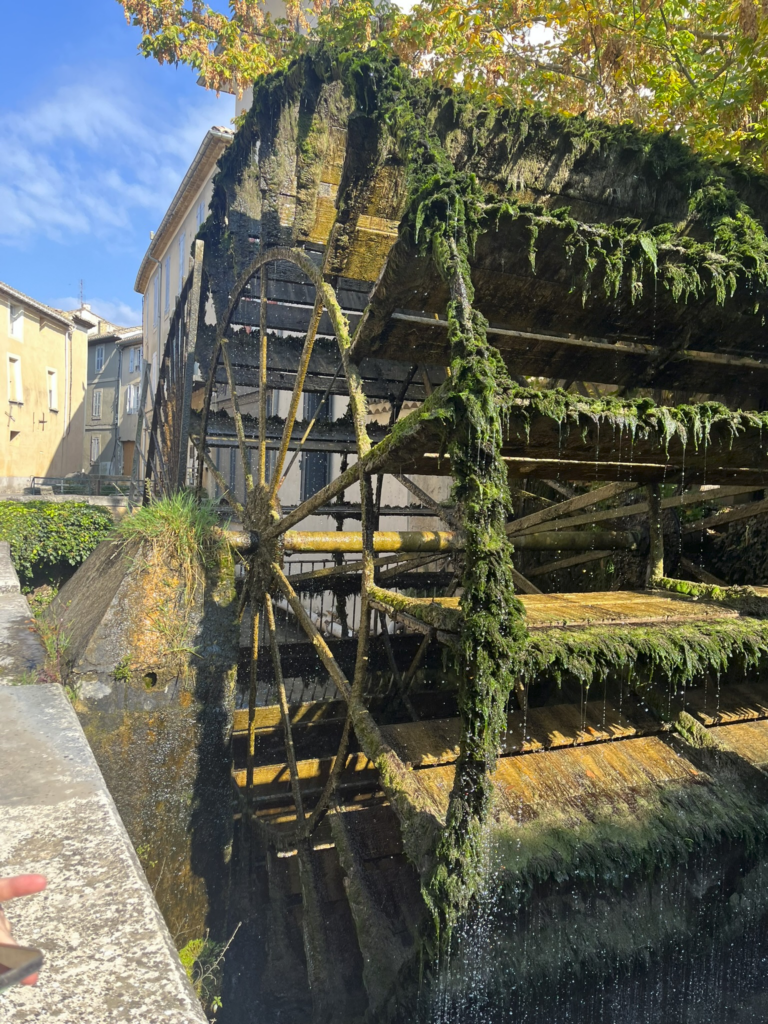
The history of L’Isle-sur-la-Sorgue dates back to the Middle Ages. Initially established as a fishing village, it grew significantly thanks to its strategic location and the presence of the Sorgue River, providing power for mills. Over the centuries, it became an important center for textiles and art, attracting merchants and artisans.
Walkability
L’Isle-sur-la-Sorgue is highly walkable, with narrow, picturesque streets lined with charming shops, restaurants, and cafes. The town’s layout, interwoven with canals and bridges, makes for delightful walking tours, allowing visitors to explore its beautiful architecture and vibrant market life.
Current Attractions
- Antique Markets: L’Isle-sur-la-Sorgue is renowned for its antique markets, considered some of the largest in Europe. Hundreds of antique dealers and boutiques offer a vast array of treasures.
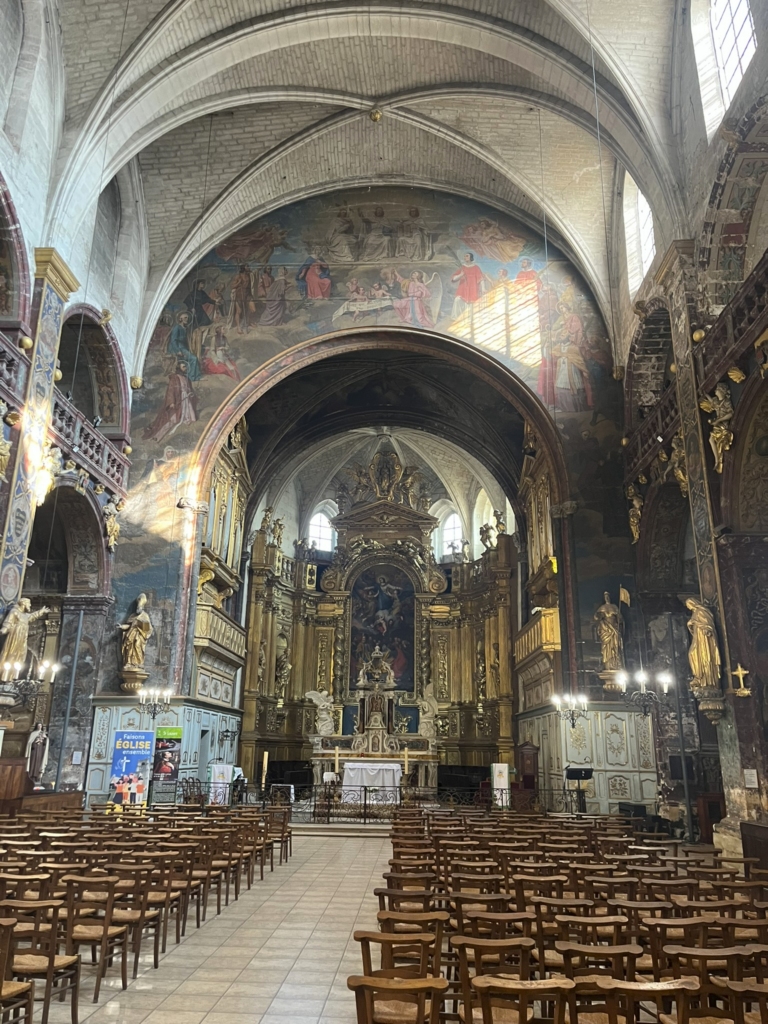
- Collégiale Notre-Dame-des-Anges: This stunning church, located in the heart of the town, showcases Baroque architecture and ornate interior decorations.
- Museums and Art Galleries: The town hosts a variety of museums and galleries, such as the Campredon Centre d’Art, featuring contemporary art exhibits.
Fun or Interesting Facts
- Floating Market: L’Isle-sur-la-Sorgue is famous for its floating market, typically held once a year, where vendors sell their wares from traditional boats on the river.
- Artists’ Haven: Historically, the town has been a magnet for artists who come to capture its unique light and scenery, contributing to its rich artistic culture.
- Vibrant Festivals: The town hosts numerous events and festivals, especially focused on antiques and Provencal culture, drawing crowds from all over the world.
L’Isle-sur-la-Sorgue offers a blend of cultural heritage, natural beauty, and vibrant market life, making it a captivating destination for travelers. To book a tour of the town, click here.
Within a short driving distance you’ll also find charming, medieval hilltop towns. Click here for tours of the villages of the Luberon, such as Gordes, Roussillon, and Lourmarin.
Check out my other Travels, Tastes, & Toasts posts on:
Also, check out my Chef’s Apprentice YouTube channel for hundreds of recipes and cooking lessons, including my French Faves series and my French Faves Julia + series, where I make the dishes of the late, great Julia Child, with my own plus.
Getting There
We flew into Paris, spent the night, then visited Provence for a week.
To book your trip to Paris or L’Isle-sur-la-Sorgue, or anywhere, and to get good prices, use this Expedia box:
We used United points to fly to Paris. If you have slightly fewer points than you need, you can buy enough to get you a free trip from United. If you want to stay in Marriott hotels and don’t have enough points, you can also buy more here.

We travel with only one bag and a backpack each. I have been using this Pathfinder bag for many years. It has a large compartment with top or bottom access, and a nylon panel can be unzipped to combine the soft upper compartment and the rigid lower. The whole bag is heavy duty, including the retractable handle and wheels, as proven by the fact that I have been using it for well over five years. It still looks new despite having been in many, many overhead luggage compartments, and Sarah just bought one because mine has served me so well for so long. What I like most about it is the pockets. I love pockets and it has many pockets both inside and out.


Where to Stay: Le Clos Violette
This charming pet-friendly hotel is only a short walk from everything of interest in this very interesting town. Set in a Medieval building with elements originating in the 13th and 15th Centuries, it styles itself as an “apartment hotel” because it has only seven apartment suites.
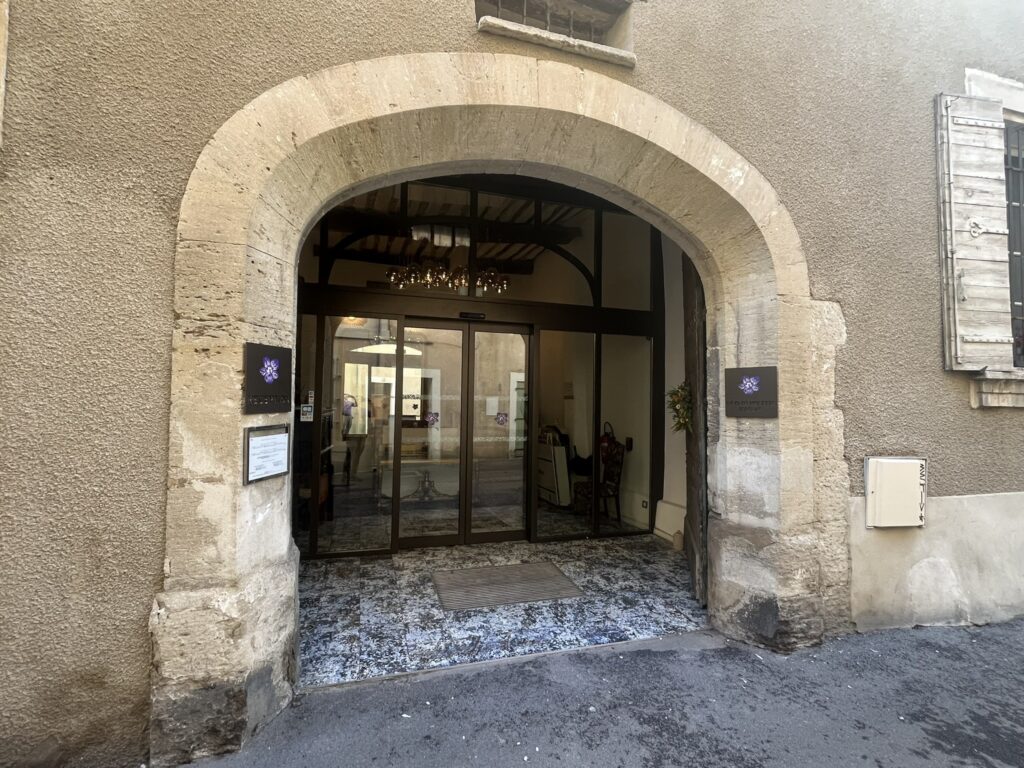
Our suite, named “Theatre” (no. 6) was spectacular. Set on two levels, the lower-level bedroom area had a huge bed (it seemed larger than a King) placed in the center of the large, bright, high-ceilinged room with exposed log 🪵 beams.
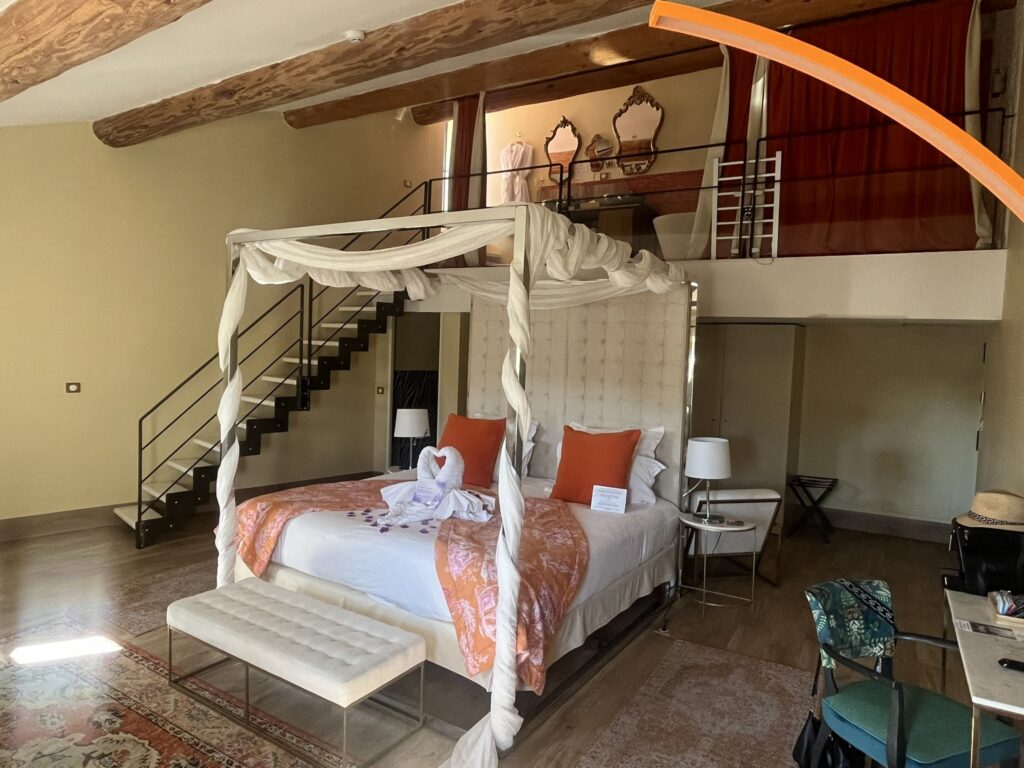
Behind the bed was one of two sitting areas; the other was in a front corner below a window. In the other corner sat another small bed, presumably for a dog if we’d brought one along (of course we would consider ourselves lucky if our three Siberian Huskies would share the big bed with us).
Also behind the bed was a hidden kitchenette.
The vanities, tub, and shower were reached via a steel staircase climbing to the second level.
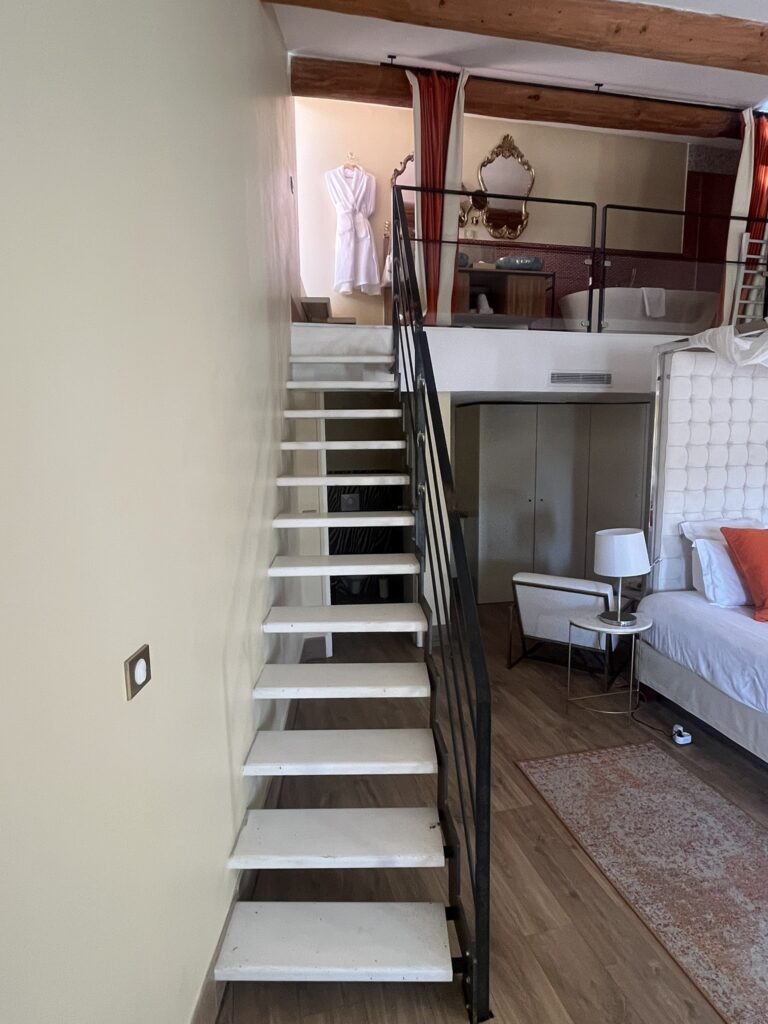
A railing overlooked the bedroom below.
Smartly, the designer placed the private privy room on the first level, which was better for nighttime access.
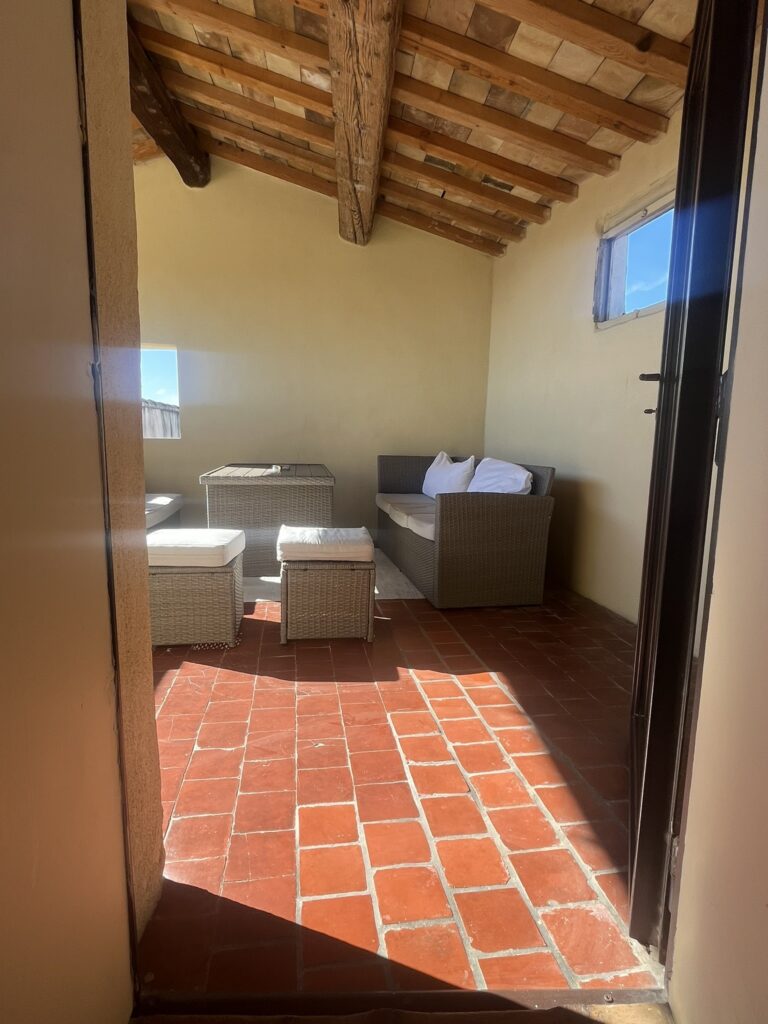
A door off the second level led to a private covered terrace with a table and seating for six, and a view of the church and surrounding rooftops.
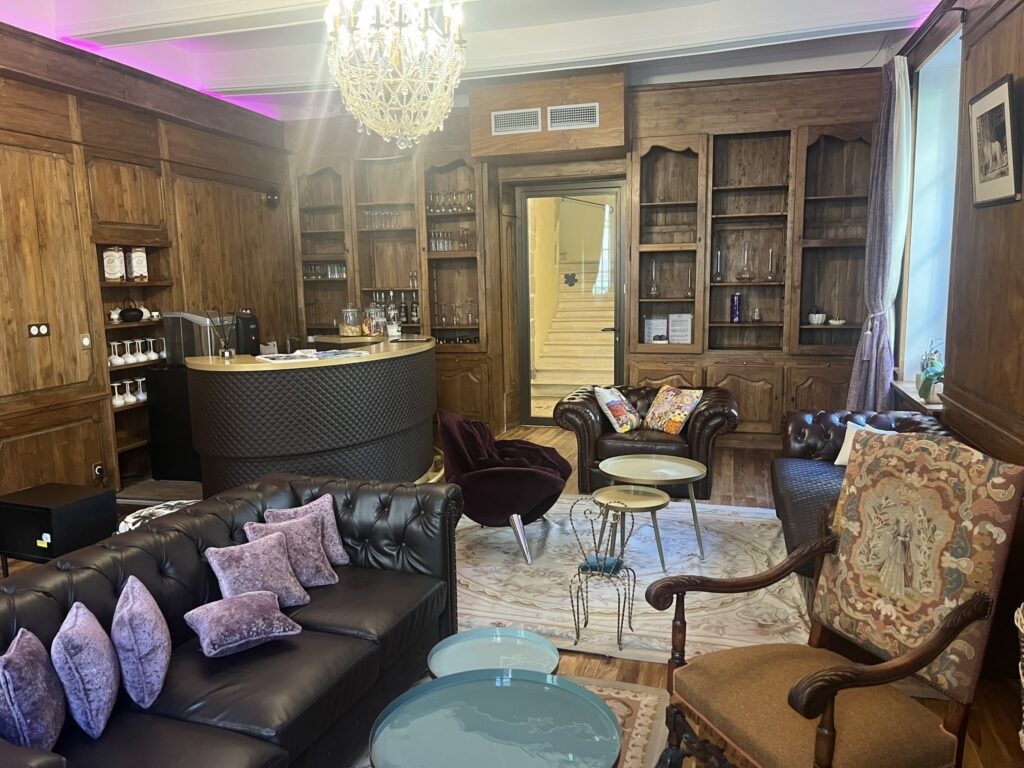
Although there wasn’t much reason to leave this great room, the hotel offered other amenities, including a cozy tea room/bar/library/game room on the first floor.
There was also a breakfast room and kitchen for the included petit-dejeuner (which was incredible and not petit at all).
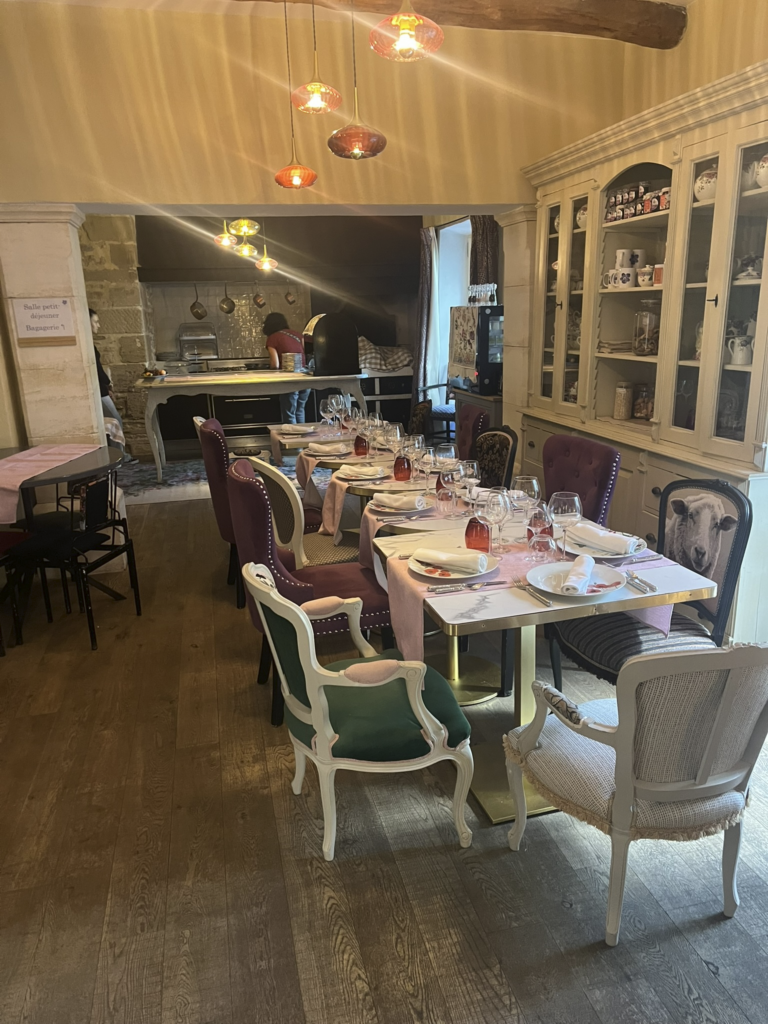
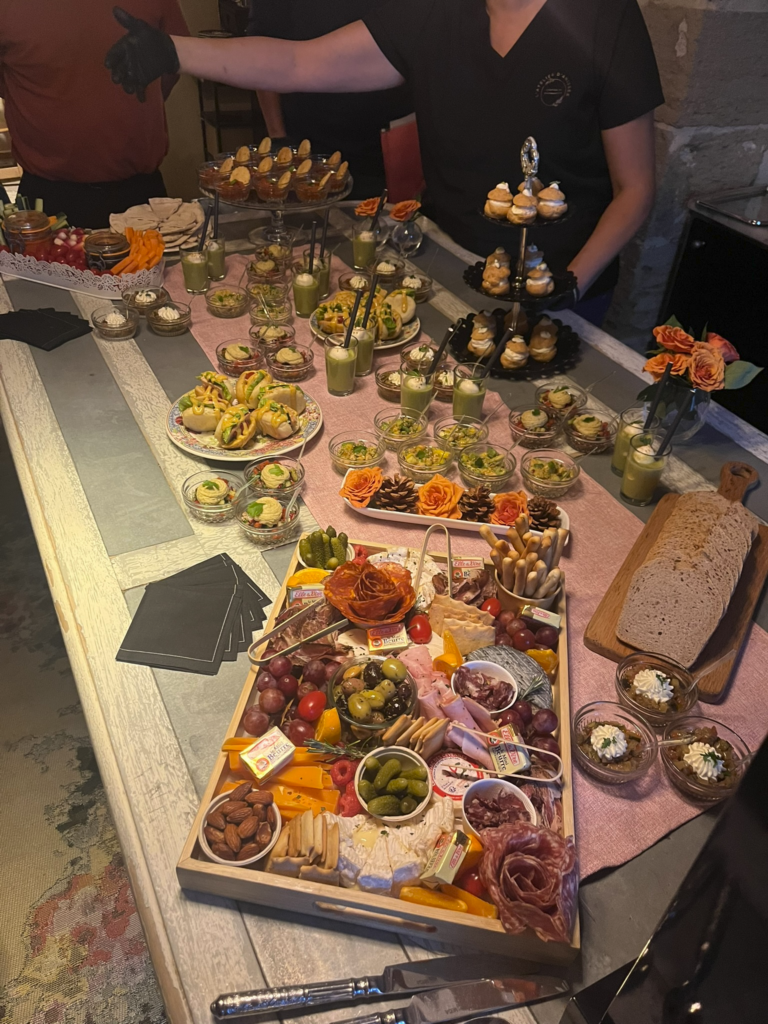
Here’s a portion of breakfast.
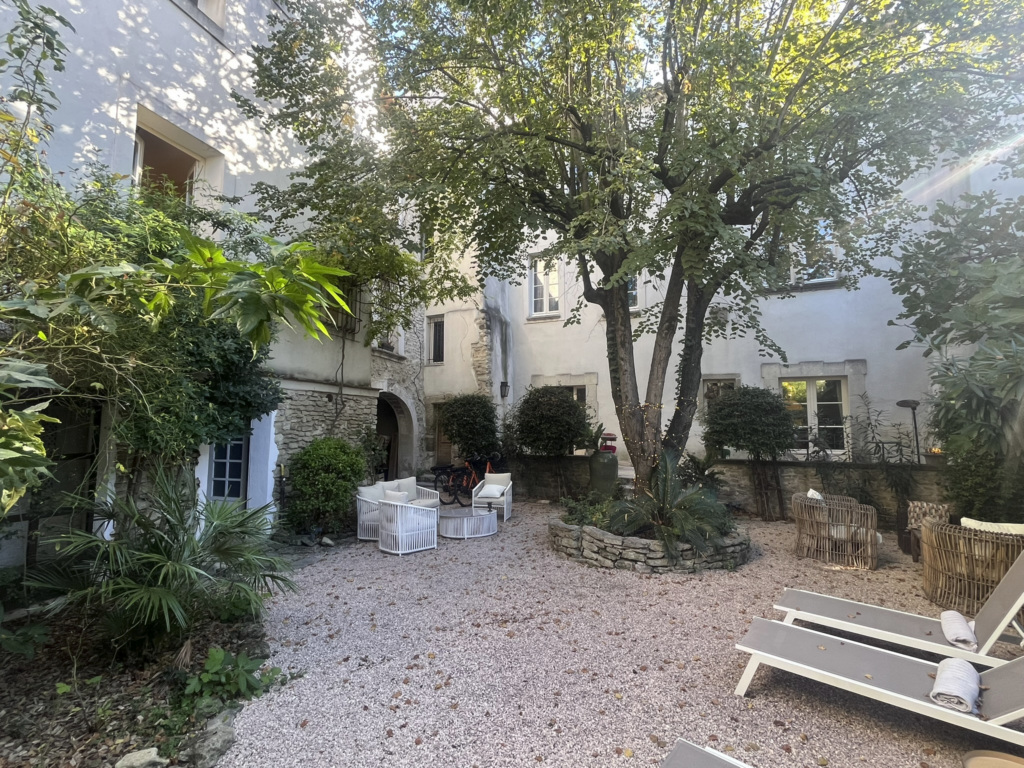
Outback was a small indoor heated pool, a terrace and garden with several seating areas, and bicycles available for rent.
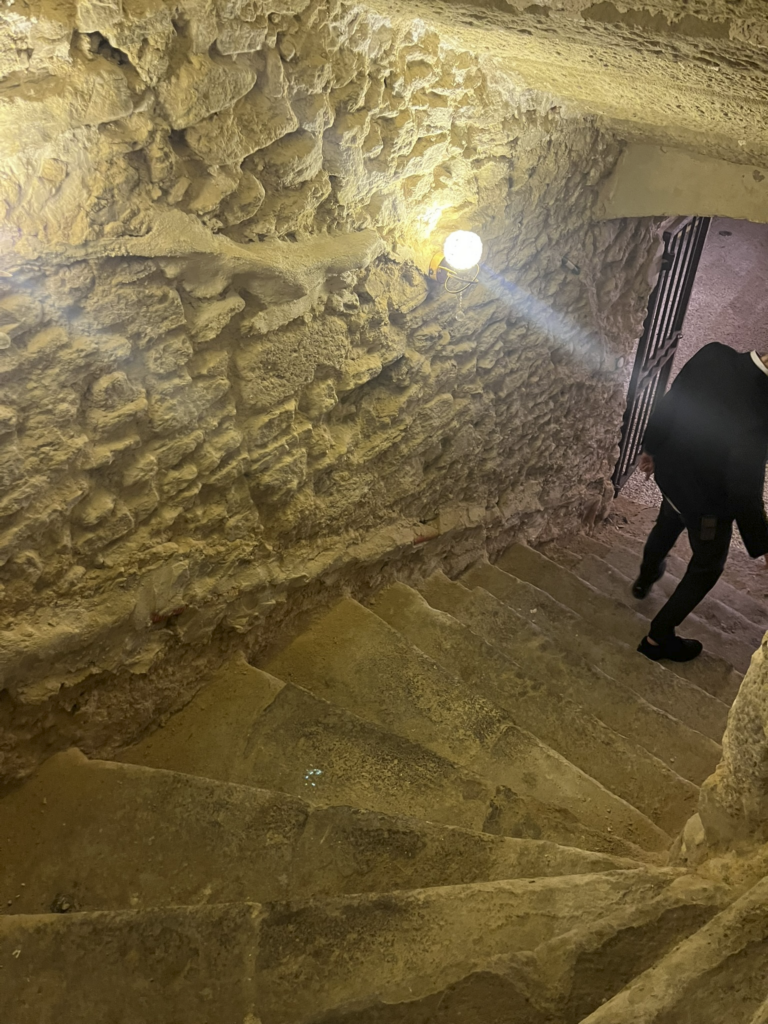
Below the ground floor was a wine cave with a gorgeous live-edged wood table and small wine cellar.
The friendly and ever-present but unobtrusive staff provided excellent service.
We thoroughly enjoyed our stay.
Haut les pains !
This small boulangerie occupying a former train station (active rails still pass only a few meters behind the building) a short drive from town offers the widest selection of freshly baked breads I have seen in any bakery anywhere.
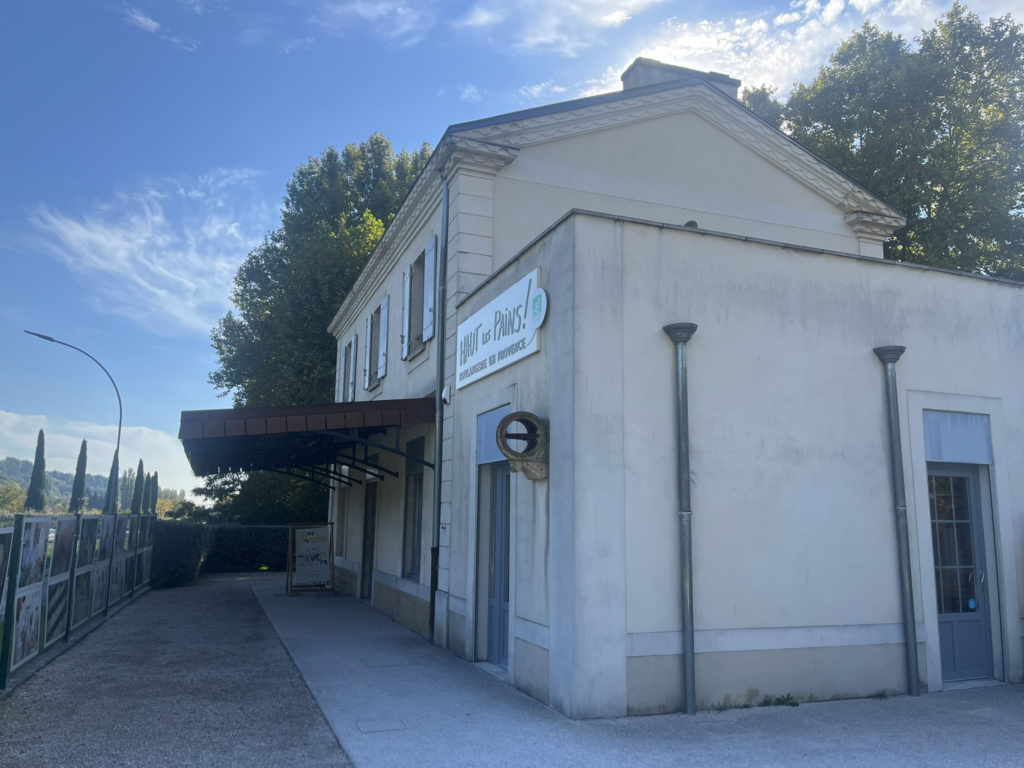
Although such baked bounty may be commonplace in France, it was quite impressive to me, or maybe I was simply intoxicated by the wonderful aromas wafting from the ovens.
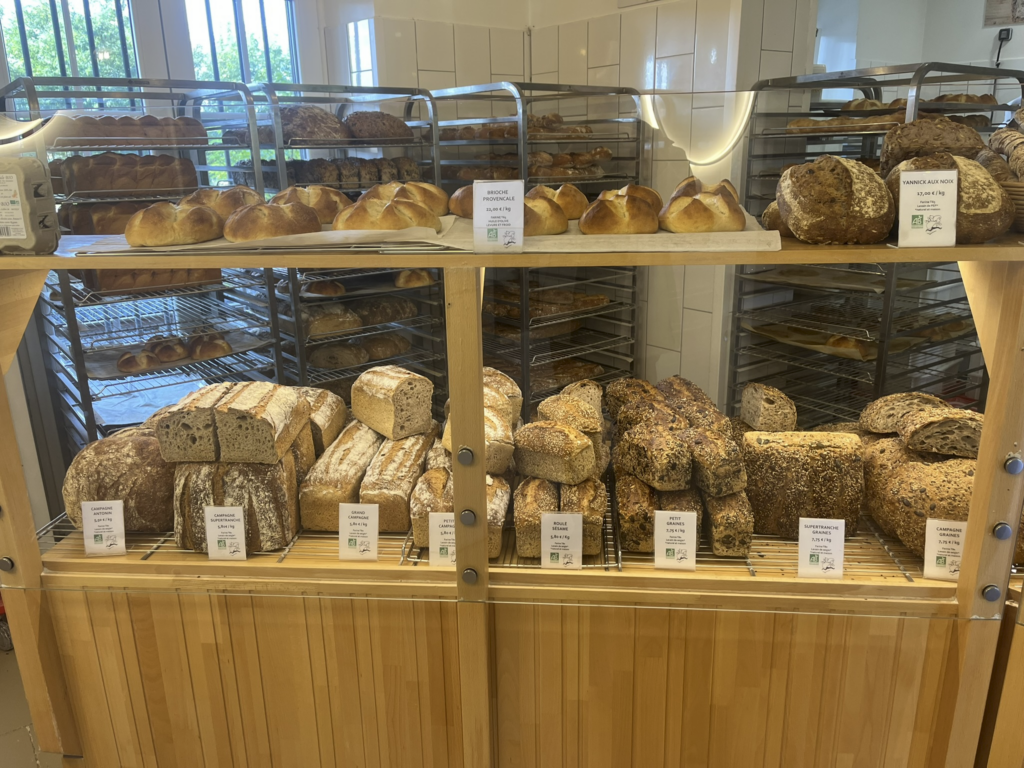
We not only feasted our eyes on the beautiful wares. We were with a group headed to a lunch and wine tasting at a nearby vineyard (Chateau de Sannes), so we bought some of seemingly every type of loaf 🍞 for actual feasting about an hour later.
And feast we did, on a scrumptious table of cheeses, charcuterie, and many types of bread 🥖. My favorites were the buttery Brioche Provençal, marvelous multi-grain, and — surprisingly — slices of the loaf made with acorn flour (maybe I have squirrel 🐿️ somewhere in my family tree 🌳).
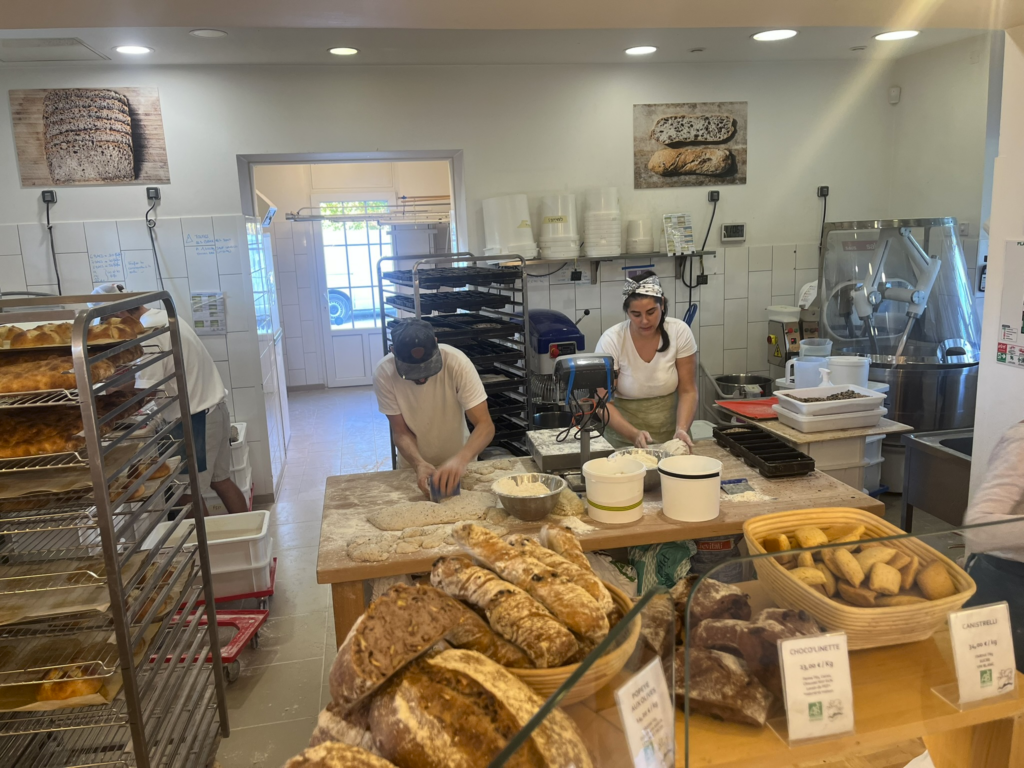
I loved the fact that unlike most bakeries, which open very early, this one opens in late morning, which means that you need not arrive at the crack of dawn for FOMO and your bread will still be fresher by lunch or dinner time. If you are in the area, be sure to detour to this great spot.
Château de Sannes Winery
This beautiful property has a new-ish, spacious, light and airy, high-trussed-ceiling tasting room and gift shop.
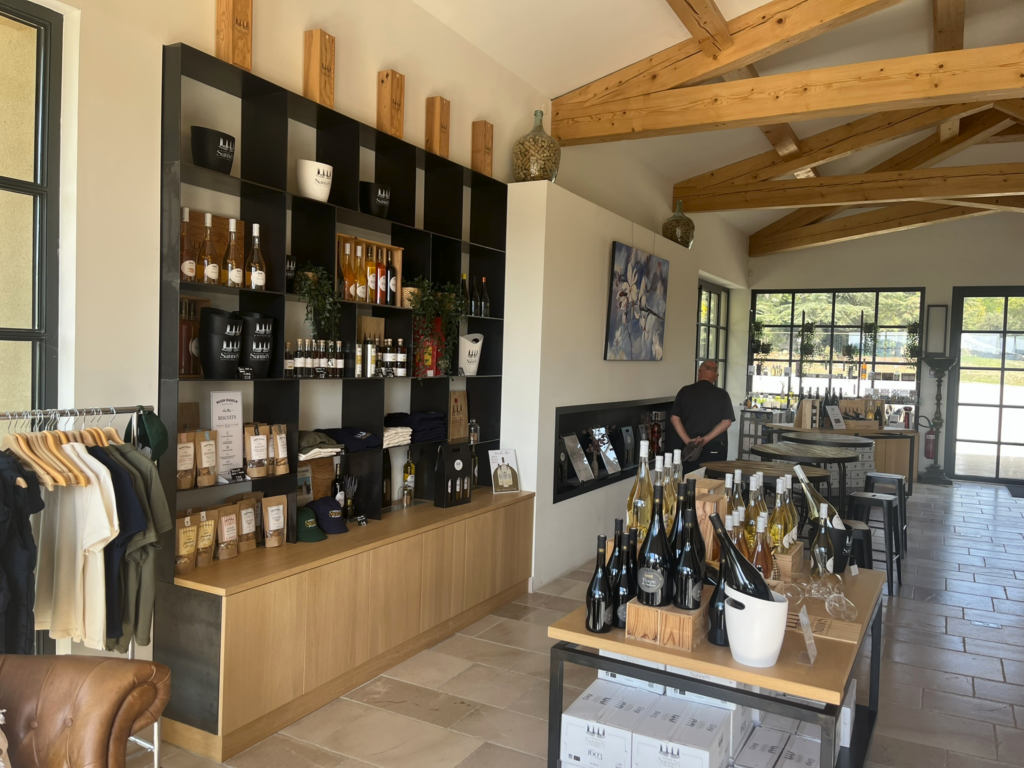
But on the perfect day we visited we enjoyed a delightful outdoor lunch of cheeses, charcuterie, an incredible bread spread from a nearby Boulangerie (Haut les Pains!), and of course a sampling of the winery’s delicious best: a white, a rose, and a red Luberon cuvé. My favorite was the Syrah.
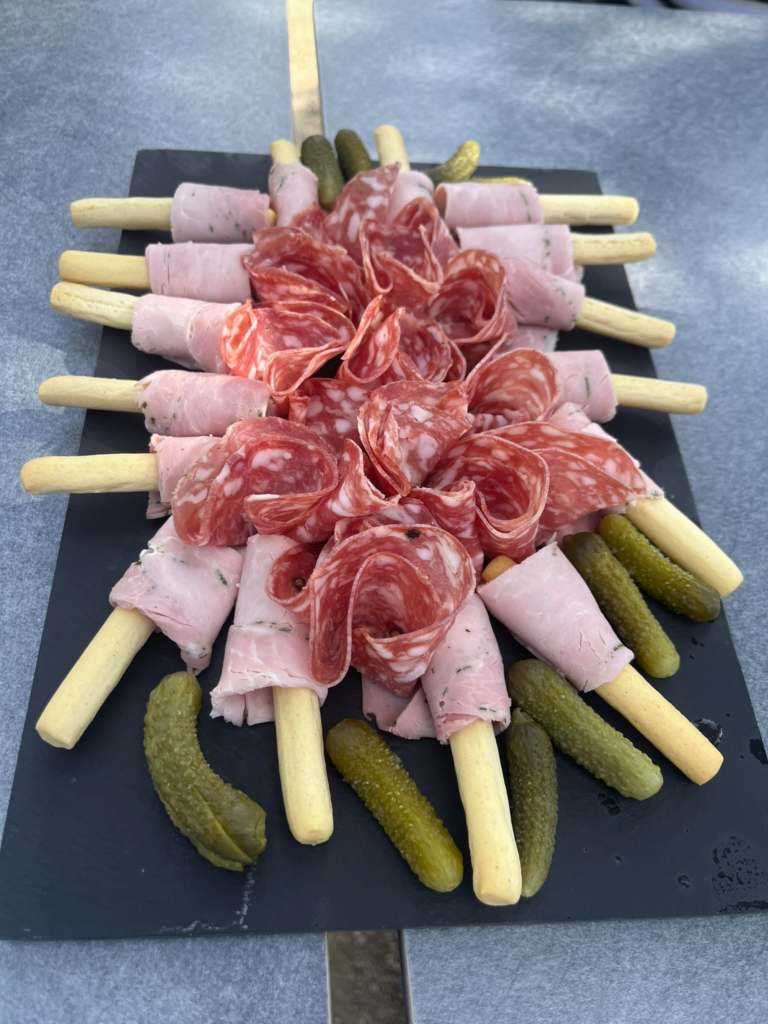
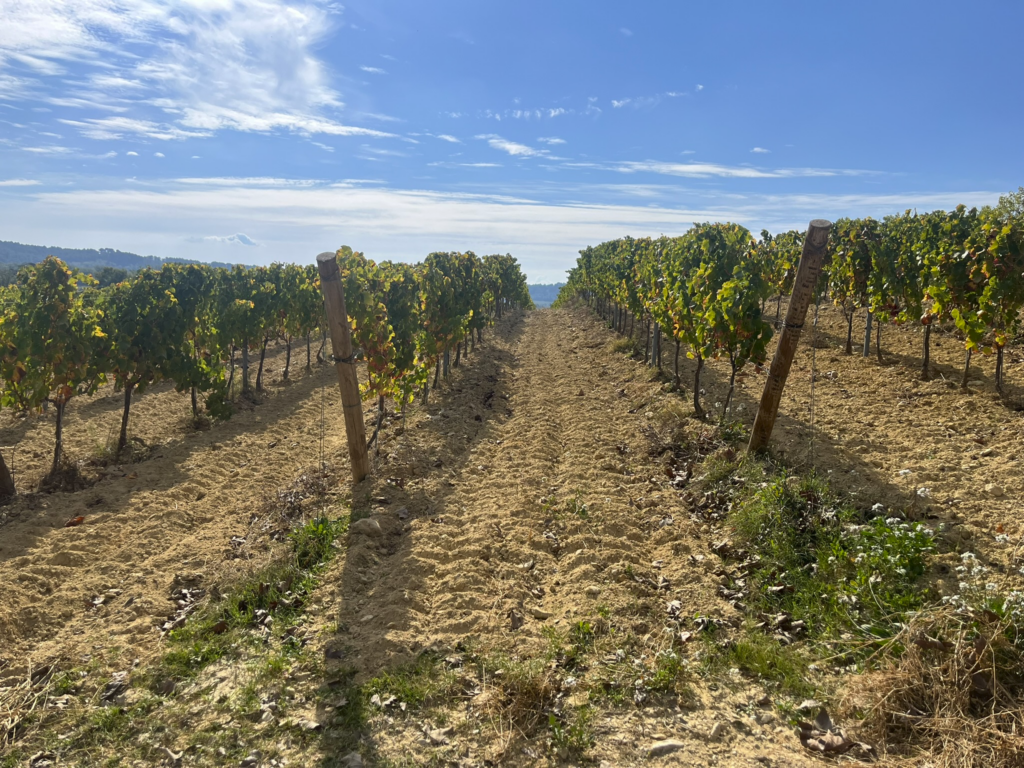
Of course the grounds were beautiful (what winery isn’t?), with vines of Syrah, Mouvedre, and Grenache stretching as far the eye can see.
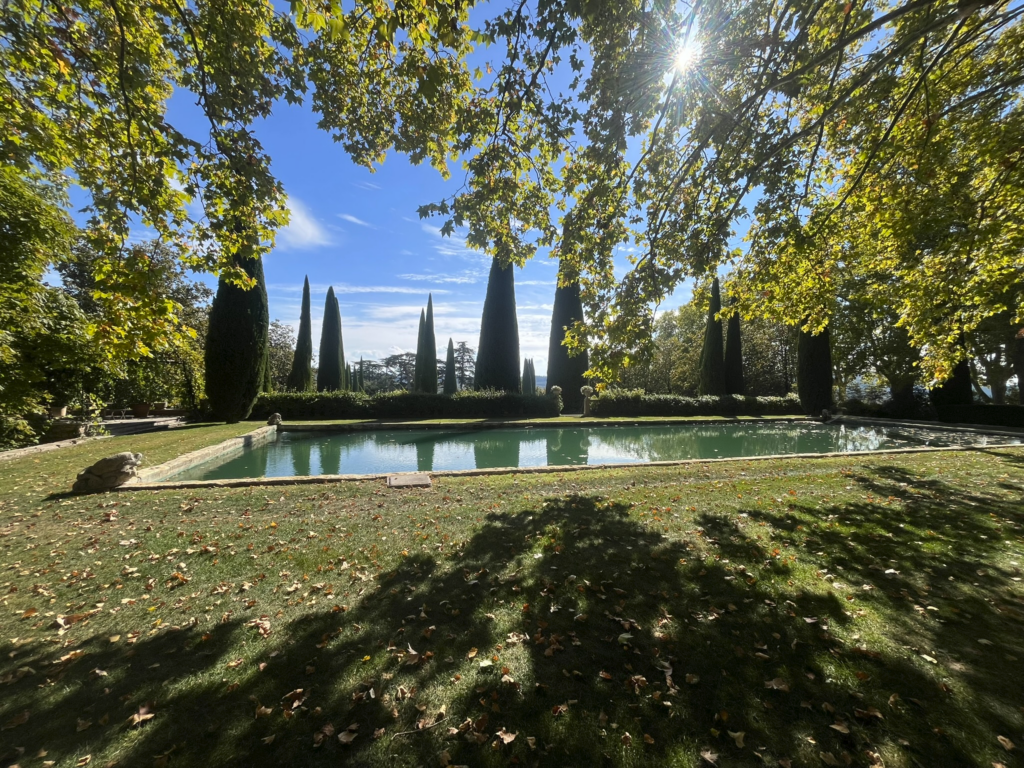
Highlights are the ancient moulin, which still turns to grind flour, the castle 🏰 on the grounds (private 😟), and the castle’s hedges, gardens, and pools (open for strolling).
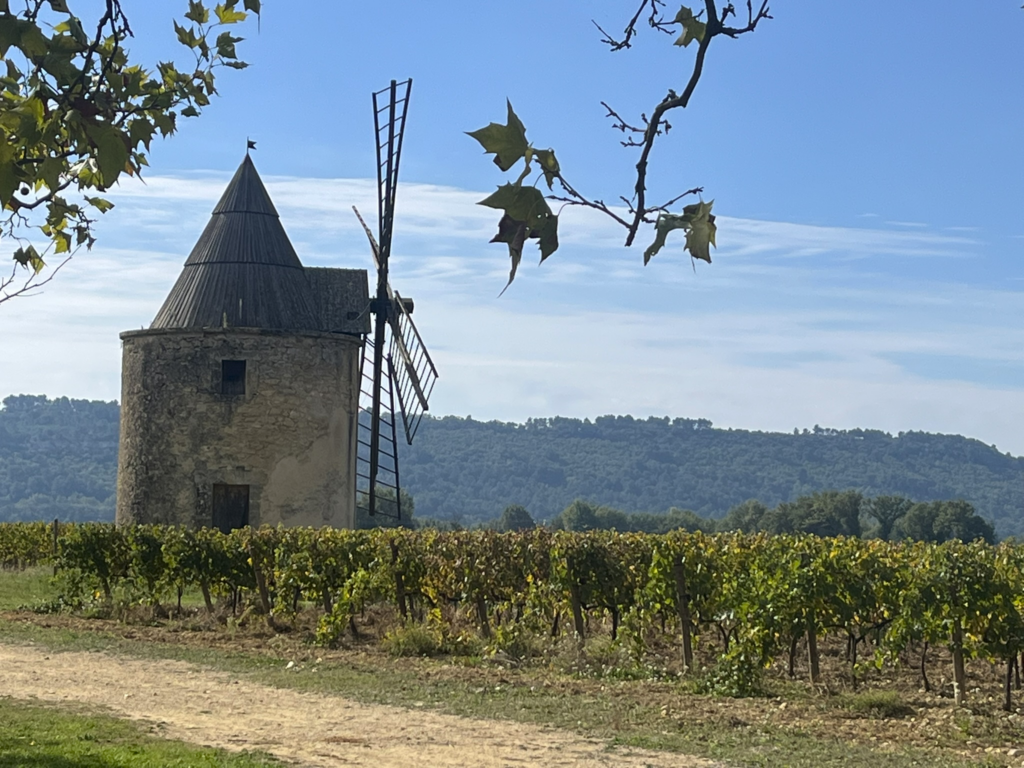
If you’re exploring the Luberon, don’t miss this spot.
Moulin à huile d’olive & Domaine Bastide du Laval
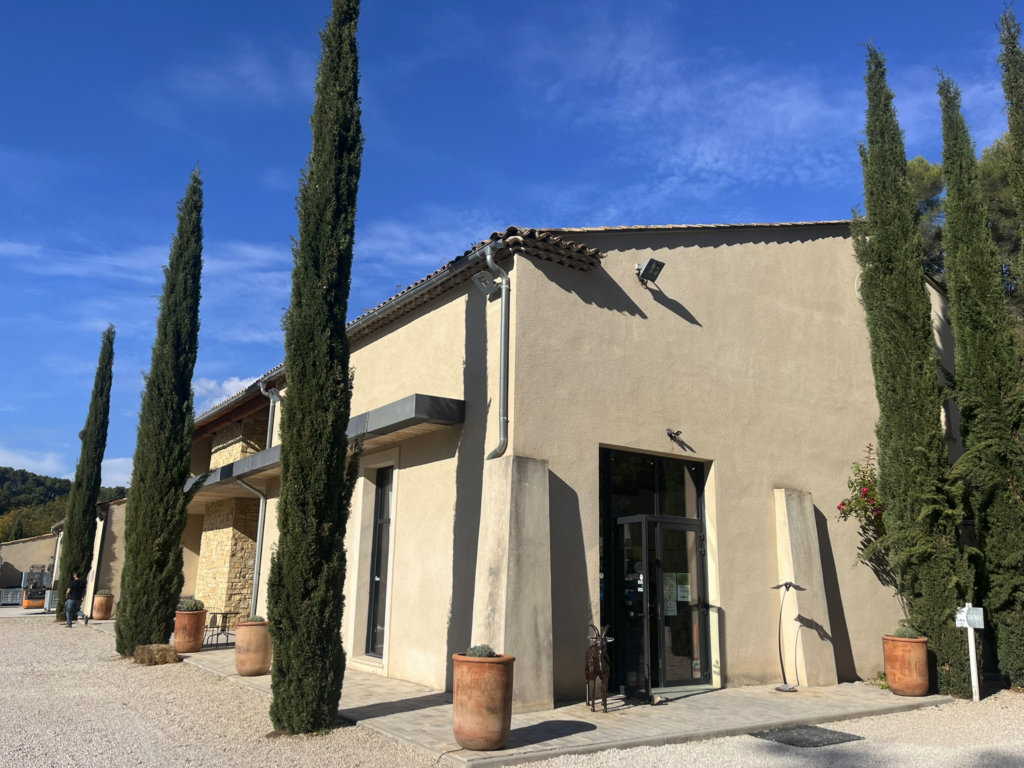
Olives 🫒 and their oil have been an important part of foodways from Southern France to North Africa for thousands of years. But the last 20 or so years have witnessed the exaltation of the oil. Bastide du Laval is one of the growing number of olive farms to dive deeply into what olive oil is and what it can be, and to elevate it almost to an art form.
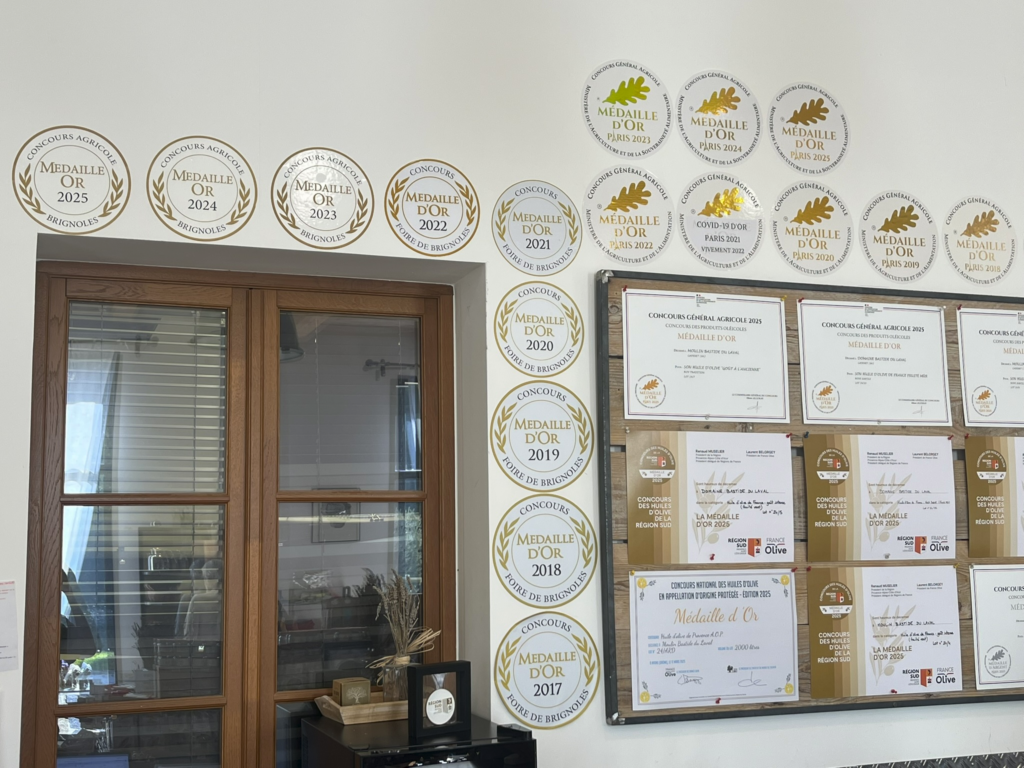
Our visit started with a interesting tutorial on how olives are grown, harvested, and pressed into oil.
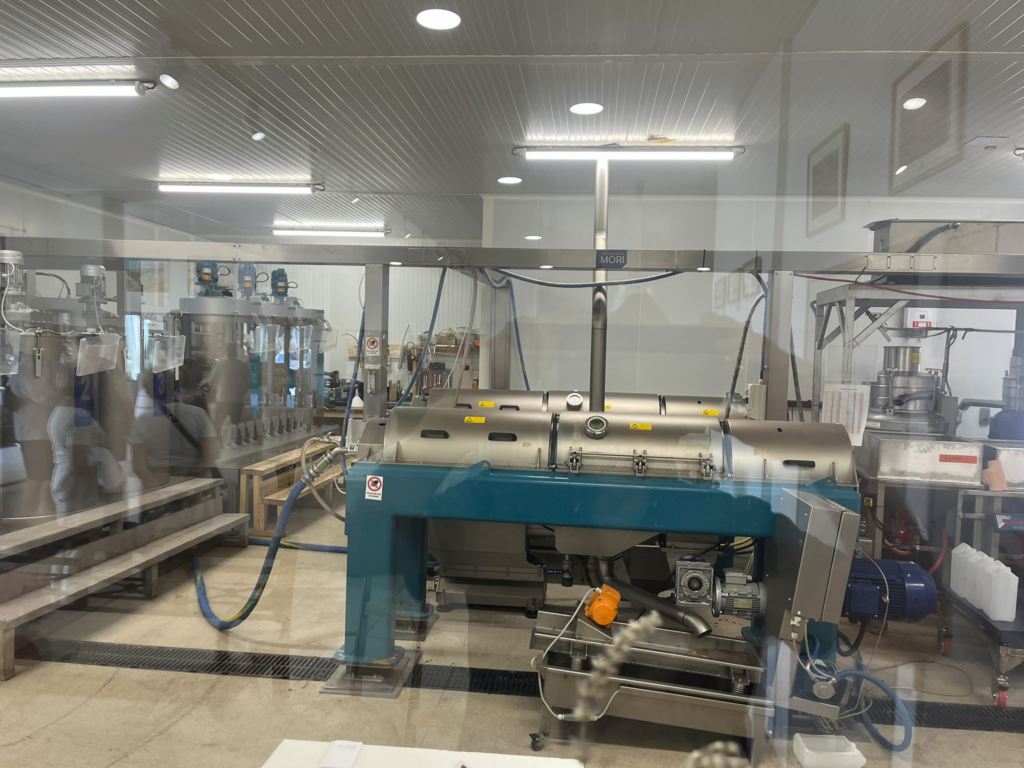
This was followed by a tour of the presses and centrifuges, and ended with a grand tasting of many different oils ranging from light, to heavy, to aggressive, to Channel No. 5-ish, to flavored, all of which were available for purchase, along with branded swag.
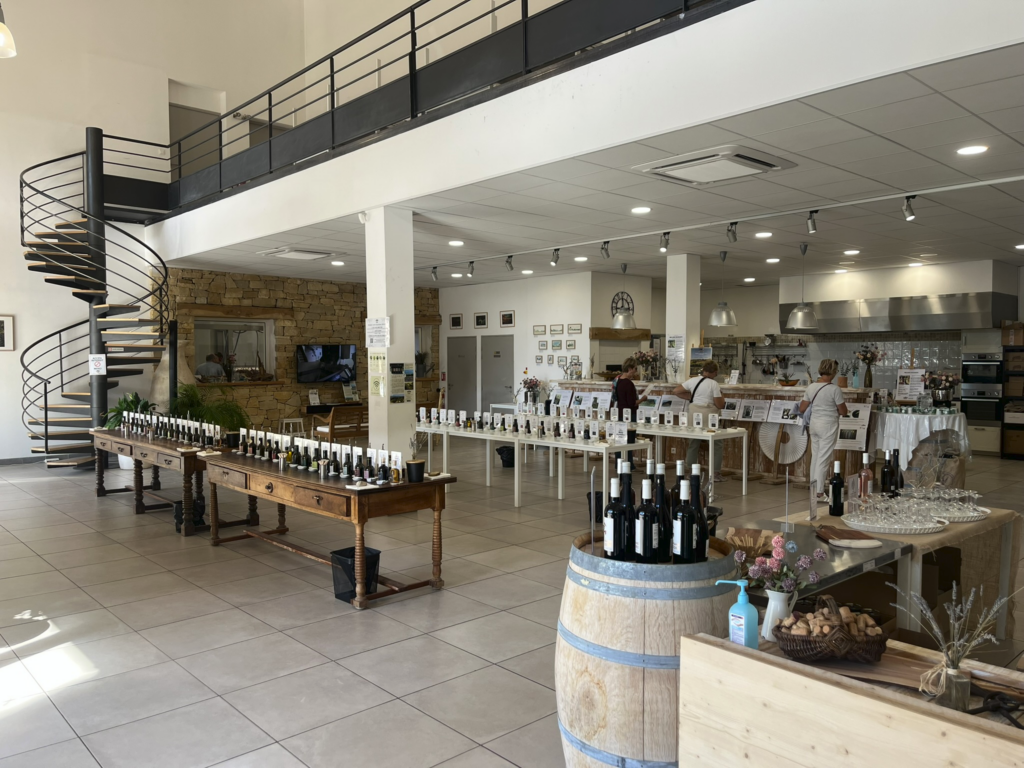
We were tempted to buy one of the large, shiny olive oil containers, to dispense the gallons of olive oil that we use each year.
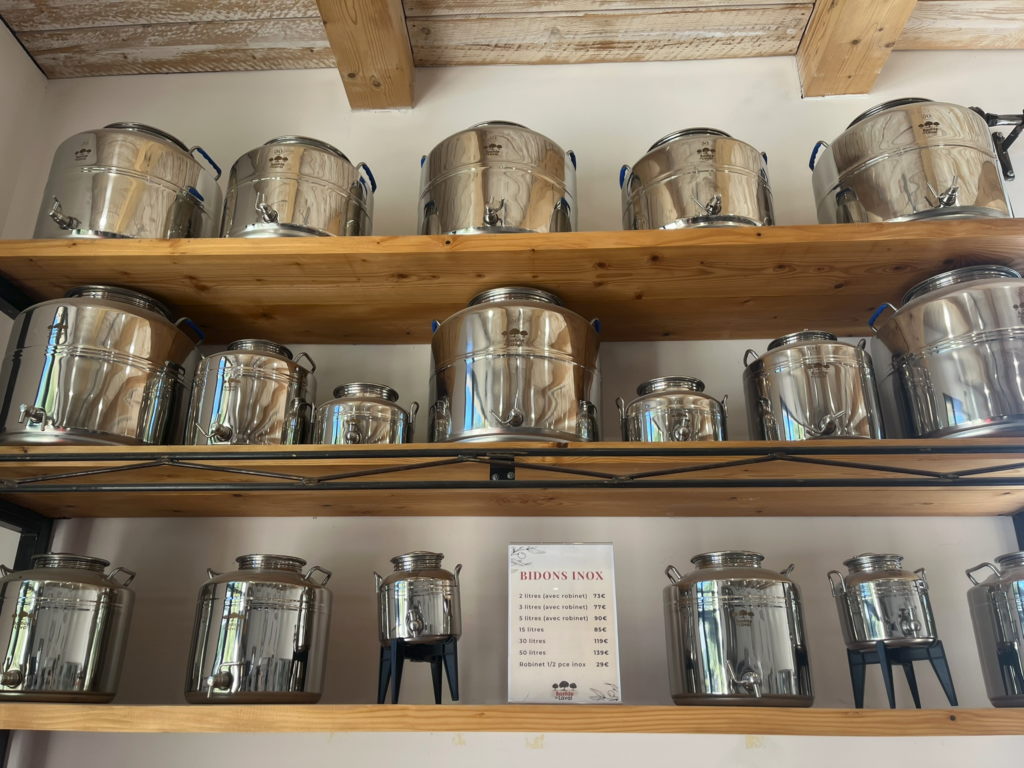
If you love and consume olive oil as we do, or you’re simply looking for an interesting side trip, check out Bastide du Laval.
L’Atelier Du Jardin
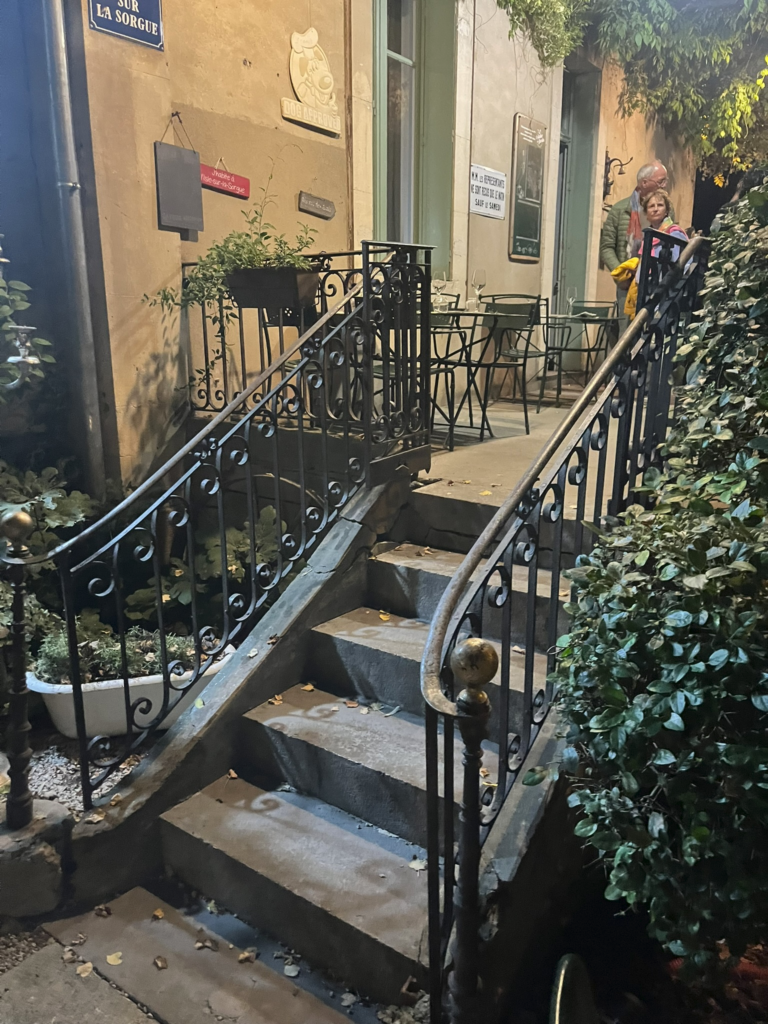
Having a free night during a culinary tour based in this great little town, we found this warm bistro online and our host confirmed it as a good choice.
When we arrived, we learned that the restaurant offers two experiences, a more gastronomic prix fix and a more casual bistro. Comparing menus, which change with the wind, it was a tough choice, but we chose the heavy, rustic wooden communal table in the bistro.
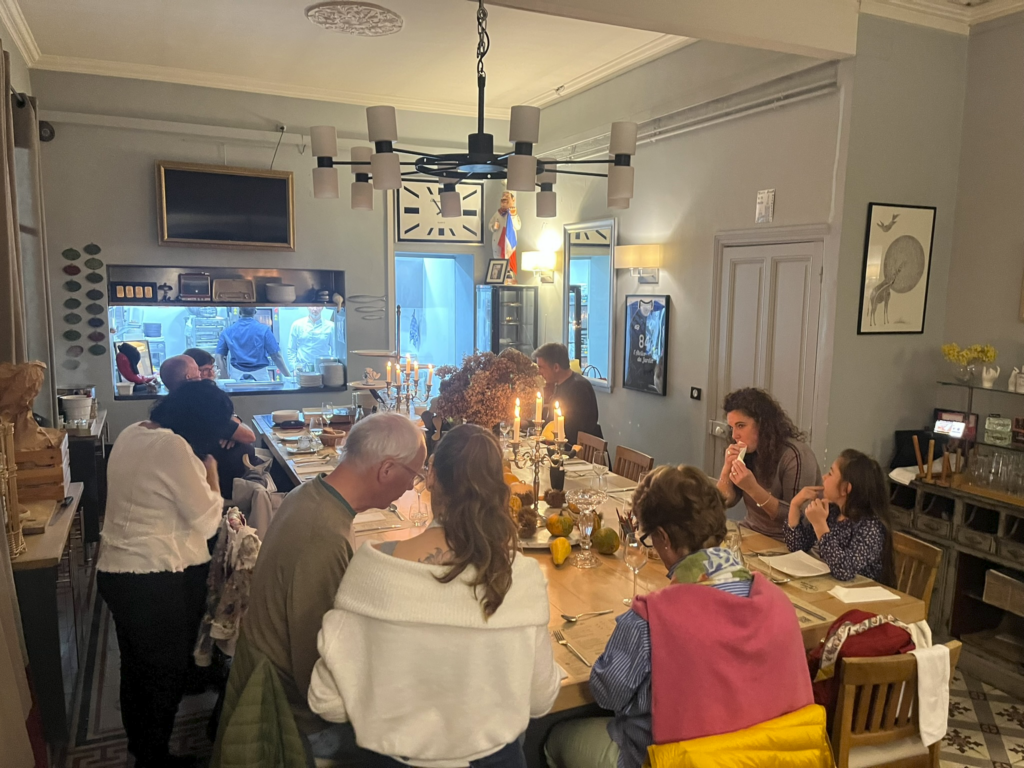
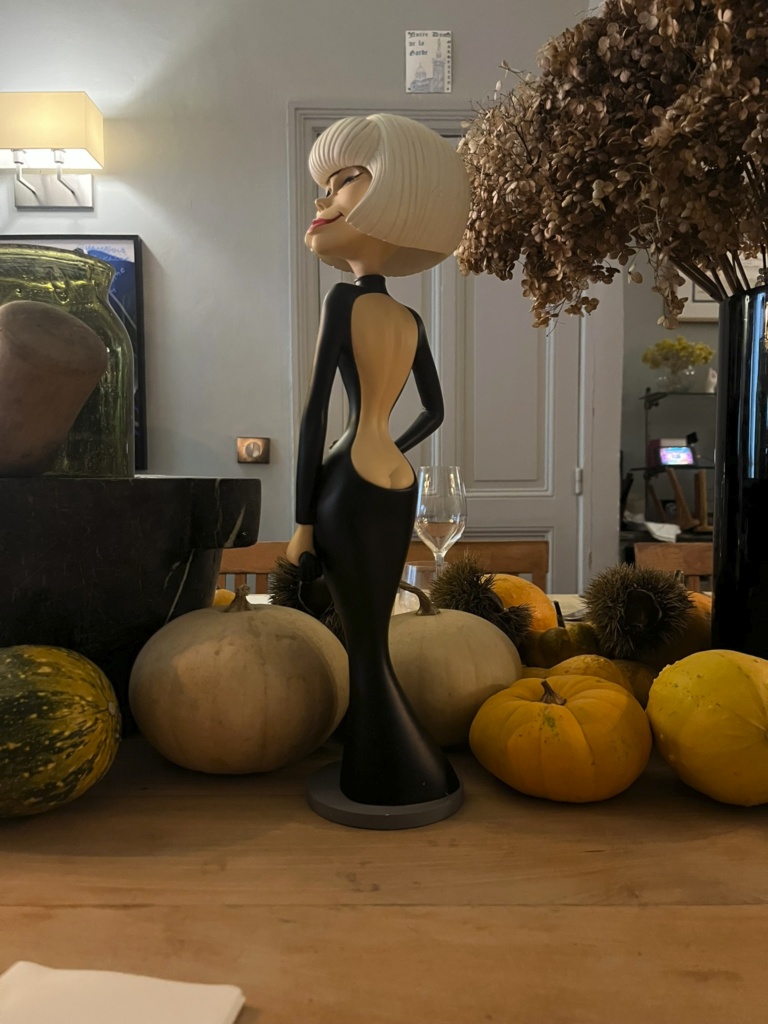
The decor was a funky blend of colorful dried squash, hairy chestnuts, and a Carole Channing statue, and a statue of a chef watching over the dining room from a high corner.
Although we didn’t expect any of the staff to speak English, our server did and she was very helpful. The menu was small but well-curated, as was the wine list: only a few local reds, all of which were delightfully inexpensive (we don’t like to spend very much money on restaurant wines).
We started with the L’oeuf Mayo (kind of like deviled eggs), which we learned are a Big Deal in France, with many chefs competing to have their eggs selected as the National champion. This chef won second place 🥈but I would have voted his eggs number 1.
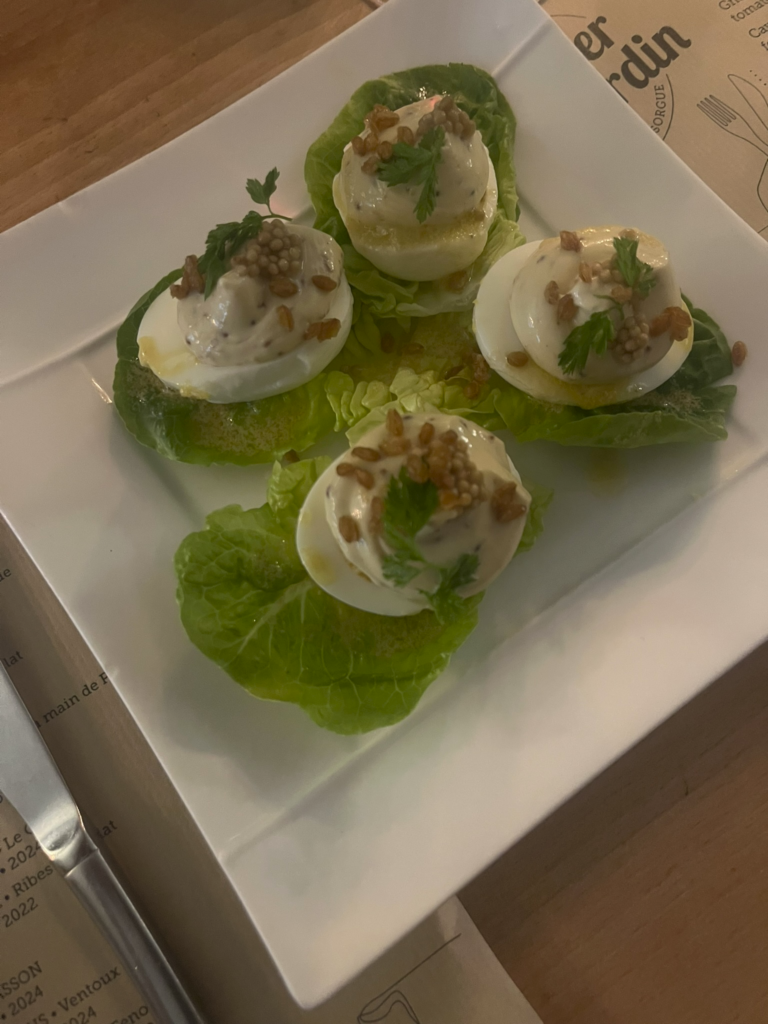
Unlike common deviled eggs in the U.S., the yolk, which was cooked to a little more than “perfect” (65C, though Chefs fight over this), was intact in the halved egg 🥚. This chef’s particular mayonnaisey mustardy mixture was then spooned on top. Excellent. I’ll be doing a lesson on my version, which I have not invented yet.
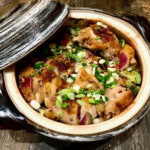
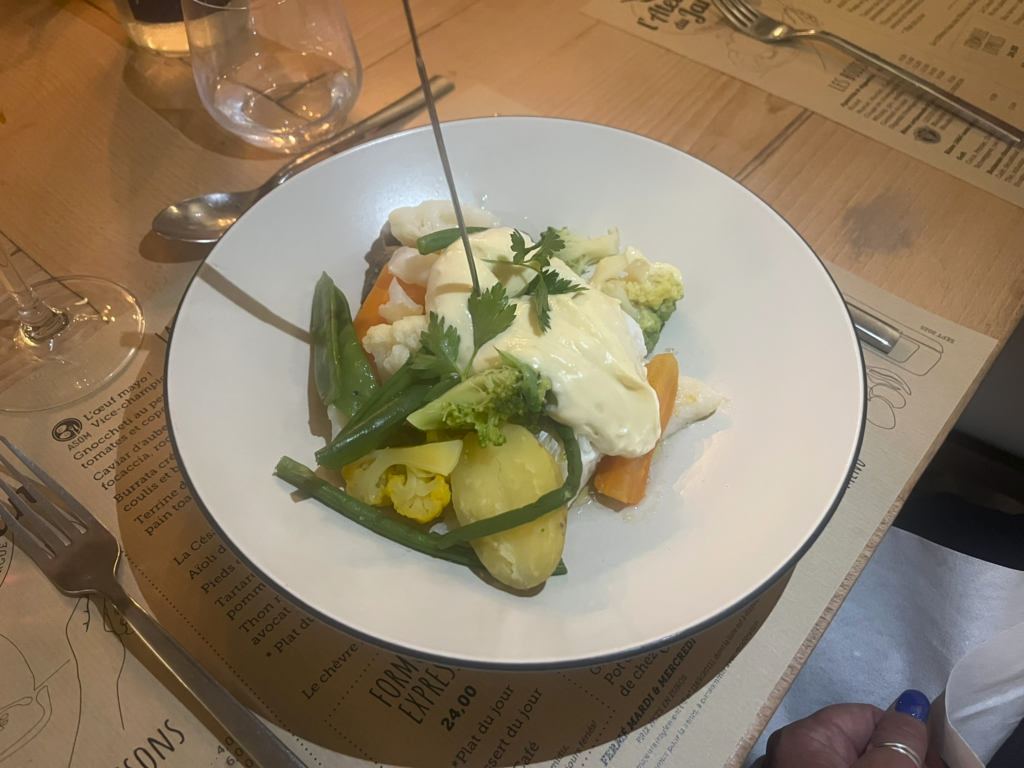
For our mains Sarah chose the steamed cod with vegetables, which was beautiful, aromatic, and delicious.
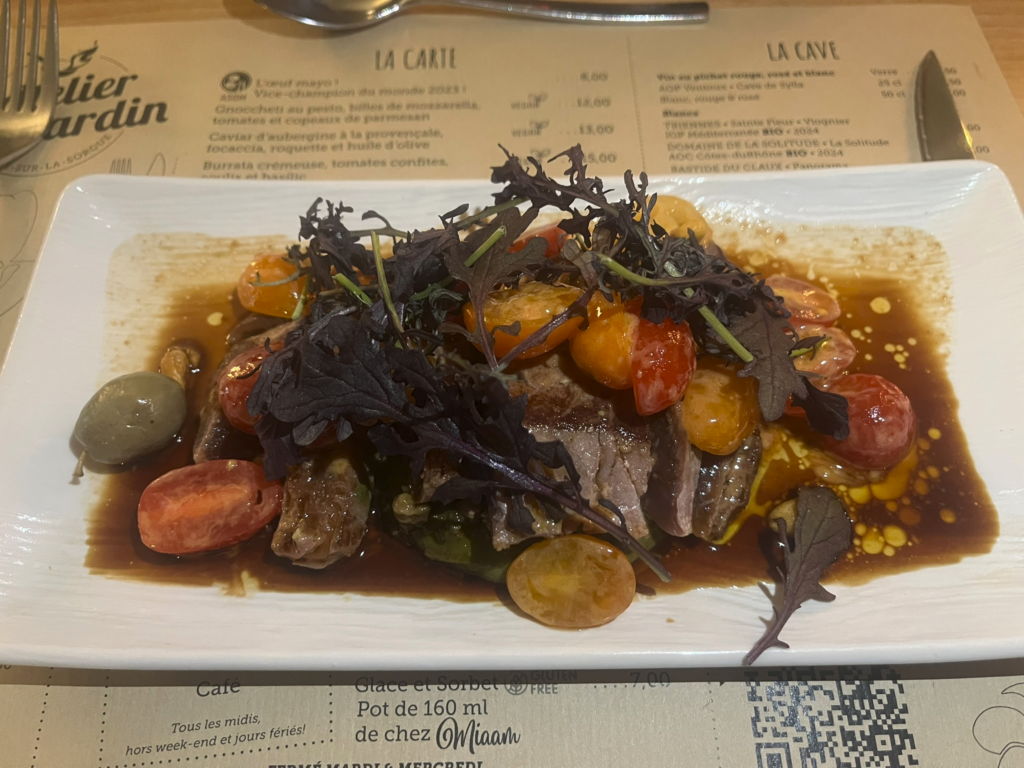
I was torn between the trotters sausage and the seared tuna with Avo and cherry tomatoes. I chose the latter and much enjoyed it, but later coveted the aroma of the trotters wafting from the bowl of the guy to our right.
We finished with an excellent Creme Caramel. Incidentally, the restaurant’s name derives from a sprawling garden outside the two restaurant buildings.
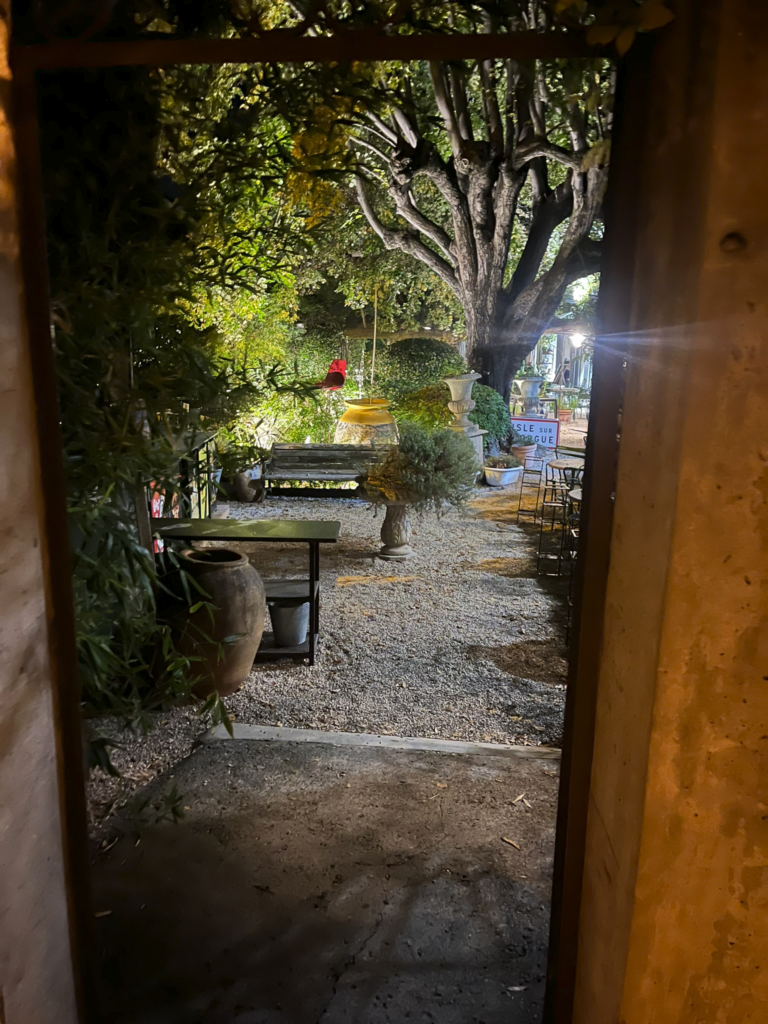
Although it was dark and too cool to dine outside, the garden looked like it would be a fantastic place to spend a warm afternoon or evening.
Abbaye Notre-Dame de Sénanque
If you are a monk looking for a new home in a beautiful valley that smells good, or a monk wannabe, or if you are a minimalist, or an ascetic, I highly recommend you check out this active monastery. You will find that it offers everything you want, which is, of course, nothing.
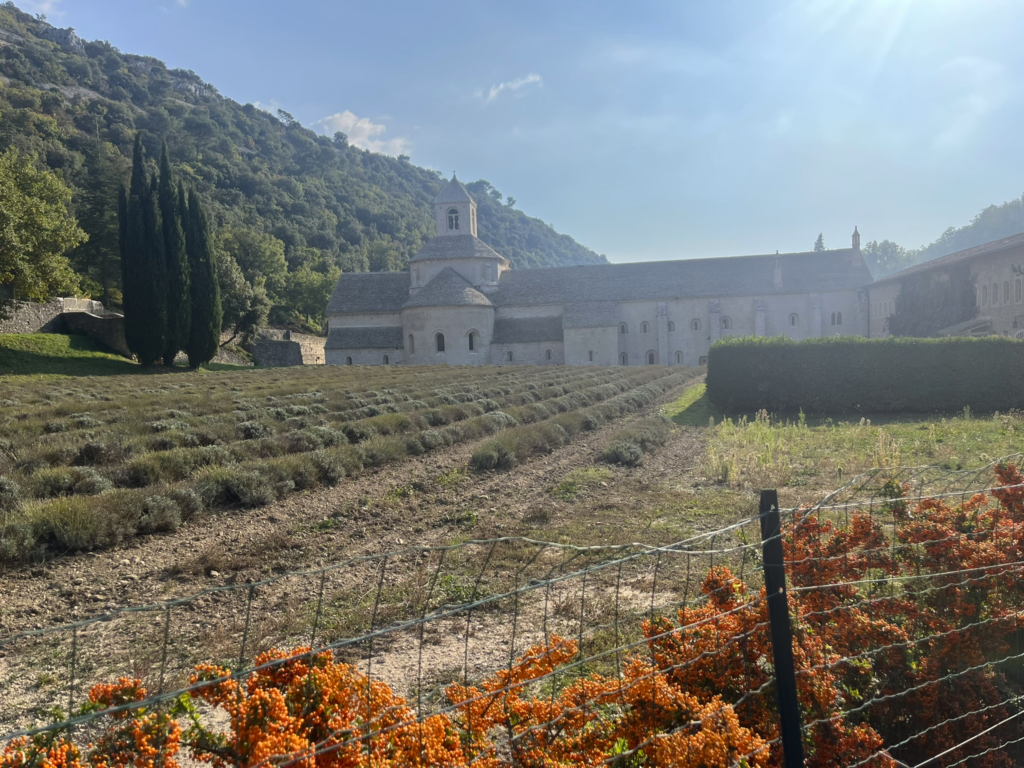
Although this incredible Romanesque structure seems huge, it has housed — on average — only about 30 monks at any one time over the past 900 years (take the tour to learn how they figured this out). When we visited, the TMP (Total Monk Population) was five. Yes, five, which is why I started this review with a shout out to anyone who may be craving the monastic lifestyle.
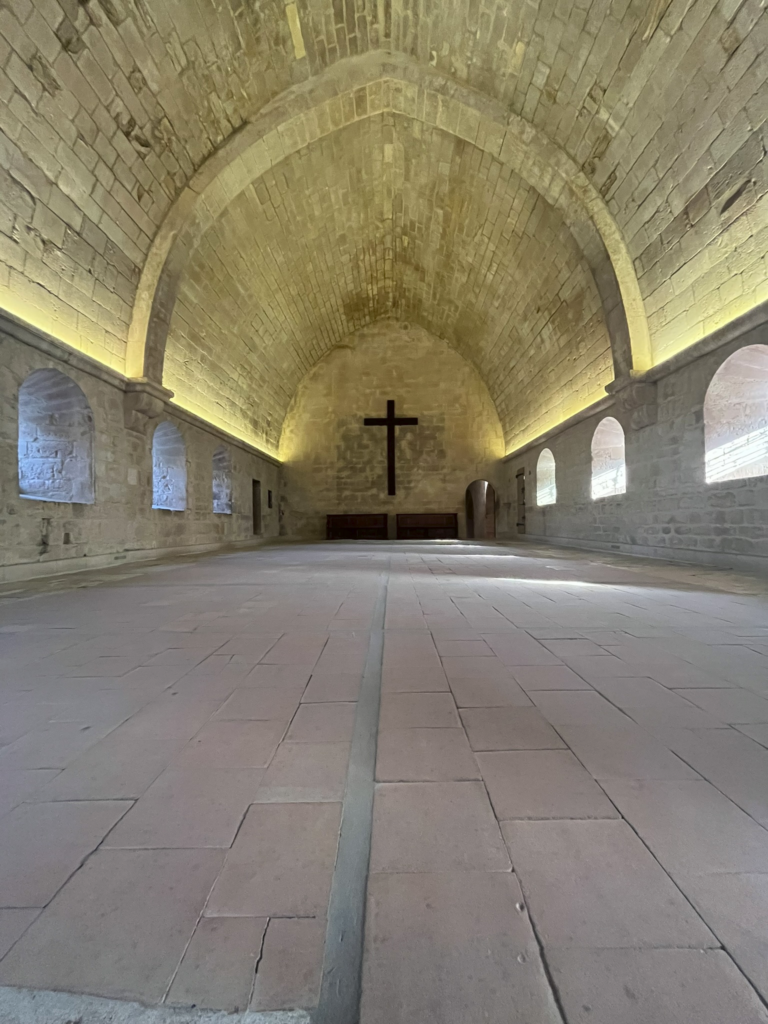
But confirmed lovers of materialism — like us — are welcome as well (for a visit), will surely learn something during the tour, and will appreciate how lucky they are to have all of their things, especially heat and air conditioning.
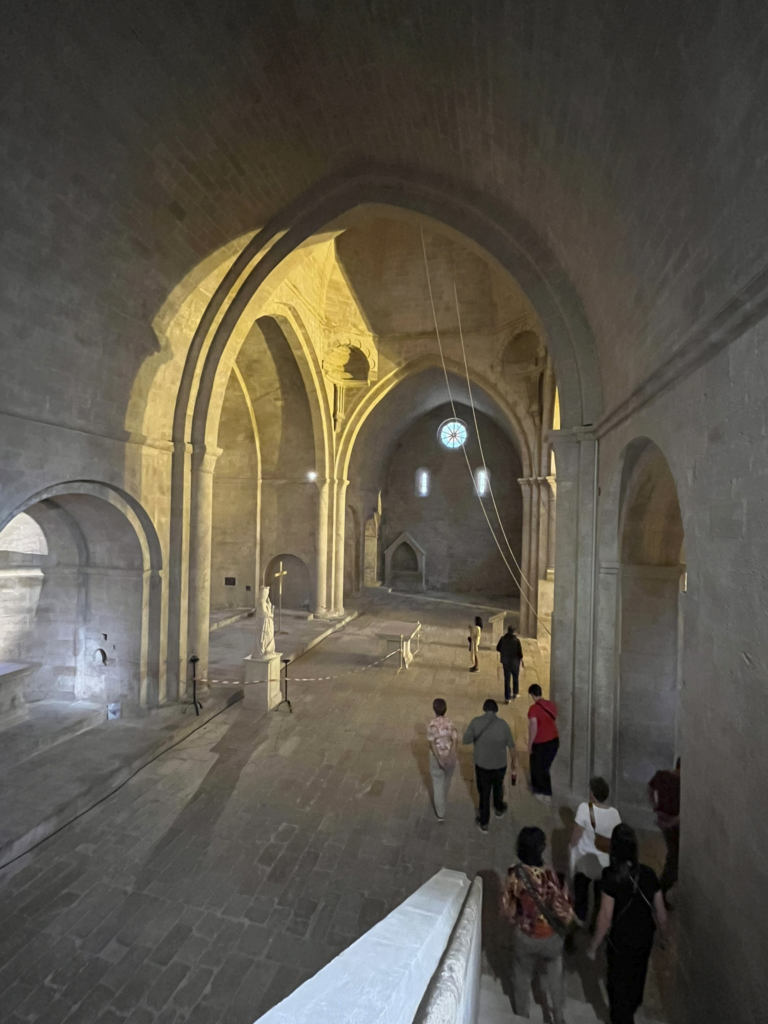
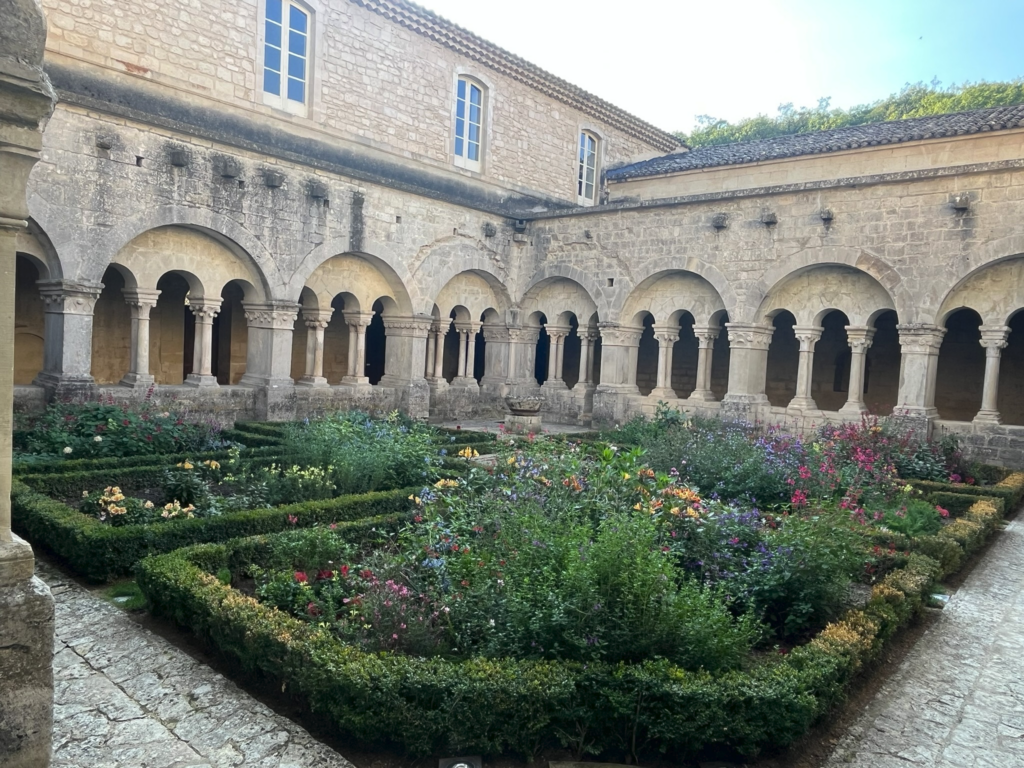
You will learn about the monks’ daily routine, the primacy of prayer and work, their ascetic lifestyle, the monastery’s spartan architecture and ornamentation, and the things monks make and sell to keep gruel on the table, including lavender products, which is why the valley smells so good.
Renaud’Mets
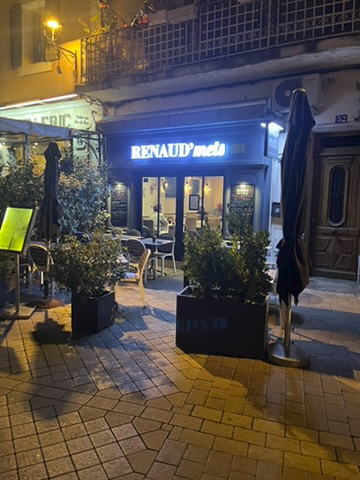
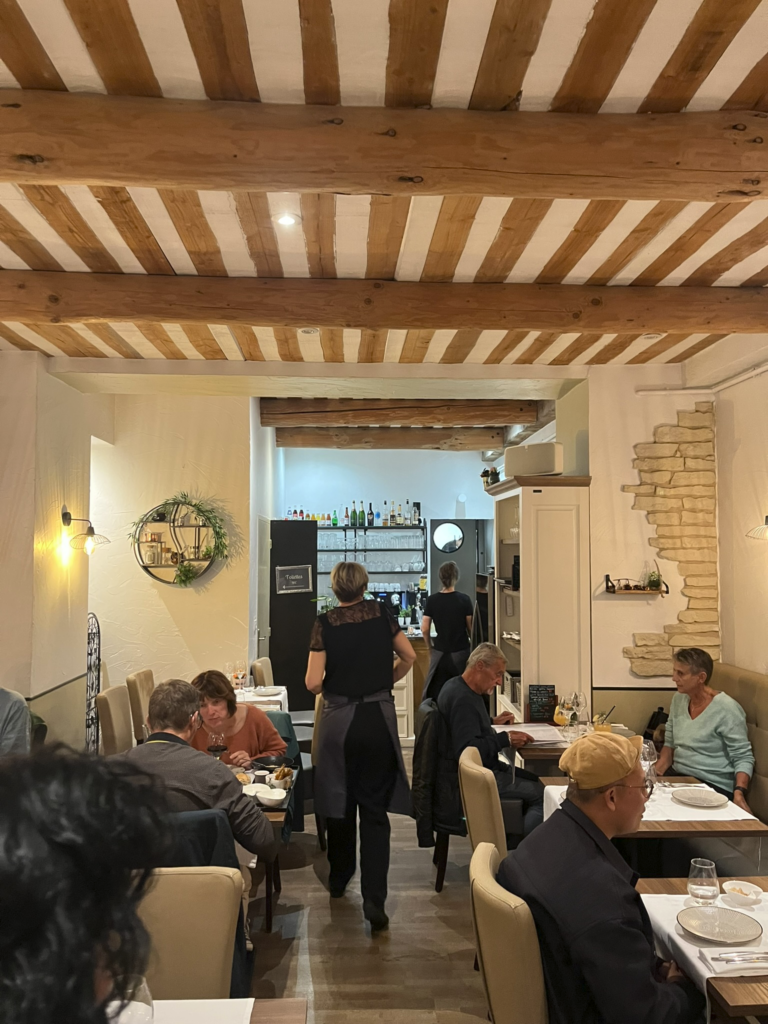
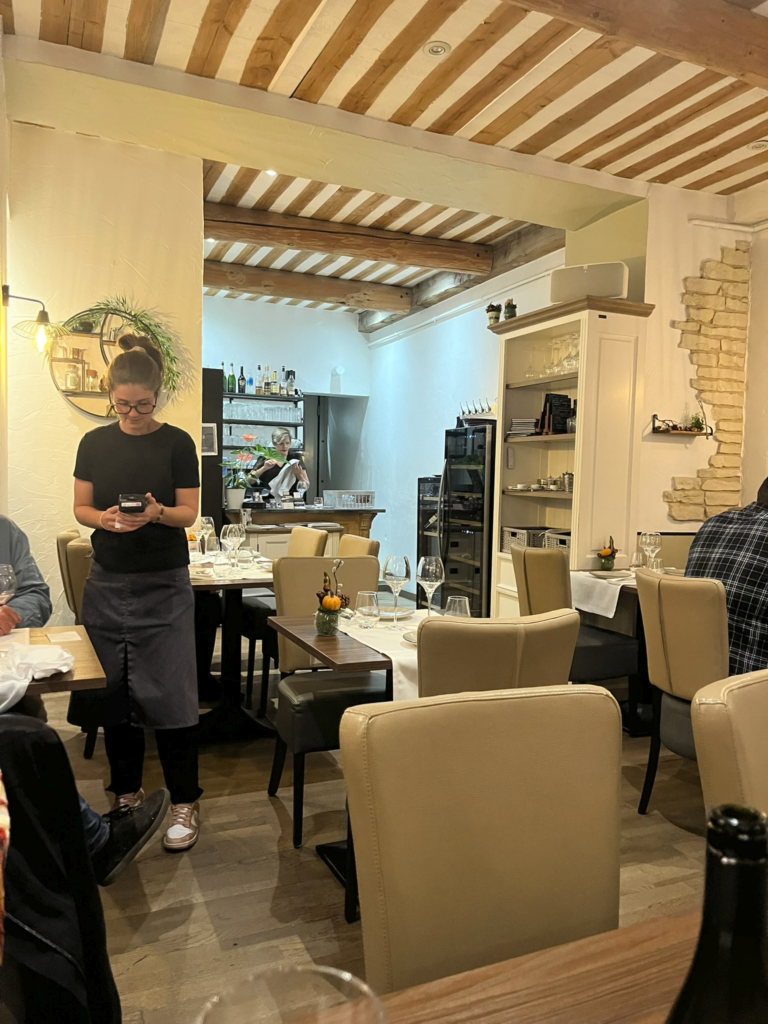
We enjoyed our dinner at this casual chef-driven fine dining spot near the river. The hardwood floors, rustic half-timbered and beamed ceiling, old bricks peeking through the plaster wall, and dark hardwood tables with white runners provide a comfortable atmosphere.
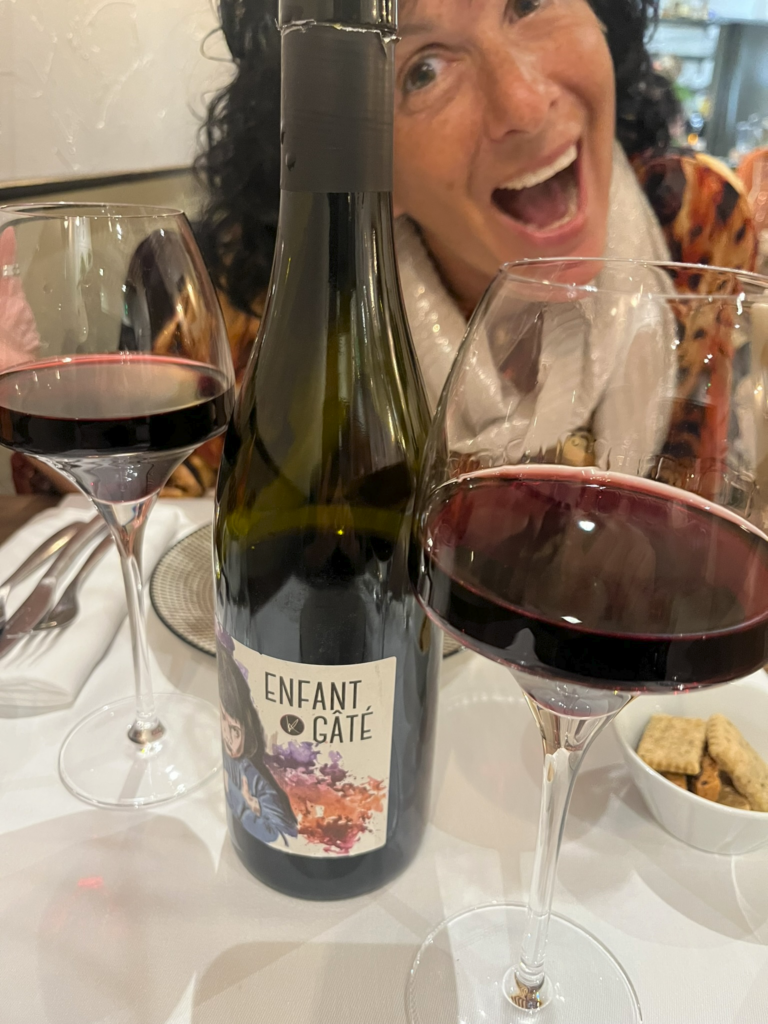
The wine list offered several bottles in our sweet spot (less than $40 Euros), and we chose a very nice Cote du Rhône with plenty of body. Although we didn’t expect the servers to speak English, they did, and were very helpful explaining the creative menu.
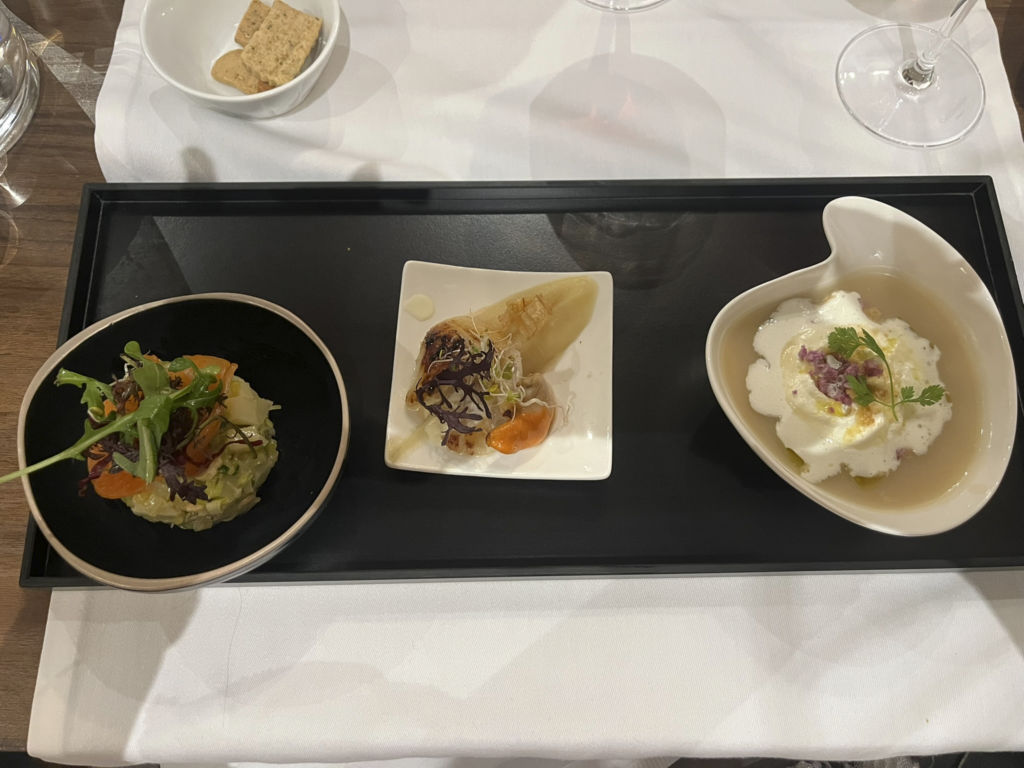
The menu probably changed often or with the seasons, but Sarah chose the excellent trio starter, which included a delicious hot cauliflower soup (an under-appreciated veg), a grilled scallop with an excellent parsnip moussiline, and a tasty room temp salad of local smoked trout, leeks and potatoes.
I chose the foie gras pate, which was delicious, of course. For mains we shared the pork loin and the pigeon.
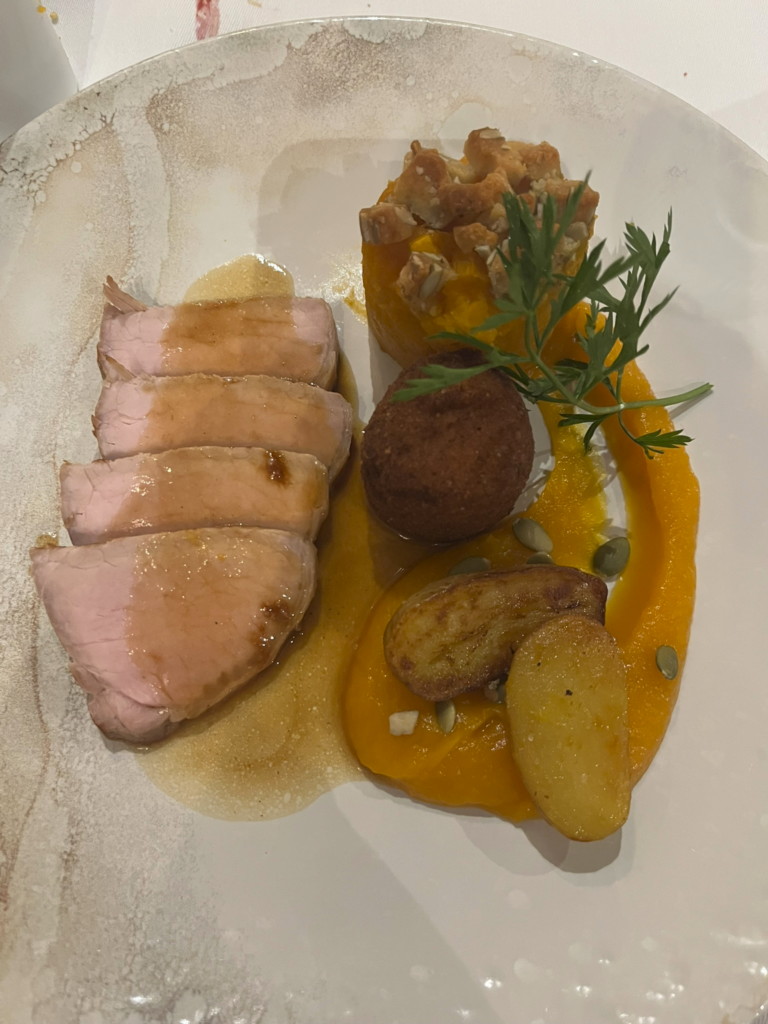
I loved that the menu described both as being prepared at the perfect temperature, and they were. Pork loin becomes dry and tough if overcooked. This pork loin was perfect, as the menu promised.
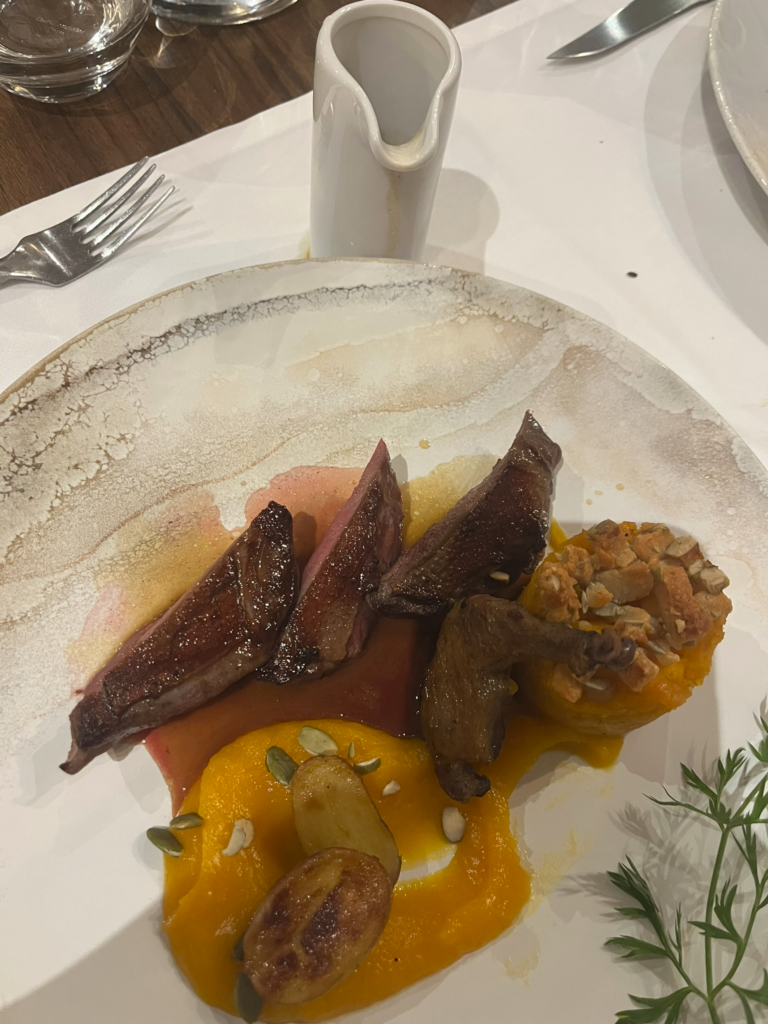
I have little experience with pigeons that are not flying. It reminded me of duck breast, and was prepared as duck breast should be prepared, medium and perfect.
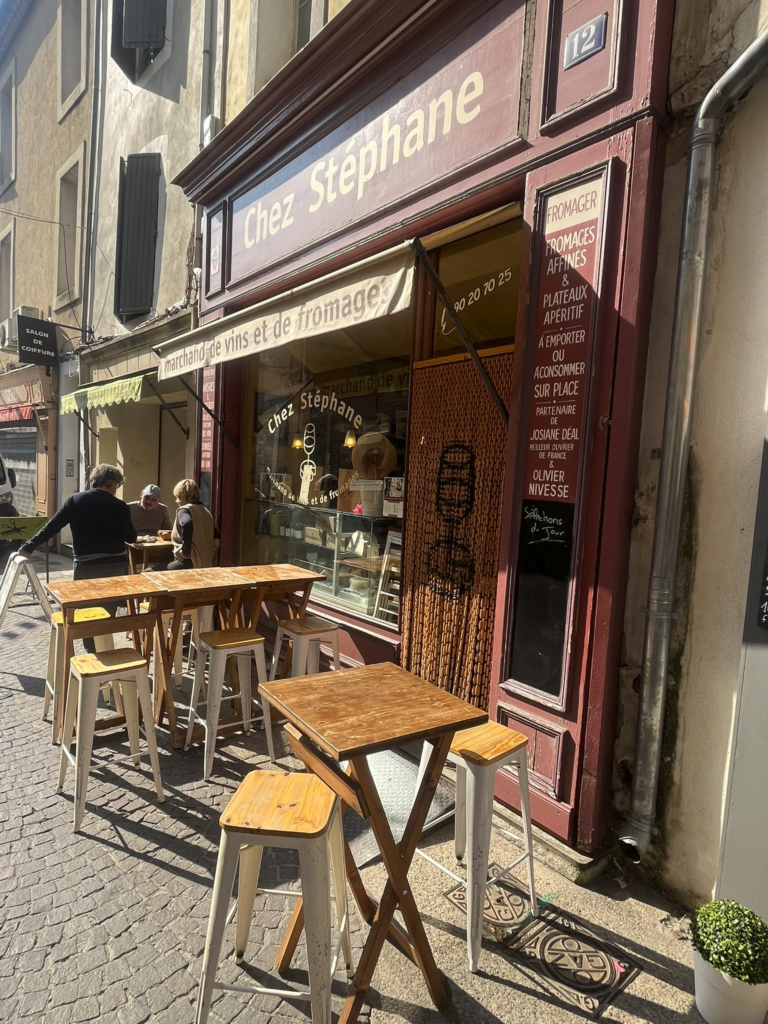
Chez Stéphane & Janique marchands de vins et de fromages
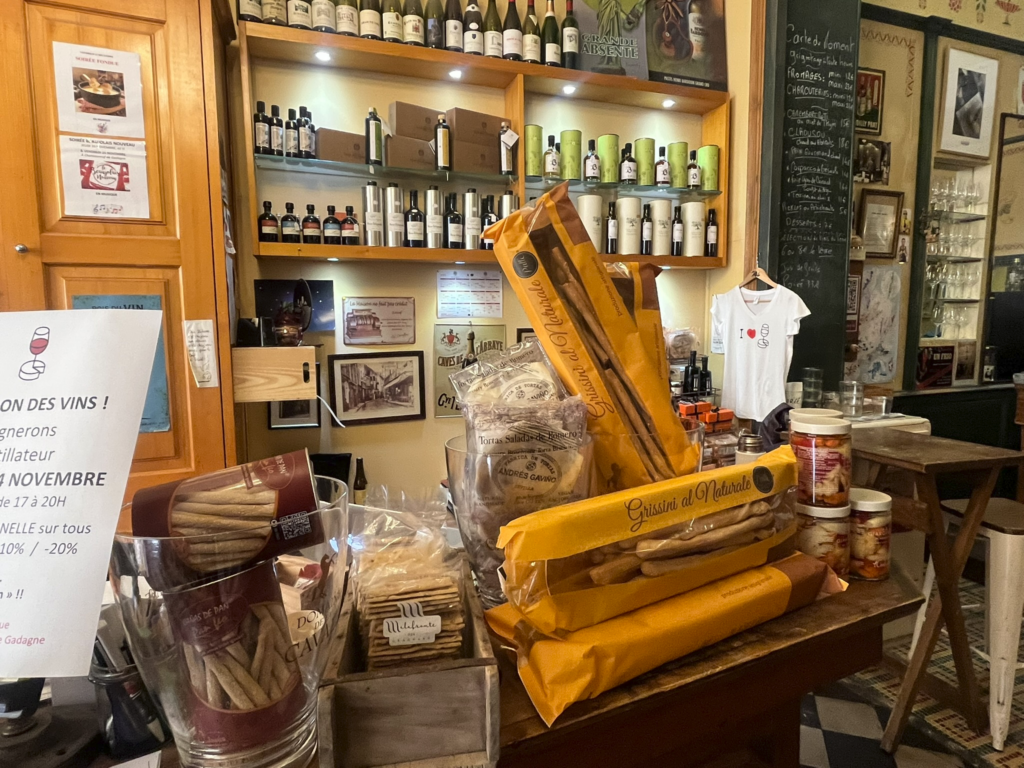
Although this narrow, weathered storefront is mostly a wine and cheese shop, it’s where we had our favorite dining experience in l’Isle sur la Sorgue.
Outside, a few hightops invite customers to sip wine in the sun.
Brushing through strings of beads hanging in the doorway makes one feel like a hippie and reveals the black and white checker-board tile floor, wooden wine racks along one wall, gently aged wine-grapes-and-olive-cluster-themed wallpaper, patinaed honey-colored wood cabinets displaying the shop’s wares, and vintage posters everywhere.
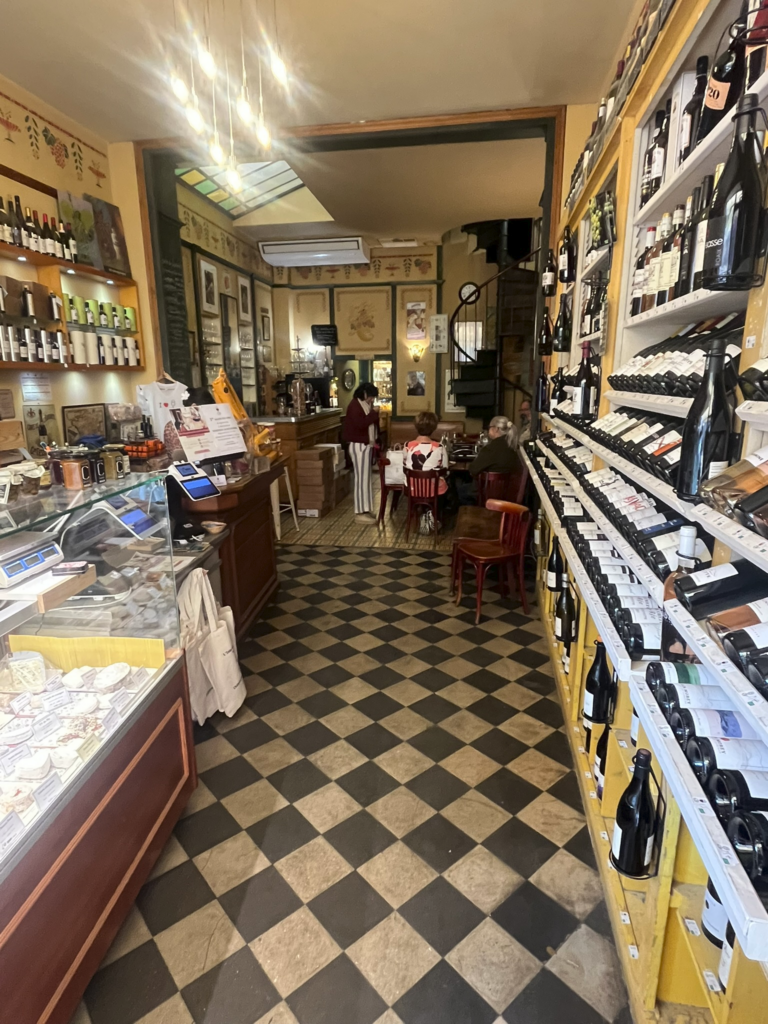
Inside, there are only a few rustic wooden tables near the seemingly unused iron spiral staircase in the back corner.
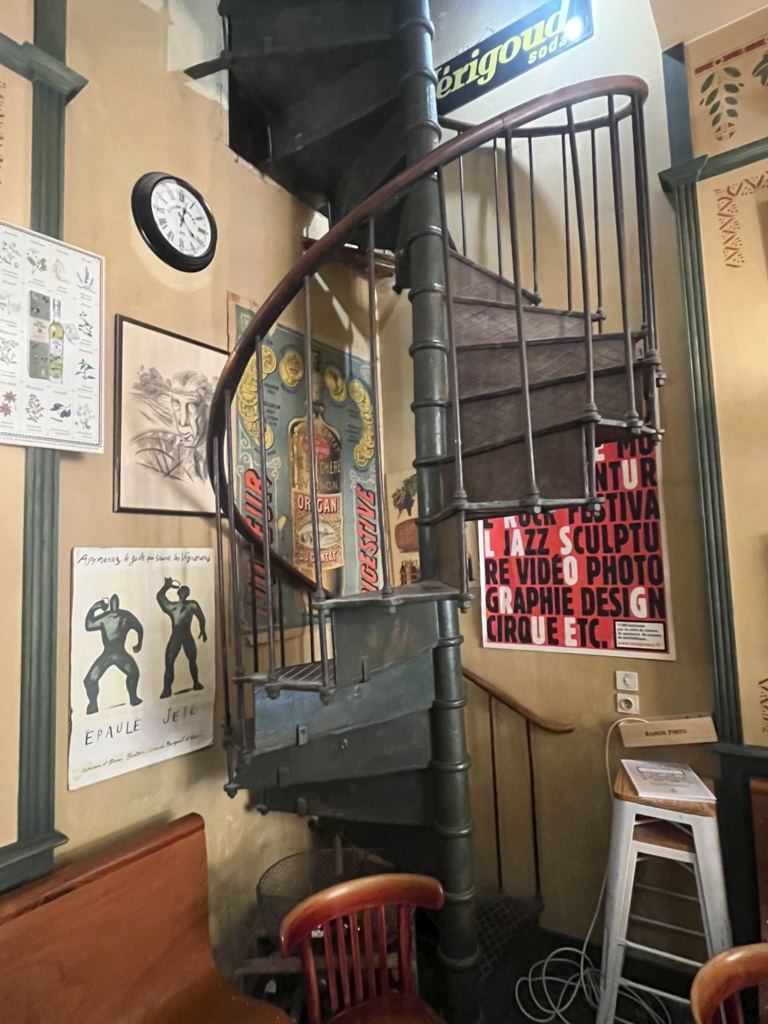
On a normal day I believe they are six spaced-out tables for two. For our visit, all of those tables were pushed together for our group lunch for 12, creating one big square that enabled everyone to talk to everyone, all at once. We dined on raclette with three cheeses, potatoes, and charcuterie.
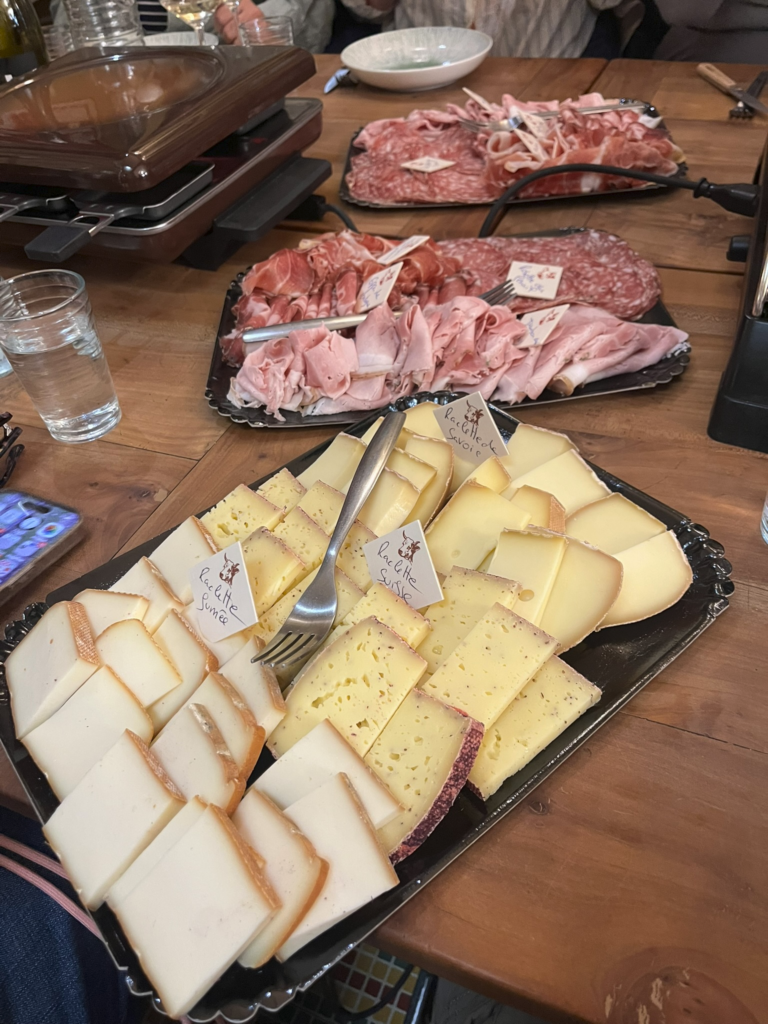
In raclette, a small electric cooker with multiple small dishes that fit inside the cooker are placed on the table. Each guest places a slice of cheese in his/her chosen dish, which is then inserted into the cooker to melt the cheese. When the cheese is molten, use the cool-to-the-touch handle to remove the dish and pour the hot, liquid cheese over a slice of boiled potato or a piece of charcuterie. Eat while it’s hot.
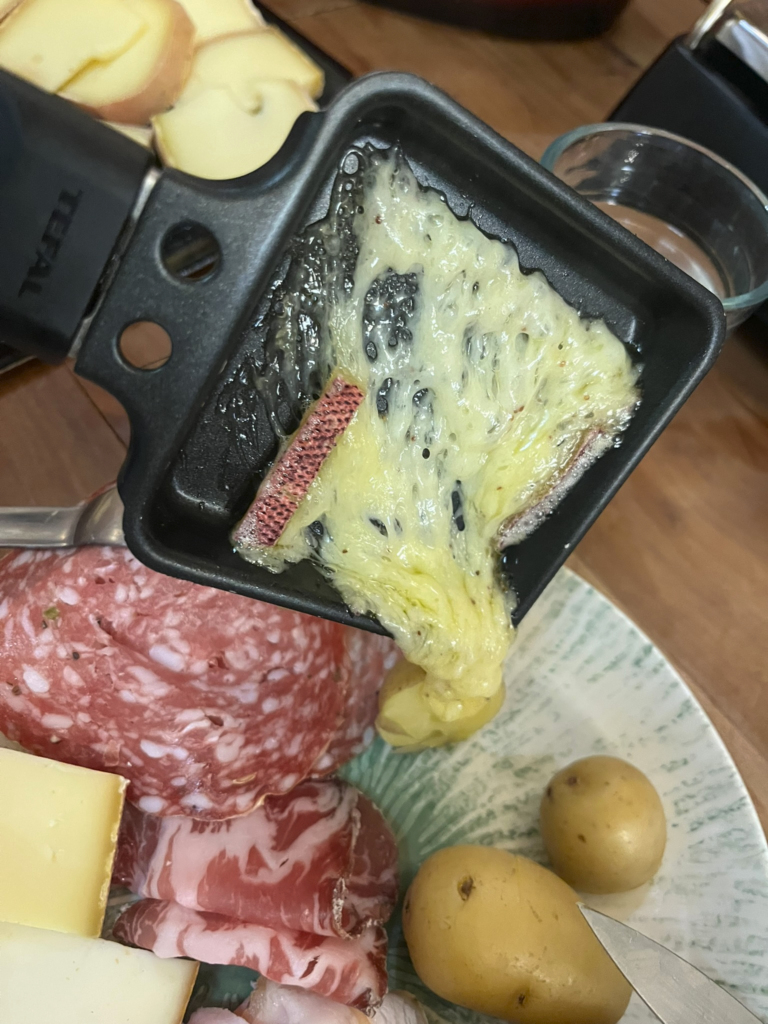
If you subscribe to my YouTube channel you know I love interactive cooking like this. Here, everyone passed the wine bottles and platters of meats and cheeses back forth while each person melted their own slices of cheese in the raclette cookers. Beautiful, coordinated chaos. The chaos was aided by three different wines, a Grenache Gris (white), a Cinsault (light red), and a Grenache (medium bodied red). The last was my favorite.
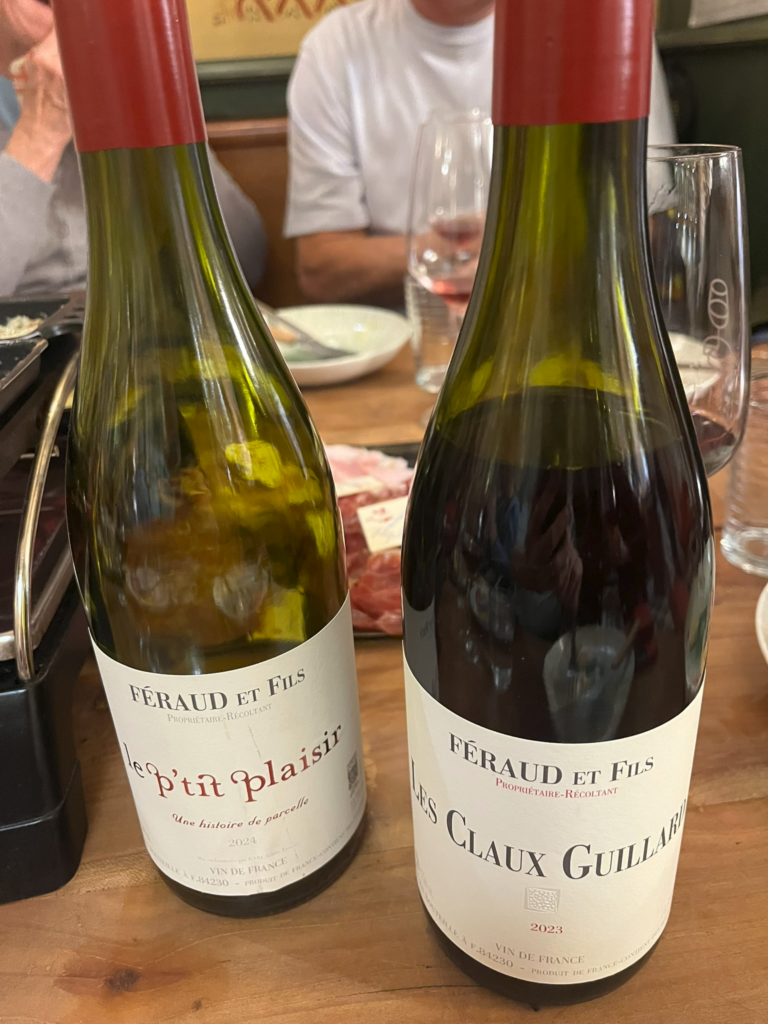
Everyone had a great time melting the ample, thick slices of cheese and enjoying them with the charcuterie and flowing wine. The affable owner, Stephane, was a font of wine and cheese information. A great time was had by all.
La Balade Des Saveurs
We were grateful that this great fine dining restaurant was able to squeeze us in on short notice on a busy Wednesday night in mid-October.
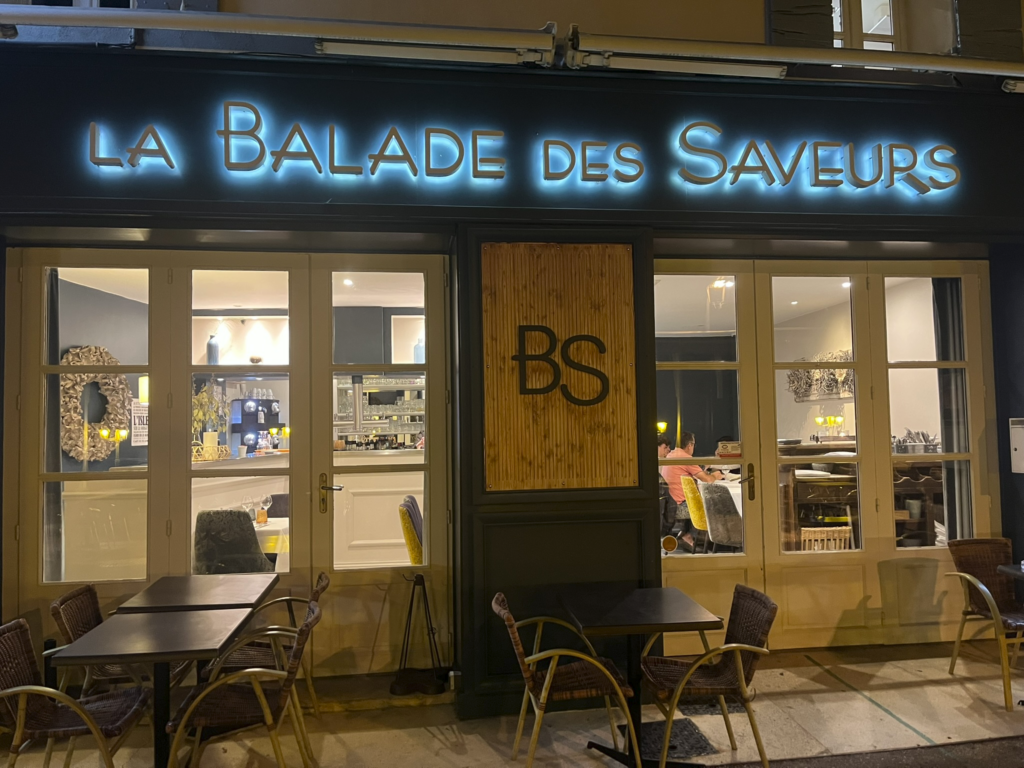
When we arrived, every other table in the front and rear dining rooms was filled, and I suspect the outdoor tables along the river would have been filled too if the night had been warmer. The smart, crisp, sparsely decorated two-tone wainscoted interior fitted the high level of food and service.
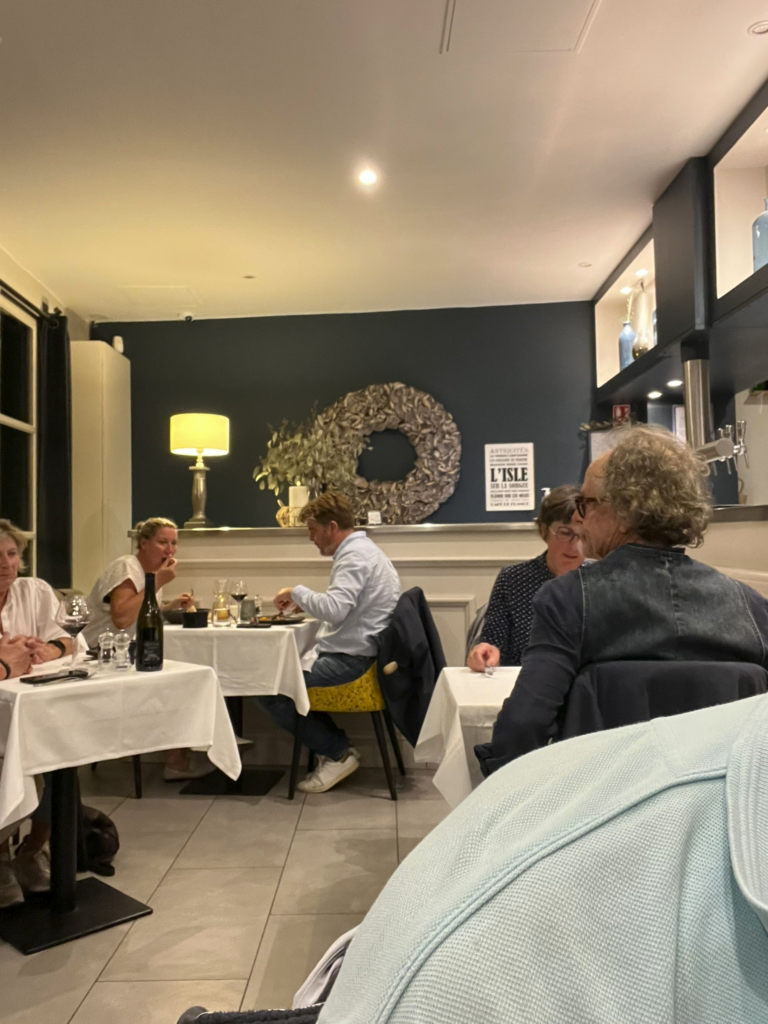
We didn’t expect the servers to speak English, but they did and were very helpful. The wine list offered plenty of bottles below 40 Euros, which is our sweet spot for restaurant wines. We chose a delicious local red for less than 30 Euros.
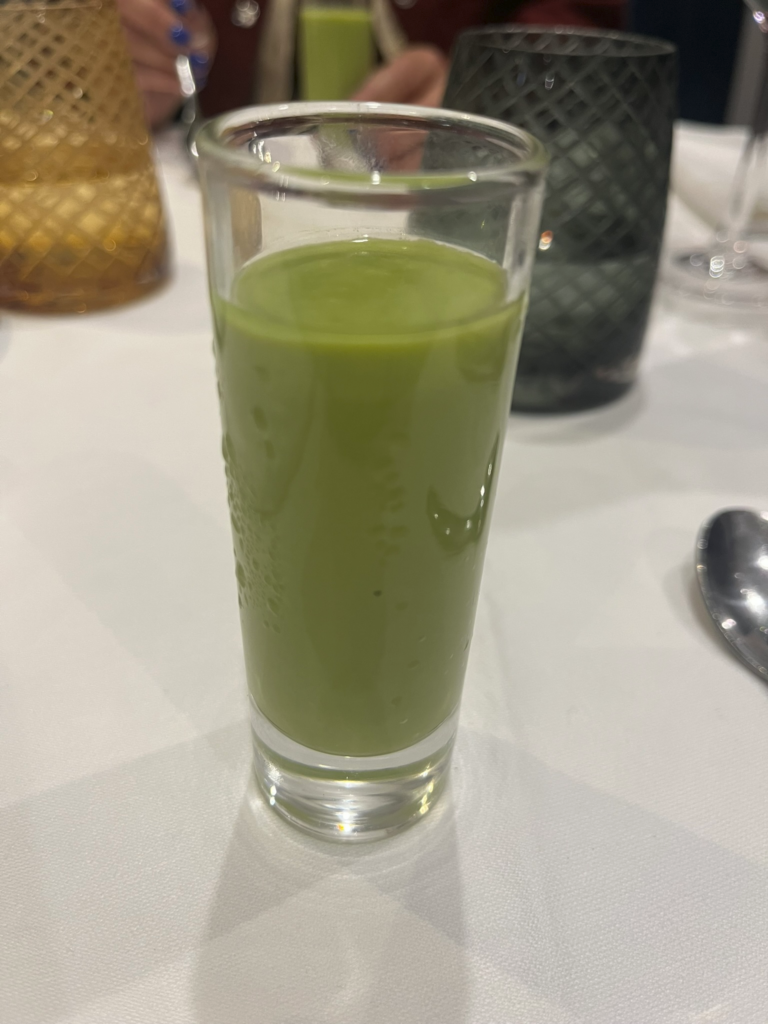
The restaurant surprised us with a pea soup amuse bouche. I love pea soup.
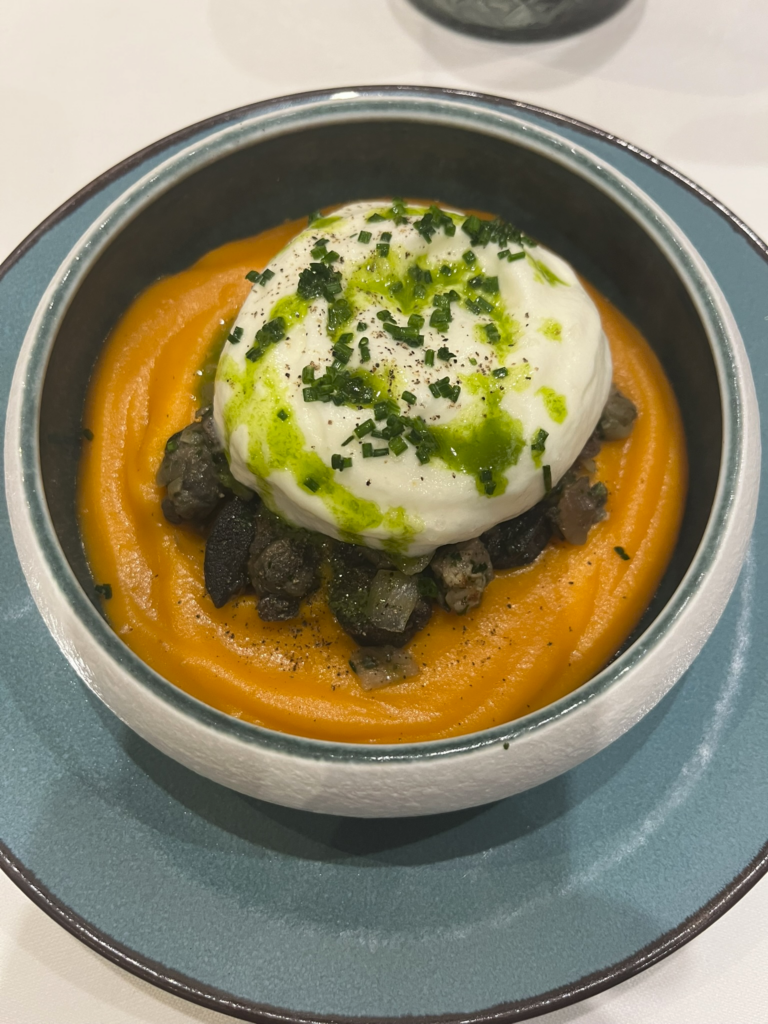
For an entree we shared the sautéed escargot 🐌, which were served atop a butternut squash puree and beneath a very light garlic sauce. As delicious as it was gorgeous.
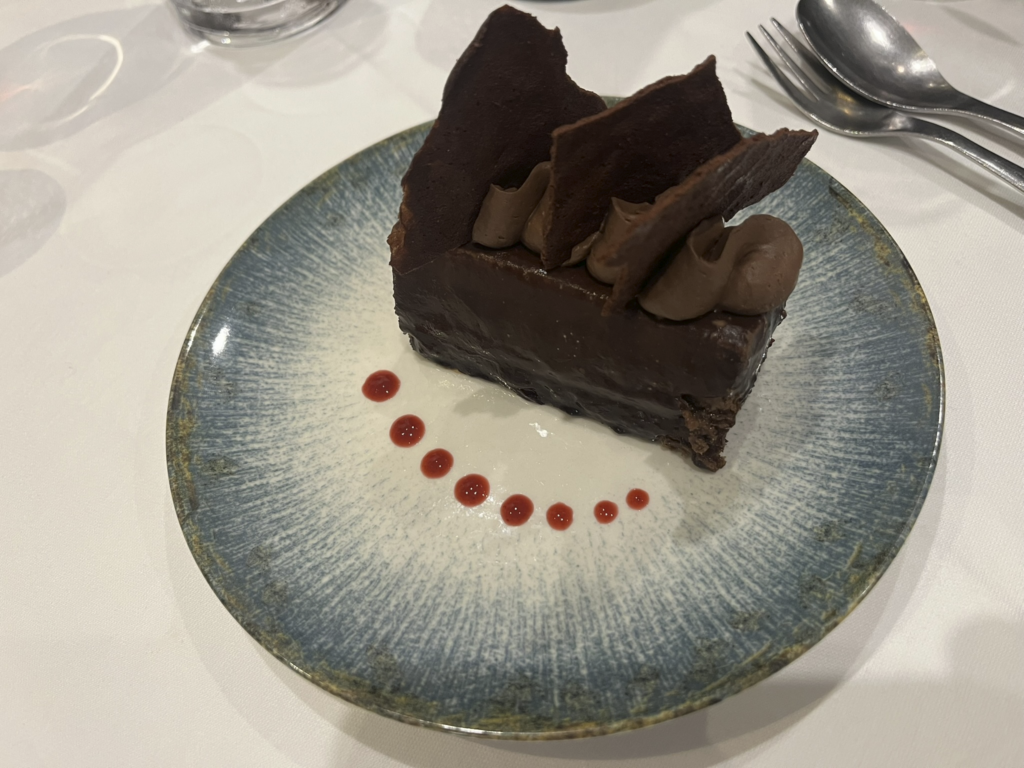
For mains we chose the pork belly confit and the filet of maigre (a white fish) with risotto. Both were excellent. We ended with the decadent Croustillant, a chocolate lover’s dream. Recommended.
Monsieur Tu Menerbes
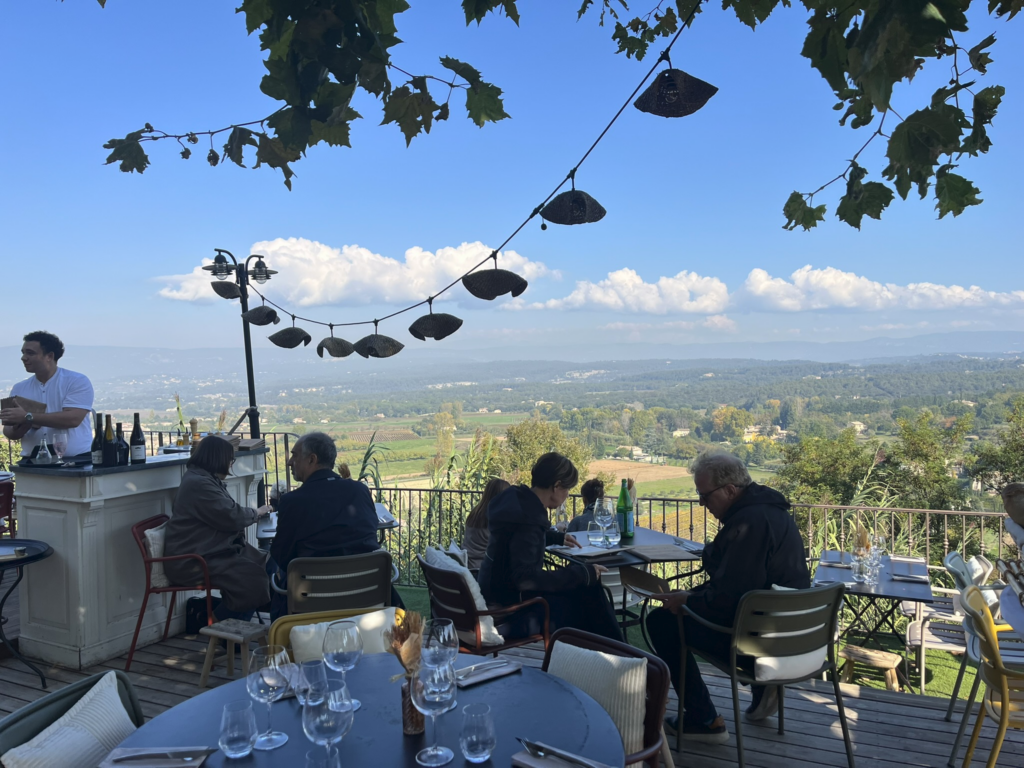
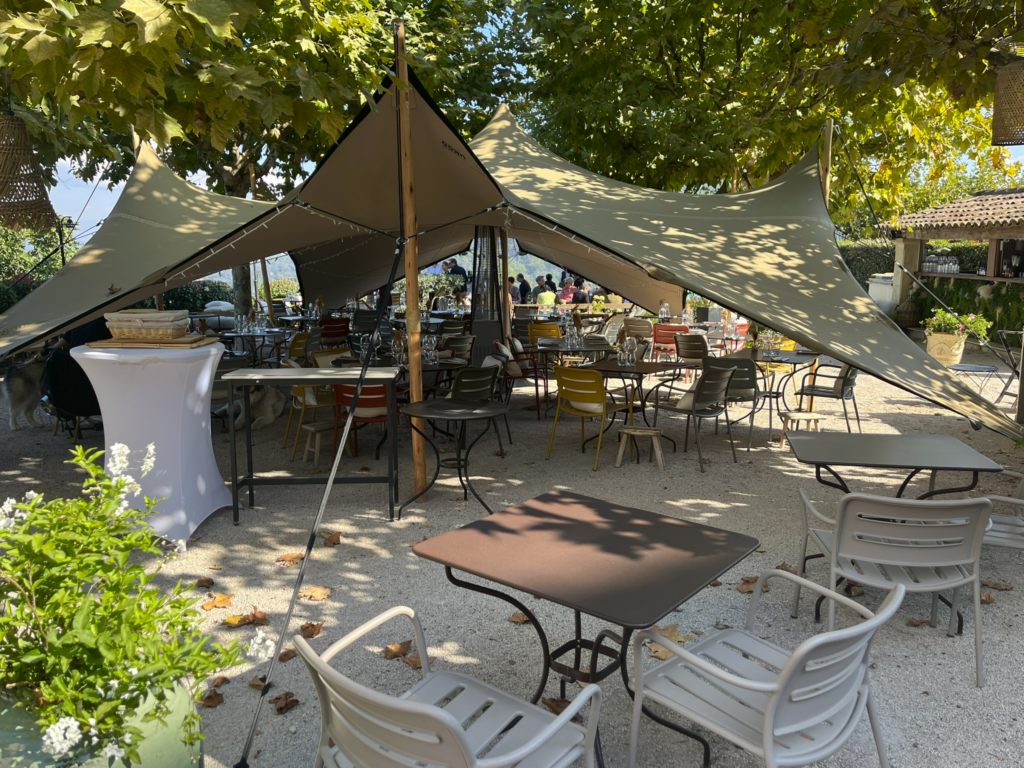
The countryside view from the gravelly outdoor dining area of this casual fine dining restaurant is so wonderful that I would forgive mediocre food.
But the food was as good as the view. First, the chef treated us to a tasty amuse bouche of tomato 🍅 gelee with brandade mousse. My bouche was definitely amused.
For a starter I chose the veloutte of cepes (porcini mushroom soup — but doesn’t veloutte of cepes sound so much better?) with an escargot croquette.
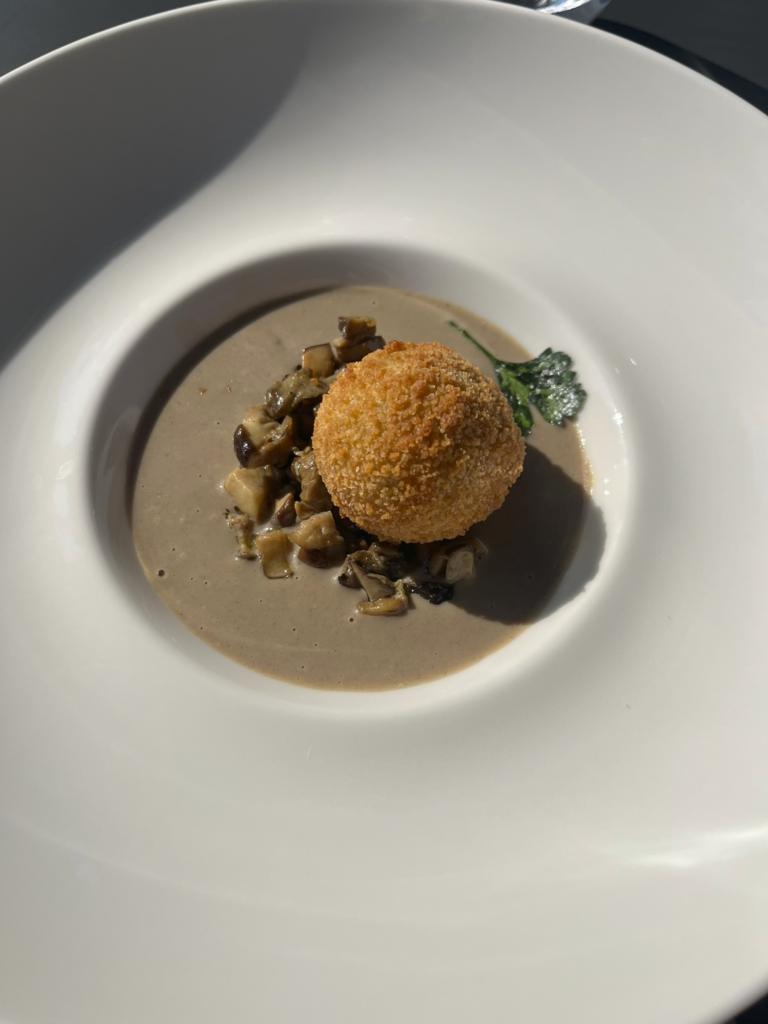
I choose porcini mushrooms anytime I can get them because they are uncommon in the U.S.
Sarah chose the gravlax with shaved beets and pomegranate seeds.
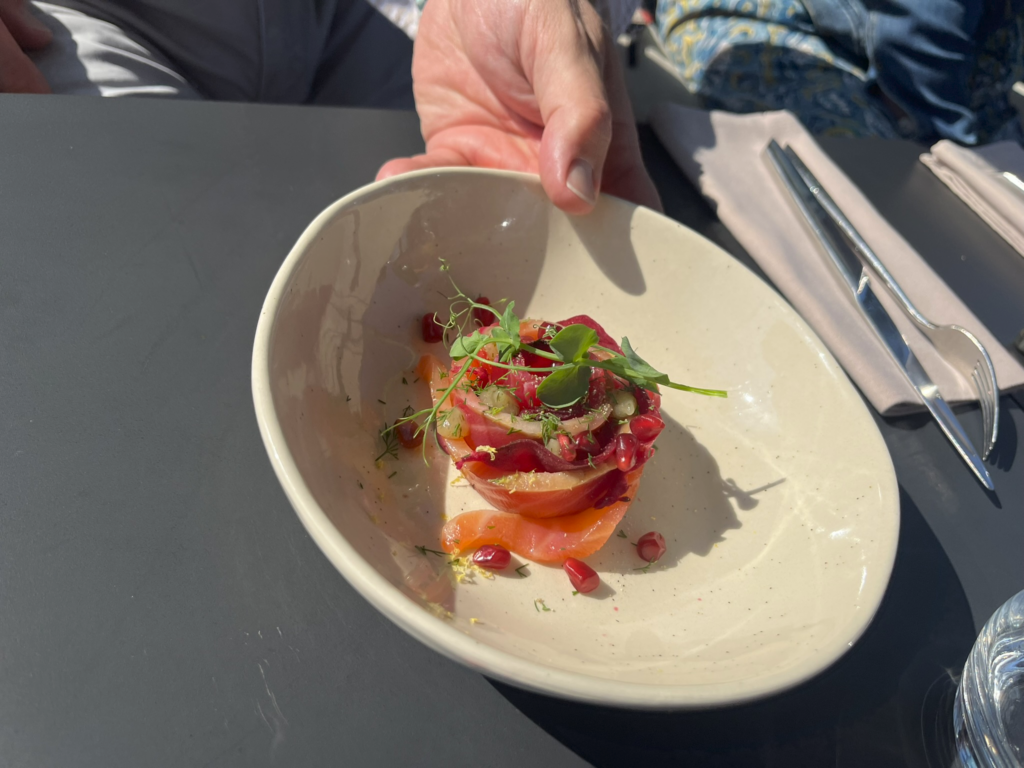
Both were excellent.
For a main we shared a perfect veal pot a feau topped with seared foie gras. The accompanying marrow bone was a bonus, as we spread the marrow on the freshly baked bread and sprinkled it with a few grains of coarse salt.
The meal was accompanied by wine 🍷 of course. We started with a glass of a Ventoux blend of Grenache, Syrah, and Carignane and ended with a glass of a Luberon blend of Viognier (yes, in a red blend), Syrah, and Grenache.
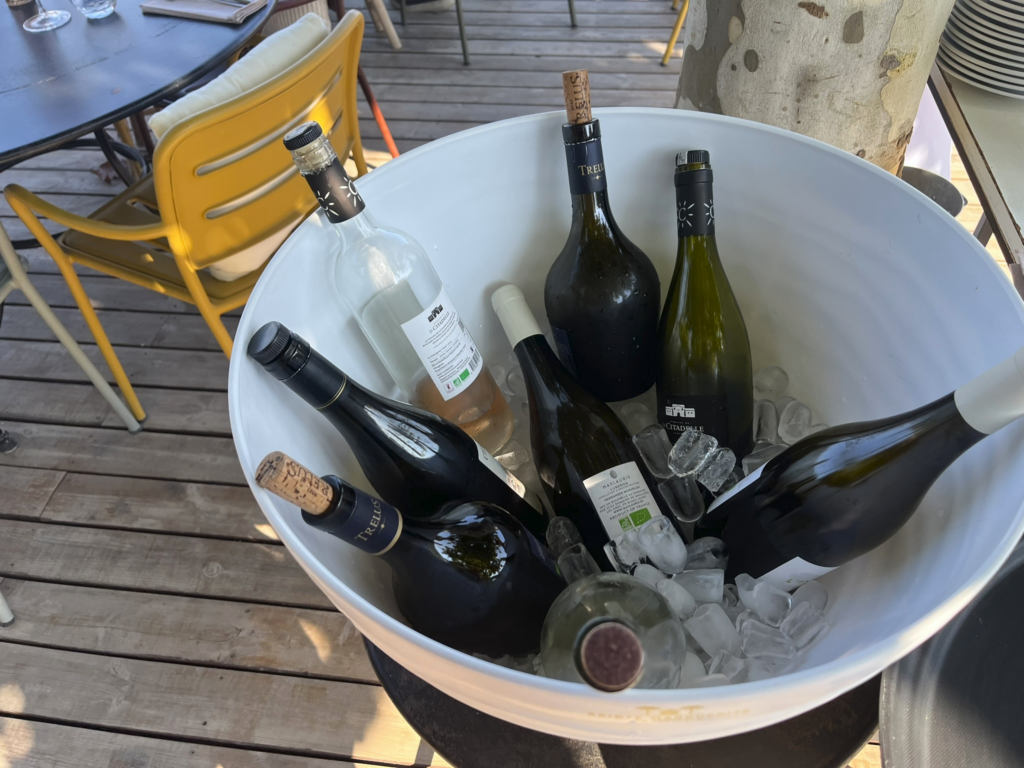
The restaurant has a very nice indoor dining room too, but unless the weather is cold, sit outside.
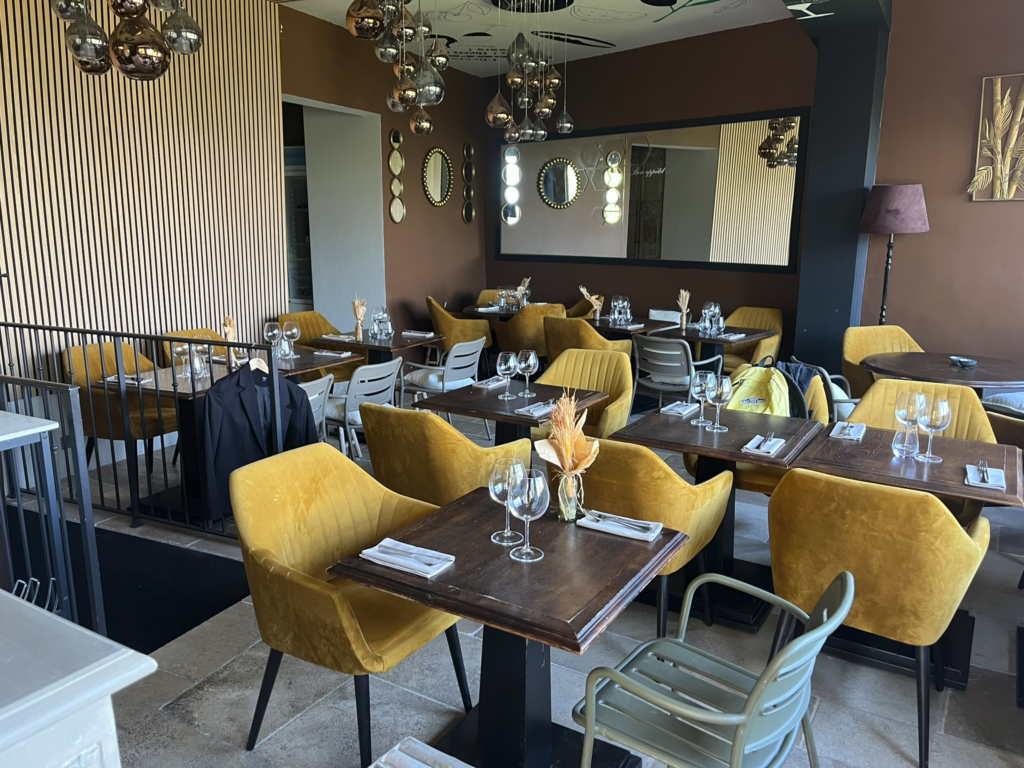
We were there at lunchtime but dining al fresco would probably also be wonderful here at night because of the ferry lights and pendant lights among the canopy of trees and the tented dining area.
Le Carré d’Herbes
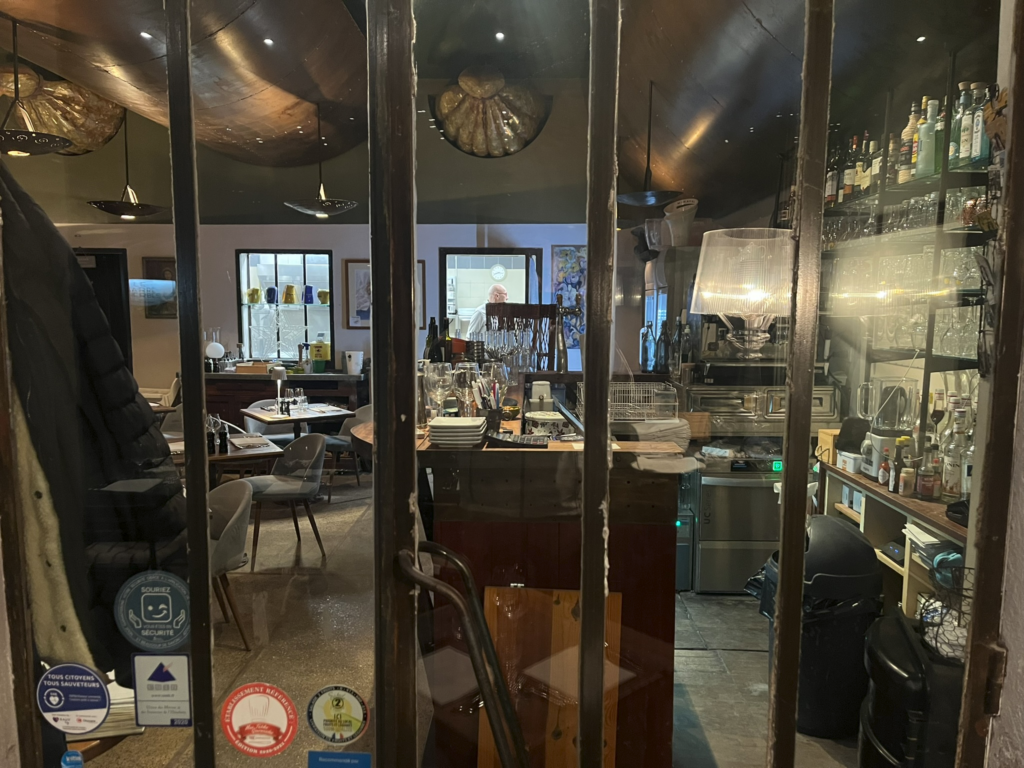
This fine food restaurant sits a little off the beaten path in a secluded garden area. Although both are very nice, we chose the livelier indoor dining room over the outside dining area. Outside has retractable glass walls that can turn the outside into inside, and vice versa, but inside has very interesting copper-clad barrel-like structures on the ceiling.
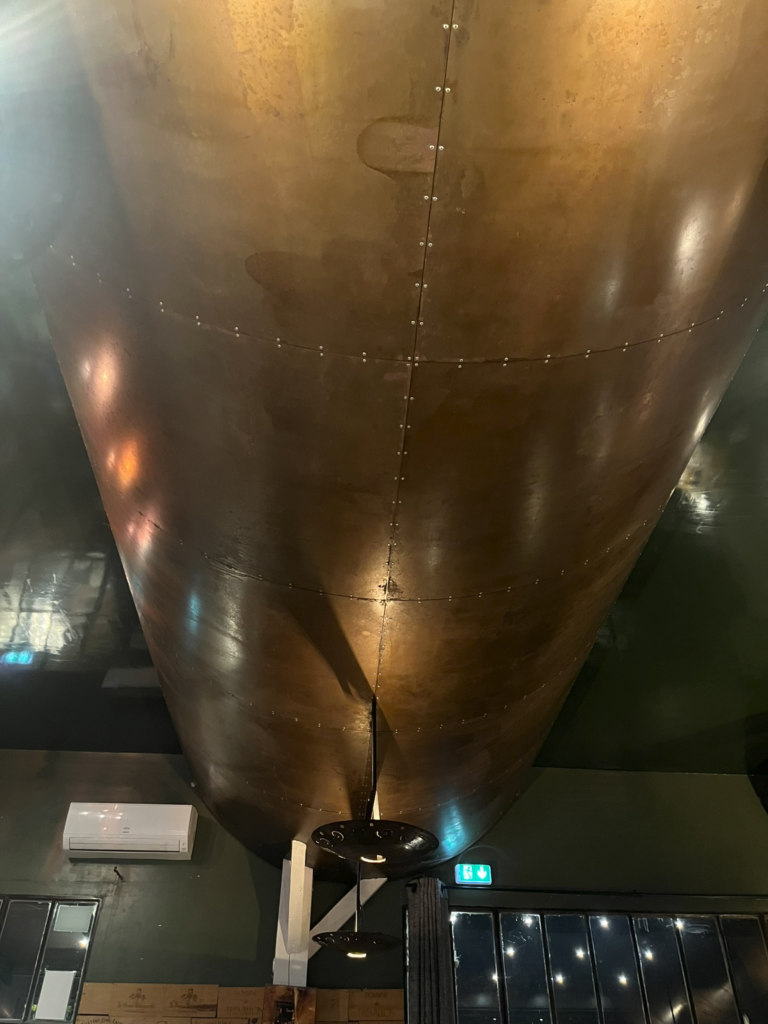
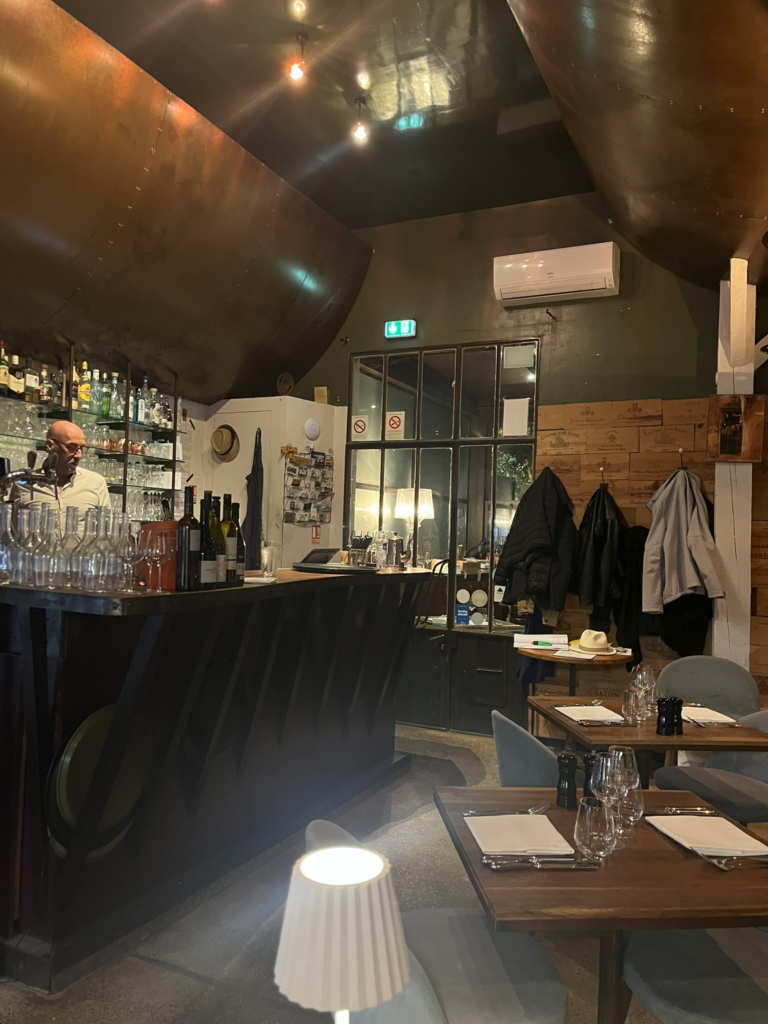
Together with subdued lighting and lots of wood, including the ends of wooden wine crates, and two huge golden bird head sculptures with harpie-worthy spiked collars, the dining room has a very warm and comfortable feel, even with the bird heads.
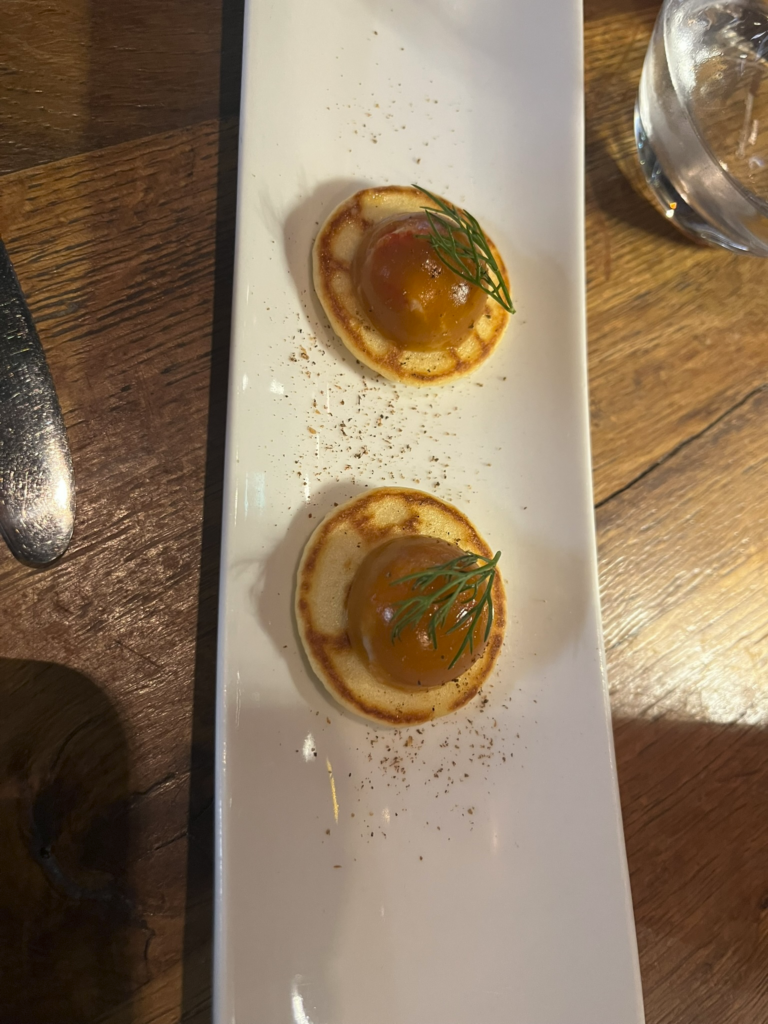
We started with a tasty bottle of local red from a very reasonably priced wine list. Then the chef surprised us with a very nice amuse bouche: a blini with crawfish and gelee of crawfish bisque.
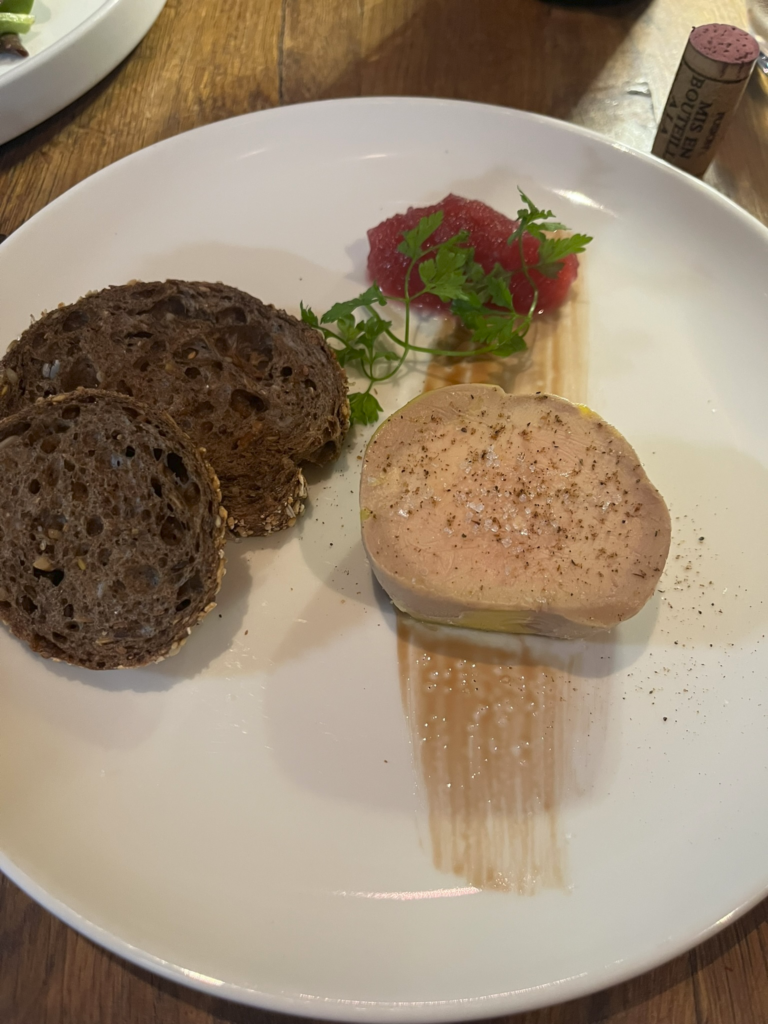
Sarah started with the beautiful plate of pan-fried frogs legs, which were served with a finger bowl. I ordered the duck 🦆 foie gras medallion with chutney, which I enjoyed with both the freshly baked dark bread accompaniment and the lighter table bread.
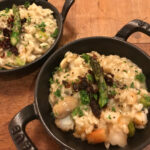
For mains we ordered the risotto, which was beautiful and tasty but needed a protein, and the gorgeous whole sea bream with mushroom 🍄🟫 fricassee.
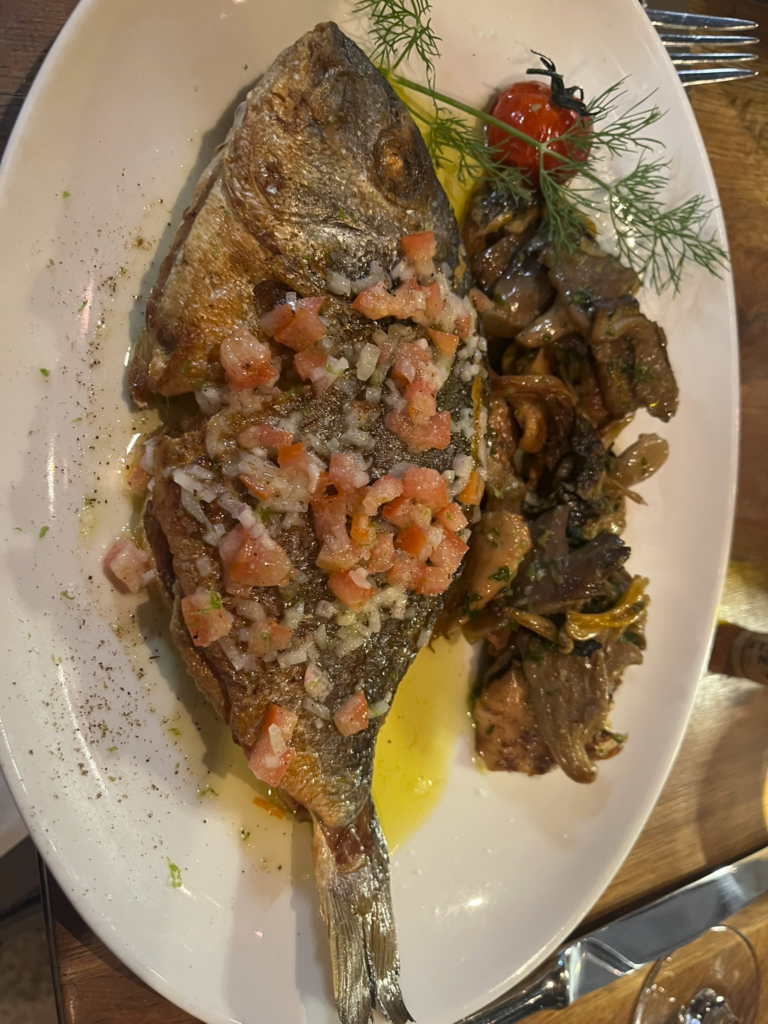
Be careful of the bones, which I had no trouble dodging or removing. Service was excellent.
Restaurant l’Ormeau
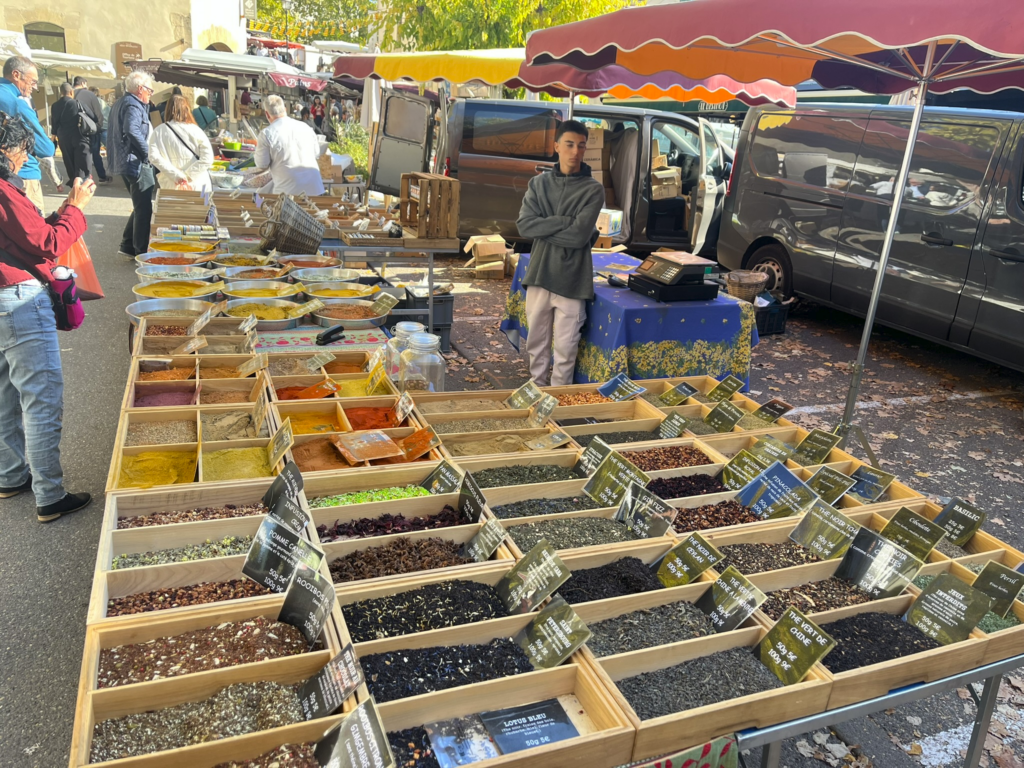
After strolling the extensive and interesting Friday market in Lourmarin, we needed food and wine. Sarah had a pizza craving and we heard that this restaurant makes good ones. For those who want sun, sit on the sunny side of the street. If you want shade, sit in the area on the other side, which is also part of the same restaurant.
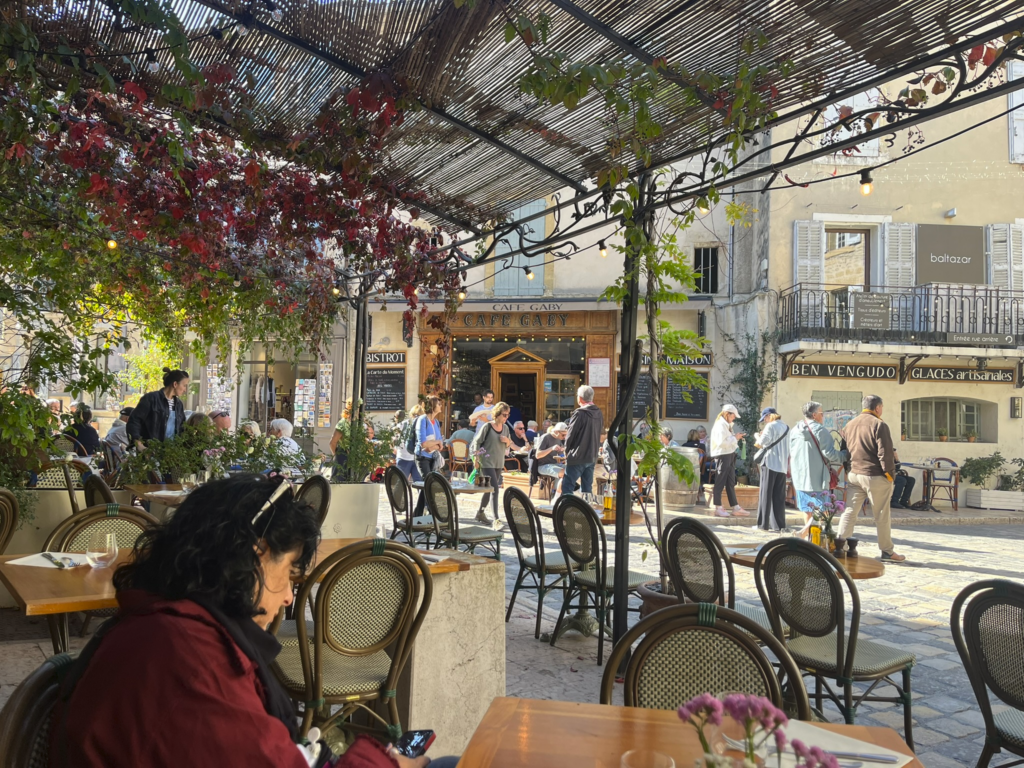
We arrived just before the rush, when we had the pick of tables. What a wonderful spot for lunch on a sunny mid-October afternoon in this picturesque town, watching local humanity and their caninity walk by!
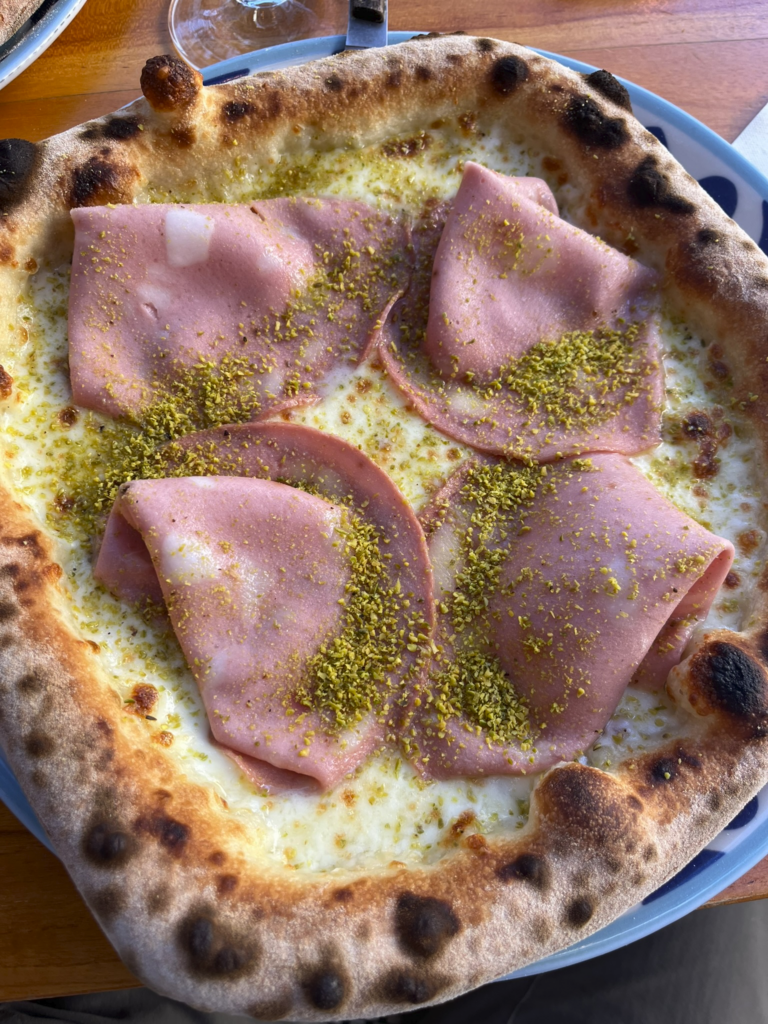
The menu offers an eclectic collection of dishes appealing to French or Italian tastes. Though we never expect much from restaurants in such touristy areas, we were very happy with our three pizza choices and glasses of a local wine. I chose the Pistachio (mozz, mortadella, and crushed pistachios).
Sarah chose the Calabrese (mozz, nduja, spicy sausage, sauce) and our friend chose the Chèvre Meil — my fave — (chèvre, mozz, honey, walnuts, parm).
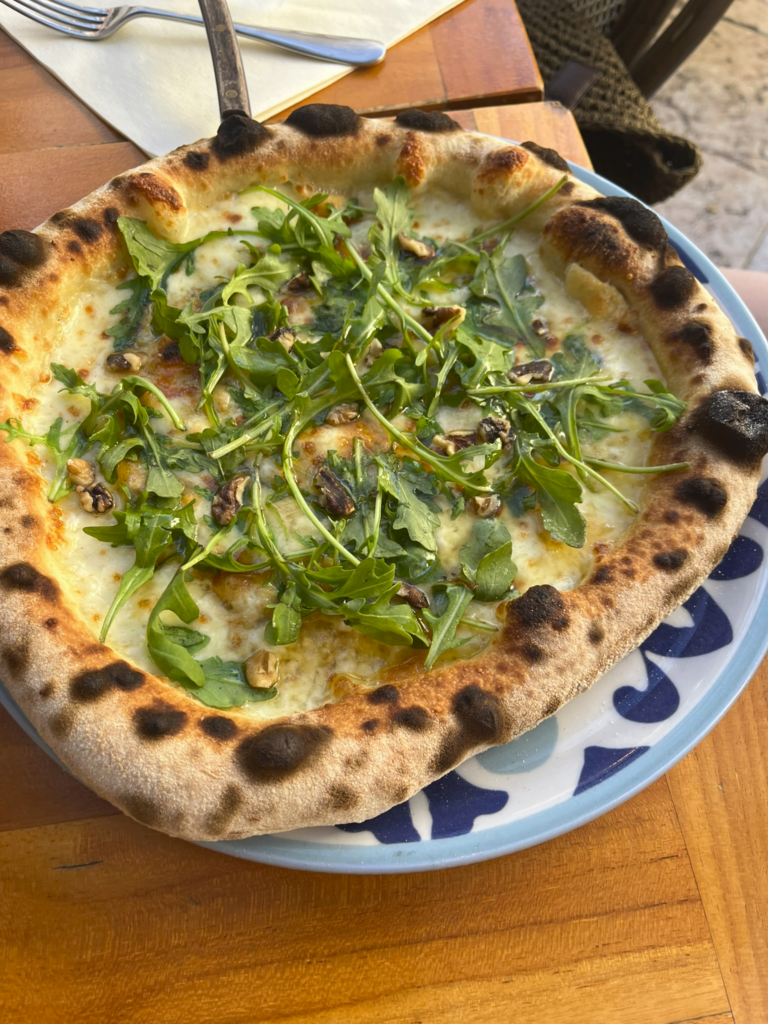
My complaint about most of the planet’s pizzas is that the toppings are clustered mostly near the center. These three pizzas had excellent distribution of the goodies from center to the crust, a sufficient amount of each topping, as well as thin crust cooked through, as it should be. I particularly liked that entire slices of mortadella were used as toppings, not chopped pieces. These pizzas also received the coveted SSPA (Sarah Seal of Pizza 🍕 Approval), which is not easy to earn and is infrequently awarded.
La Cour aux Saveurs – Maître Chocolatier
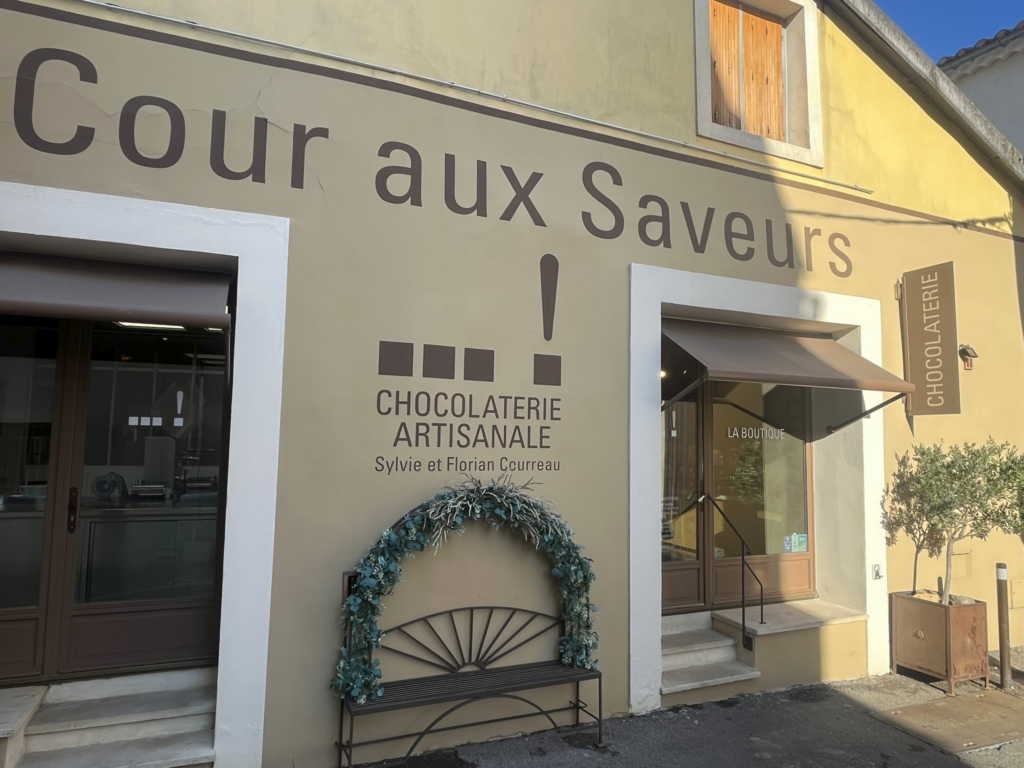
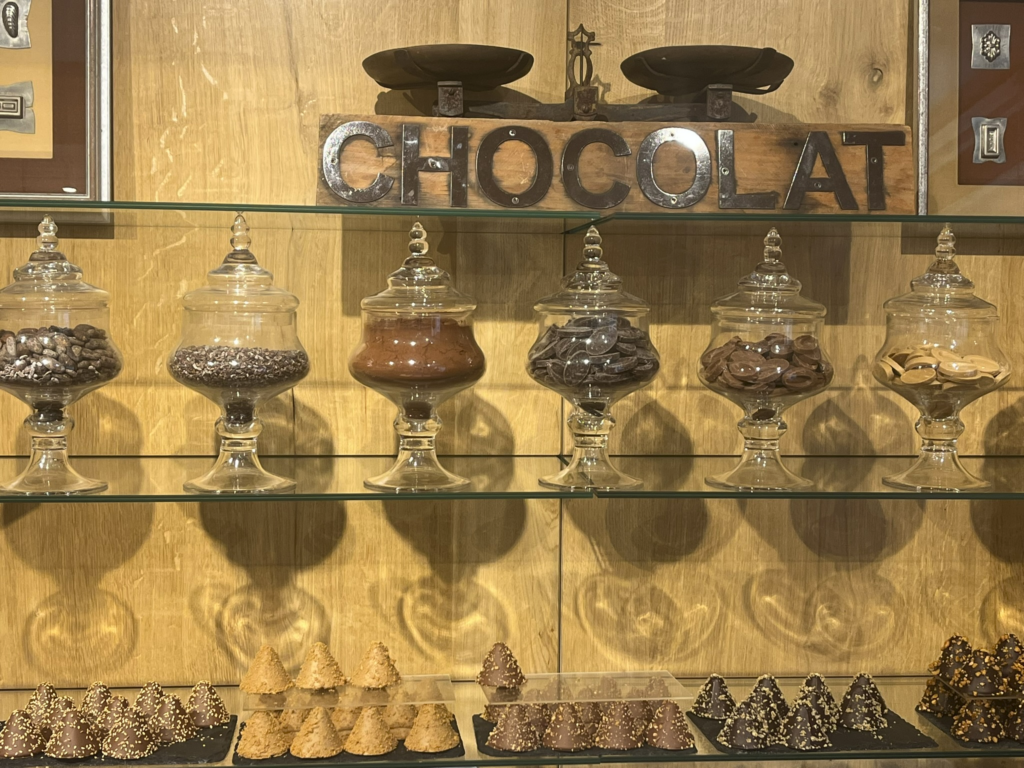
I liked three things about this chocolate shop. 1. The chocolates are handmade in-house; 2. The owners treat chocolate as an art form; and 3. The chocolates are fresh, luscious, decadent, and delicious.
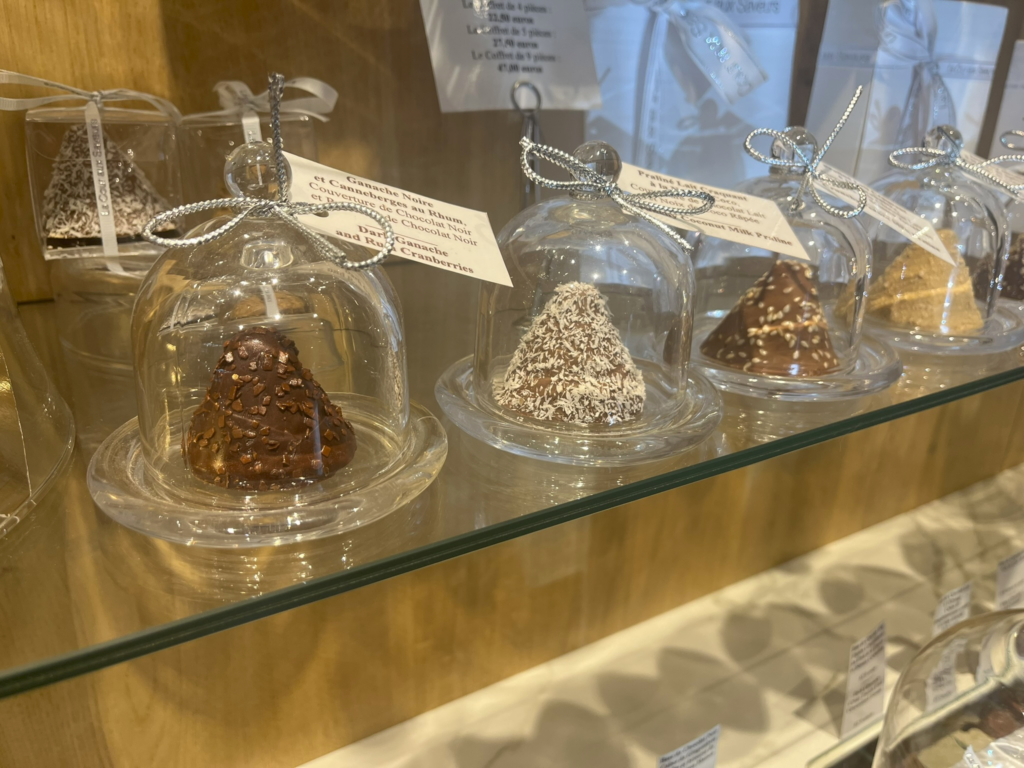
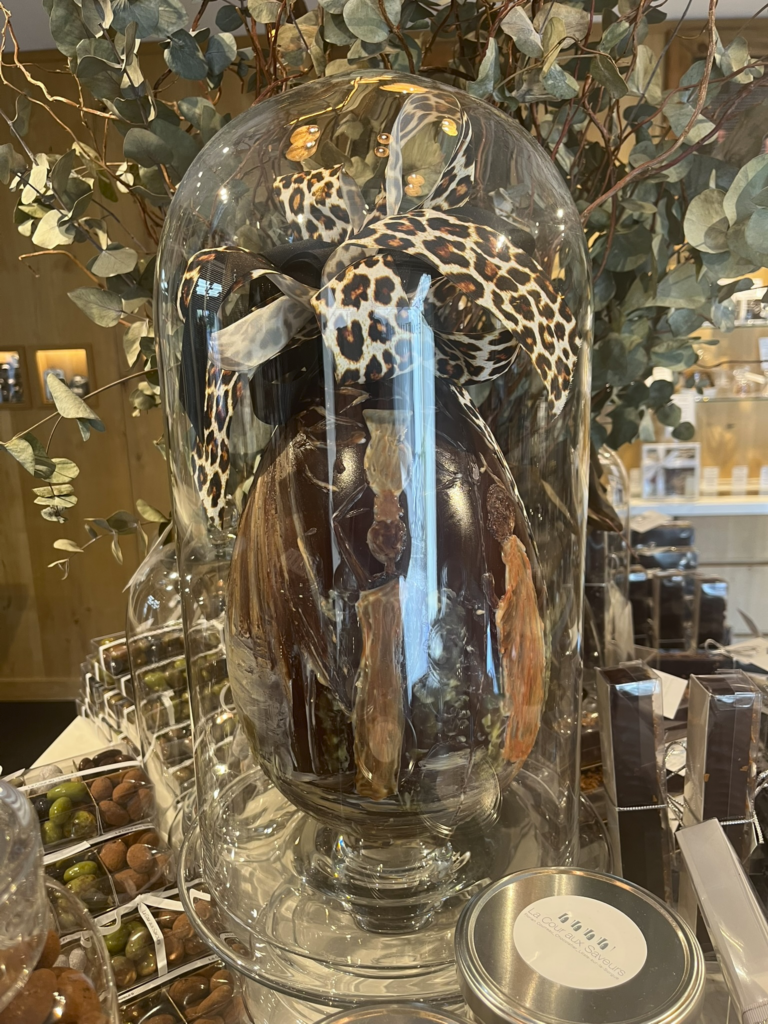
Regarding no. 1, you can watch the magic through the window into the kitchen. Regarding no. 2, check out the incredible single-source Easter Egg (or the seasonal equivalent— we were there in October and the Egg was still on display), the cloches with jewel-like cones of chocolate, and the overall design and aesthetic of the shop.
Regarding no. 3, we chose a representative selection of light and dark pieces from the main display case after sampling from the chalice of dark couverture.
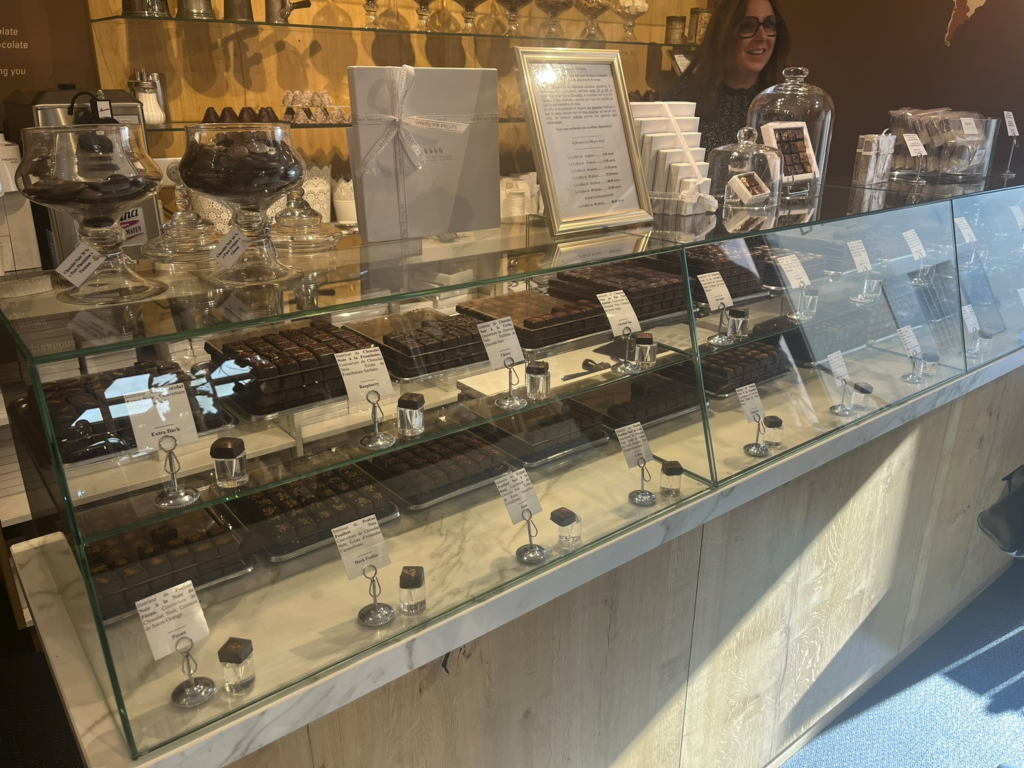
I laughed when the Mademoiselle du Chocolate said that because the chocolate is so fresh, we should eat our purchases within “three,” then paused and said “months”. I laughed and responded that they probably wouldn’t last three days, and maybe not even three hours. It’s been about three hours and half of them are luscious, decadent, and delicious memories.
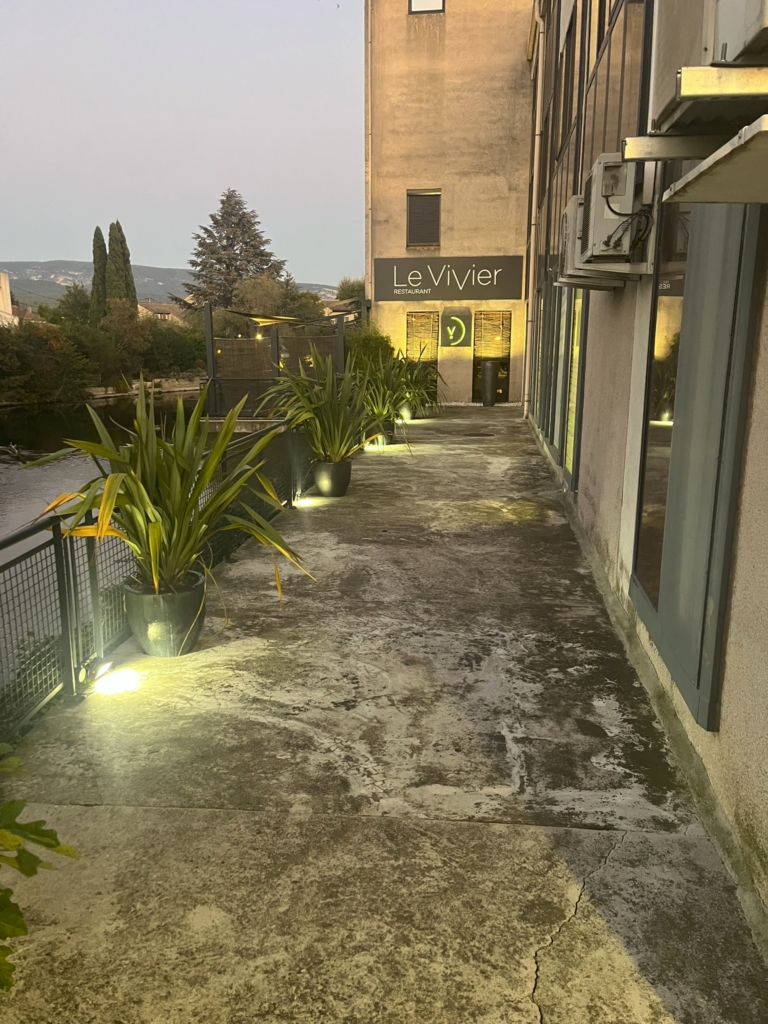
Le Vivier Restaurant
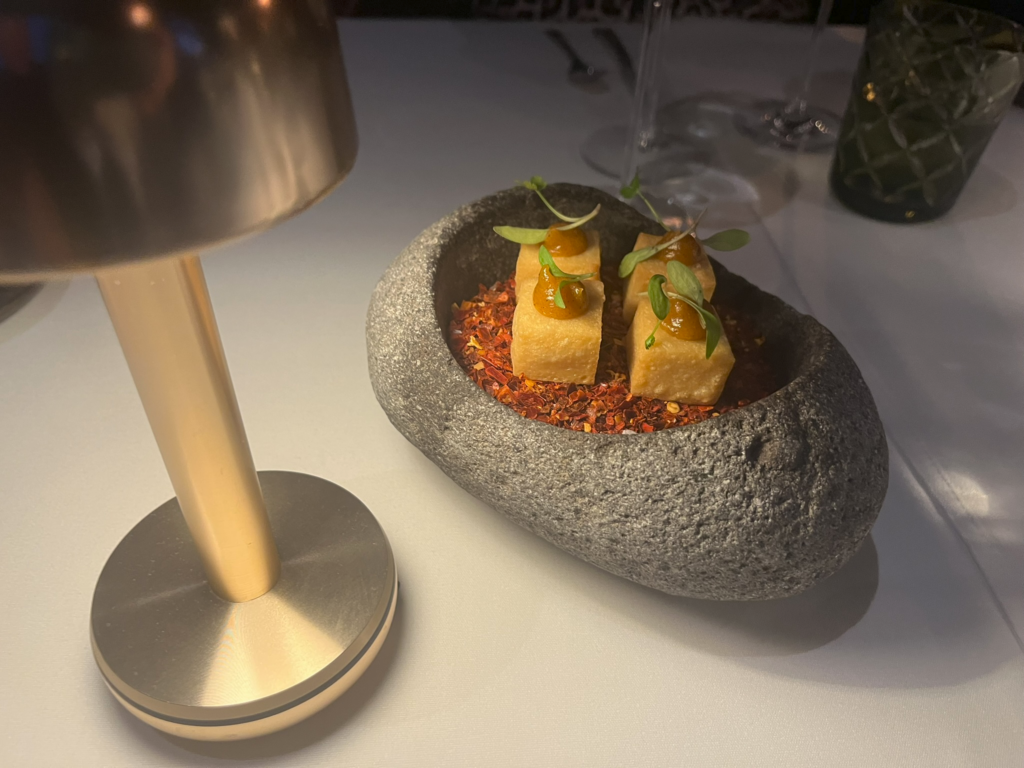
This fine dining restaurant earns a string of Impressives: impressive menu, impressive creativity, impressive decor, impressive plating, impressive food, impressive wine pairing, impressive service.
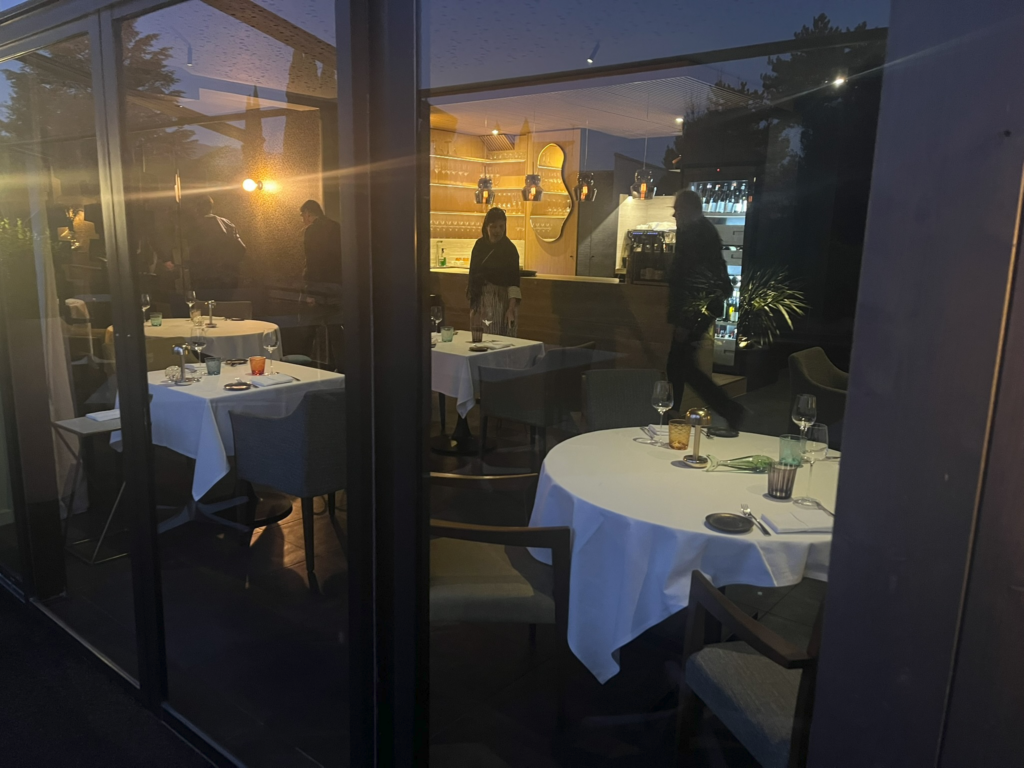
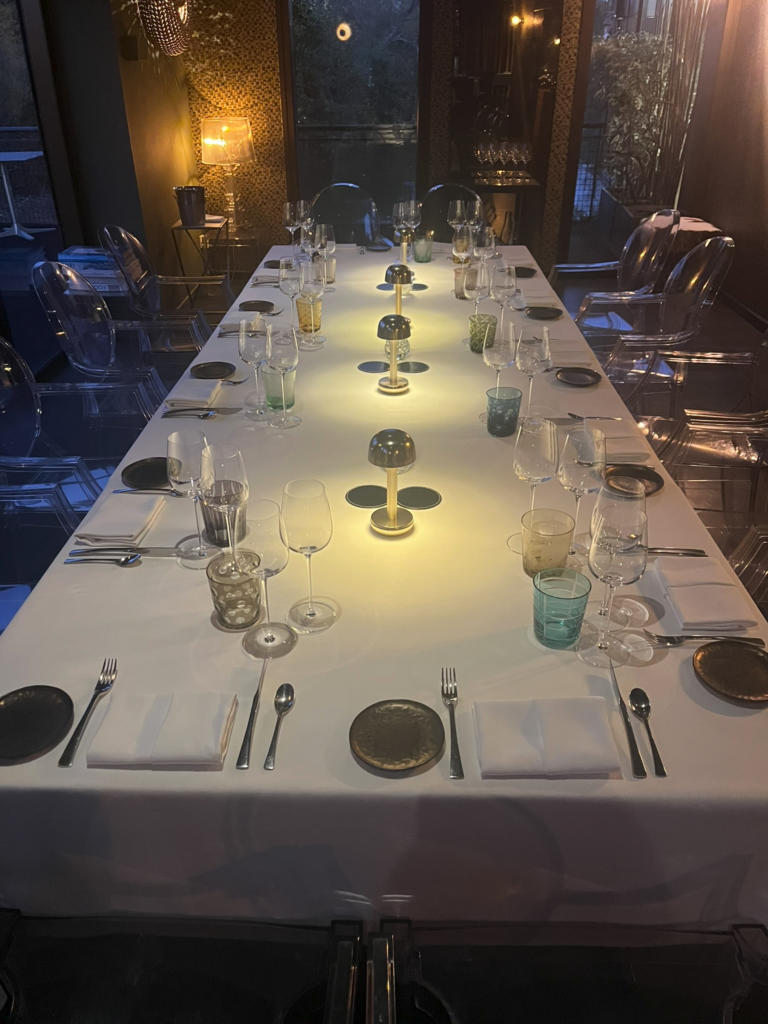
This was the finest fine dining of the several fine dining restaurants we experienced during a week in this interesting town. We liked the subdued lighting and Japanese-ish aesthetic, which was apparent in the decor, serving plates, and plating.
We dined there as part of a group dinner, which our local hosts chose for the last night of a week-long culinary tour, which says a lot.
There is also a large outdoor deck for riverside dining, but it was too cool for al fresco dining when we visited (mid-October). We didn’t choose our dishes or wines, but the restaurant did an impressive job of doing it for us. The meal started with several amuse bouche. My bouche was so amused that we probably could have stopped eating after those amusing courses. But we didn’t stop and instead enjoyed four impressive courses, three savory and one sweet.
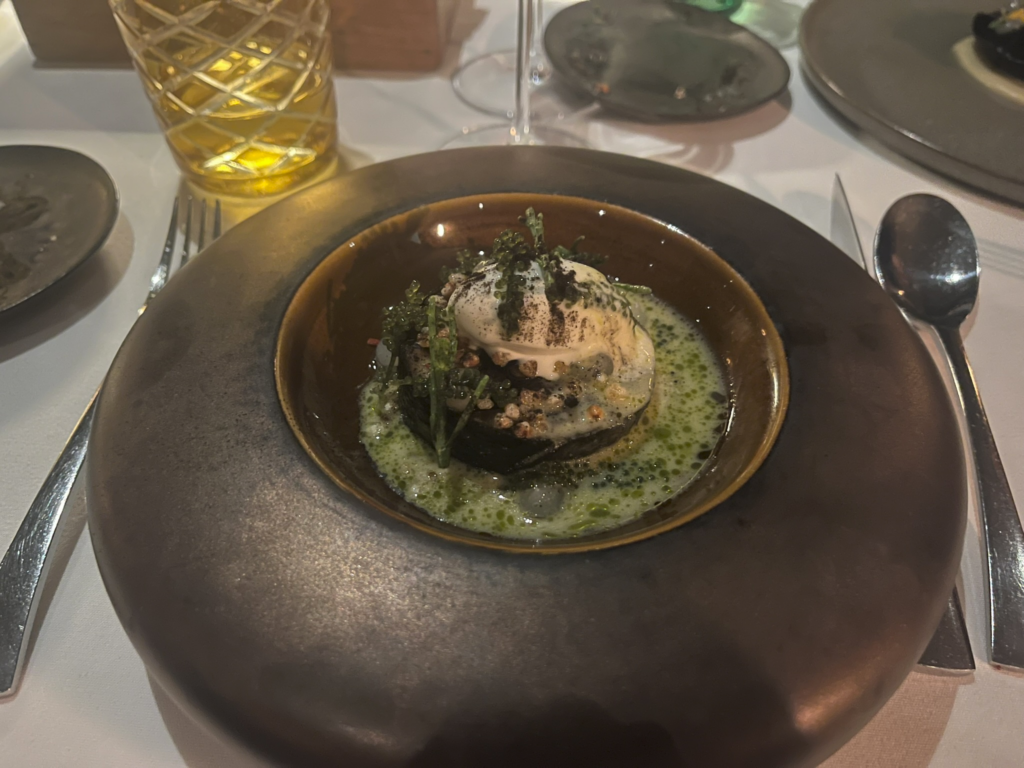
If you want gourmet for gourmands, gastronomic for gastronomes, and culinary for culinarians, enjoy an evening (or lunch) at this fine restaurant.
Conclusion
We tasted and toasted nonstop during our six days in this wonderful town, but I feel that we barely scratched the surface of the town and all that the surrounding area has to offer. I was skeptical at first because I had never heard of the town, but having enjoyed it so much, I don’t know how it evaded my radar for so long. Go there. You’ll love it, as we did.
Disclosure: As an Amazon Associate I earn from qualifying purchases. If you buy from a link on this site, I may earn a small commission from the vendor without any additional cost to you. No company pays me to say anything in particular, or to say nice things. I only stand behind products I believe in.