John Hornick — Chef’s Apprentice
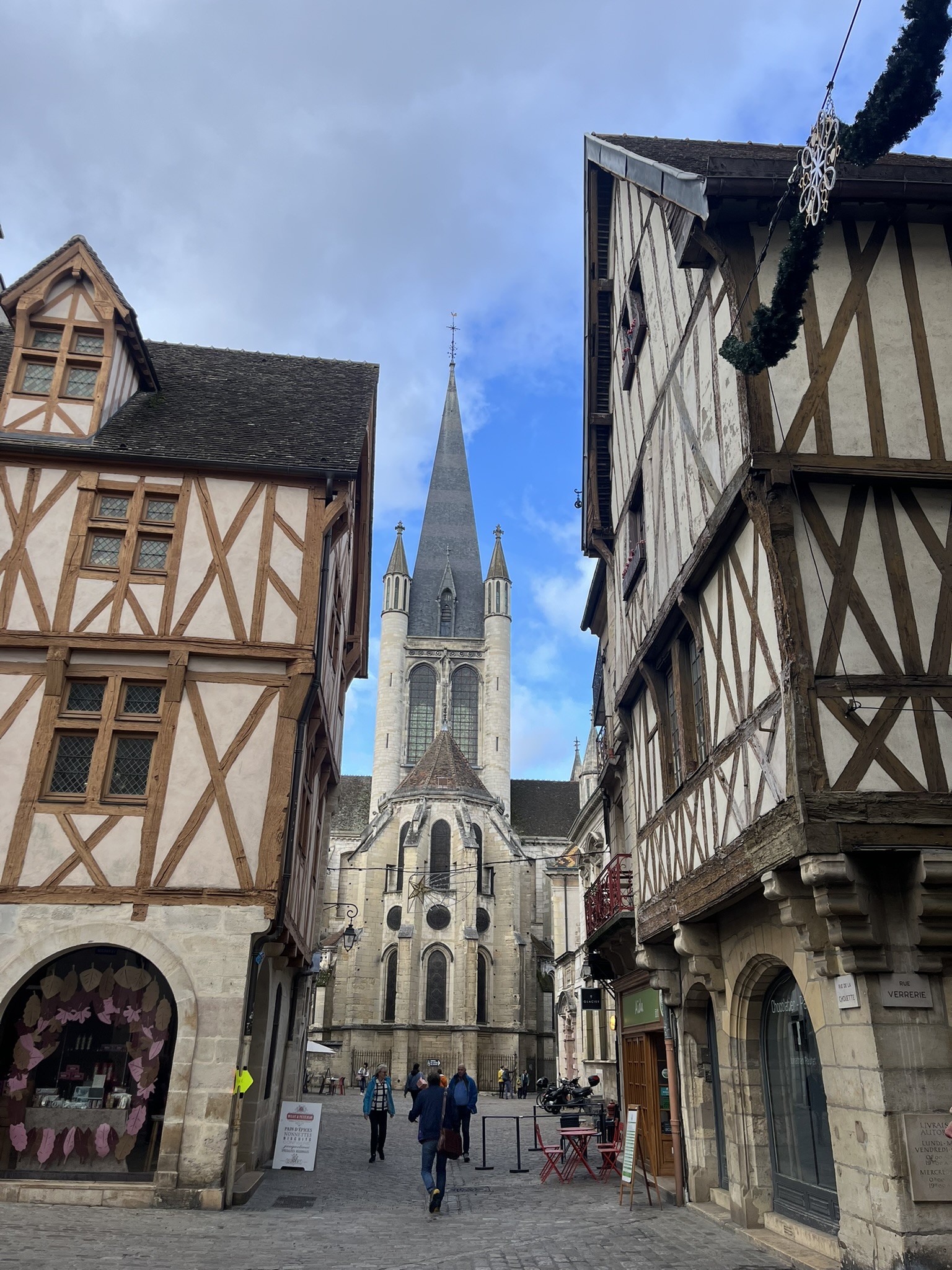
Here’s a collection of Tastes and Toasts from our recent Travels to Dijon, the Mustard Capital of the World. If you are traveling around France, don’t miss this charming and historic city. This is your budget-friendly gourmet guide to good food, wine, and local ambience.
Getting to Dijon
We flew into Paris, spent the night, then visited Provence for a week. Then we took the train to Lyon, then Dijon.
To book your trip to Paris or Dijon, or anywhere, and to get good prices, use this Expedia box:
We used United points to fly to Paris. If you have slightly fewer points than you need, you can buy enough to get you a free trip from United. If you want to stay in Marriott hotels and don’t have enough points, you can also buy more here.

We travel with only one bag and a backpack each. I have been using this Pathfinder bag for many years. It has a large compartment with top or bottom access, and a nylon panel can be unzipped to combine the soft upper compartment and the rigid lower. The whole bag is heavy duty, including the retractable handle and wheels, as proven by the fact that I have been using it for well over five years. It still looks new despite having been in many, many overhead luggage compartments, and Sarah just bought one because mine has served me so well for so long. What I like most about it is the pockets. I love pockets and it has many pockets both inside and out.


Where to Stay in Dijon: Aloft Hotel
Being Marriott loyalists, we have stayed in several Alofts, as well as many other Marriott properties. Alofts, which are mid-range hotels, are always funky, colorful, or fun, if not all of the above.
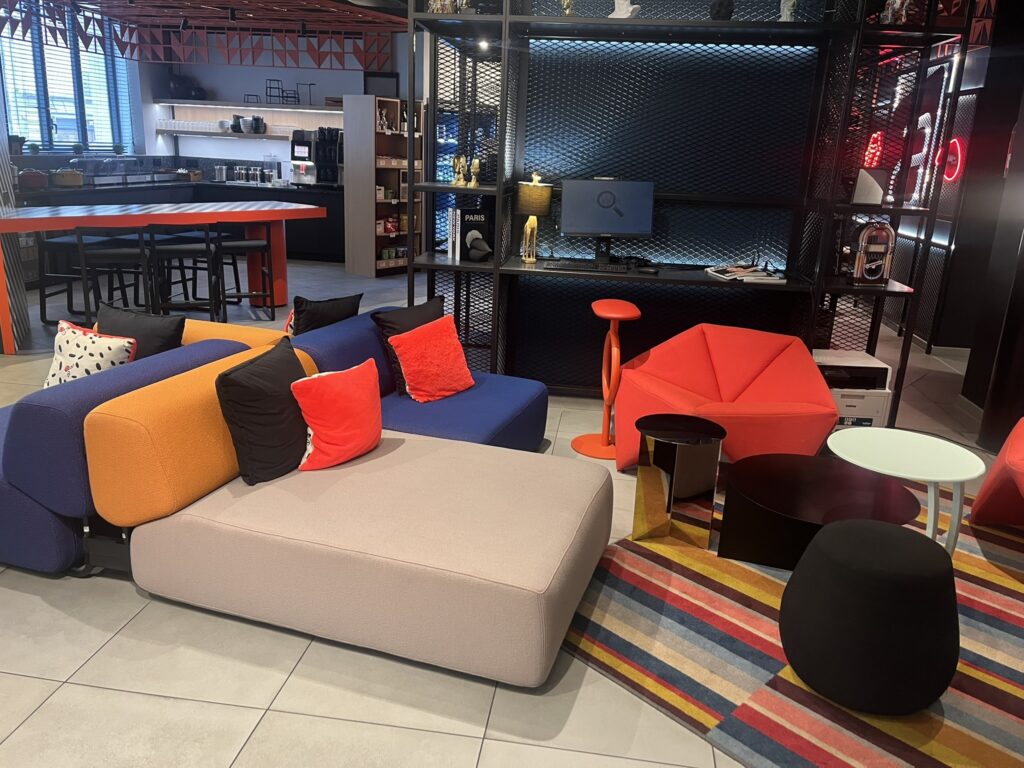
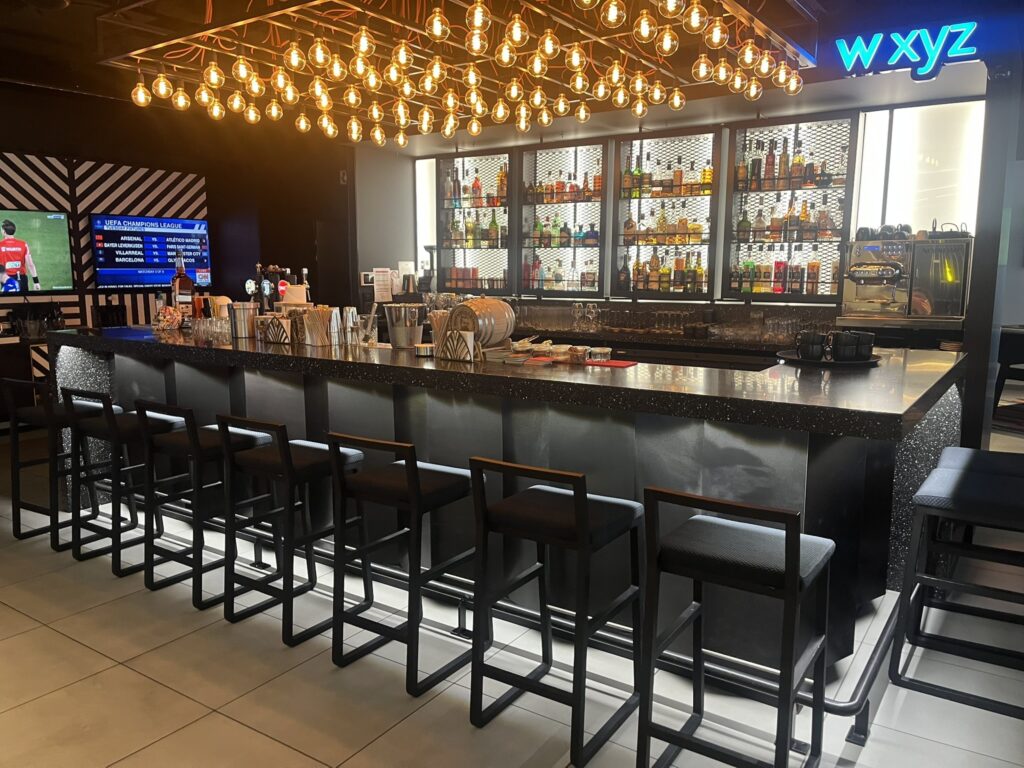
This one was all of the above, with a colorful and funky lounge and furniture, arcade games, several TVs, and the WXYZ bar. It’s also pet friendly.
But the best things about this hotel are that it is housed in a gorgeous historic building that formerly housed the Hotel des Postes, built in 1907.
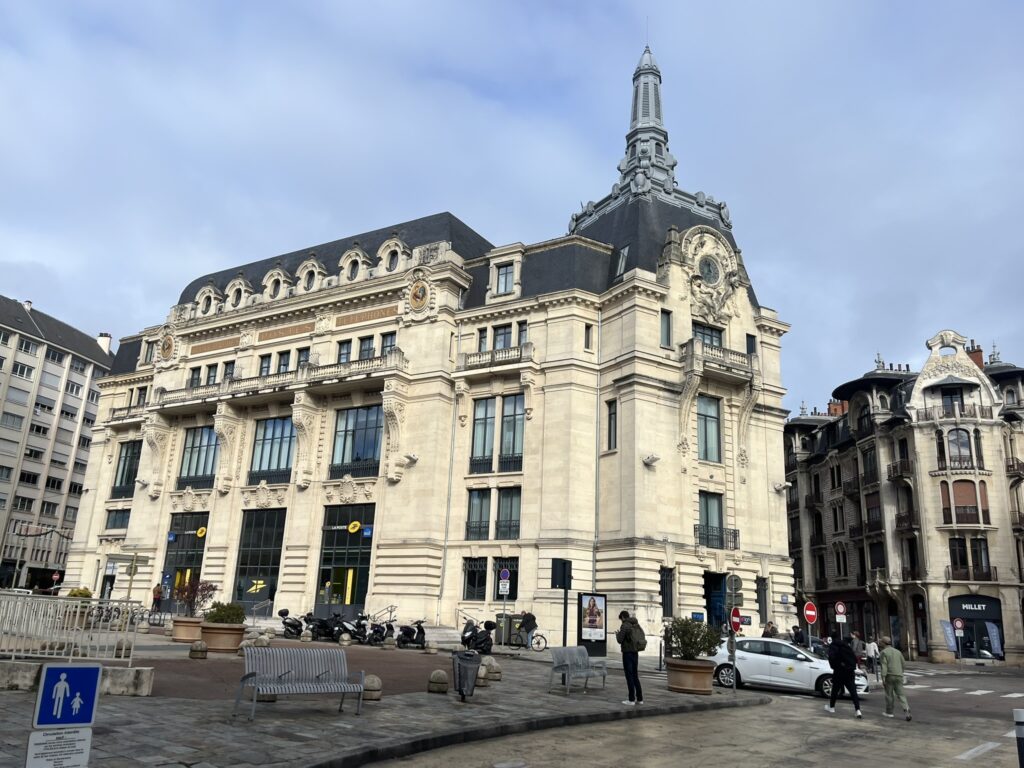
And it is only a very short walk to the heart of the old city. We did not see any other hotel of any significance any better located.
The elevators were slow so we used the oval staircase to ascend and descend to and from the second floor, which by the way is really the third floor above the lobby floor (0), following the European floor numbering convention.
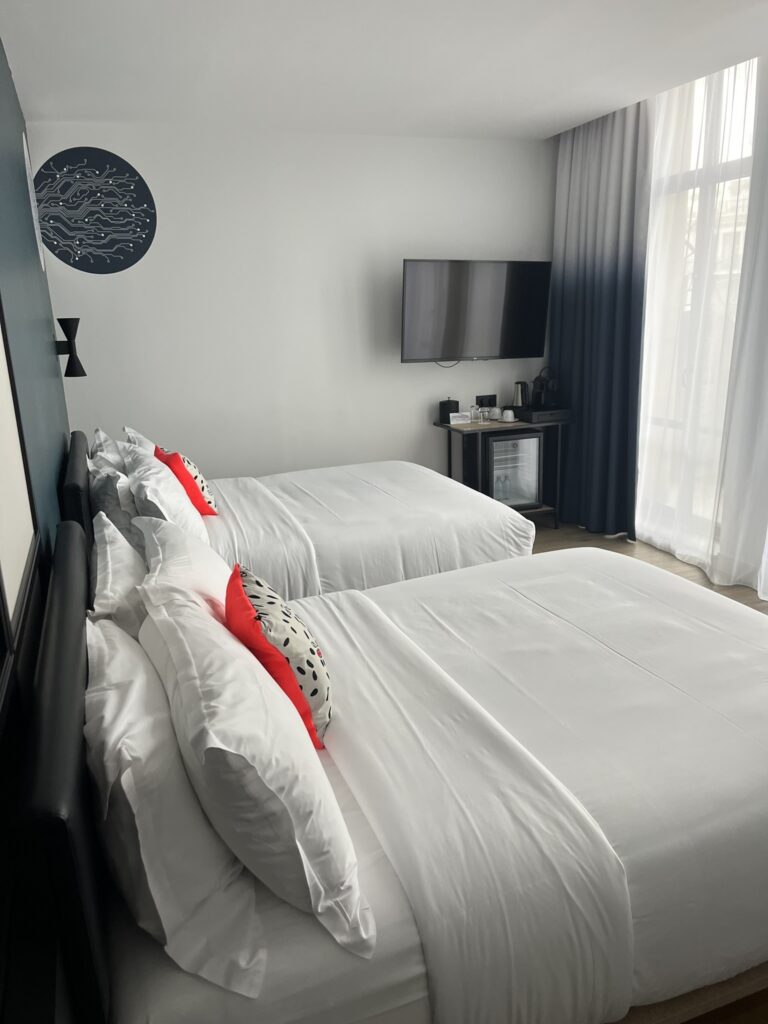
Our room was spacious and well-appointed, with a large bathroom area behind the bedroom area, a separate shower and toilet room, a built-in couch with table, and a private balcony with cafe chairs.
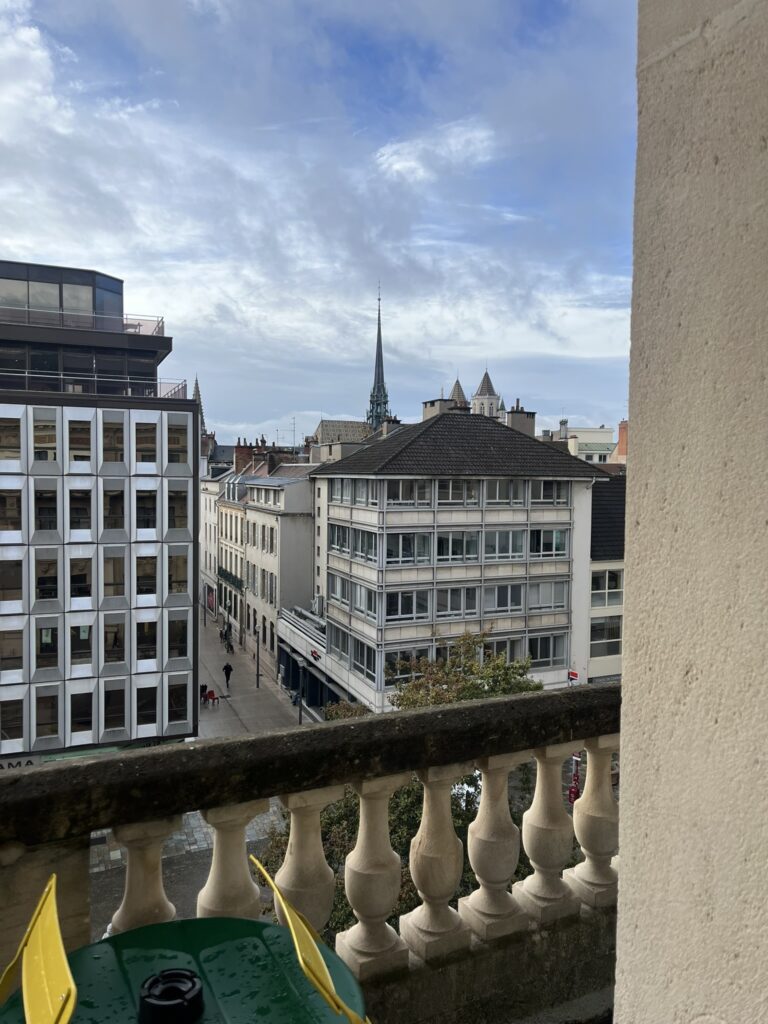
The hotel also has a pool and a fitness center, but we got our exercise exploring every street in the old city and using the hotel’s stairs instead of the elevators.
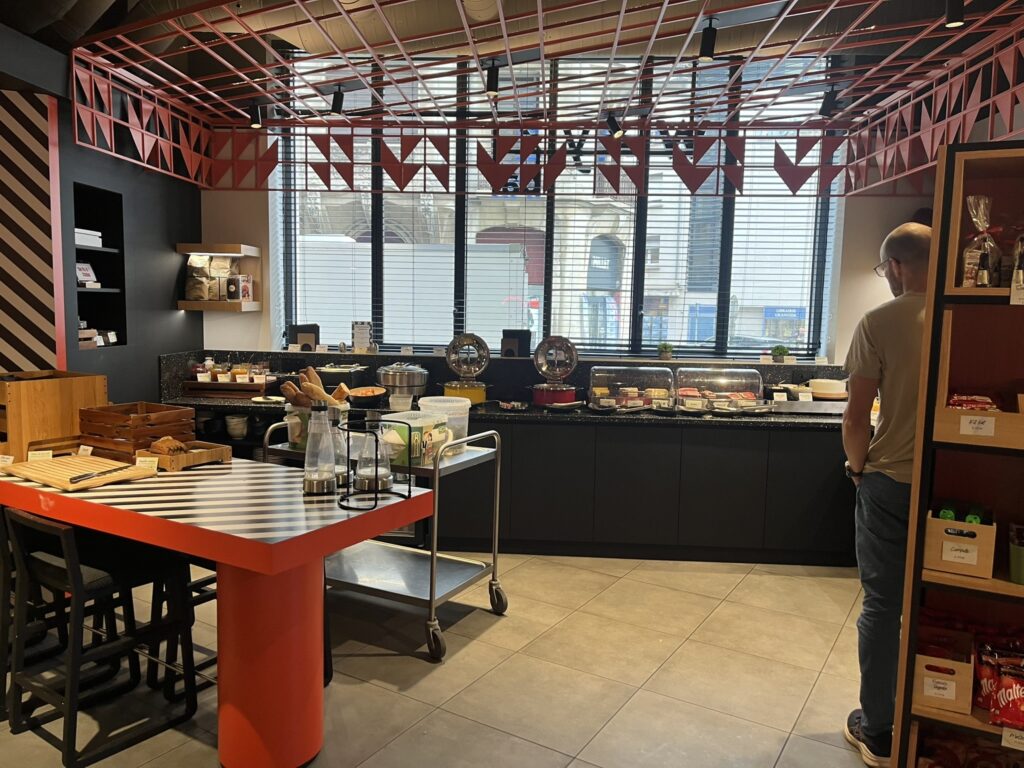
A good breakfast selection was included, including a cook-your-own egg 🥚 station with instructions for soft, medium, or hard boiled. We will stay here again the next time we are in this charming city.
Les Halles Market
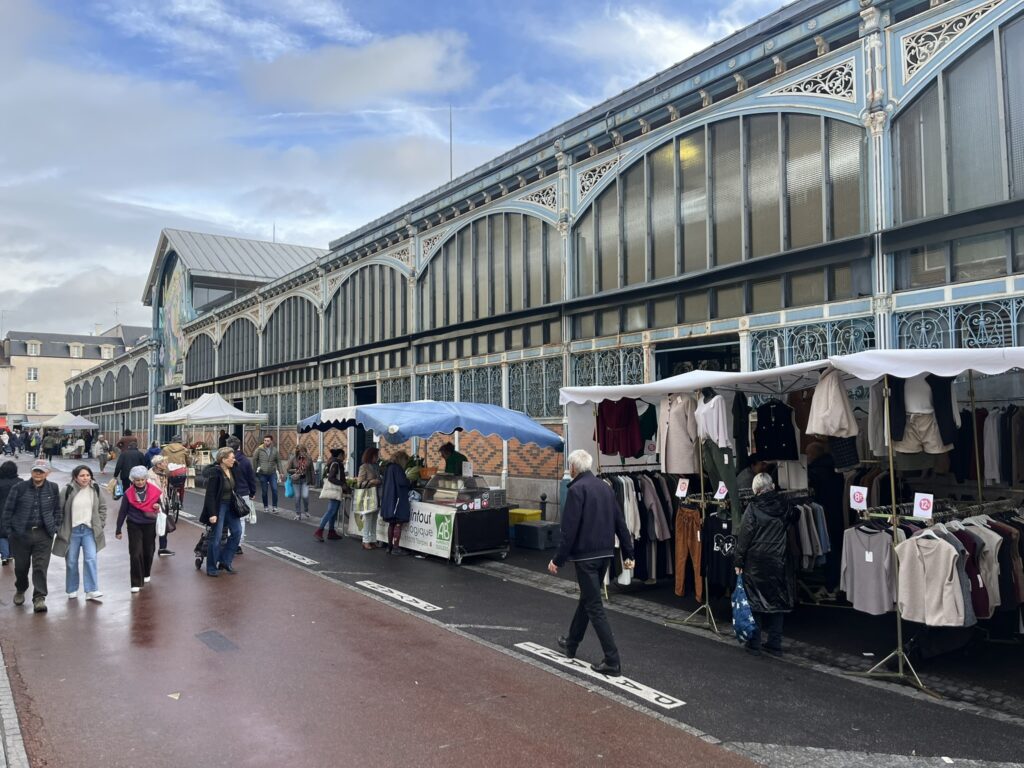
We love visiting public food markets and have strolled many market aisles in many cities and countries. Some food markets have transformed into food halls, like Mercado San Miquel in Madrid (one of my favorite places in the world). Some markets that once sold food now sell mostly clothes and trinkets.
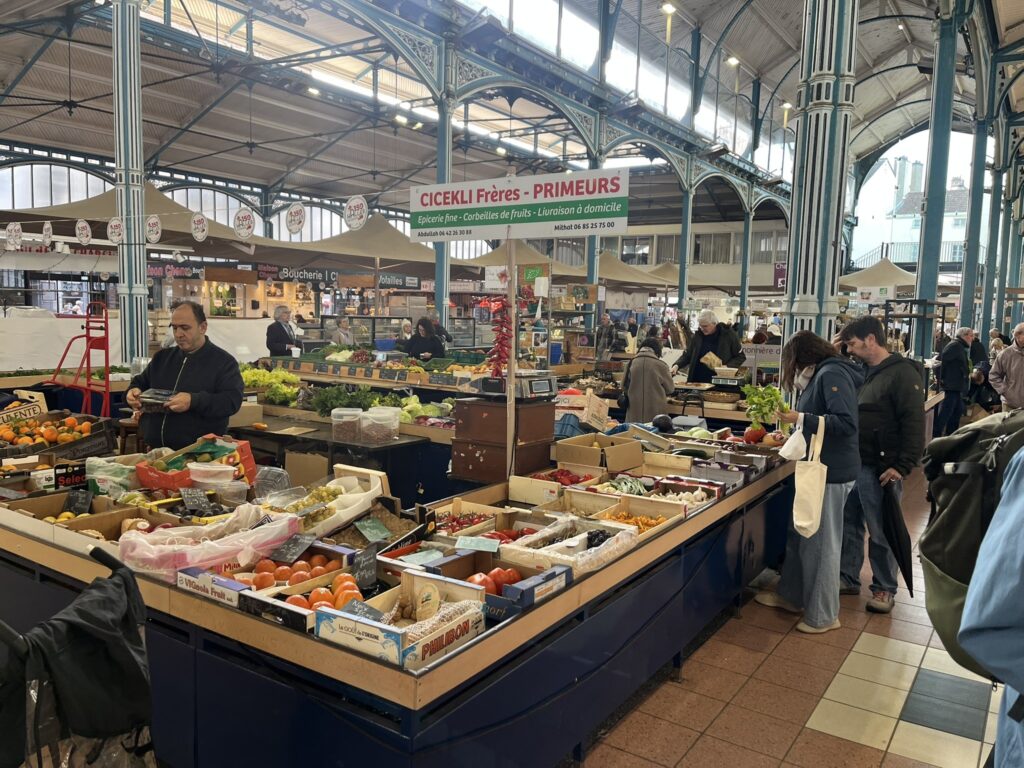
We shared a freshly baked Pain au Chocolate as we strolled among this market’s stalls. I’m happy to report that the Les Halles Dijon market is still mostly traditional, selling uncooked food, with many butchers, fishmongers, cheese mongers, olive merchants, wine merchants, Boulangers, and Patissiers plying their wares in this 19th Century cast iron Victorian-style building.
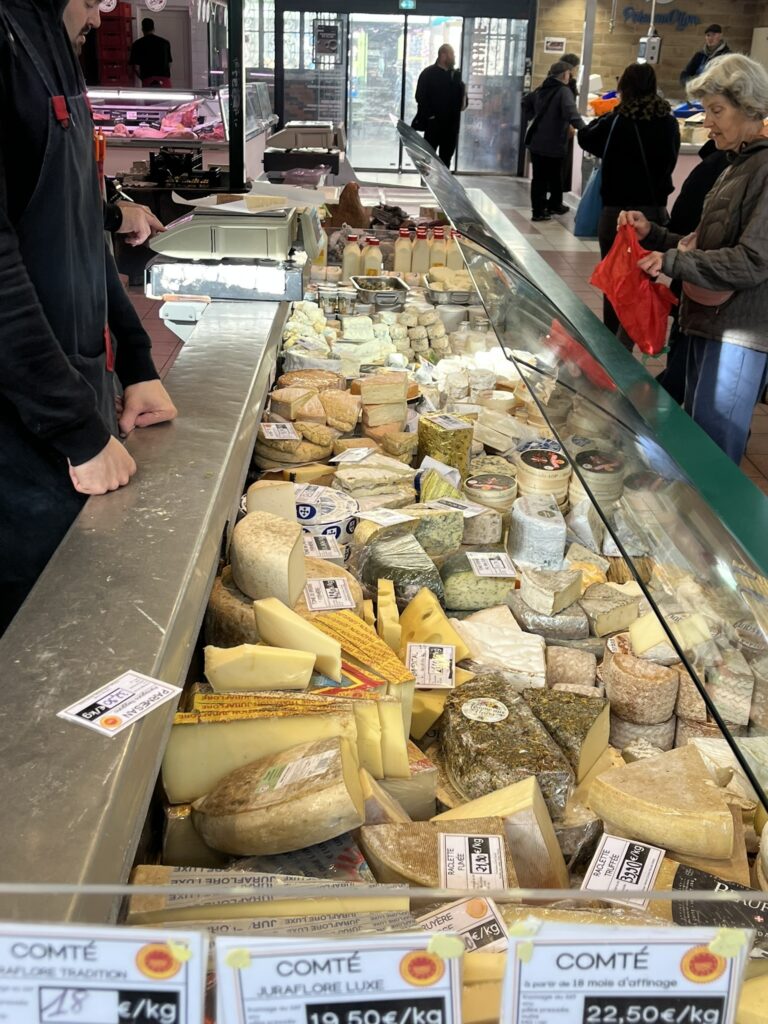
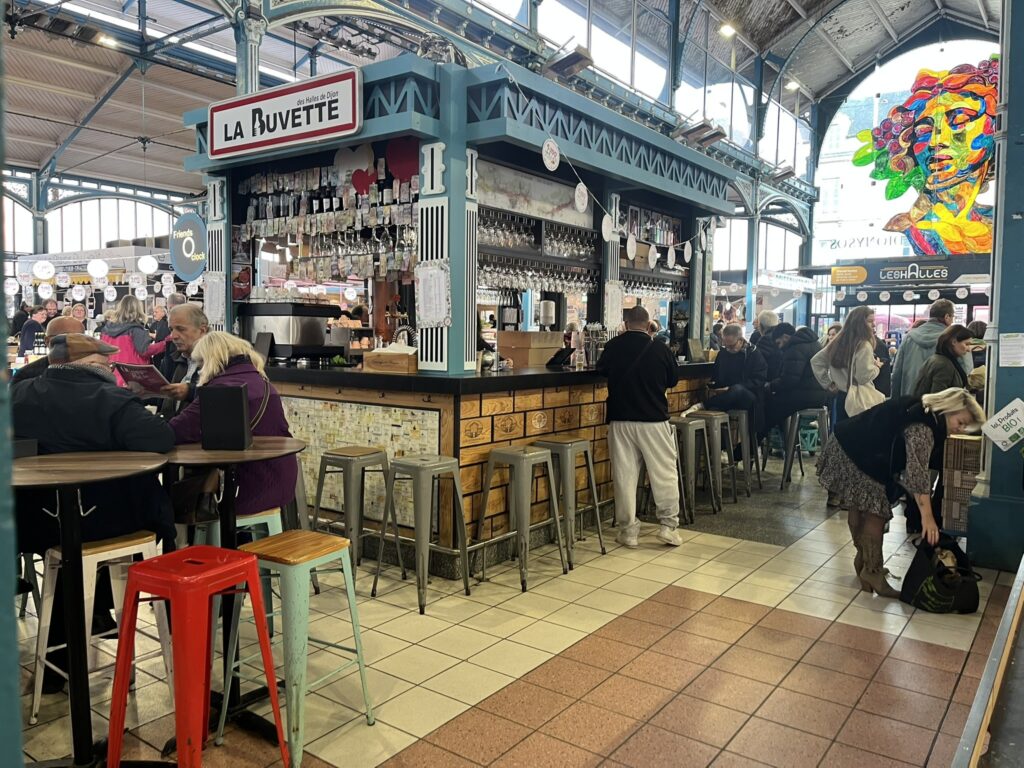
There was probably more cheese than anything else. No surprise there. There was a little prepared food and also a wine bar, which was surprisingly busy during our morning visit.
Maille Dijon Mustard
When I eat a hot dog 🌭 (yes, I like hot dogs), I have a little hot dog with my mustard, not vice versa. I tell the hot dog guy to “give me extra mustard; and if you think you have added too much, add more). I. LOVE. MUSTARD. So I was very happy when we finally arrived in Dijon (the mustard capital of the world 🌎) after touring France for 10 days.
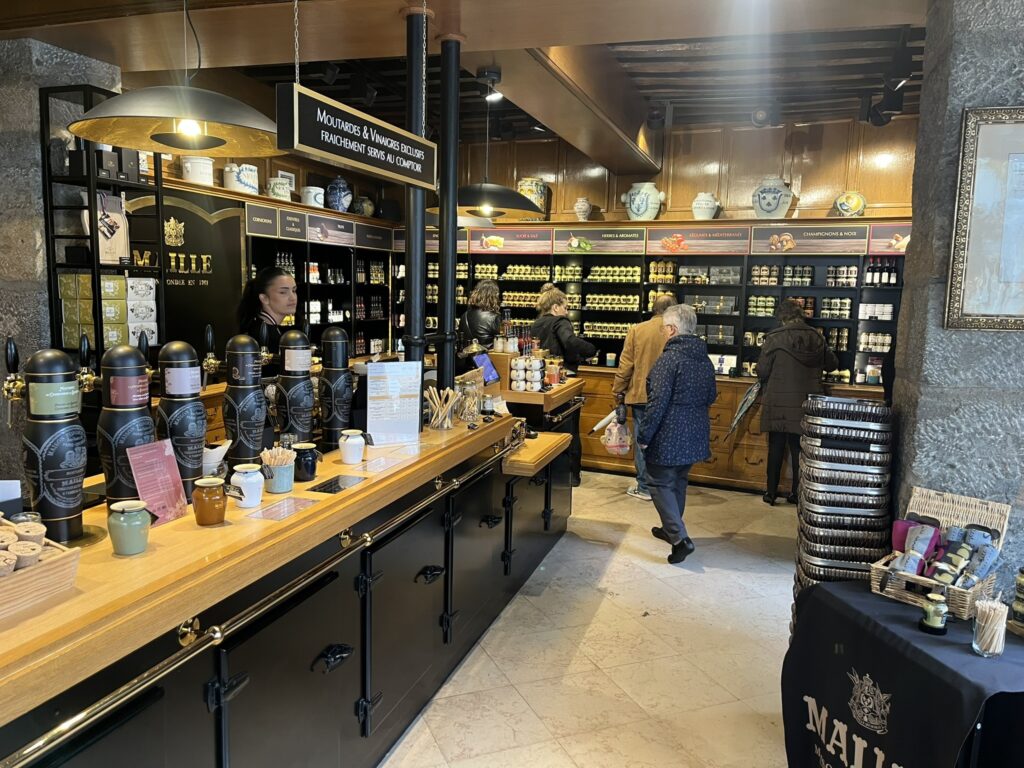
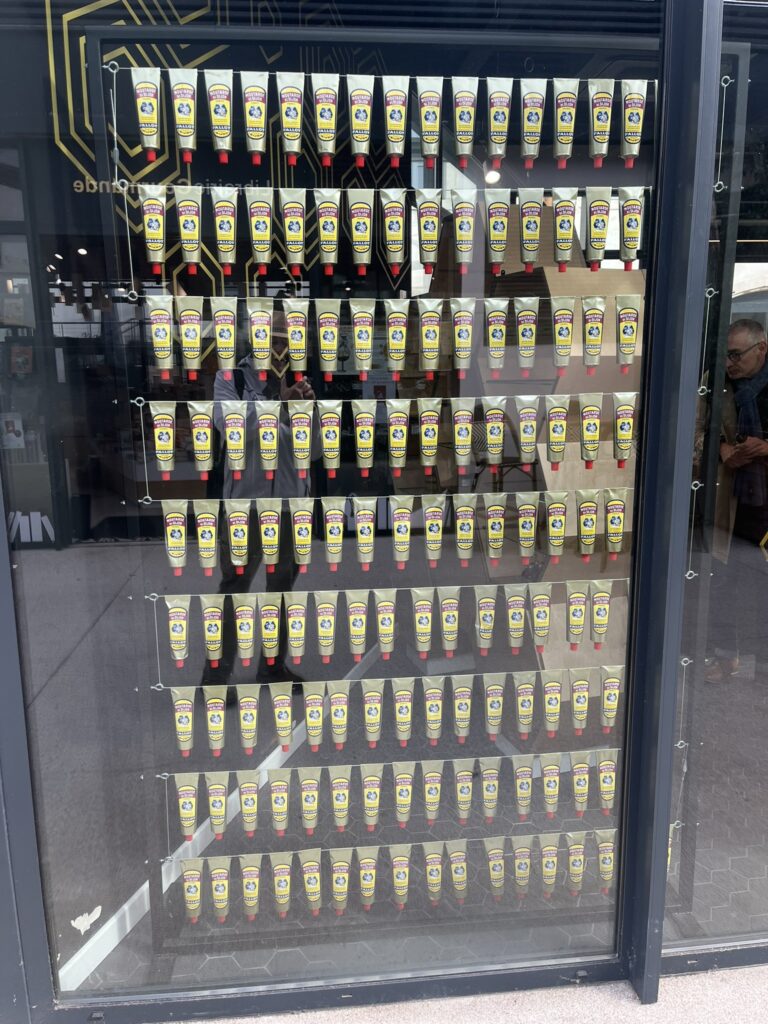
In Dijon, mustard is an art form. Art merits being appreciated in a gallery. The Moutarde Maille shop is a gallery of mustard.
Parked outside was a bicycle-driven mustard cart.
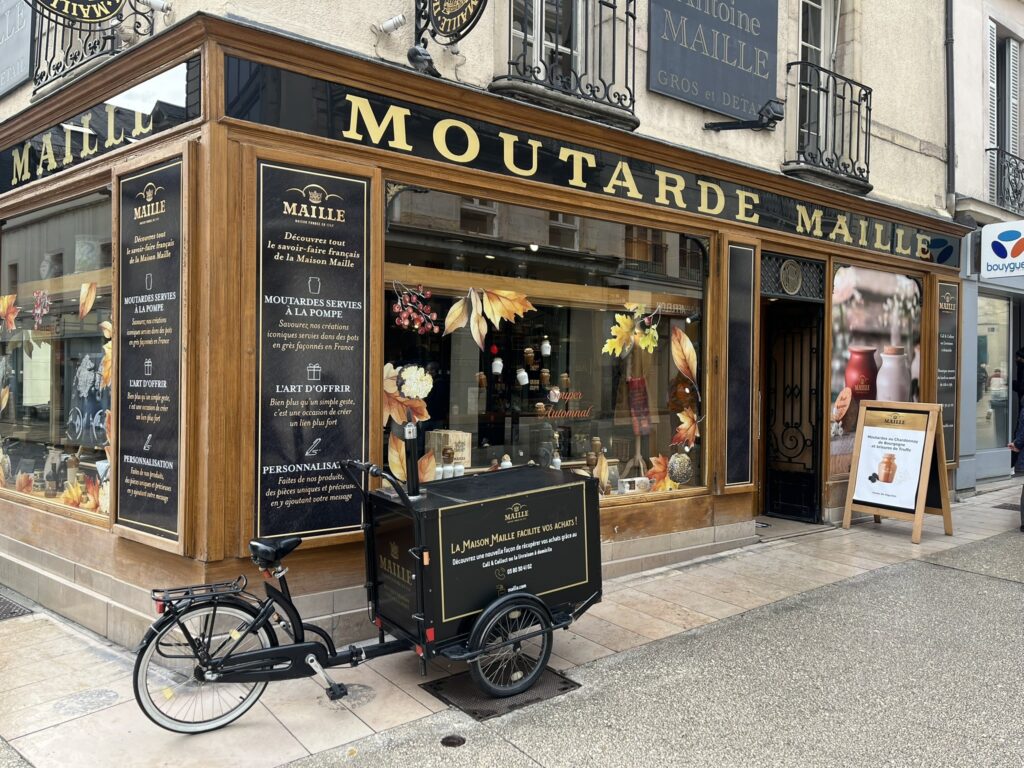
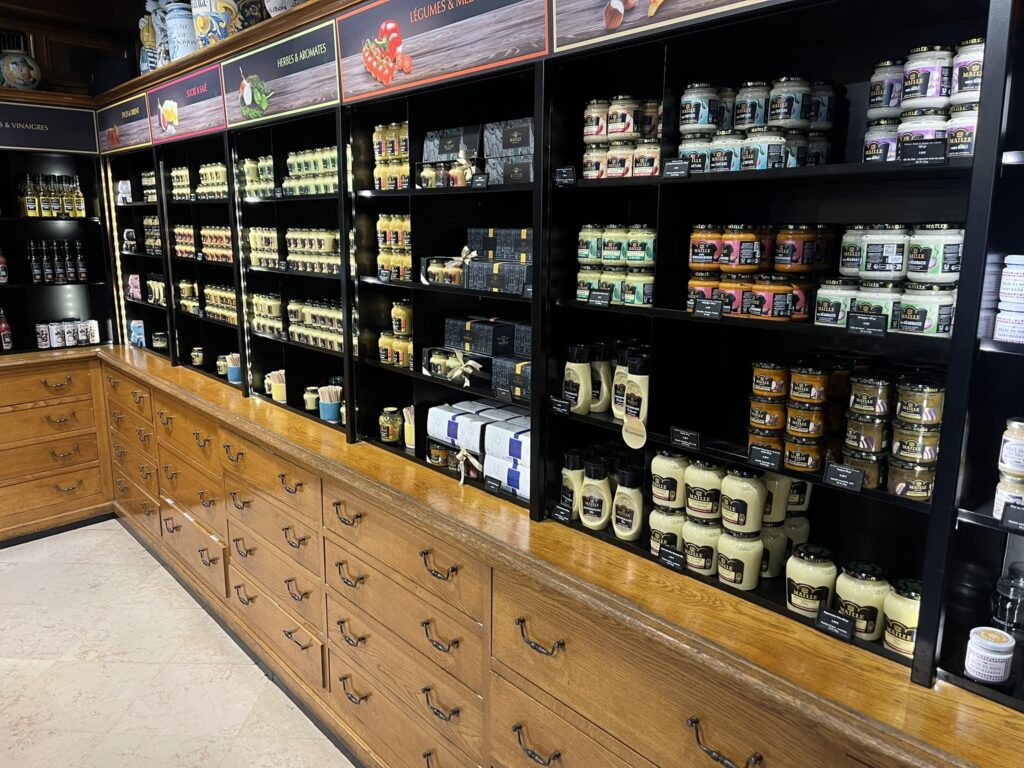
Mustard crocks hung in the window. Beautiful wooden cabinetry displayed many mustard flavors, many of which were available for tasting but are not sold in the U.S.
Most impressive was that the shop had a mustard bar with six mustards on tap for sampling. On tap! I was in heaven. They were all excellent.
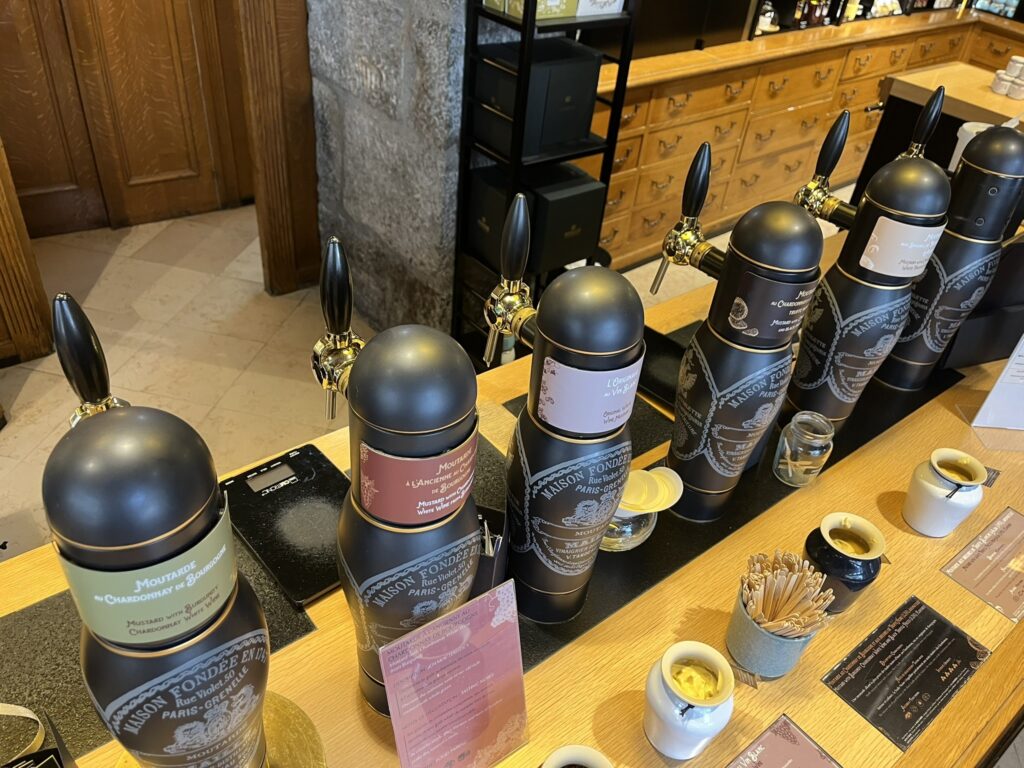
My faves were the black truffle mustard and the Burgundy Chardonnay. The former was very truffley (more so than the white truffle variety) and the latter was very strong. The shop also offered customizable mustard crocks, made while you wait.
Dr. Wine
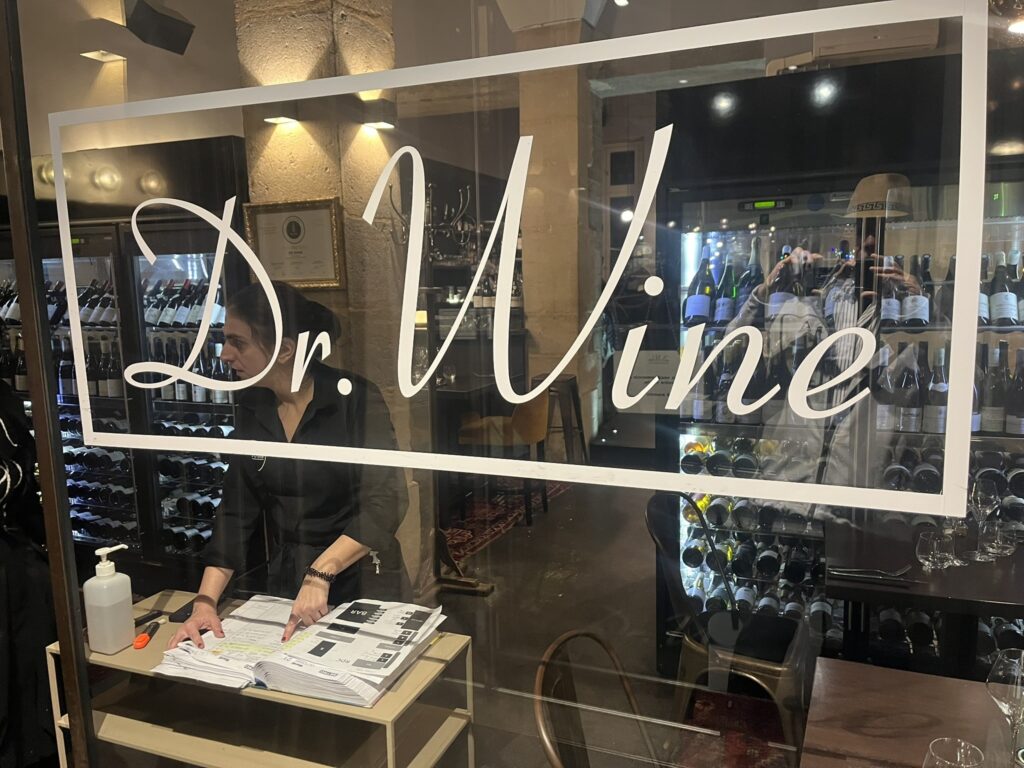
We’ve never been BOB (Big on Burgundy wines), but could become BOBs after visiting this great wine bar. The atmosphere is cool and polished, with hints of the Old-World.
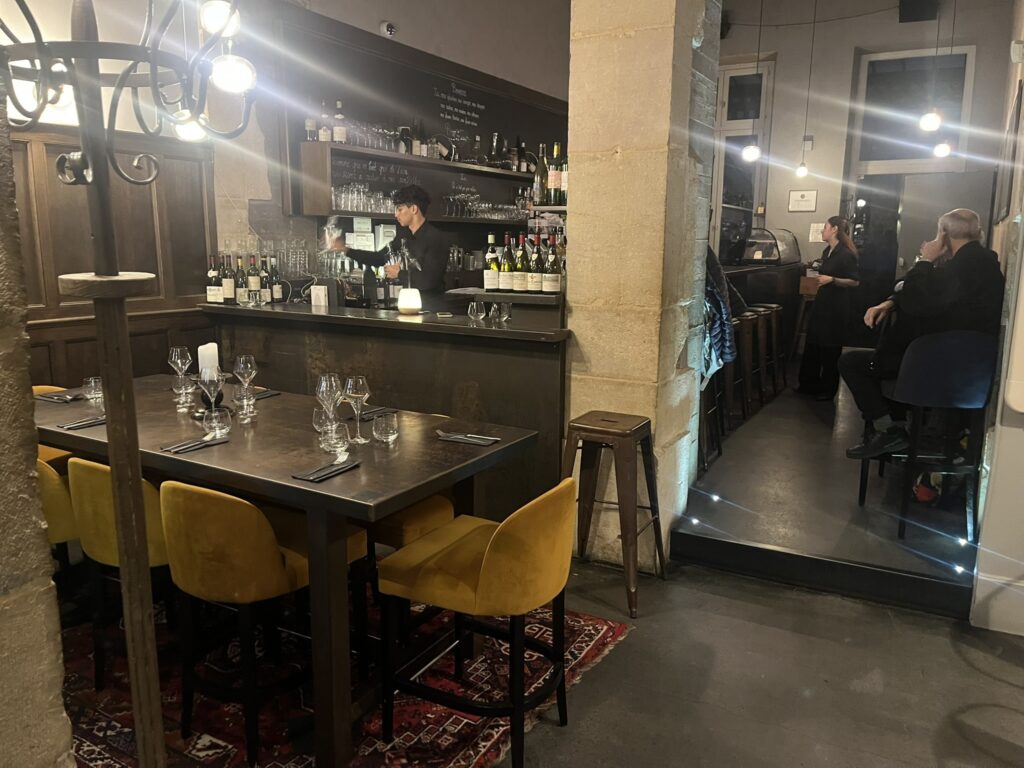
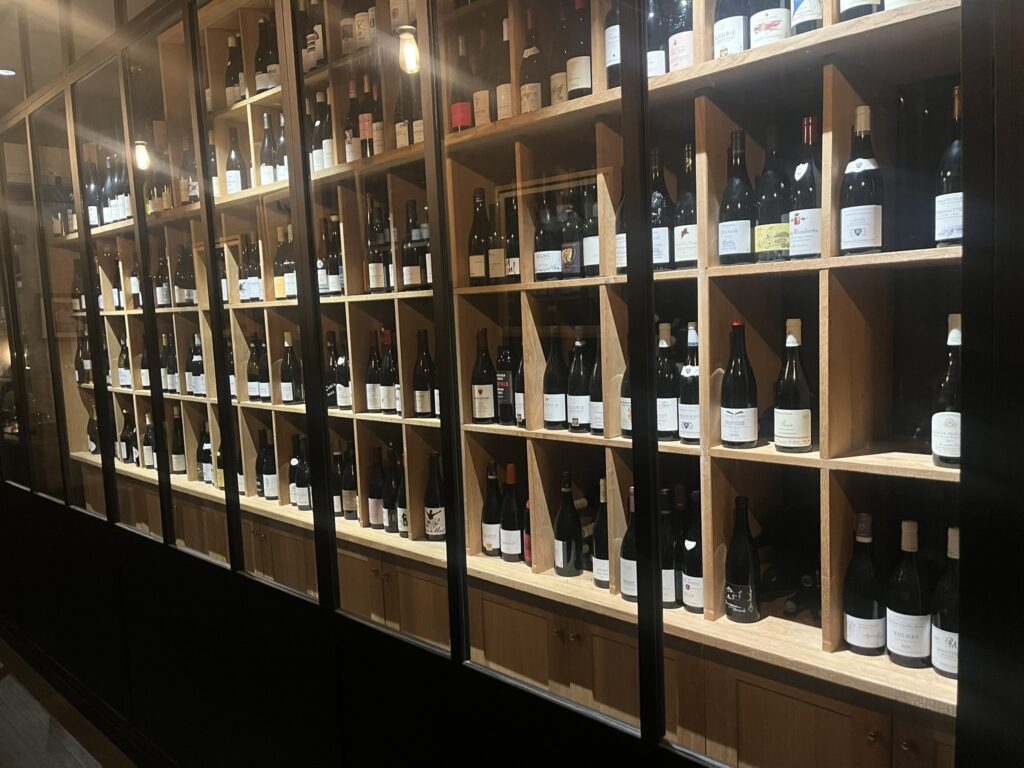
We sat downstairs but ventured upstairs for a peek at the impressive wine wall and wine-dominant dining room (I know what you’re thinking: what the heck does that mean? For the answer, see the photos).
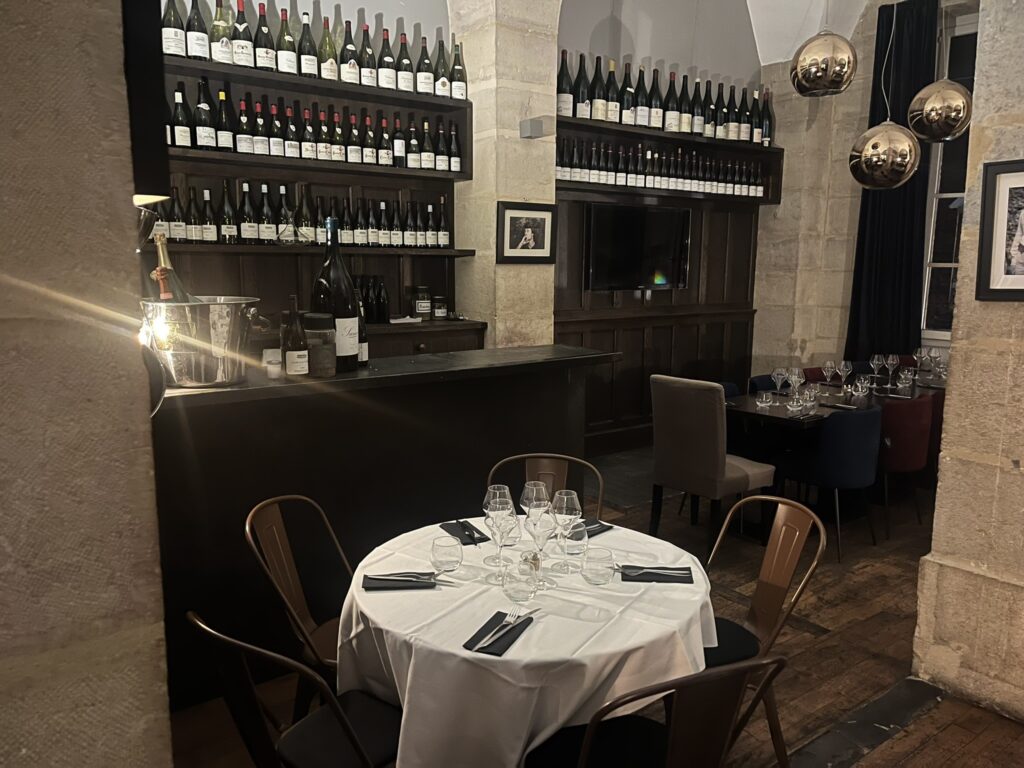
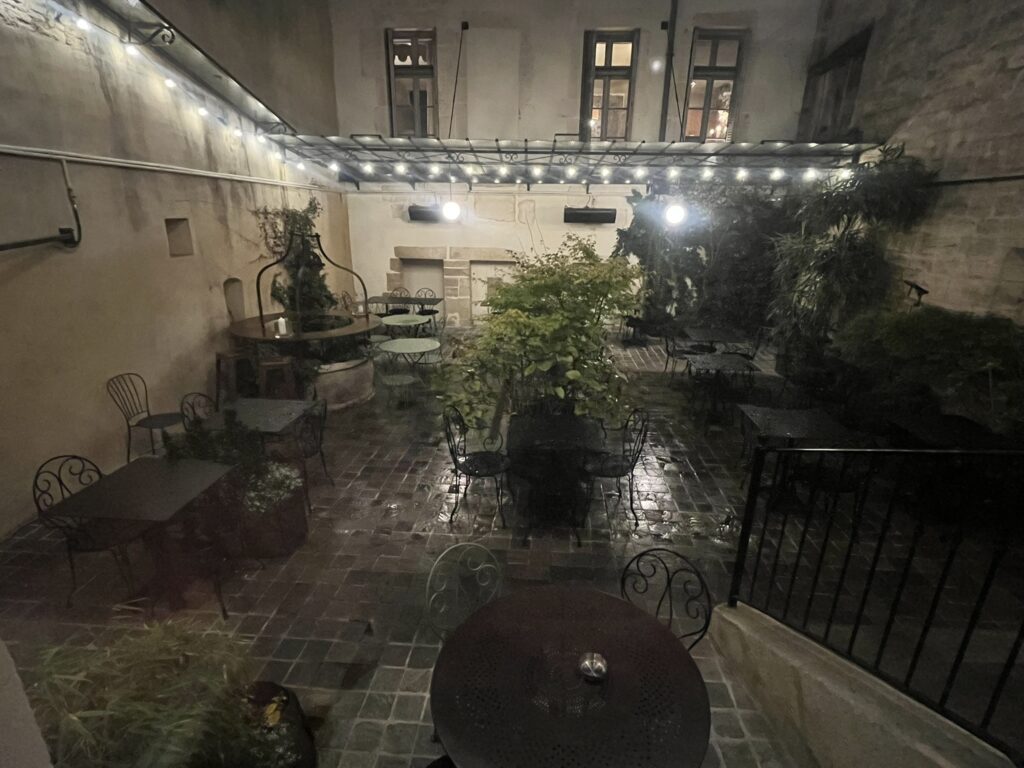
There’s also a big outdoor patio with heaters and what appears to be a retractable awning. But alas, it was retracted when we visited and therefore unusable because of the rain.
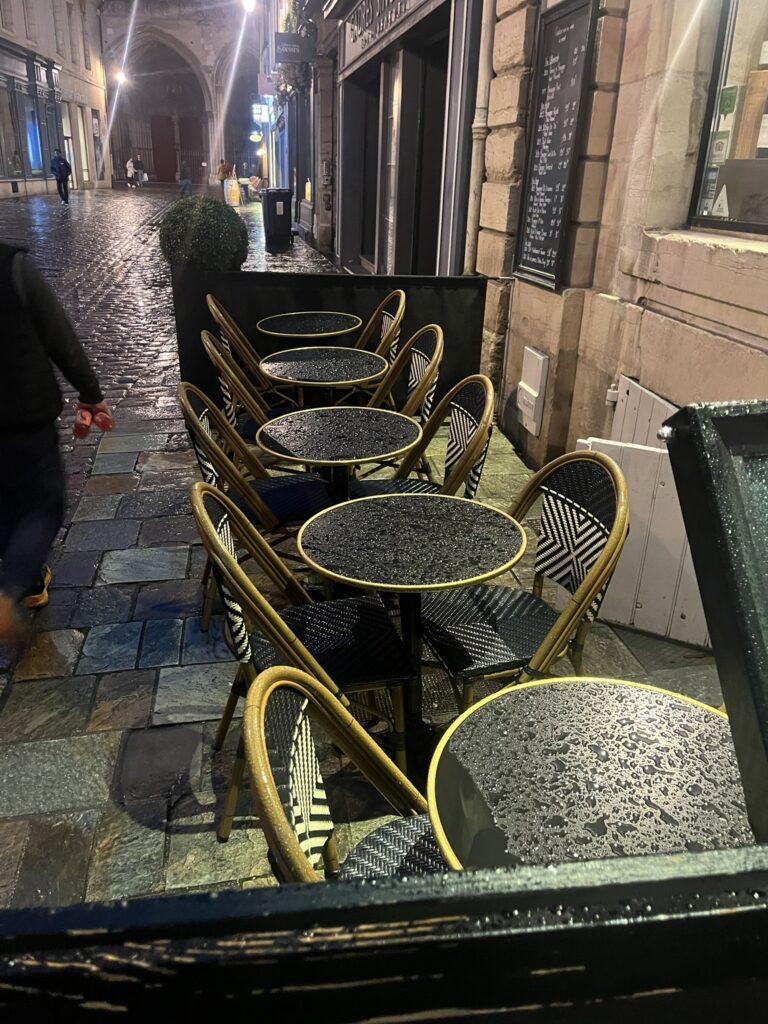
There were also several sidewalk tables outside the front door but they were unused for the same rainy reason.
This establishment serves both wine and food, but if you go only for wine, as we did, you can sit at the bar and consume nothing but vin rouge (or blanc if you so choose), to your heart’s content. The wine list is quite extensive (there are wine bottles everywhere, in every nook and cranny) and many wines are offered by the glass, which is what we were hunting.
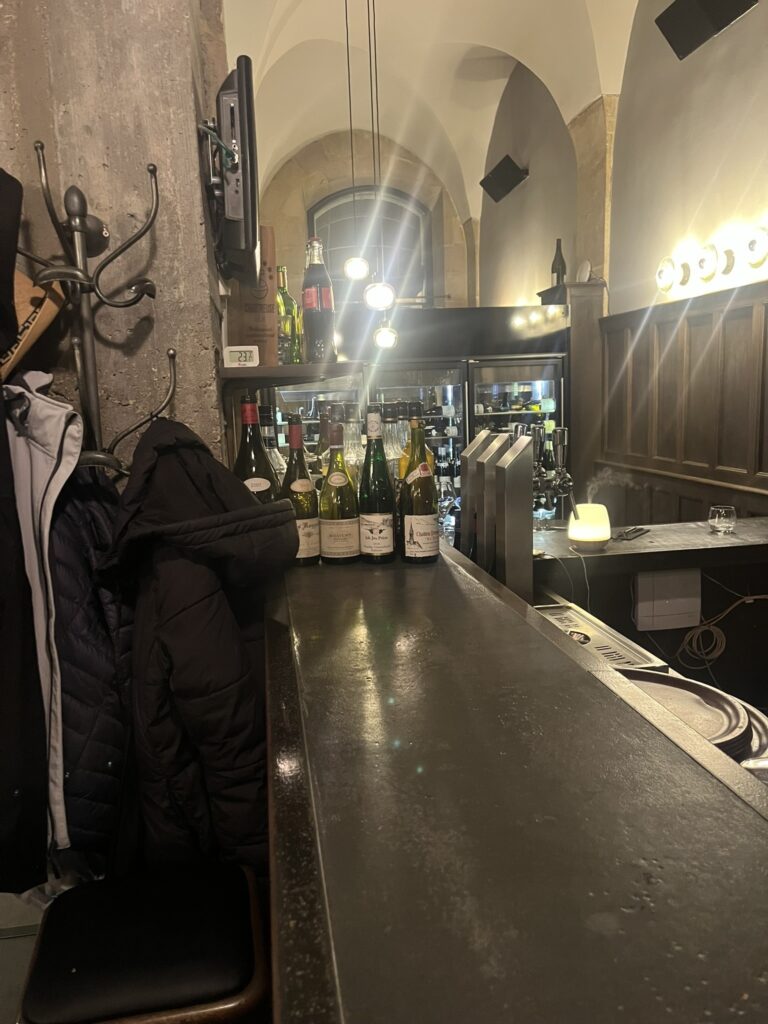
We ordered four burgundies by the glass, two for each of us, and cross-pollinated, so we were each able to drink about a half glass of four local wines. They were all exactly as the Doctor (Wine) ordered.
The physician’s assistants behind the bar were all hyper friendly and made Herculean efforts to understand our terrible French and only slightly better English.
If you are interested in food too, there is a small but we’ll-curated menu of shareables (6p to 8:30p only), entrees, mains, and desserts. We loved this place.
Speakeasy
We booked this elegant restaurant based on the photos we saw online and our hotel’s recommendation. Why? It reminded us of a brothel.
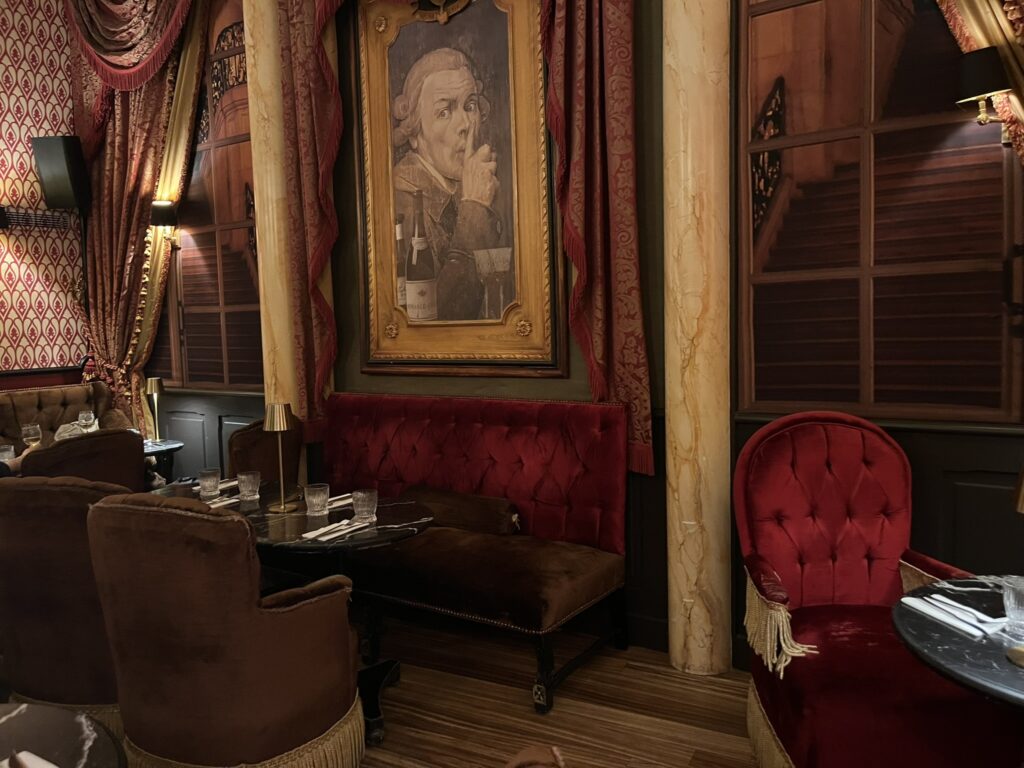
We have often wondered where have all the brothels gone (wasn’t this the basis for a Pete Seeger song?). The answer is that one of them seems to have become Speakeasy. And we mean this in the best way possible. After all, Speakeasy? Really? It’s a short hop.
Seriously, we expected a basement restaurant, or one behind a secret door, but it was at street level adjacent to Les Halles market (see above).
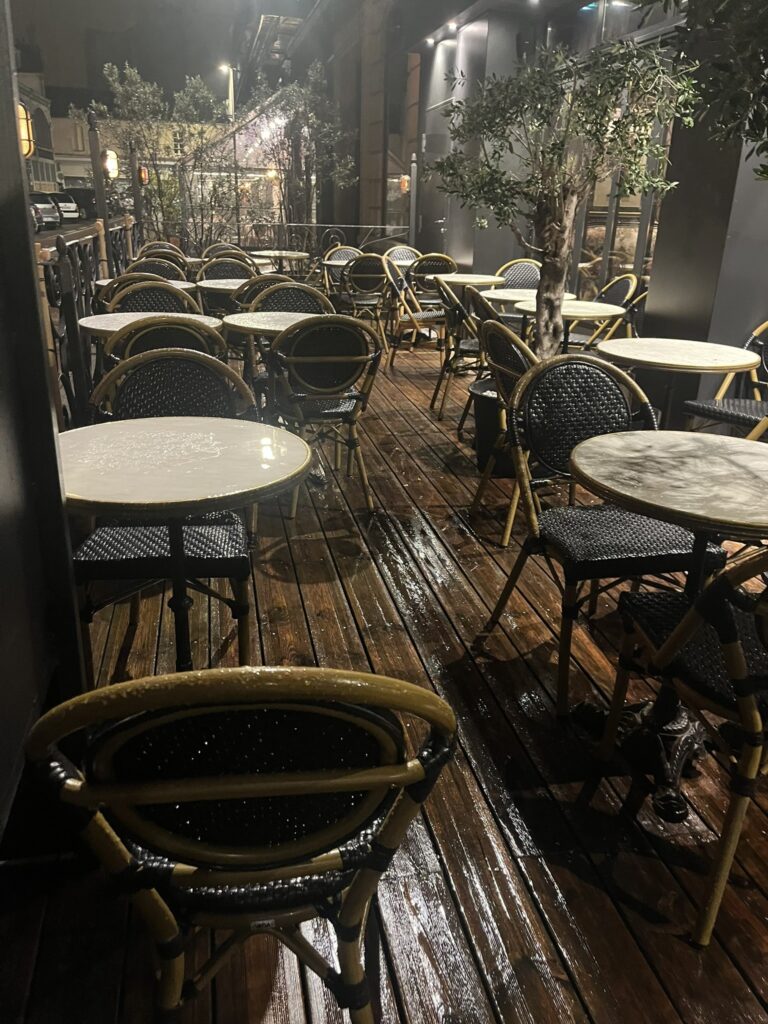
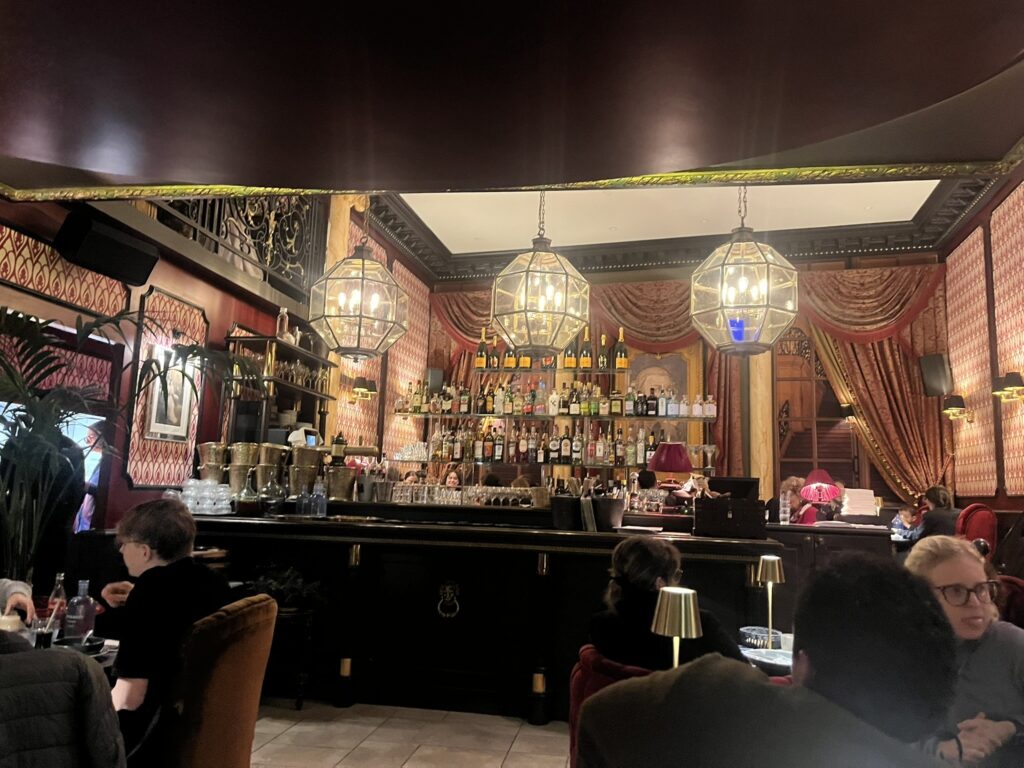
Brush past the ample outdoor tables (rained out on our visit) to the beautiful red velvet furniture and flocked (or flocked-ish) wallpaper inside, managed, as it were, by the semi-central modern-day Madam, the bar.
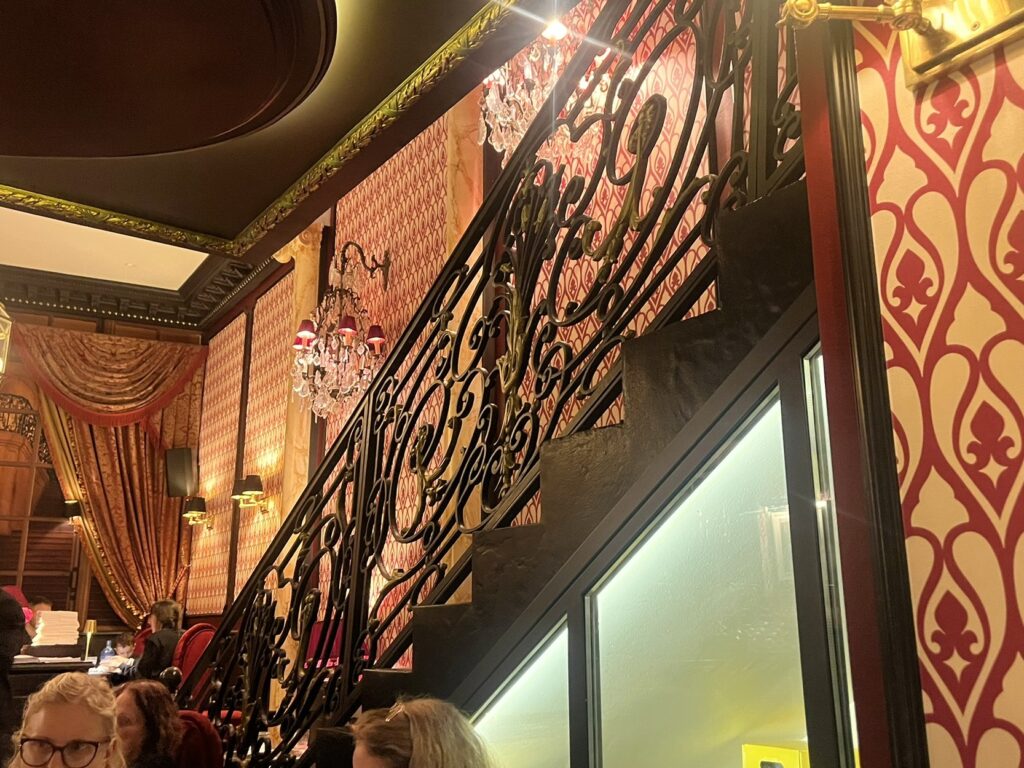
If the downstairs dining room is full, as it was when we visited, follow Cole Porter and climb the stairs to the second floor dining room.
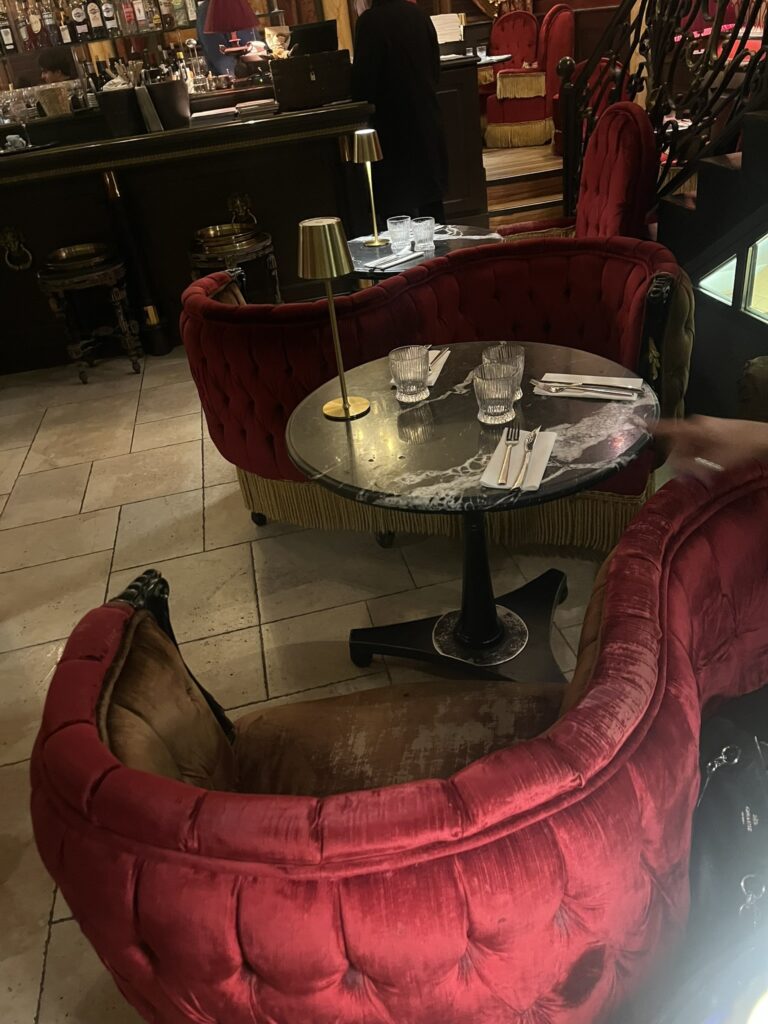
We wanted to be in the busy downstairs dining room, and luckily a red velvet courting bench open up (the S-shaped courting bench was designed to allow conversation or kissing, but no serious hanky panky — not very brothel-esque). Sarah sat on one side of the S, facing me across the table. Some guy sat on the other side of the S.
We started with a bottle of local wine, a Burgundy of course (follow the link to find Burgundy at good prices). We ordered the three-course meal. For entrees I ordered the Oeuffs Meurette (egg poached in Meurette sauce, which is basically Bourguignon sauce) and Sarah ordered the chicken liver mousse.
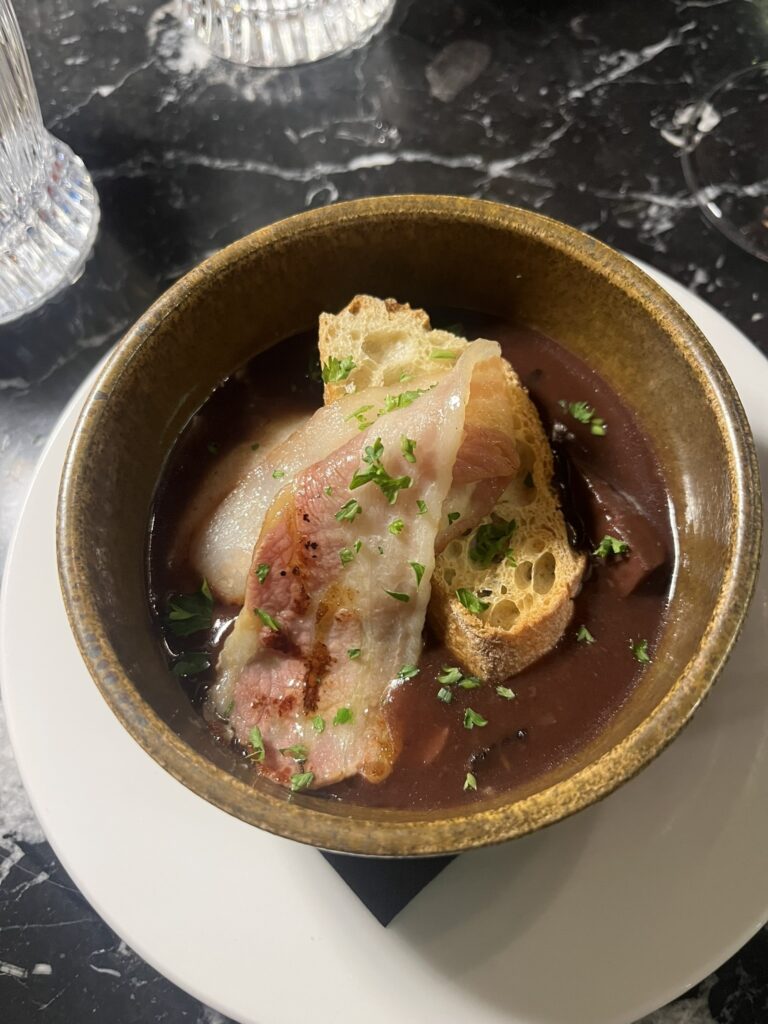
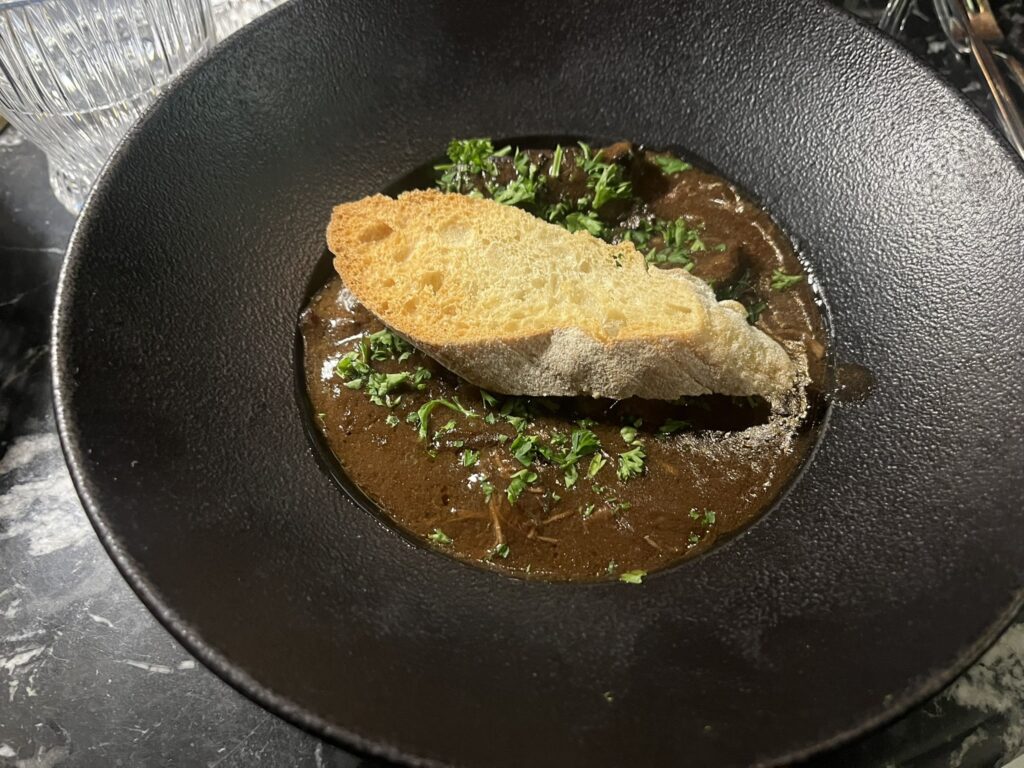
For mains I ordered the Oeuffs Meurette and Sarah ordered the salmon. All were very local (except the salmon) and all were very good, and rich. My mistake was ordering both the Oeuffs and the Beef, which meant that I was a bit overly Bourguignon sauced.
For dessert we both ordered the molten chocolate cake. Unlike most U.S. versions of this dessert, which are usually overcooked and not molten at all (or only a little), this one was perfect: the batter was baked just enough to form a firm outer shell, with the remaining batter uncooked and molten on the inside. Kudos to the pastry chef.
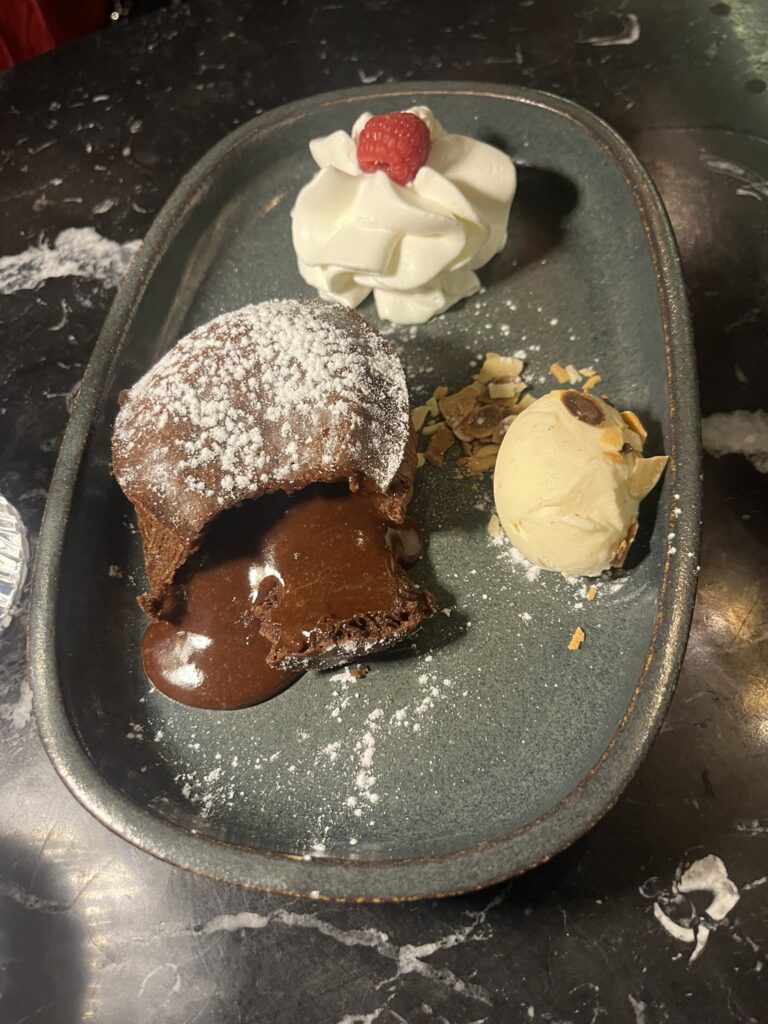
We enjoyed our dinner at the brothel-esque Speakasy very much, a great pick for our 25th Anniversary.
Sébastien Hénon | Chocolatier Dijon
This amazing patisserie and chocolate shop is doing something I have never seen before: filling color-striped freshly baked croissants with one of 12 different flavored pastes.
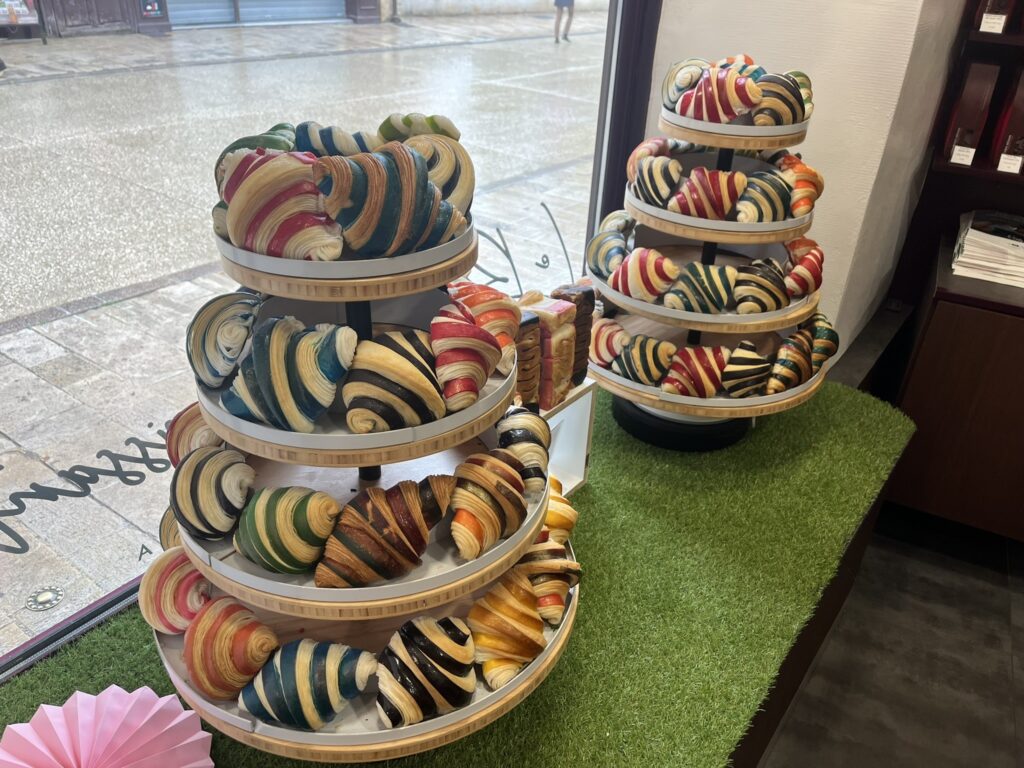
Potential goldmine in just the right U.S. location.
The color stripes on the croissants do not have flavor. The croissants themselves have no filling, except the black-striped croissant, which has a chocolate bar inside.
The shop is set up with 12 canisters and pump devices, each one filled with a different flavored paste, such as cherry, coconut, salted caramel, raspberry, and banana.
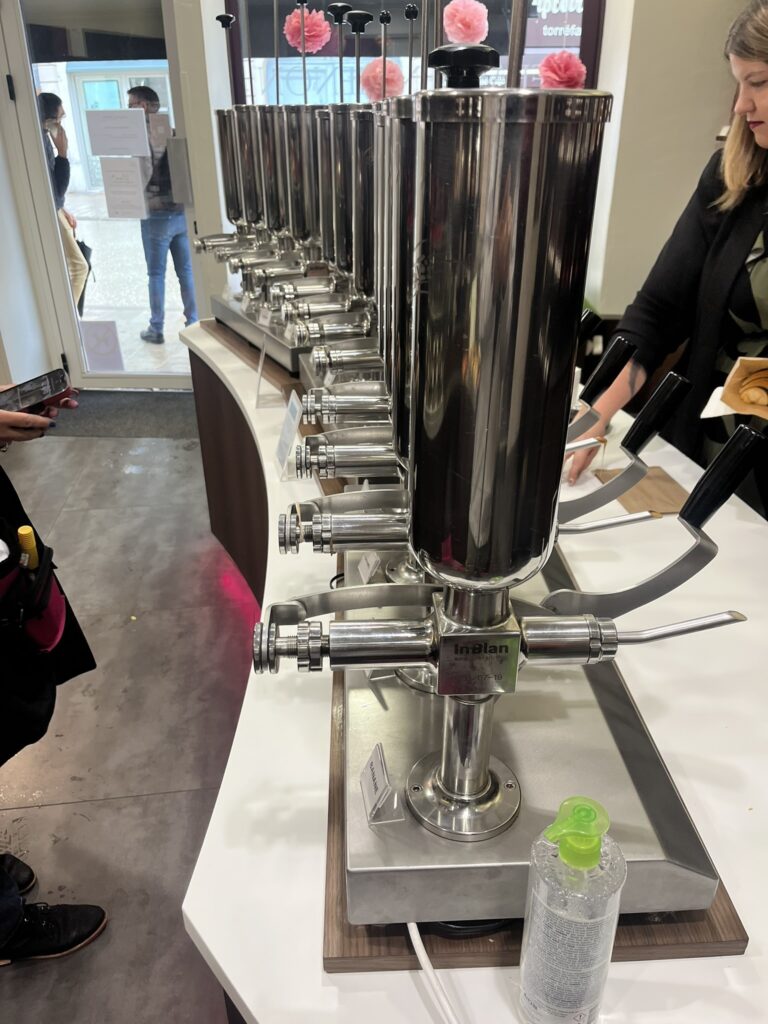
The pump contraptions have a long metal tube that inserts into the end of the croissant.
After you choose your croissant, the Mademoiselle du Croissant inserts the tube and pumps it generously full of the cream of your choice, which squeezes out as you bite into it.
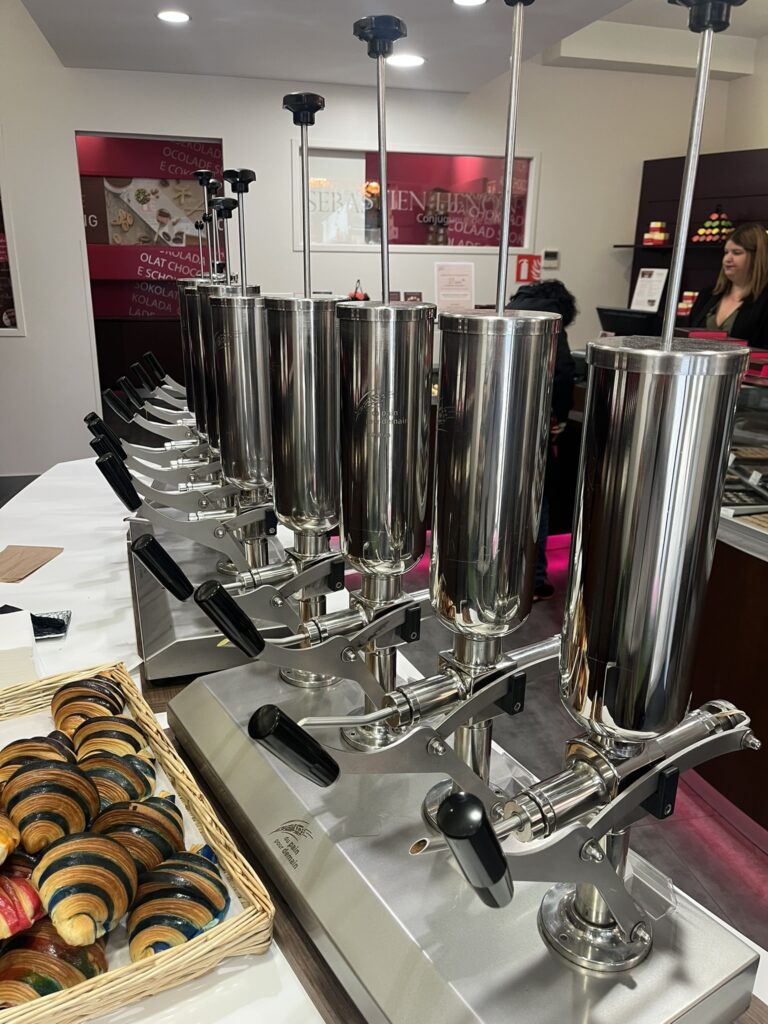
We chose the banana and the croissant with the chocolate bar. The banana filling was like over-ripe real banana or strained banana baby food (I used to eat the latter, long after I was a baby). Tres yummy.
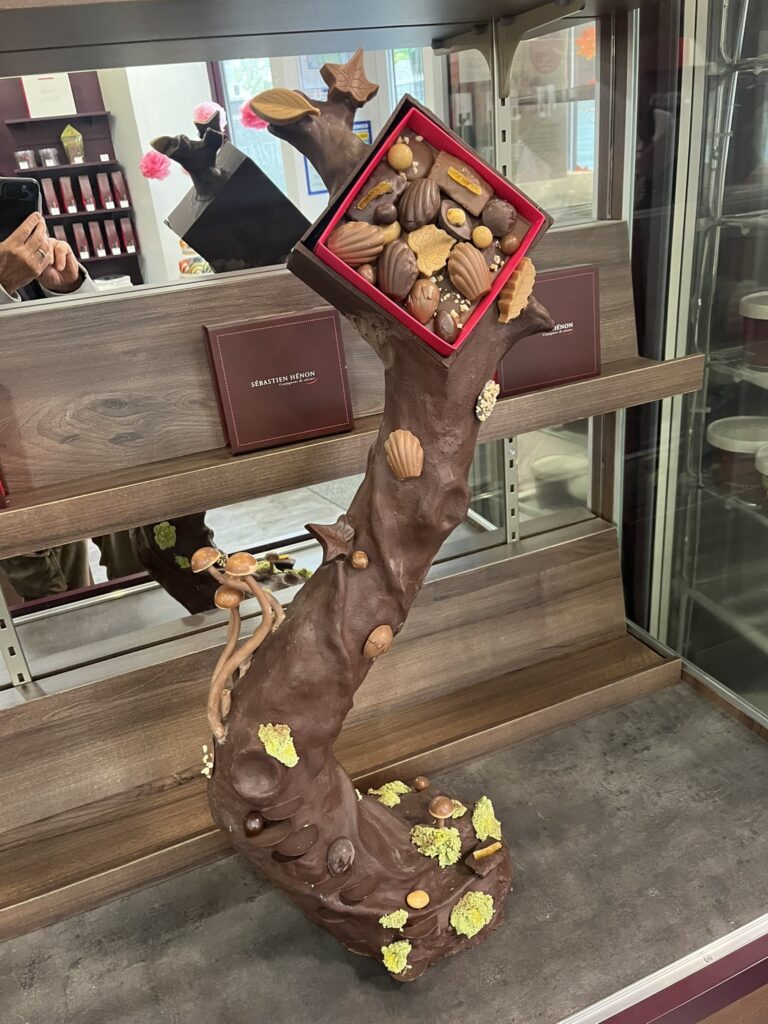
The shop also sells macarons, packaged chocolates, and artisanal chocolates by the piece, and had an amazing chocolate tree on display.
For the maker of the pump equipment, study the photos closely. If you open a shop doing this and make a fortune, I expect free filled croissants for life.
Cité Internationale de la Gastronomie et du Vin
The name says it all. Just outside the old-town area, on the other side of the train tracks, sits a huge complex of food-and-cooking-related shops, a movie theatre, restaurants, school of Burgundy wines, cultural and educational attractions, and exhibitions (such as “The Little Theatre of Fine Food and Drink”).
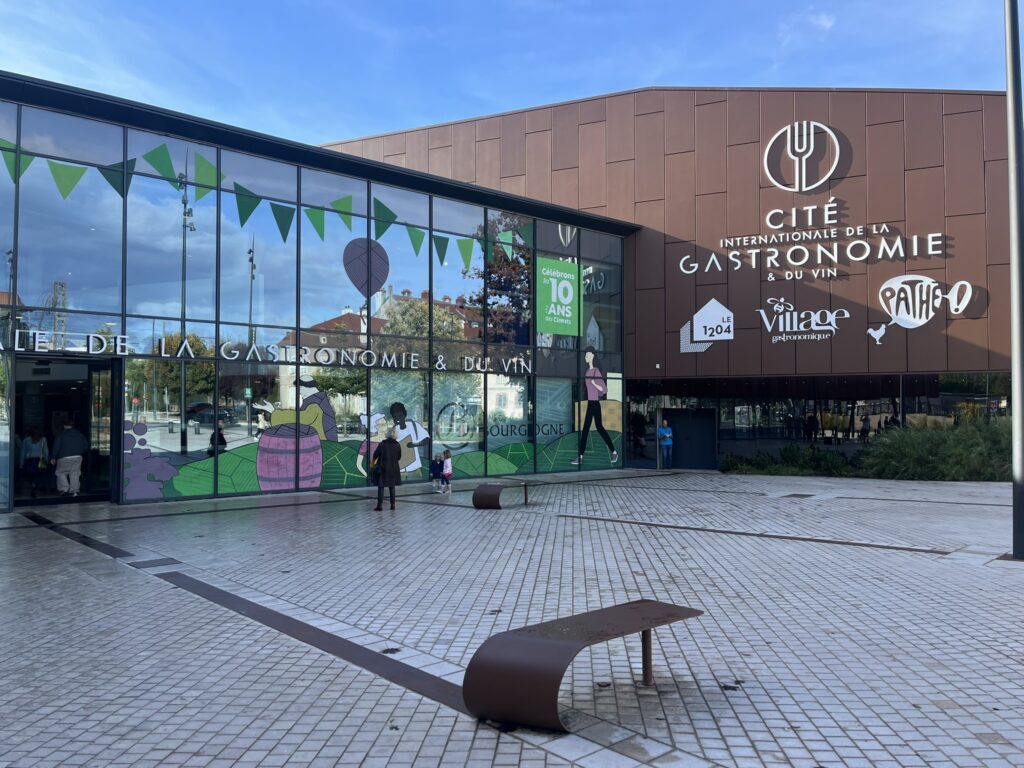
There’s quite a lot of the latter, and you could spend an entire afternoon here (maybe most of a day). Admission is free.
Walk into the main building, which houses the cultural and educational stuff. Enjoy whatever attracts you. Then pass out the other side into the “Gastronomic Village”, which is an open air collection of shops and restaurants.
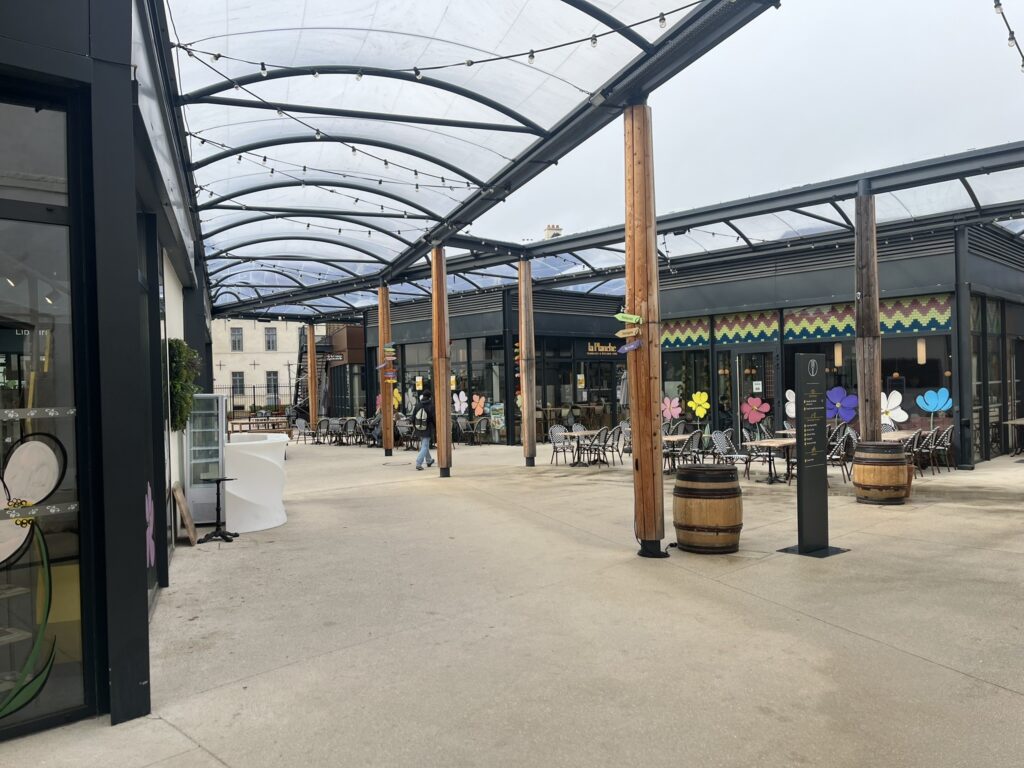
We strolled the shops (mustard (of course), cheese, cookbooks (mostly in French), kitchen wares, dining wares), enjoyed freshly baked mini baguettes 🥖 with ham, cheese, butter, and cornichons from the Boulangerie, then tasted wine at the La Cave de la Cite wine tasting room (see below).
It was raining when we visited, so we could not fully experience all of the outdoor seating. But this is a great place for gastronomes and oenophiles.
La Cave de la Cité
If you love wine, as we do, this is a truly wonderful place. Around the perimeter of the large main room are 140 wine dispensers.
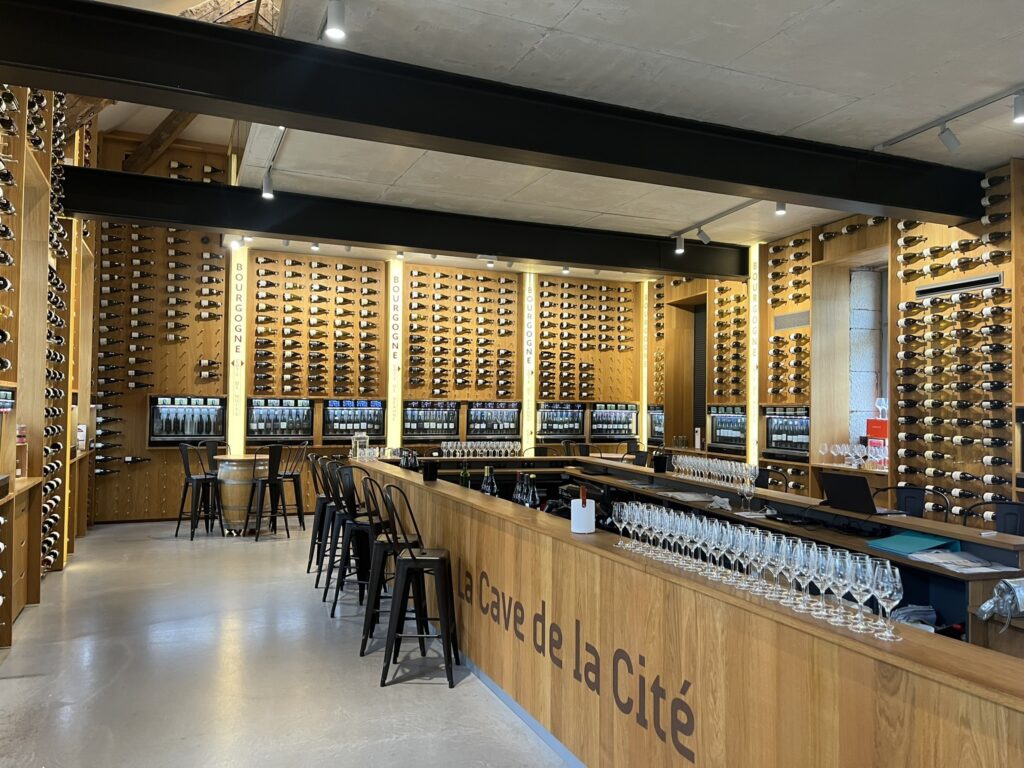
The wines are half red, half white, mostly Burgundies. But there are a few choices from elsewhere in France and the world.
You will be given a wine glass of quality glassware. Buy a card from the Mademoiselle du Vin and load it with as much money as you want. Insert the card into the dispenser and choose the wine you want to taste and the size of the tasting, small, medium, or large.
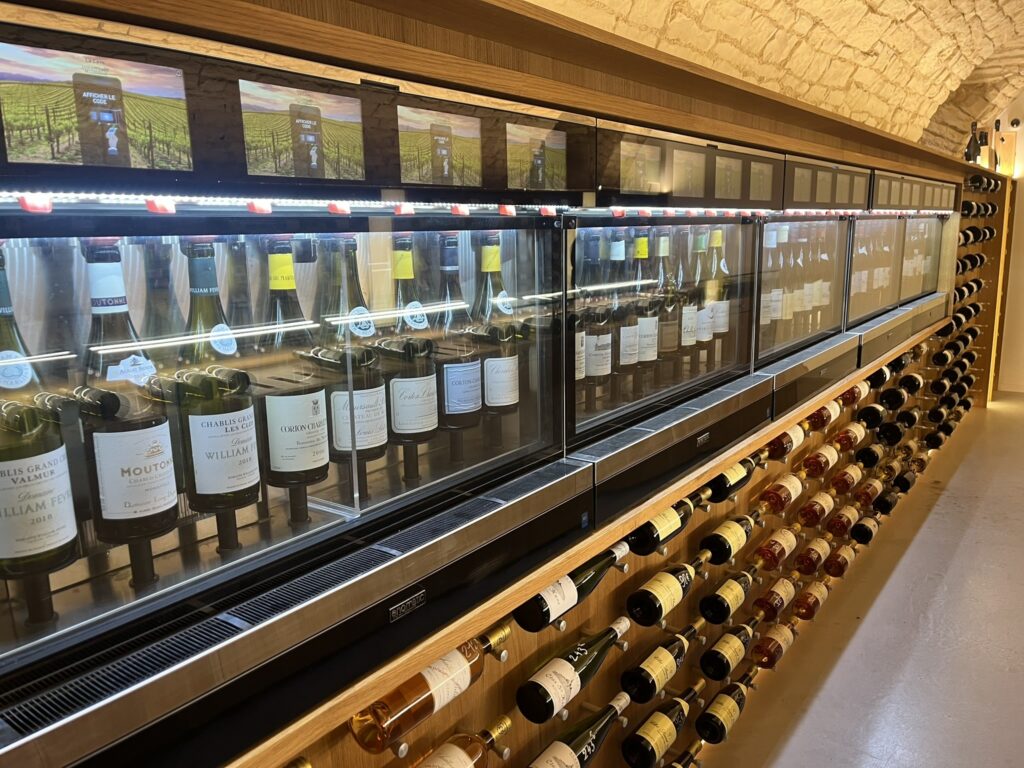
The dispenser subtracts the price of your wine and size choice. The card can be reloaded and you will be refunded any unused value on the card. Each wine may have a different price.
In the lower-level cave are 40 more dispensers for high-end wines.
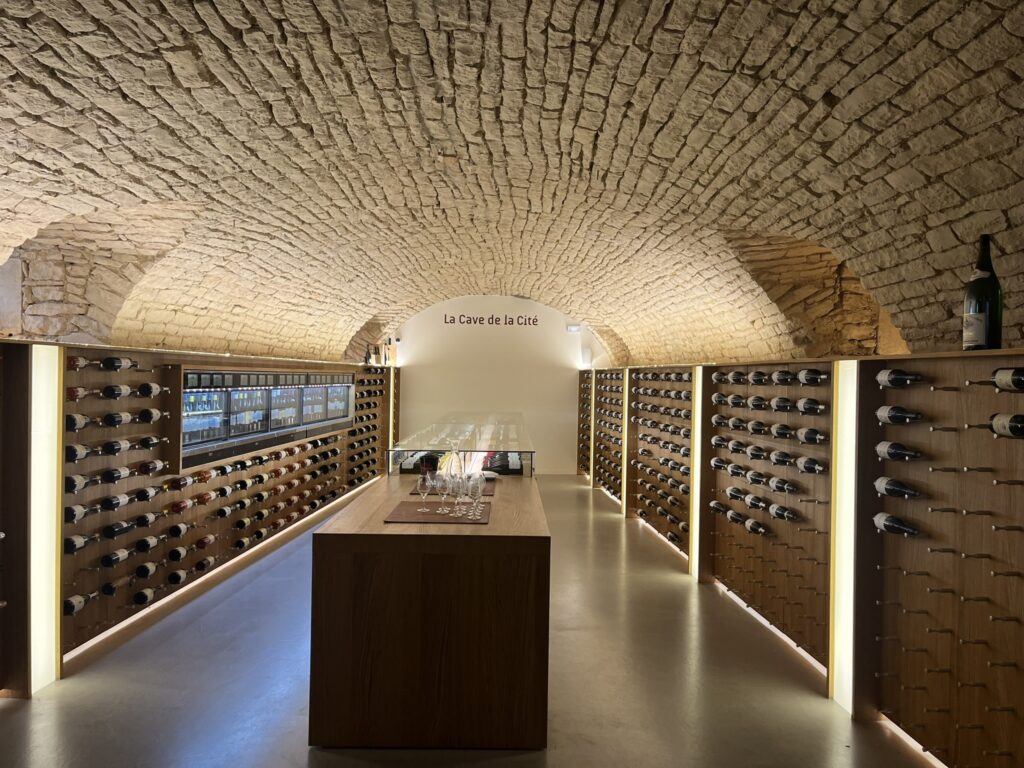
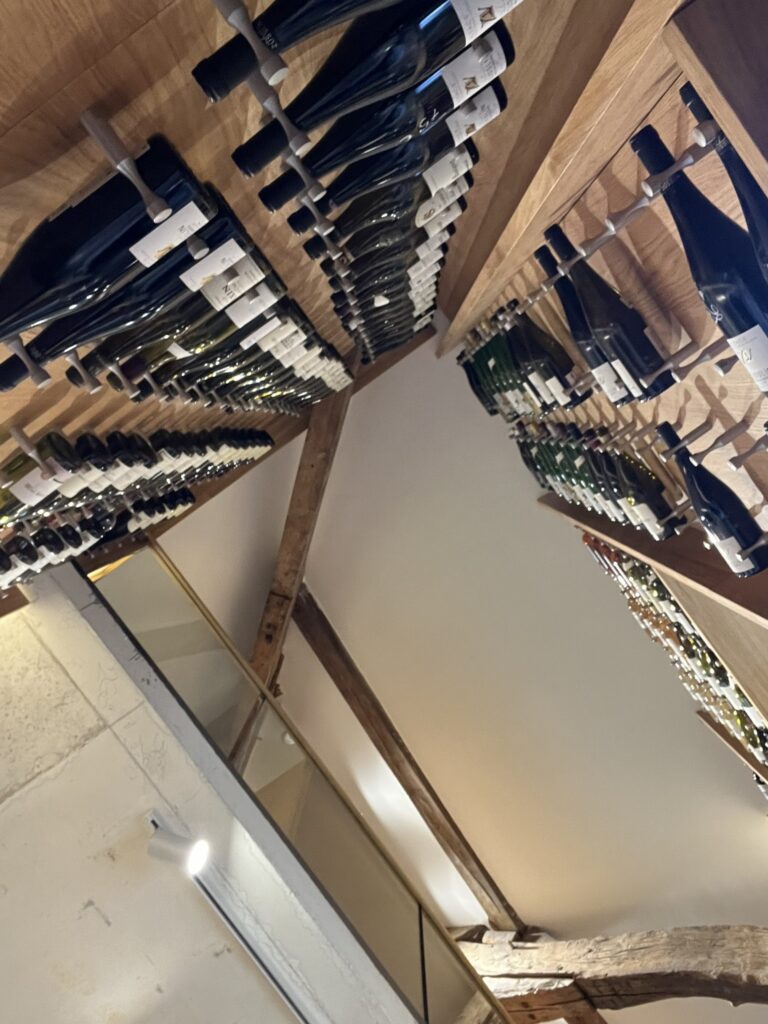
The facility itself is beautiful: soaring wood walls with floor-to-ceiling wine bottles, post-and-beam roof structure, wine barrel tasting tables, a central tasting counter with metal stools, arched stone cave for the high-end wines, an upper-level tasting area with big tables, and plentiful outdoor seating on an elevated deck.
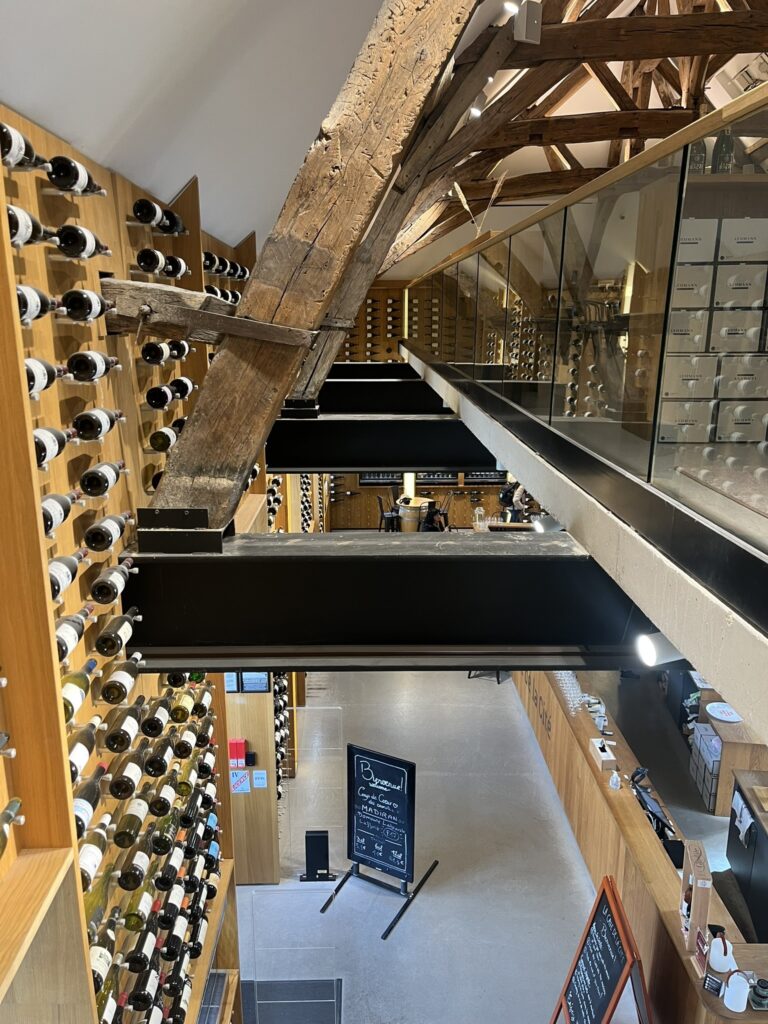
The Rolling Stones quietly serenaded us while we sipped. We tasted 10 wines like this: we chose 5 sets of two wines in the smallest sized pour, 4 sets on the main floor and one set from the cave. We shared each glass, half and half. This way, we controlled both the overall cost and quantity consumed.
All of the wines are also available for purchase by the bottle, as are wines that are not available for tasting, including an impressive collection of high-end bottles. To buy Burgundy wines (or any other wines) at good prices, click here.
Creative Workshop Of The Real Moutarde De Dijon
Everyone knows that Dijon is known for its mustard. But much of the world’s Dijon Mustard doesn’t come from Dijon. To learn this and much more about the famous mustard, to learn how to make Dijon mustard and actually make it yourself, and to earn a diploma certifying your new-found mustard expertise, sign up for the 1-hour mustard-making class (sign up at the Tourist Information office).
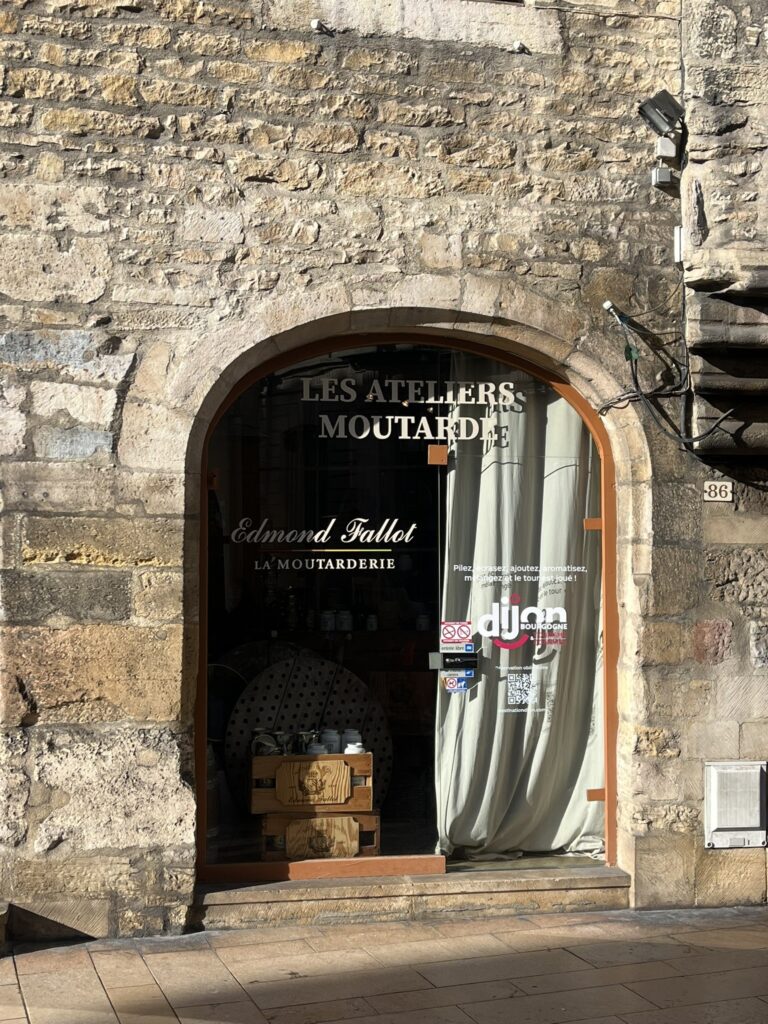
Our class had about 12 people in the intimate classroom located in an ancient building, which was filled with mustard lore and accoutrements.
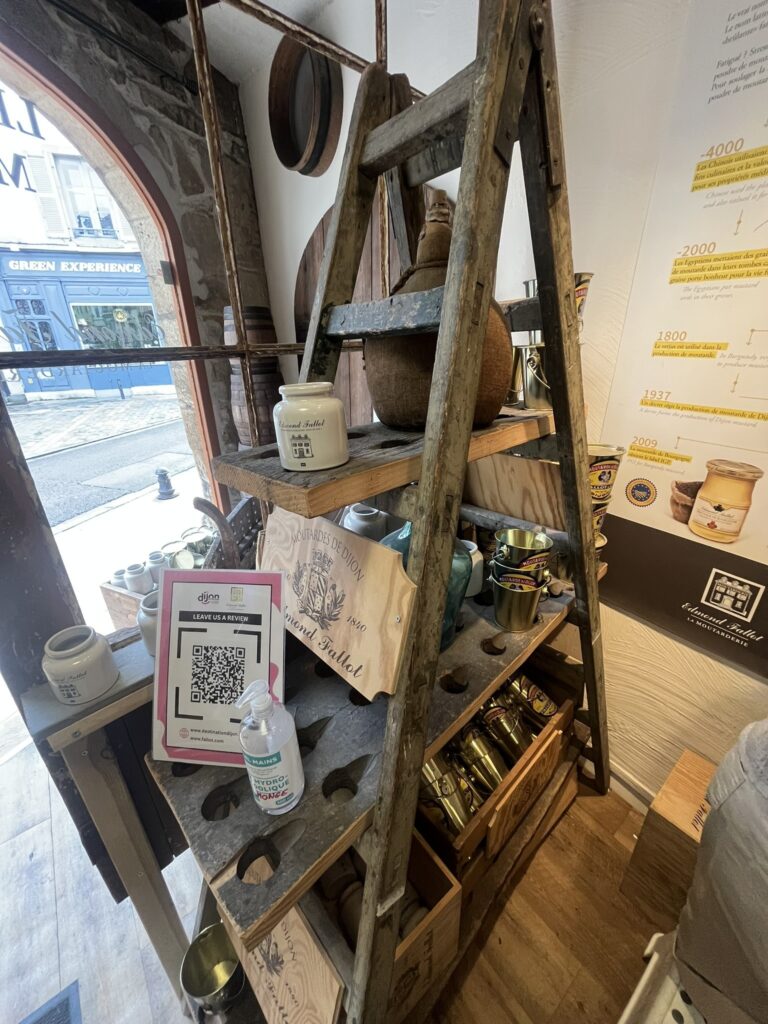
The instructor’s English was good (everyone else in our class was French) and she was very friendly, knowledgeable, and helpful.
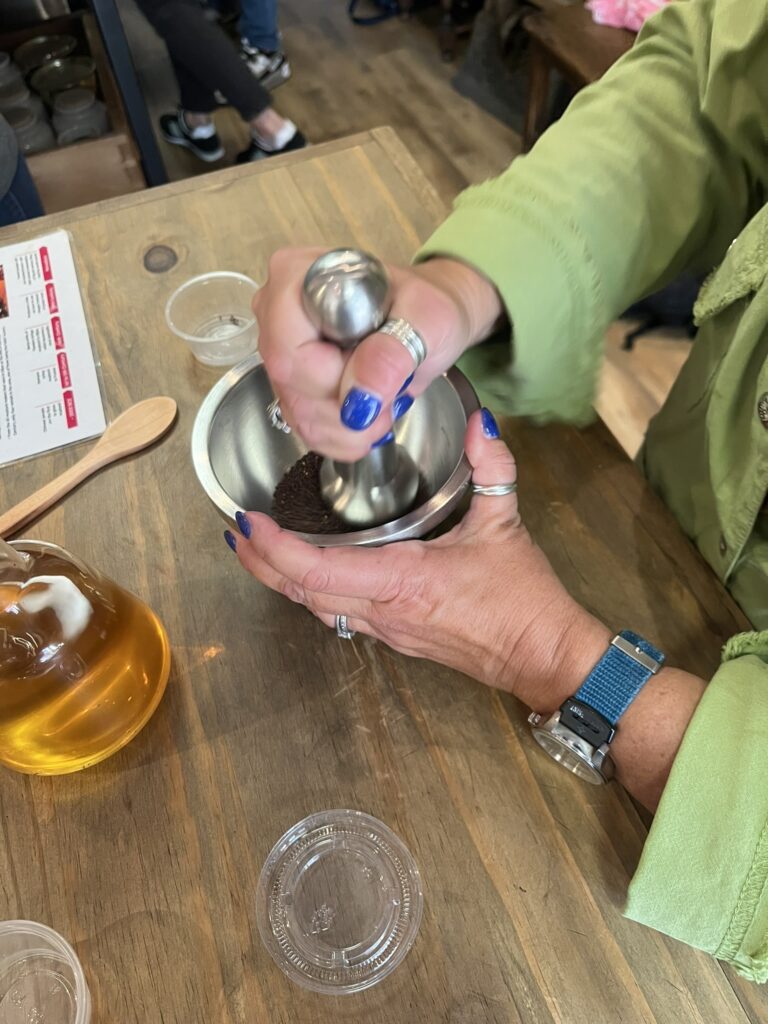
After the class, visit one of the town’s mustard shops, show your diploma, and receive a gift of Dijon mustard.
This was great fun and a quintessential Dijon experience.
Pain D’Epices Mulot Et Petitjean
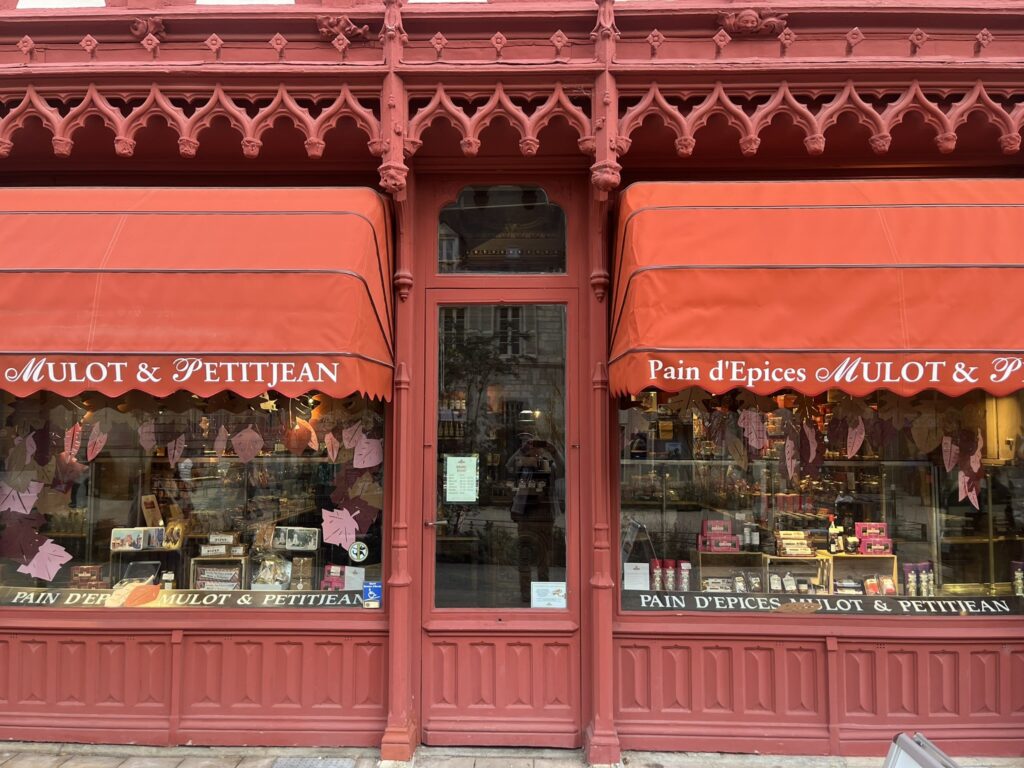
This company first started making what it calls “gingerbread” in 1796. But this isn’t the gingerbread used in the U.S. for gingerbread men and Christmas houses. This is ginger bread, not gingerbread (even though they call it “gingerbread” — I make the distinction to make the distinction).
It’s more of a spiced bread, less overtly gingery, and is sold in many forms, such as cakes, rolls, fruit-filled biscuits, and even powder (which is used for making mustard, pie crusts, and breading for savory dishes).
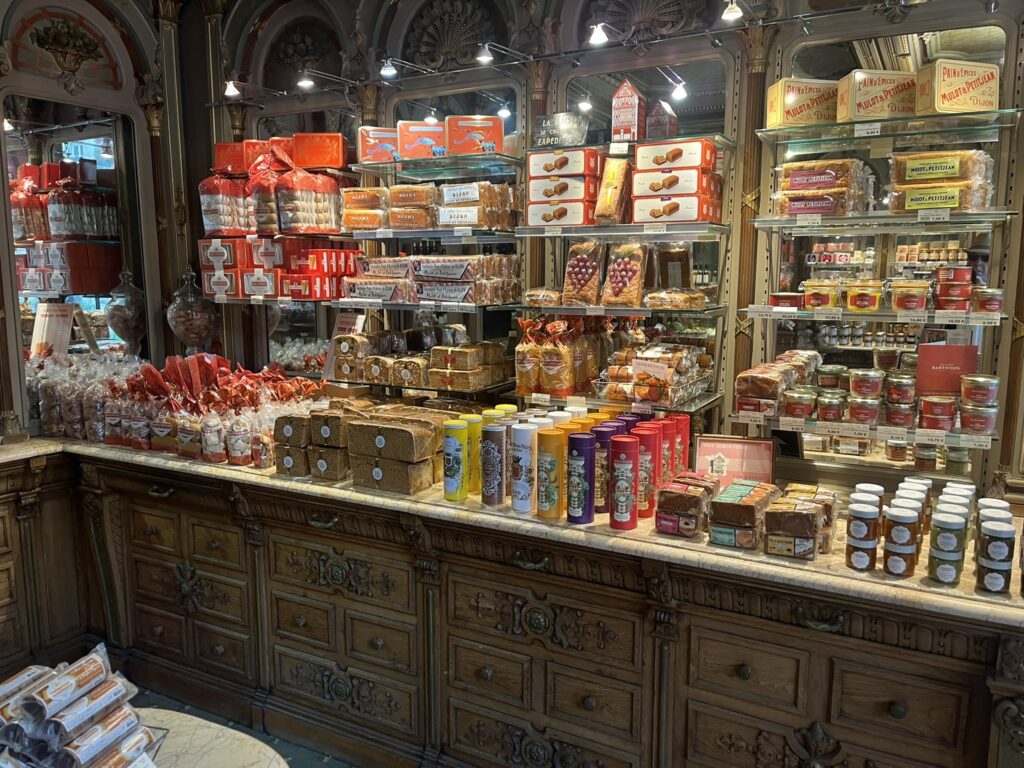
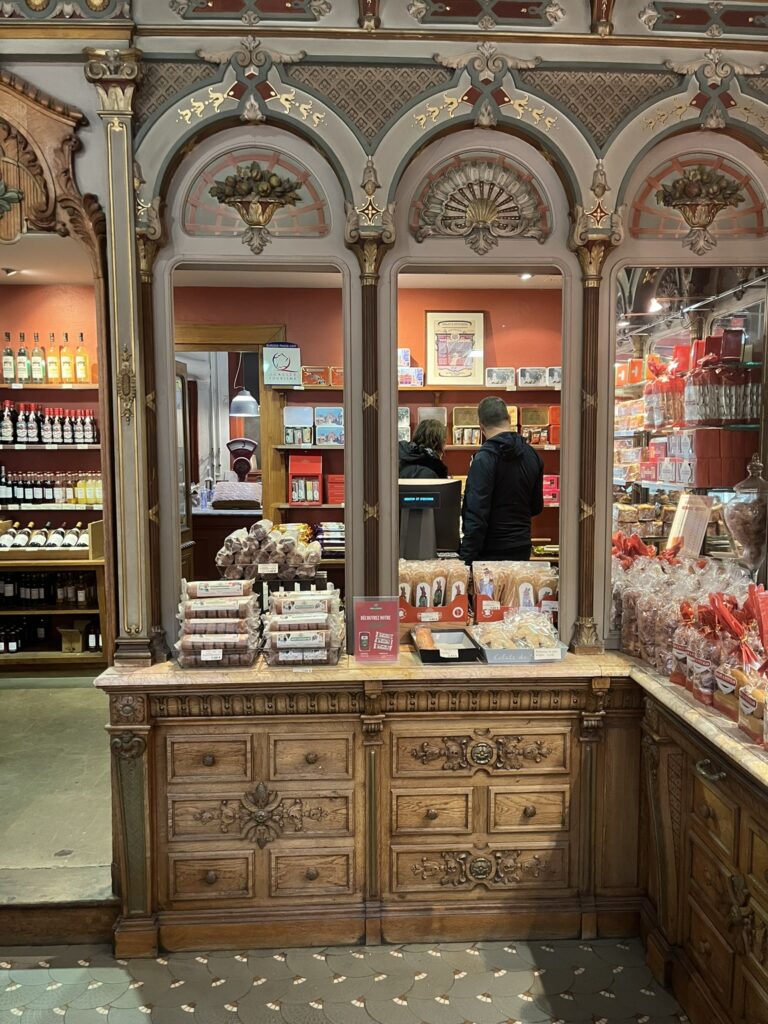
The shop itself was once the factory, but is now a retail store. Although this is France, not England, the interior looks like it’s straight out of a Dickens novel. It’s full of history, charm, color, sweet and spicy aromas, and every possible form of baked ginger bread product.
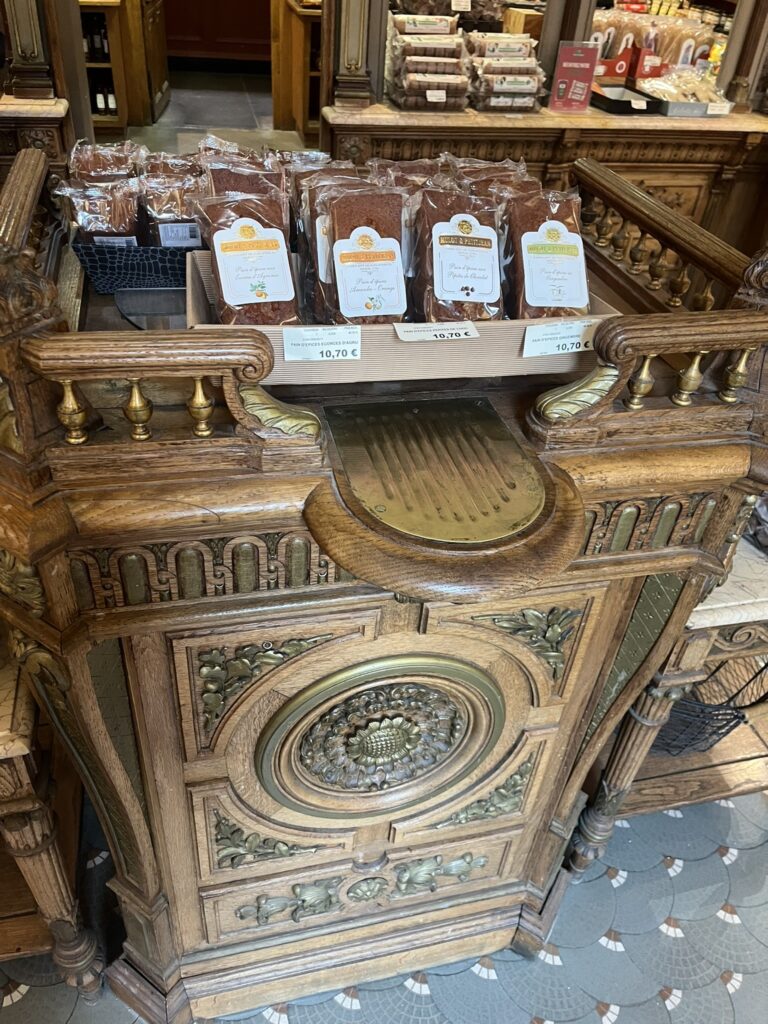
Antique wooden cabinets below with shelves of colorful products above, marble-topped antique furniture, and ornate arched interior windows revealing one room to another.
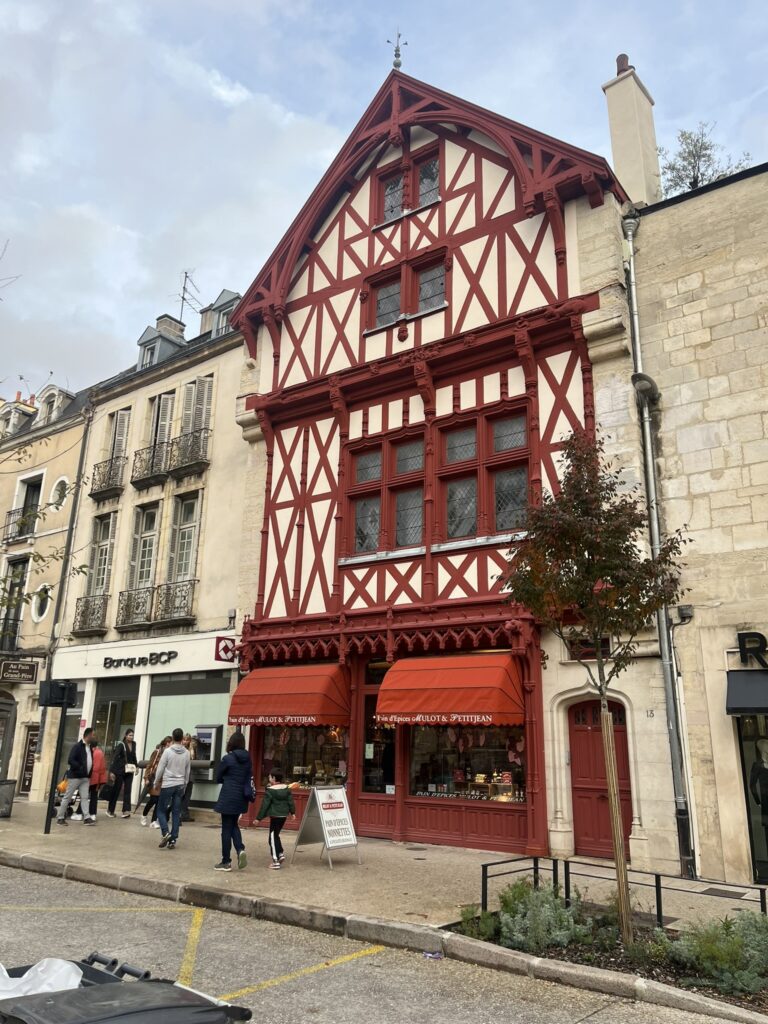
But if you want something like American-style gingerbread, check out the building before you walk in, from across the street. The reddish and white-ish half-timbered building would make a great Christmas house.
For a product unique to Dijon and its history, be sure to try this ginger bread and take some home, as we did.
Le 314 – Les Restaurants Nicolas Pierre
This protected building was once Dijon’s fish market and is so named because it is 314 kilometers to the Eiffel Tower. It’s not clear if it was designed or only inspired by the engineer of the famous tower.
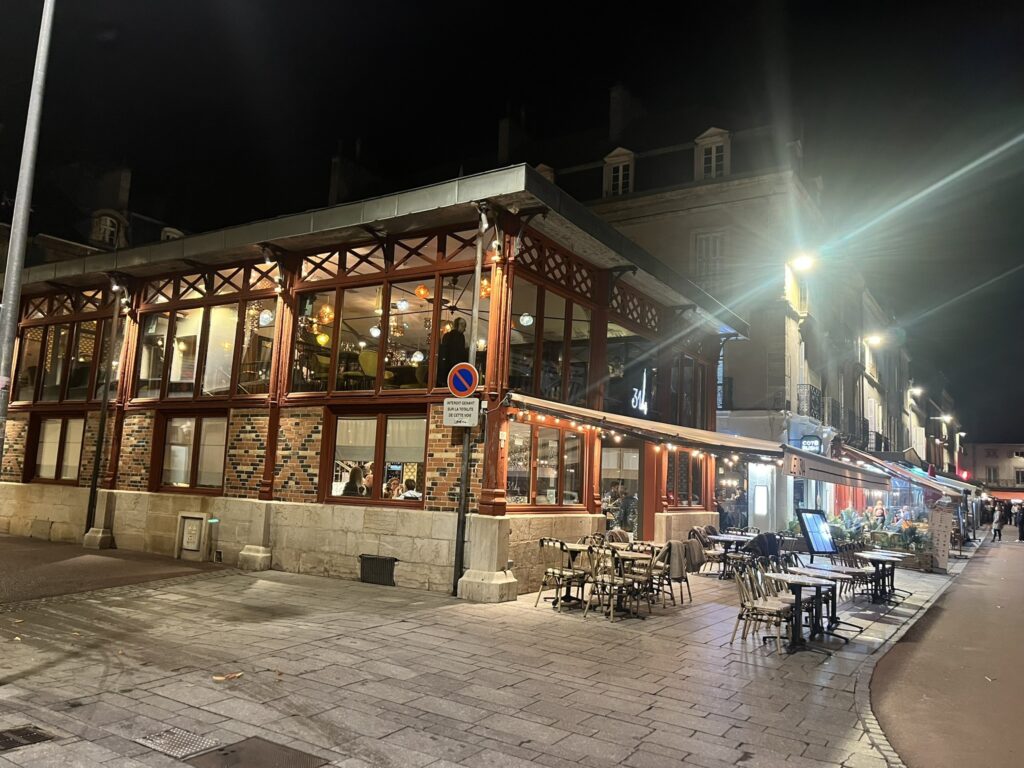
It is elegant throughout, in a 19th Century way, and combines an Eiffel Tower motif on the second floor ceiling, vineyard and vine motif on the floor, and the original steel (or maybe iron) rods tieing the corners to the center, much as the structure of the Eiffel Tower is exposed to view.
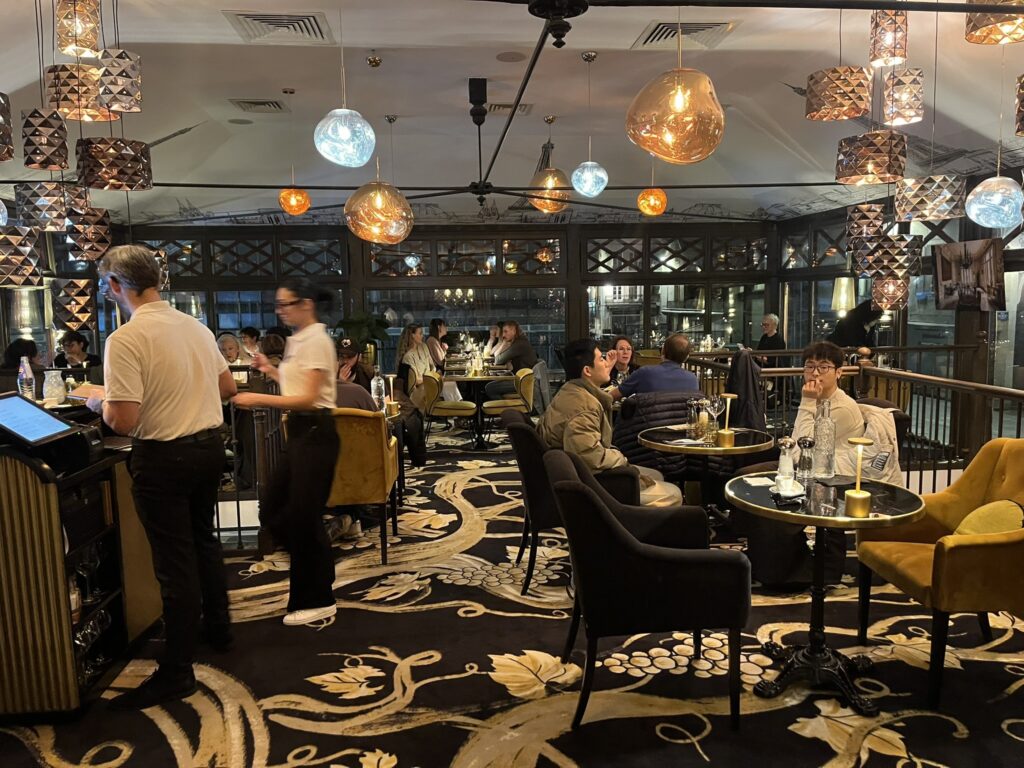
Twin staircases connect the first and second floors.
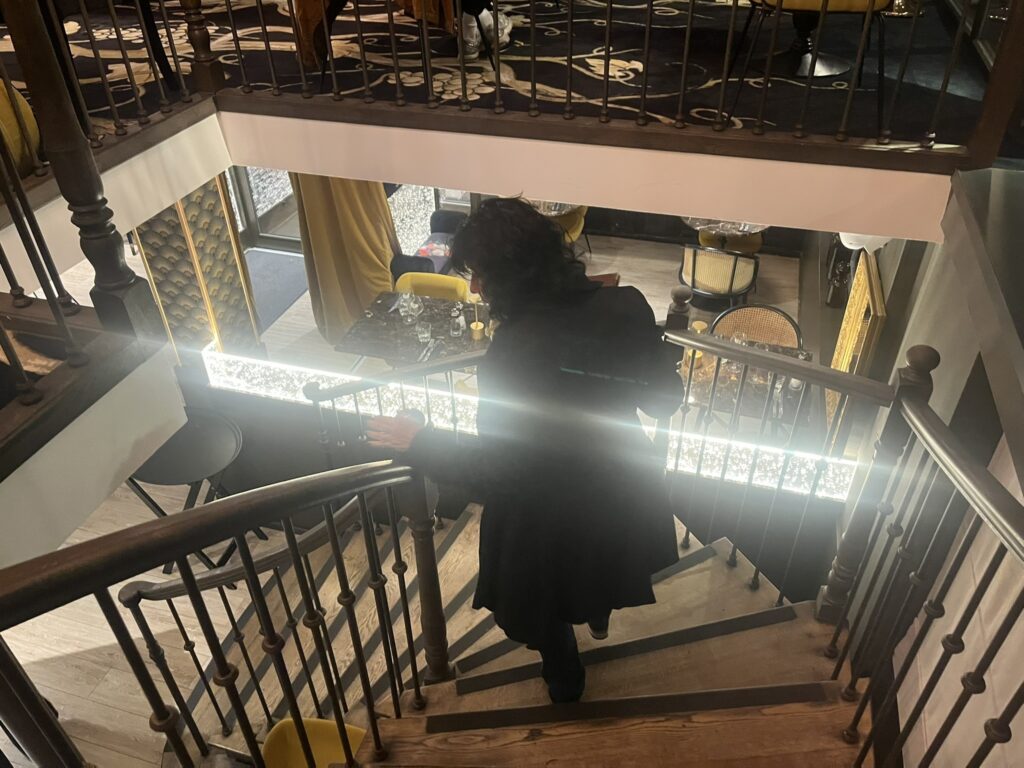
The second floor offers a panoramic view of Les Halles and the street below.
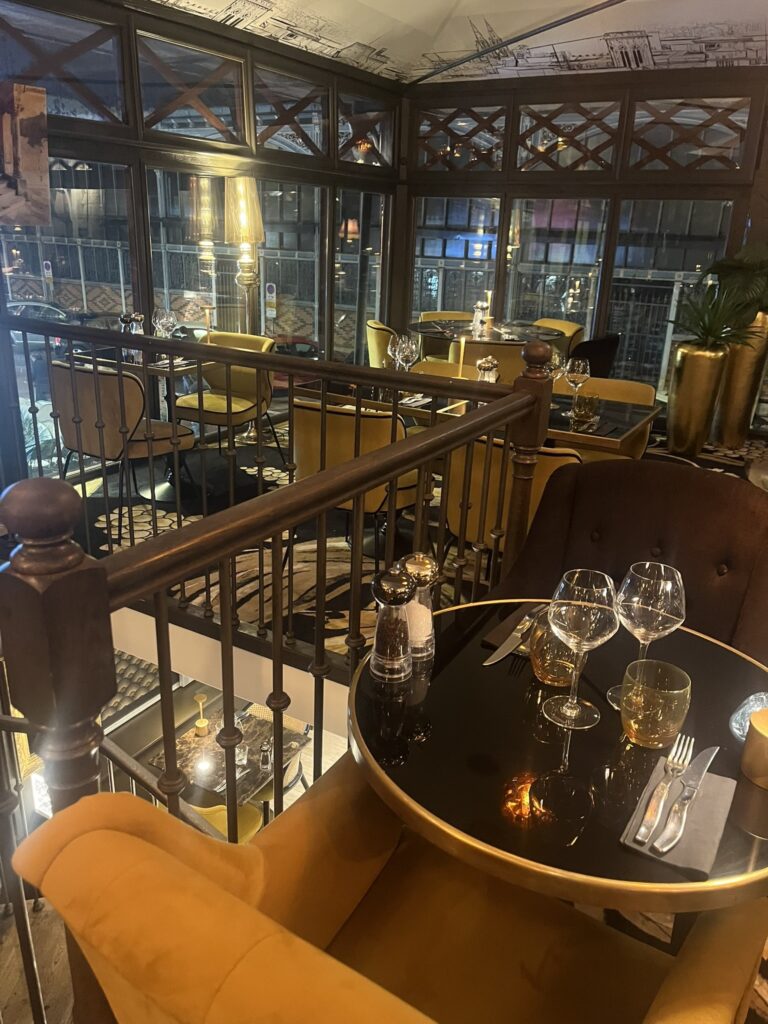
We dined upstairs at a perfect table by a side window forward of the staircase. Every table was full, every seat taken, creating a festive buzz.
The menu, which combined local dishes and styles with French classics, suggested a wine pairing with each dish, so we decided to accept the menu’s suggestions.
As an aperitif we ordered a glass of a local burgundy. For an entree we shared the escargot, which was paired with a glass of Domaine Rochebin Bourgogne Aligote (click for a comparable wine). The wine was not served before the dish, as it should have been, but the server made up for it with a healthy pour.
For a main Sarah ordered the Chicken Cordon Bleu, which was perfectly prepared.
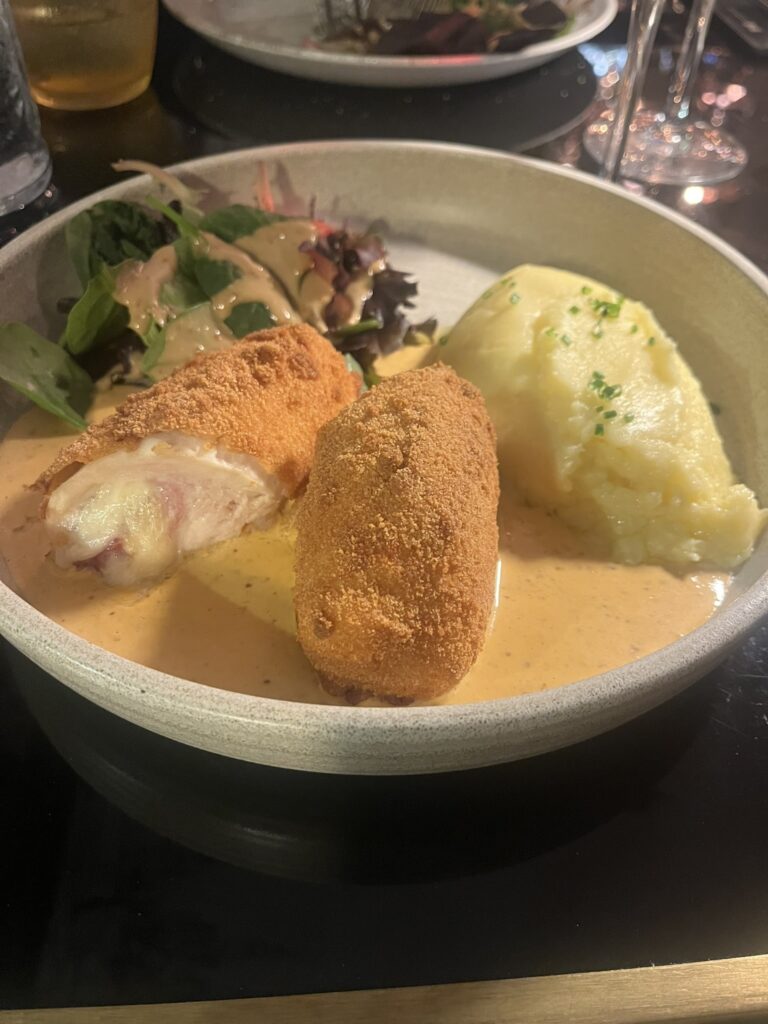
It was excellently paired with a red wine, the Domaine Tremeaux Mercurey 1er cru Les Croichots (for a comparable wine, try (Domaine Sirugue-Noellat 2021 Les Barreaux, Vosne Romanee).
I ordered the 314 burger 🍔 with frites and aioli. The bacon 🥓 was crisp and the cheese was gooey. Best of all was the freshly baked brioche bun.
It was well paired with the Domaine Maldant-Pauvelot Chorey-les-Beaune (for a comparable Beaune, try Maison du Chancelier 2022 Les Monsieres, Cote de Beaune). Both wines were served before the mains arrived. 😀
Excellent Dijon meal and experience, our last before our 314 kilometer train trip to Paris the next morning.

Conclusion
This is only a small sampling of Taste and Toasts in the Mustard Capital of the World.
Disclosure: As an Amazon Associate I earn from qualifying purchases. If you buy from a link on this site, I may earn a small commission from the vendor without any additional cost to you. No company pays me to say anything in particular, or to say nice things. I only stand behind products I believe in.